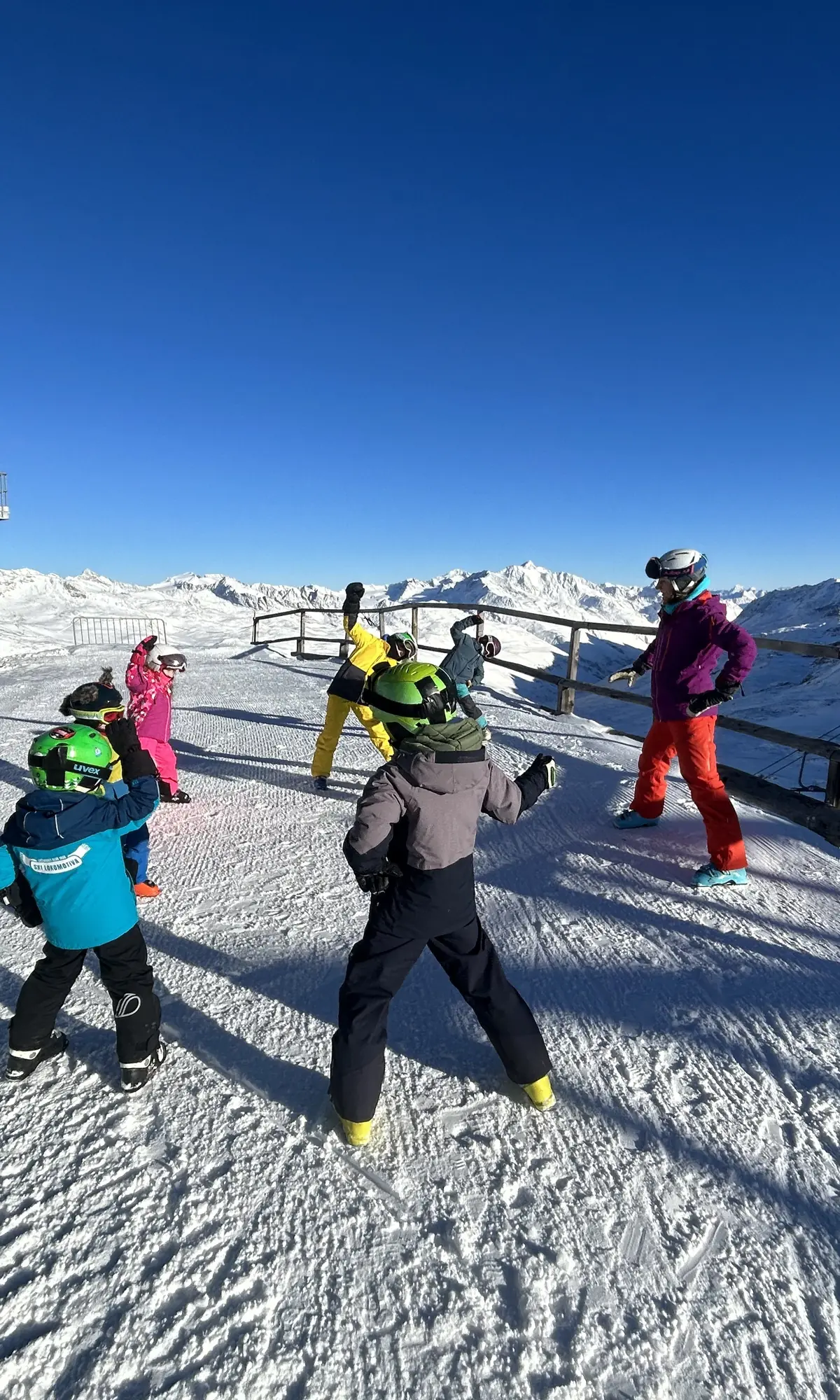
Children's Skiing Dictionary
Technique, races, gear, and training explained clearly. Each entry can have its own photo and content managed in the admin.
Technique and Learning
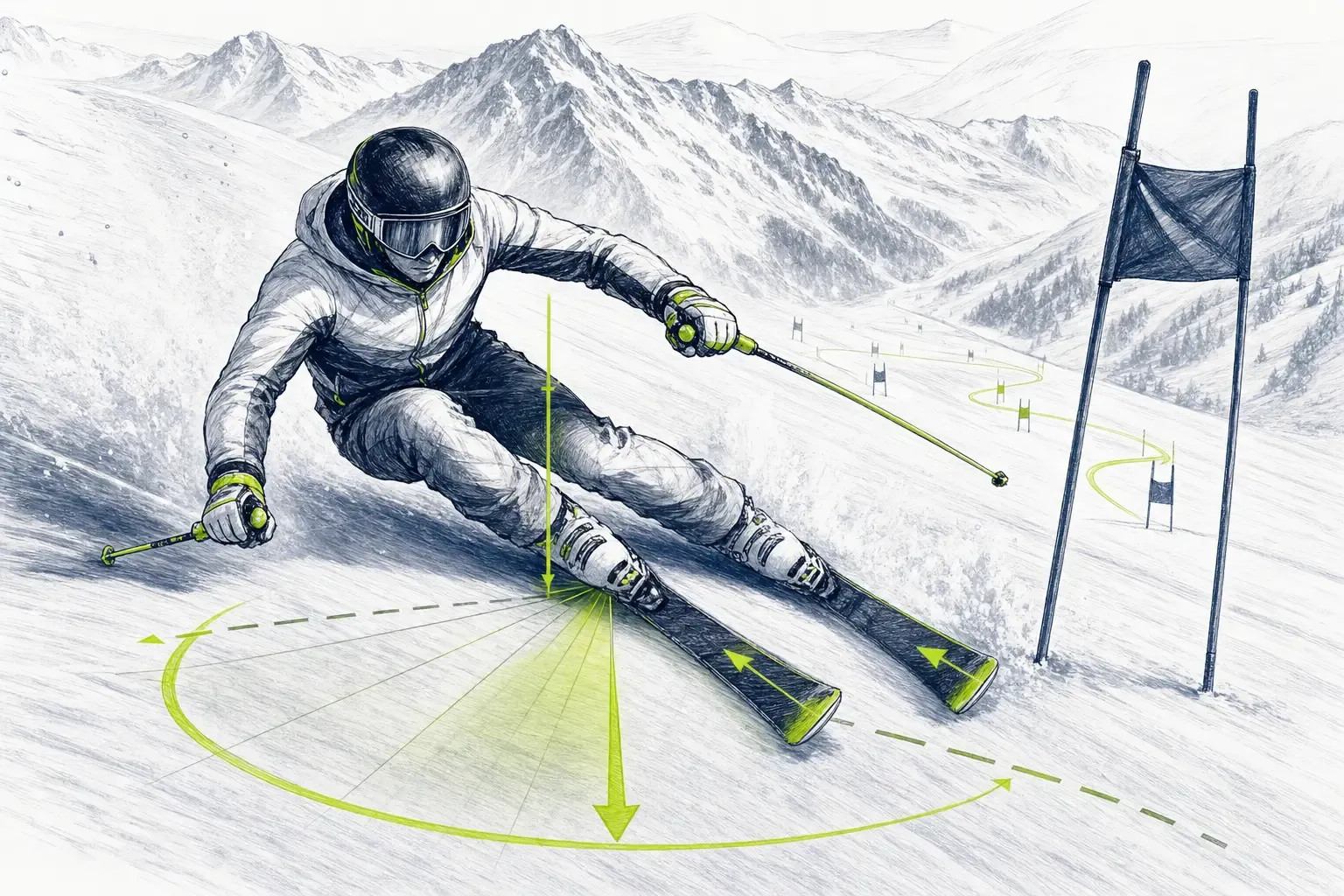
Alpine skiing
Alpine skiing is downhill skiing with the heel firmly attached, in which the skier uses turns to control the direction and speed of descent.
Open entry →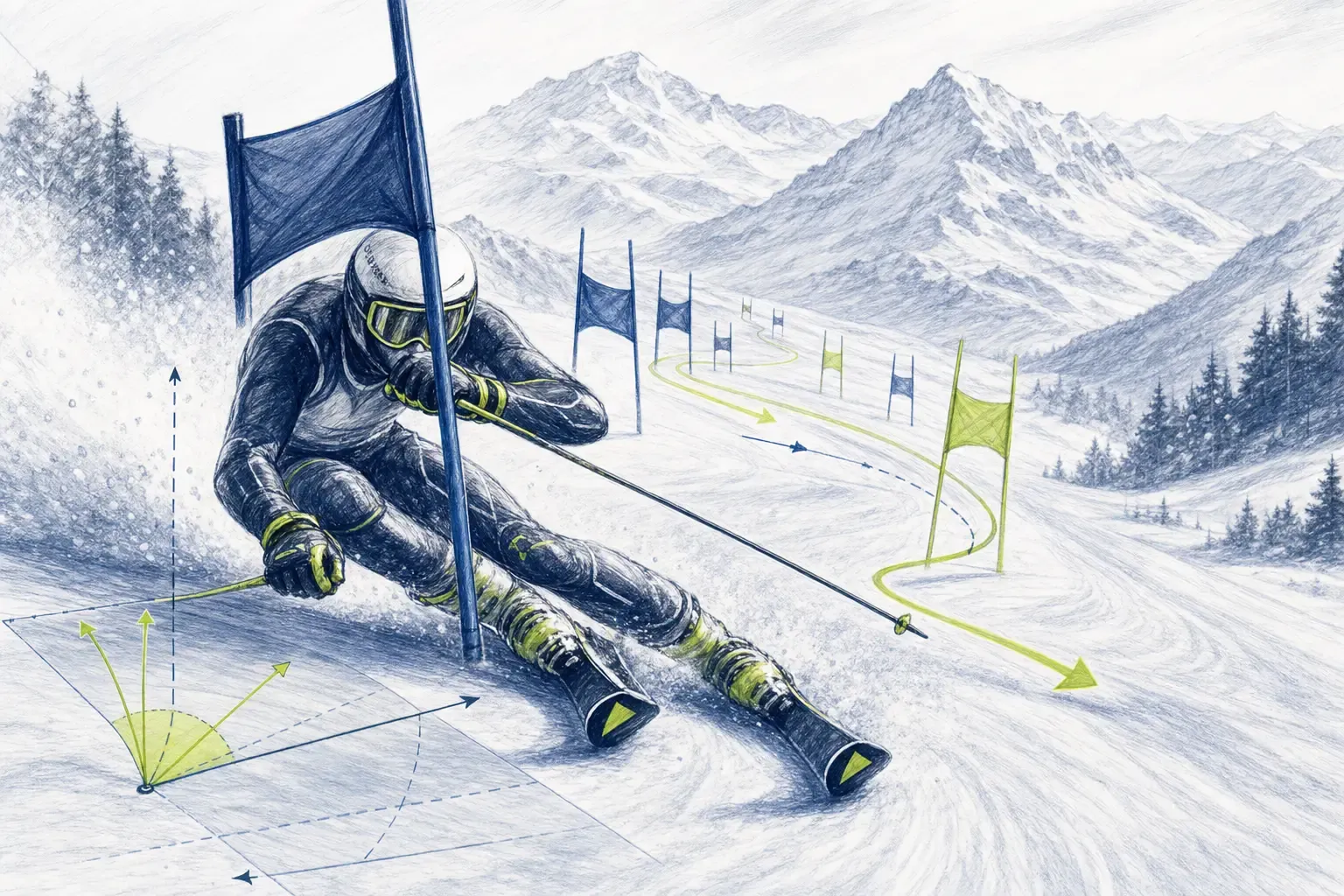
Alpine disciplines
Alpine disciplines are racing forms of downhill skiing in which the skier follows a marked course and the result is determined by the recorded time and correct passage through the gates.
Open entry →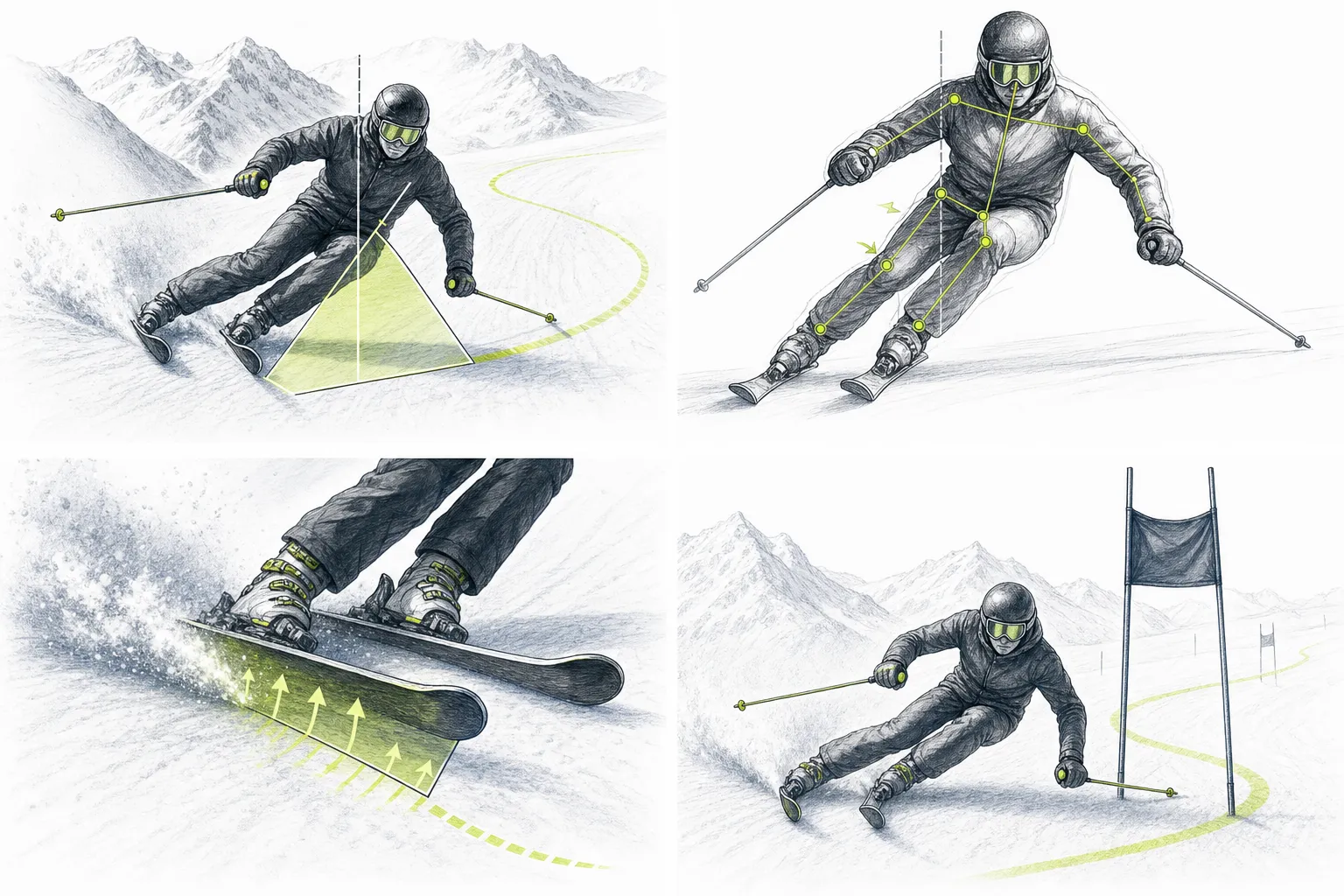
Angulation
Angulation is the side bend of the body, which allows the skier to adjust ski edging and body position without the whole body leaning inward into the turn as one rigid block.
Open entry →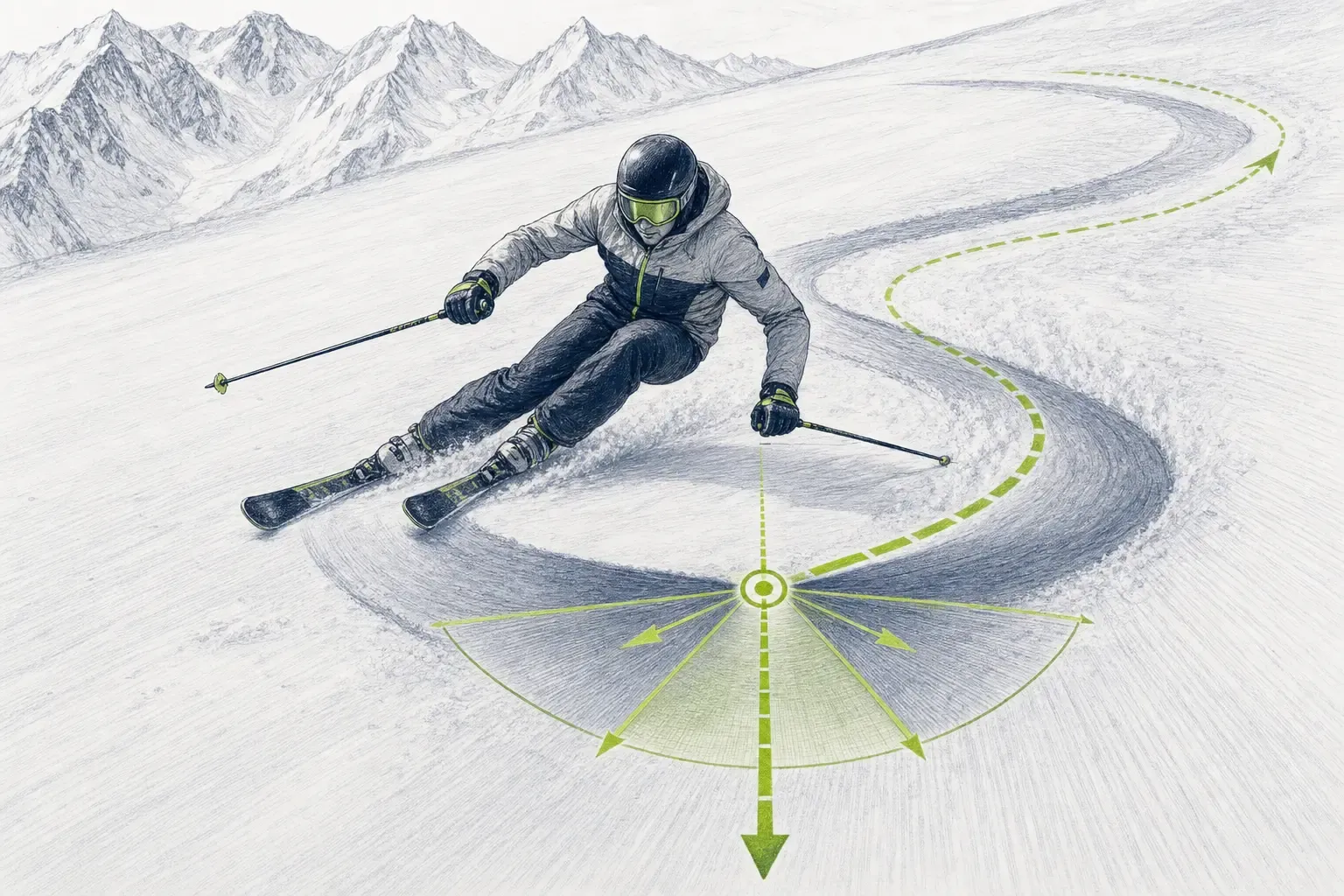
Apex of the turn
The apex of the turn is the point or short section of the turn where the skis point roughly down the fall line.
Open entry →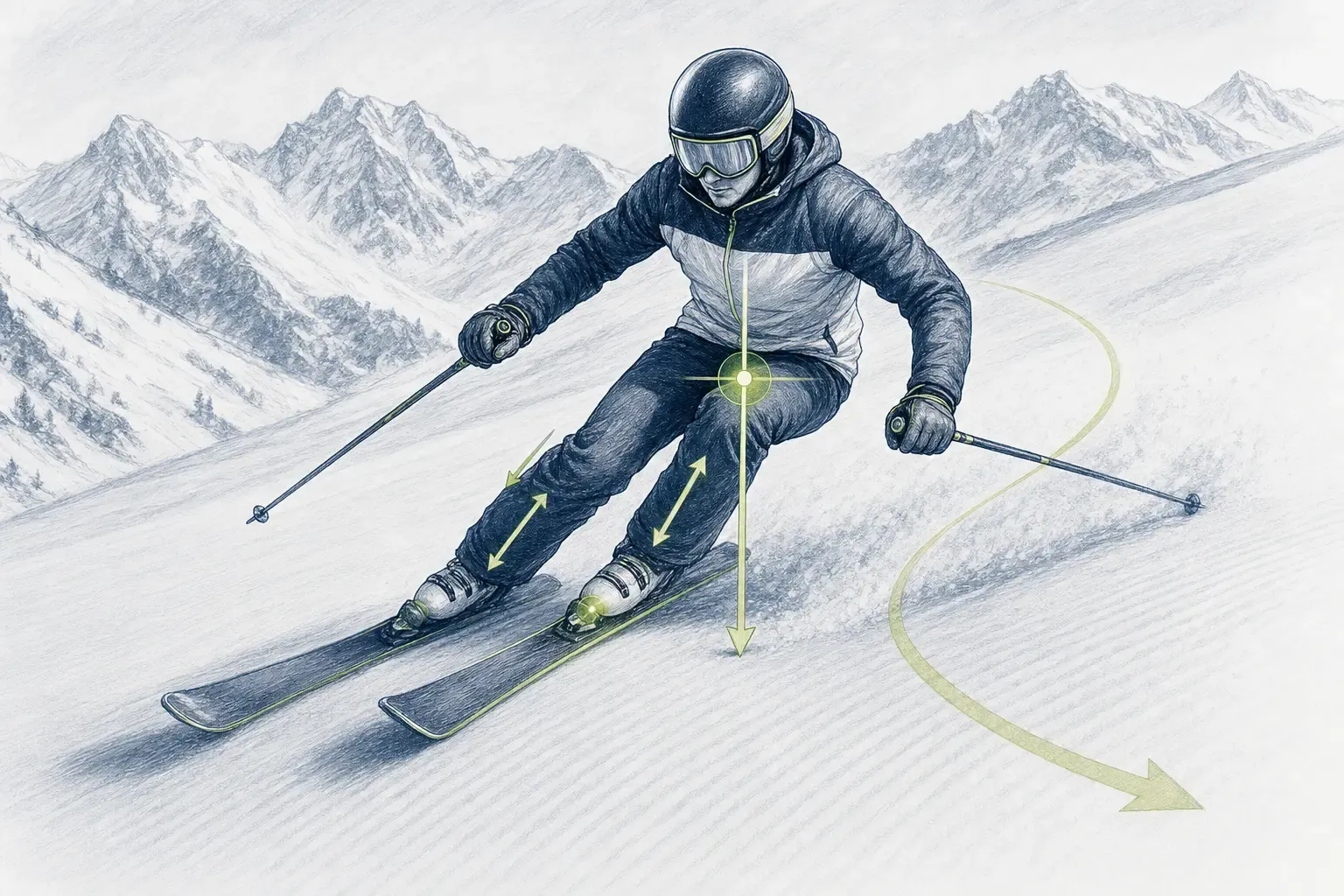
Active stance
Active stance is a continuously adjusted, balanced ski position from which the skier can respond effectively to the turn, terrain, and changes in load.
Open entry →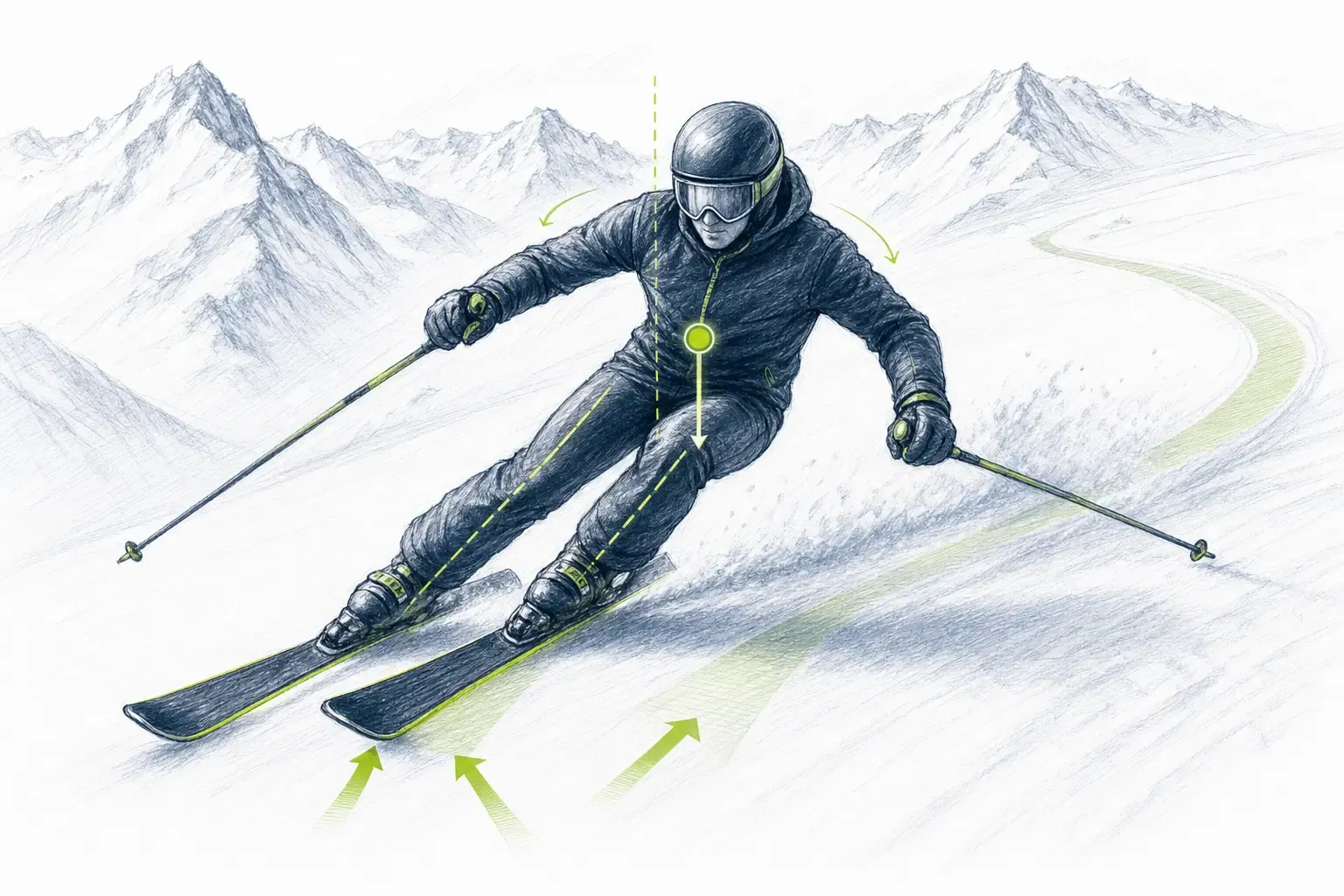
Balancing stance
Balancing stance is a mobile and adaptable body position that allows the skier to maintain balance, control pressure on the skis, and respond to changes in direction, speed, and terrain.
Open entry →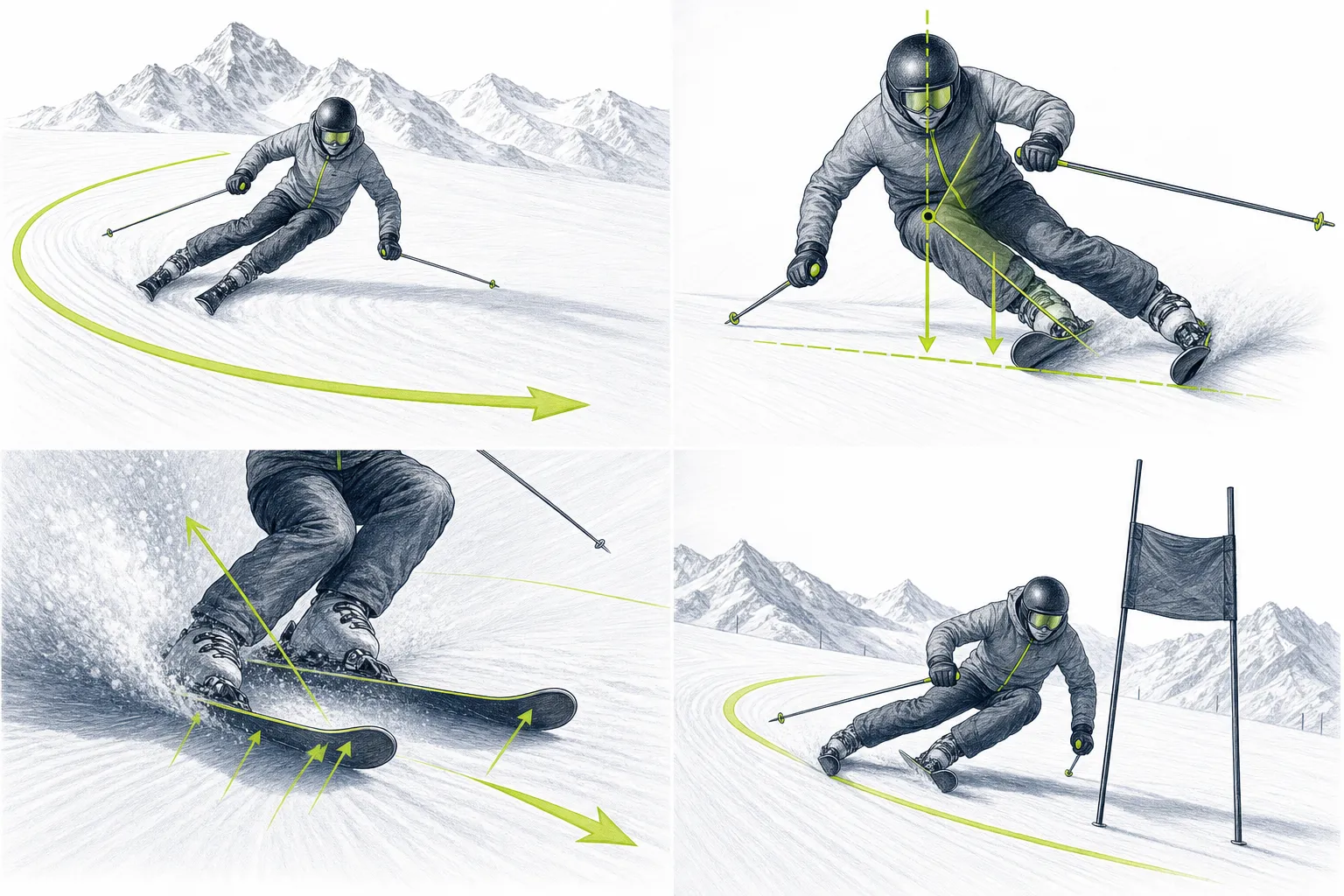
Carving
Carving is steering the skis on their edges in a carved turn with minimal sideways skid.
Open entry →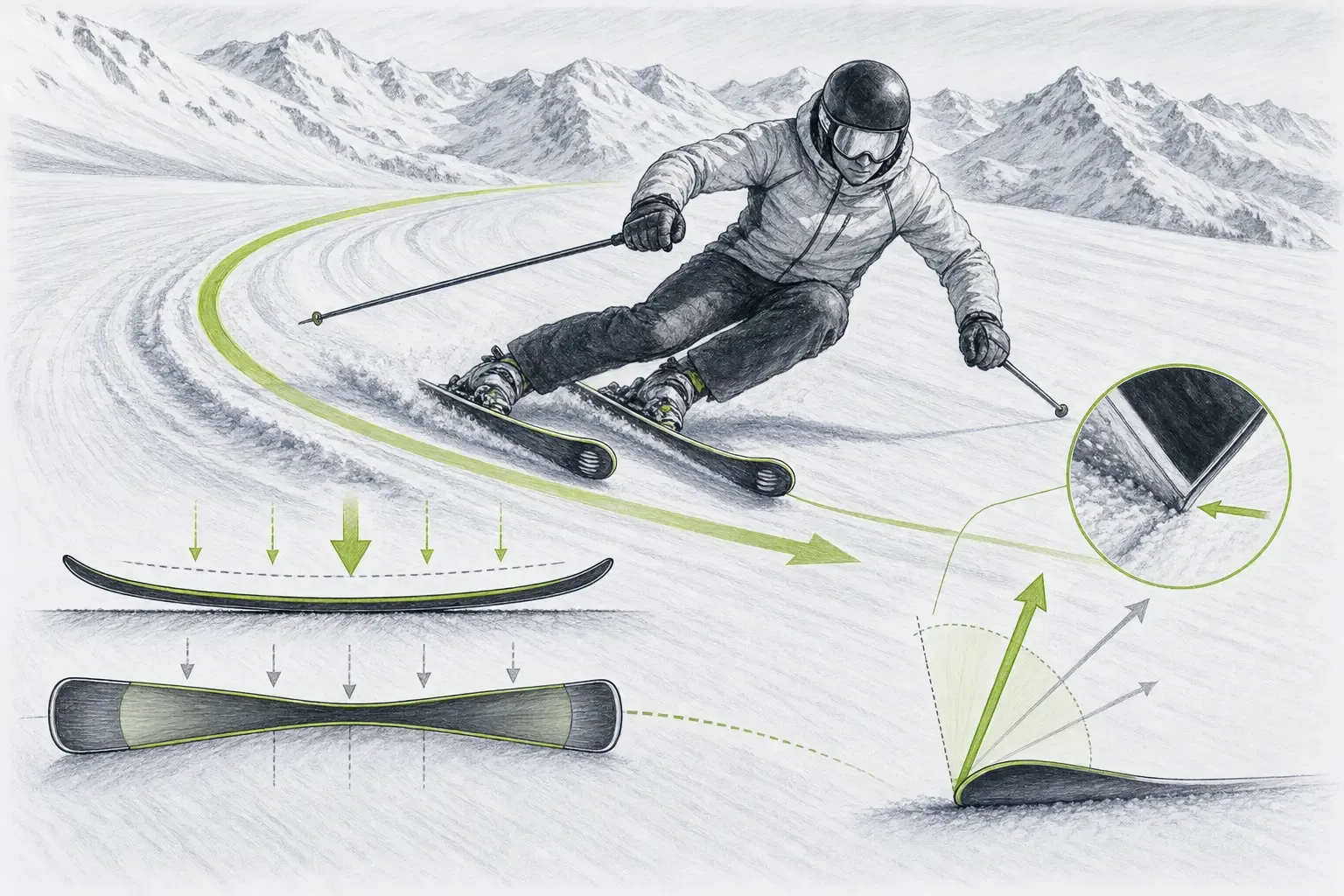
Carving turn
A carving turn is a turn made mainly on the ski edges with minimal sideways slide.
Open entry →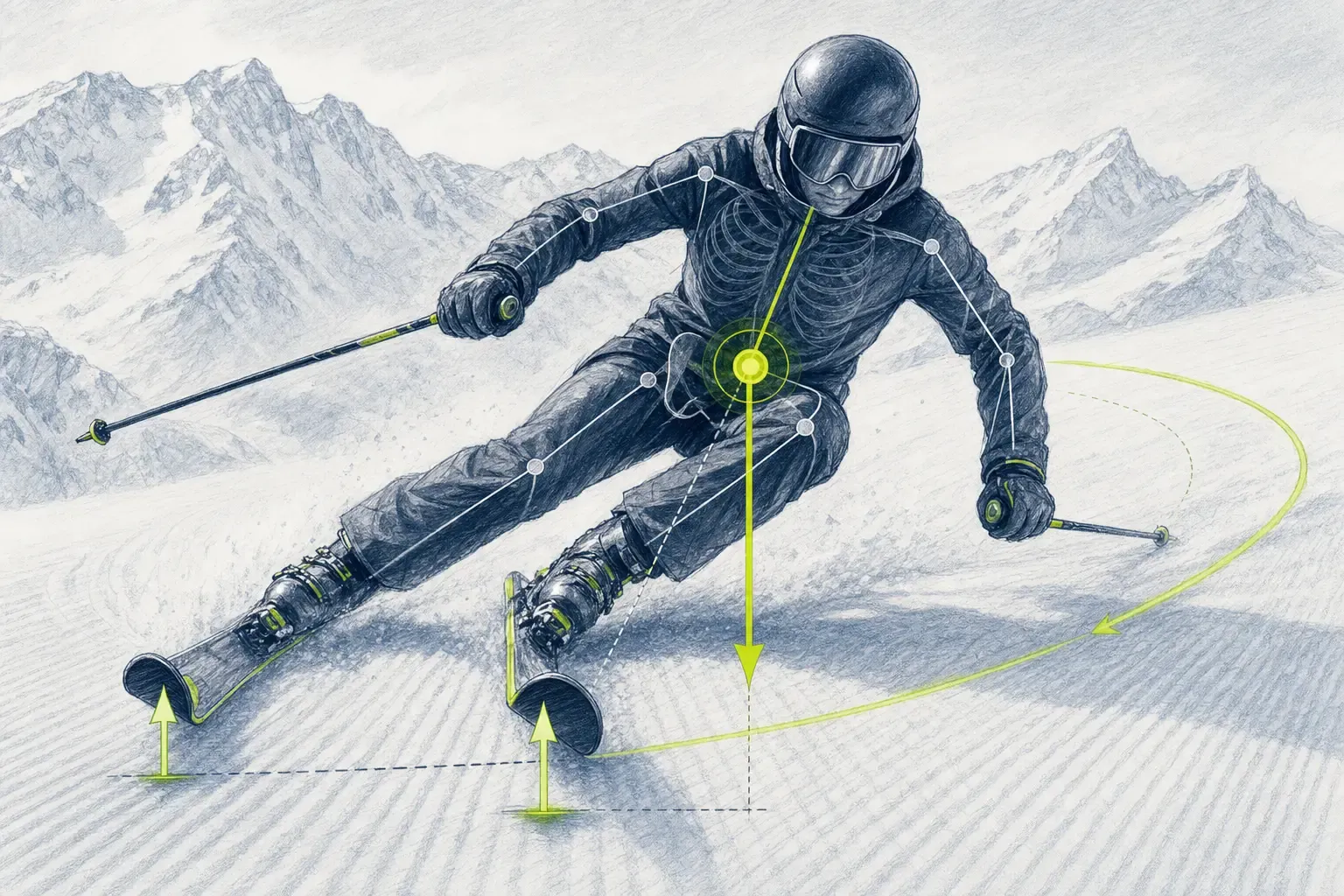
Center of mass
The center of mass is an imaginary point at which the skier’s mass can be concentrated when describing motion. Its position changes with body posture, and in skiing it is assessed in relation to the skis, the direction of travel, and the forces acting on the skier.
Open entry →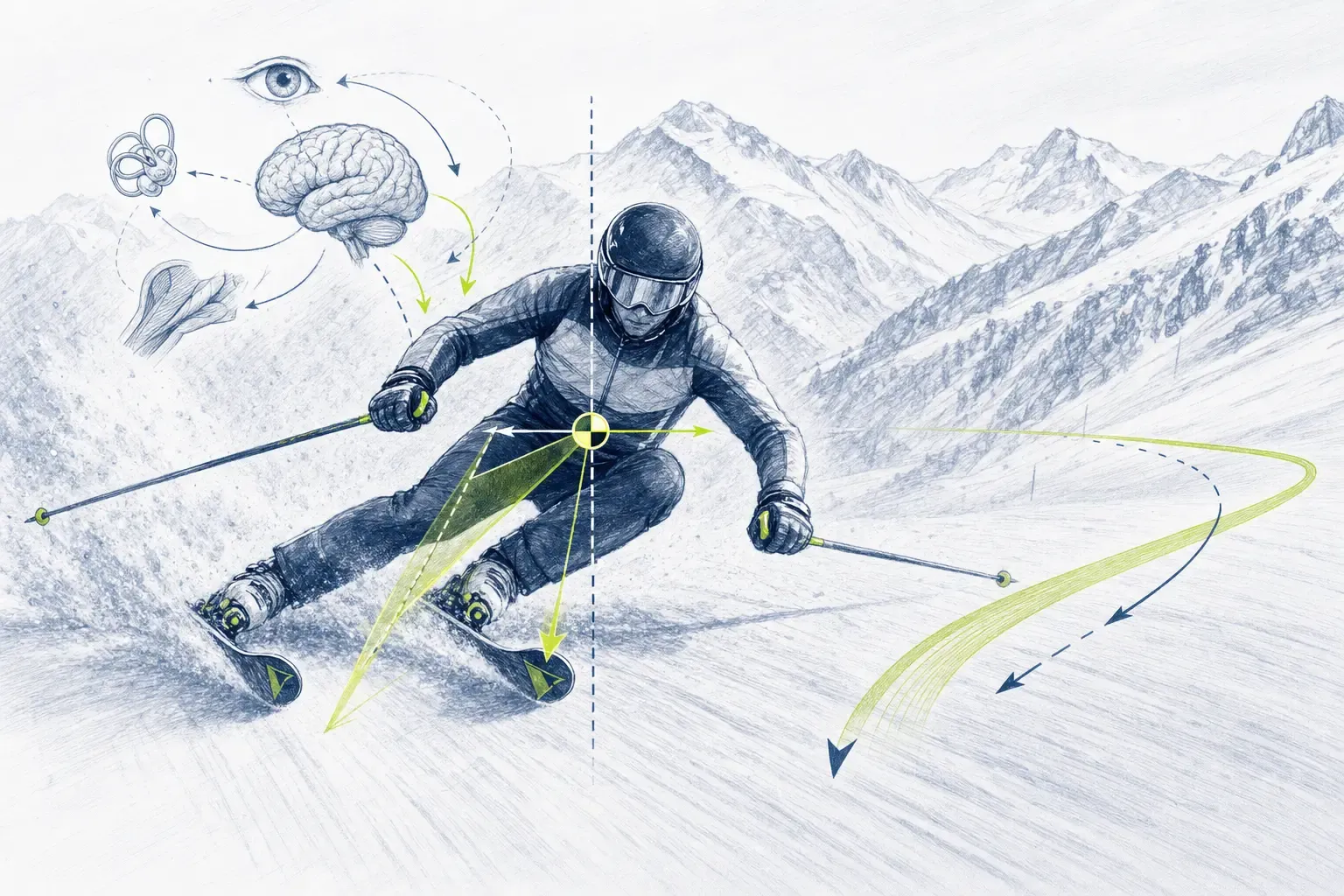
Dynamic balance
The skier’s ability to continuously maintain or regain stability while moving and to adapt body position to changes in speed, direction, terrain, and ski load.
Open entry →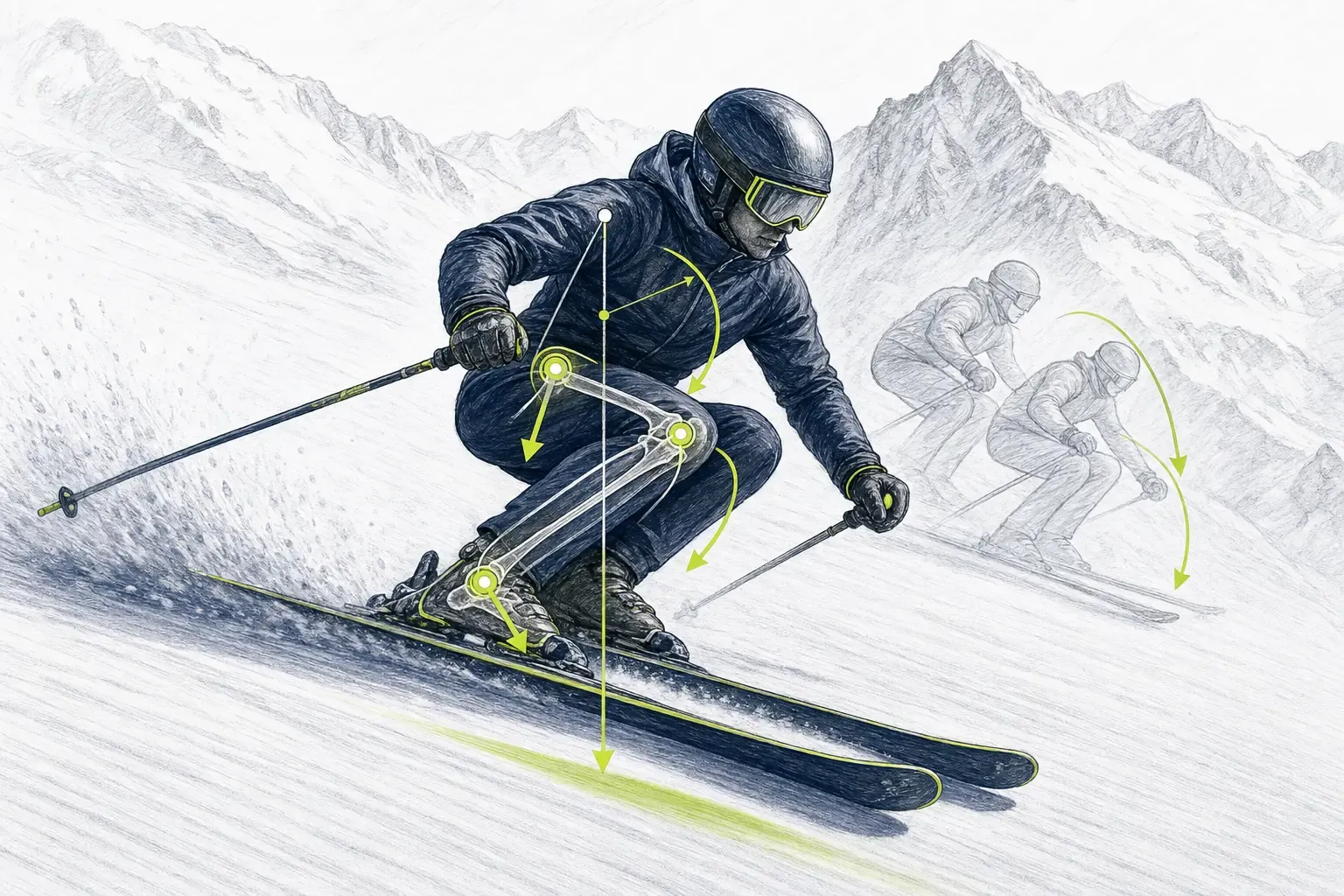
Flexion
Flexion is bending at a joint; in skiing, it most often refers to the coordinated bending of the lower limbs, which shortens their functional length.
Open entry →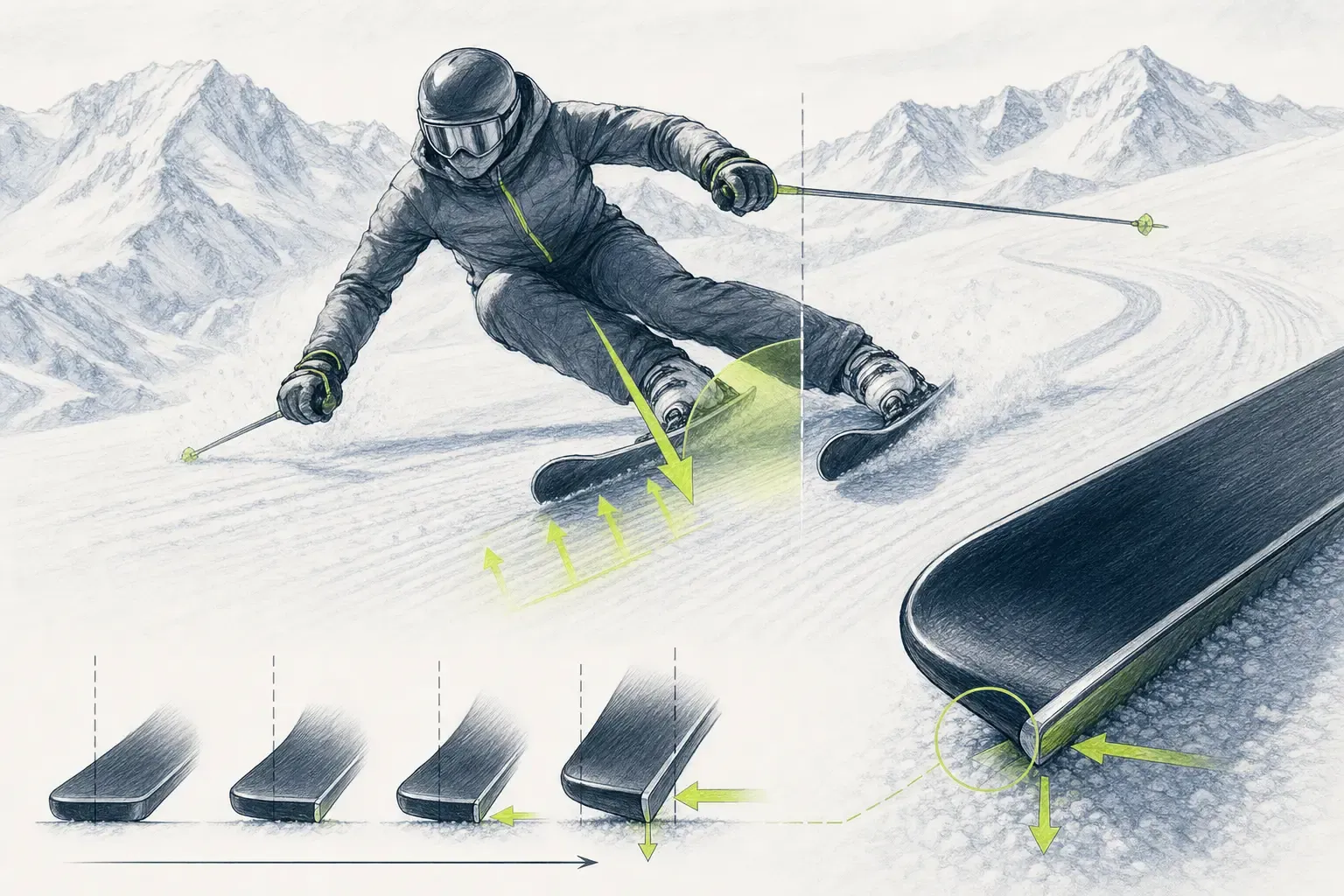
Ski edge
The ski edge is the metal strip on both sides of the base that allows the ski to turn, brake, and hold an edge on hard snow.
Open entry →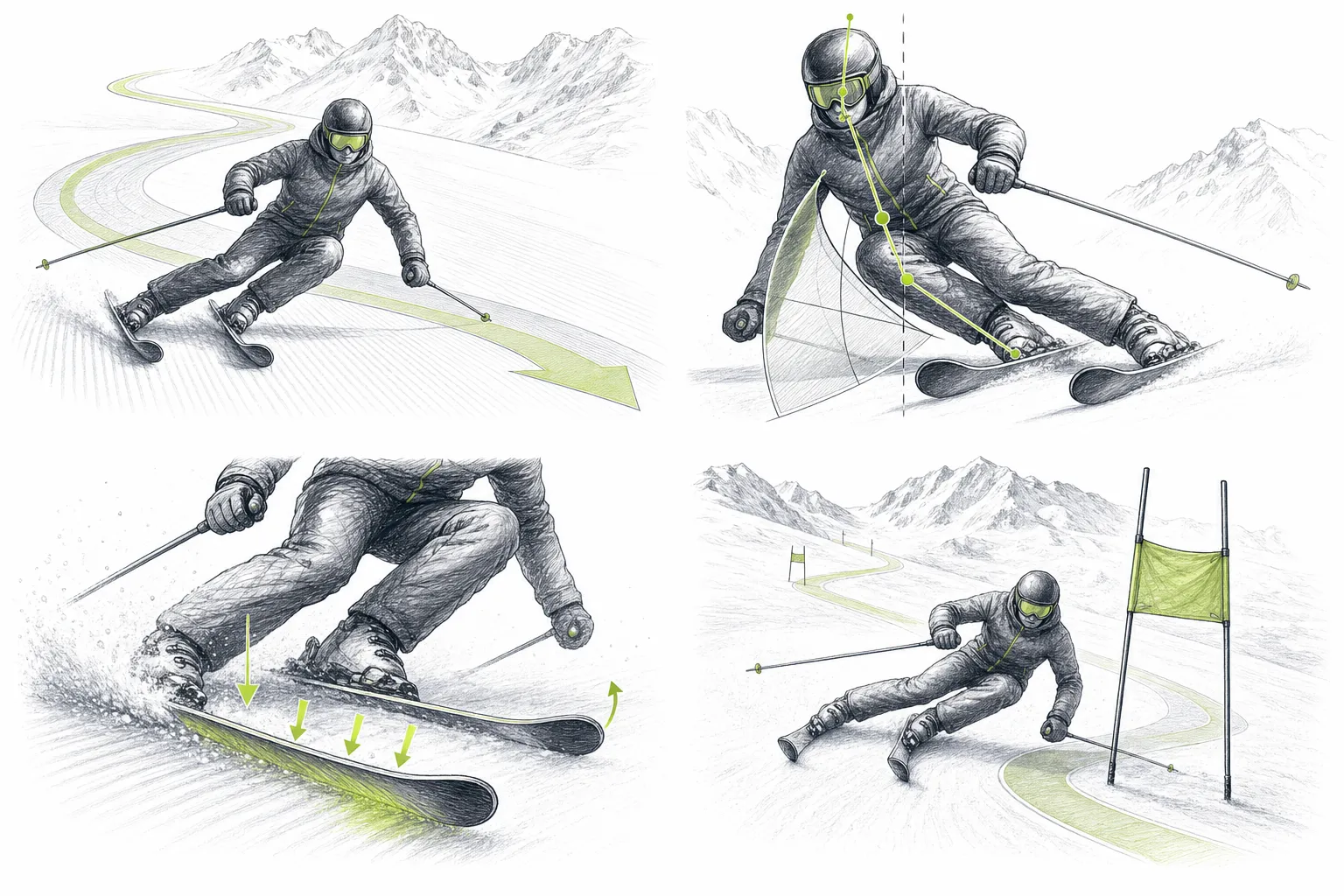
Edging and setting the edges
Edging is the controlled tipping of the skis onto their edges and their subsequent release. Setting the edges refers to the stance or state of the ski in which the edge creates support in the snow.
Open entry →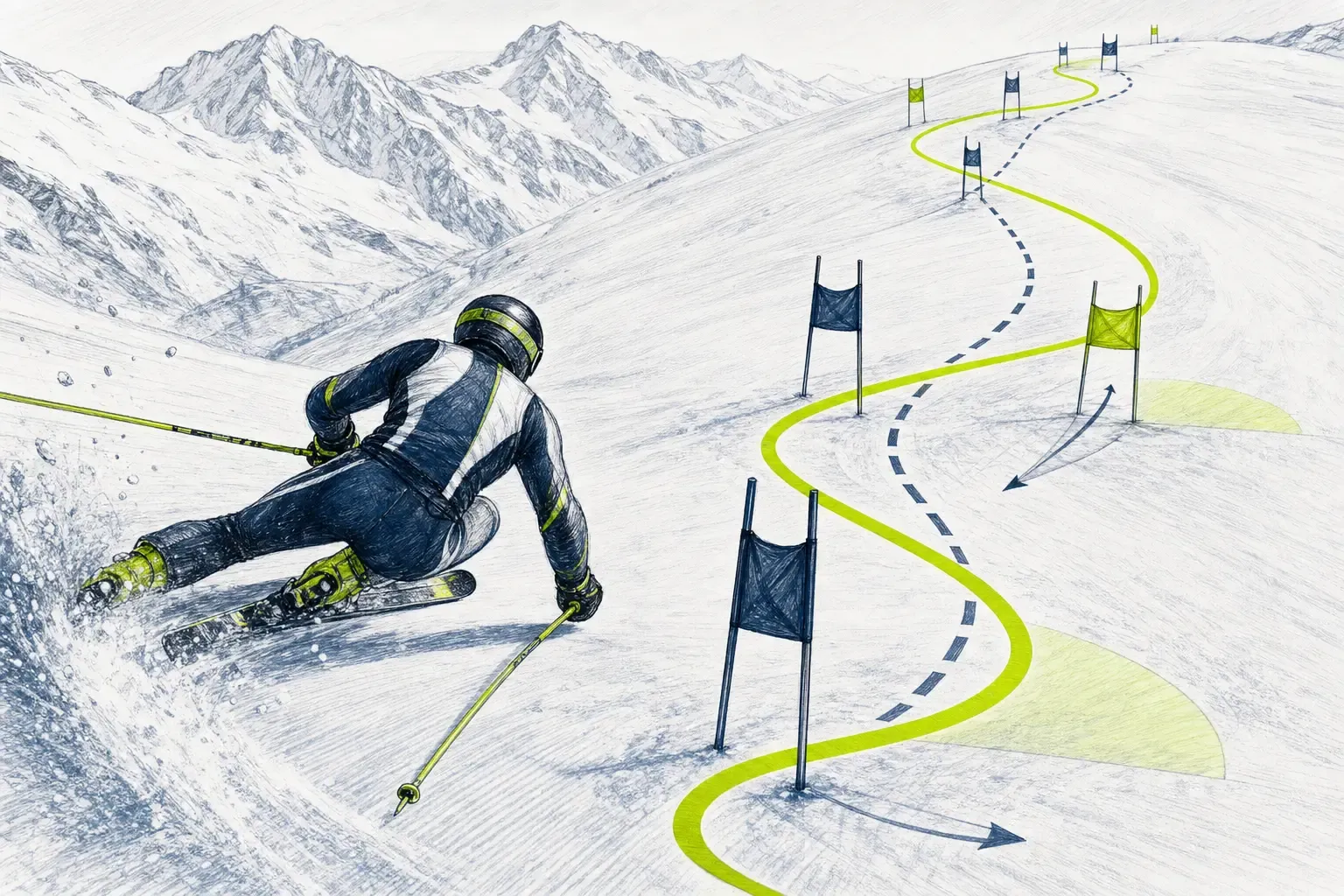
Ideal track
The ideal line is the skier’s purposeful trajectory, combining the correct direction, appropriate speed, a manageable turn, and good preparation for the next section of the course.
Open entry →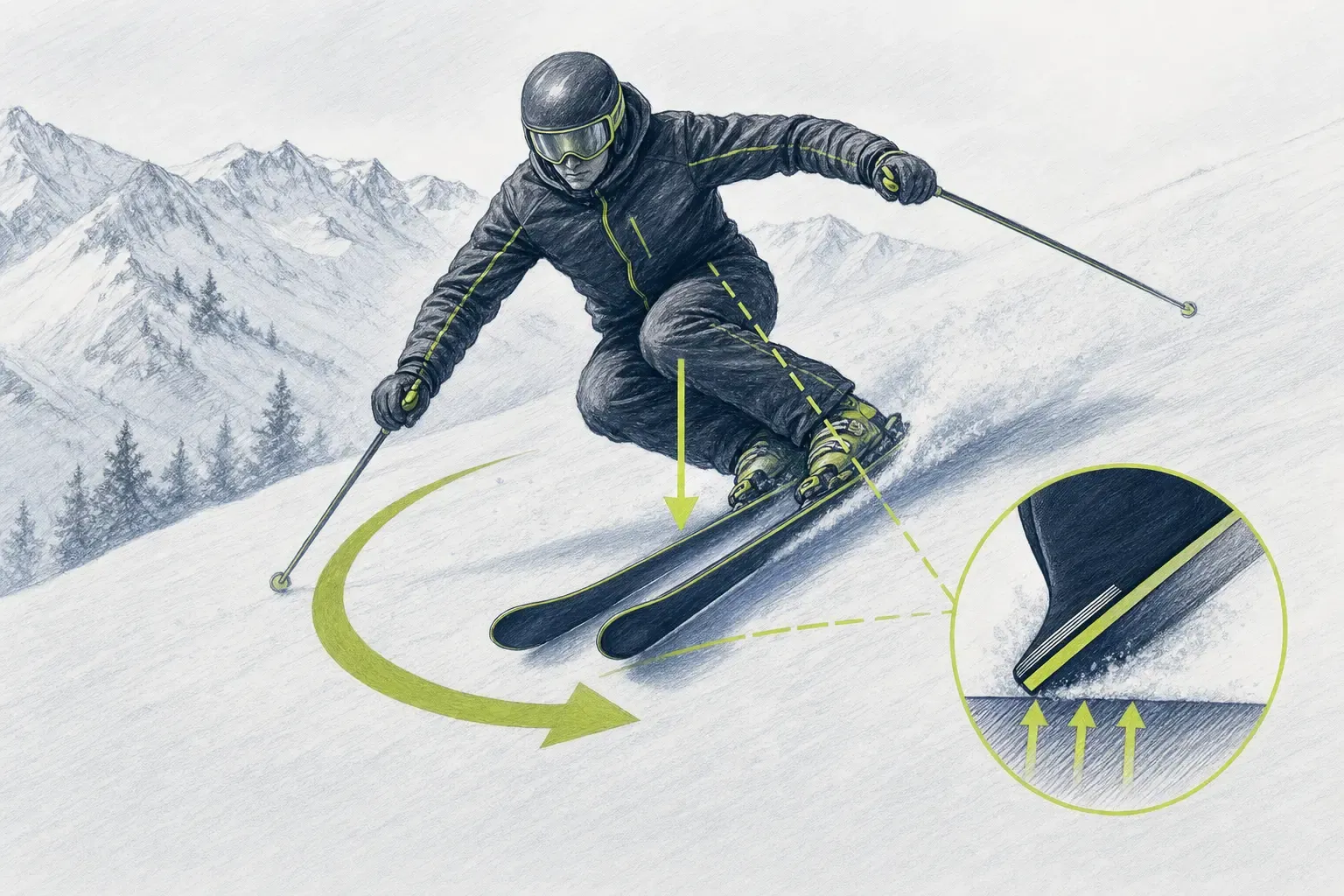
Carving
Carving is skiing with the deliberate use of the skis’ side edges to control direction, side slip, and the shape of the turn.
Open entry →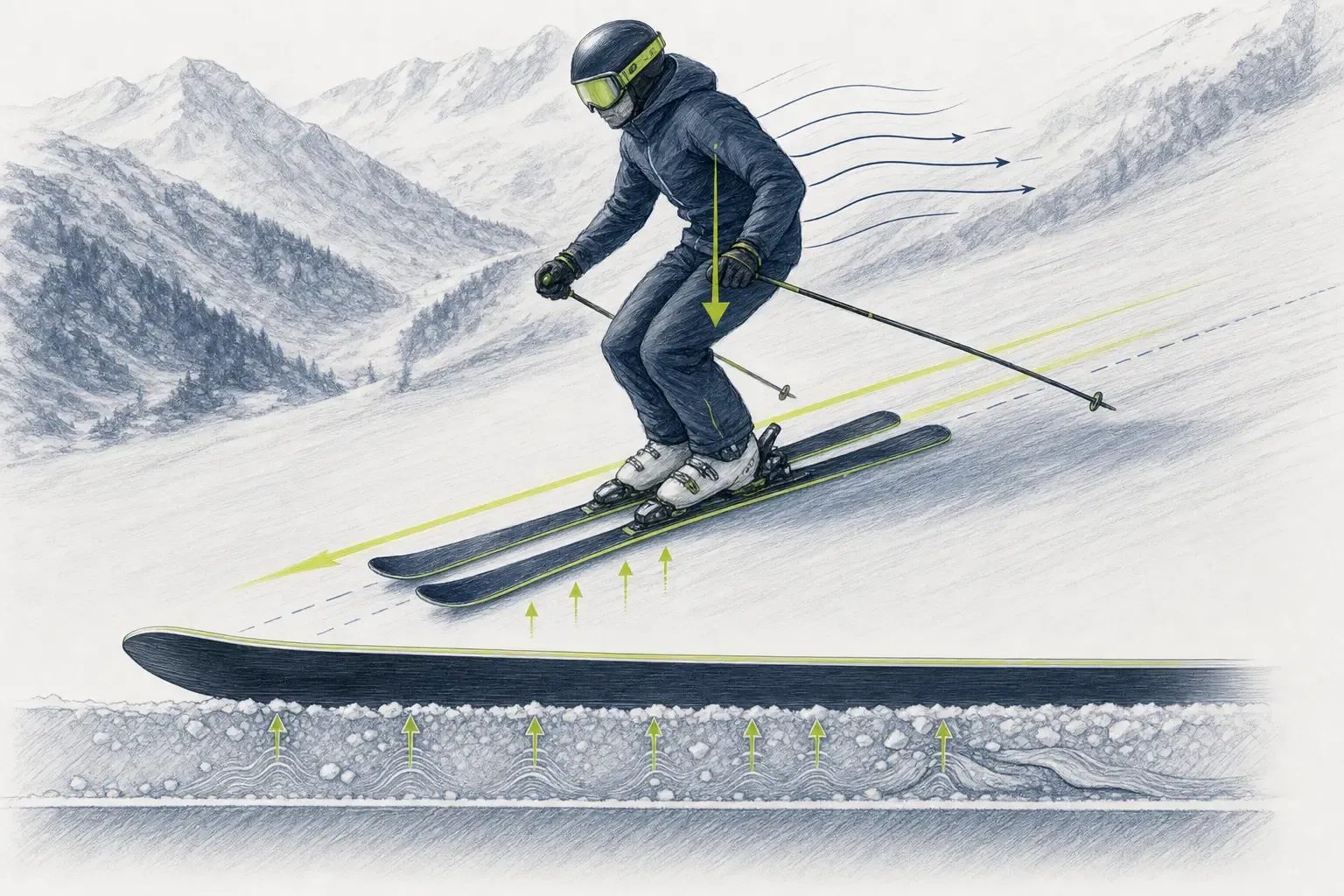
Gliding
Gliding is the basic skiing skill of moving smoothly, in balance, and without unnecessary braking from the edges, ski rotation, or an unsuitable stance.
Open entry →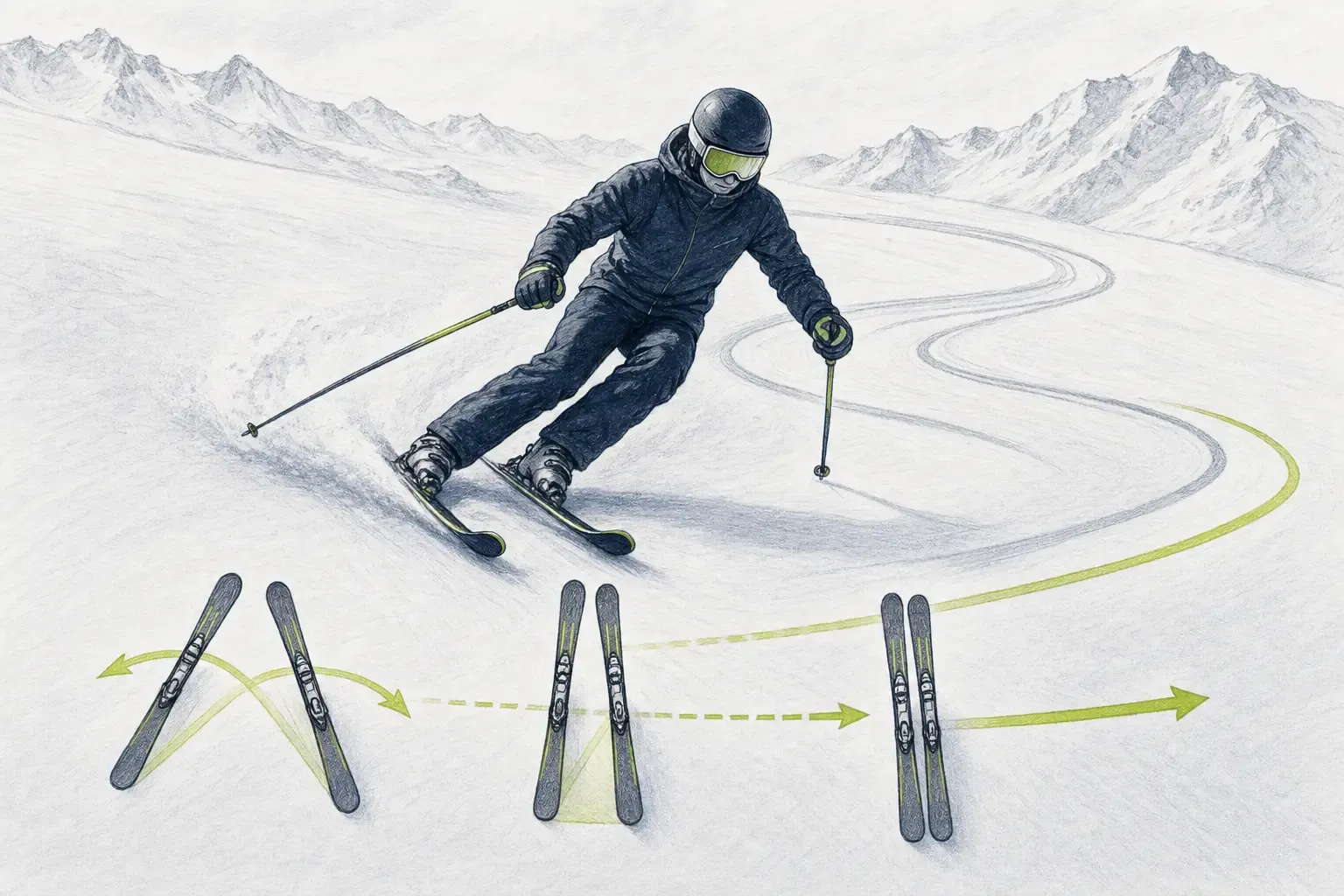
Gliding turn
A transition turn from a slight wedge into parallel ski guidance with a small braking effect.
Open entry →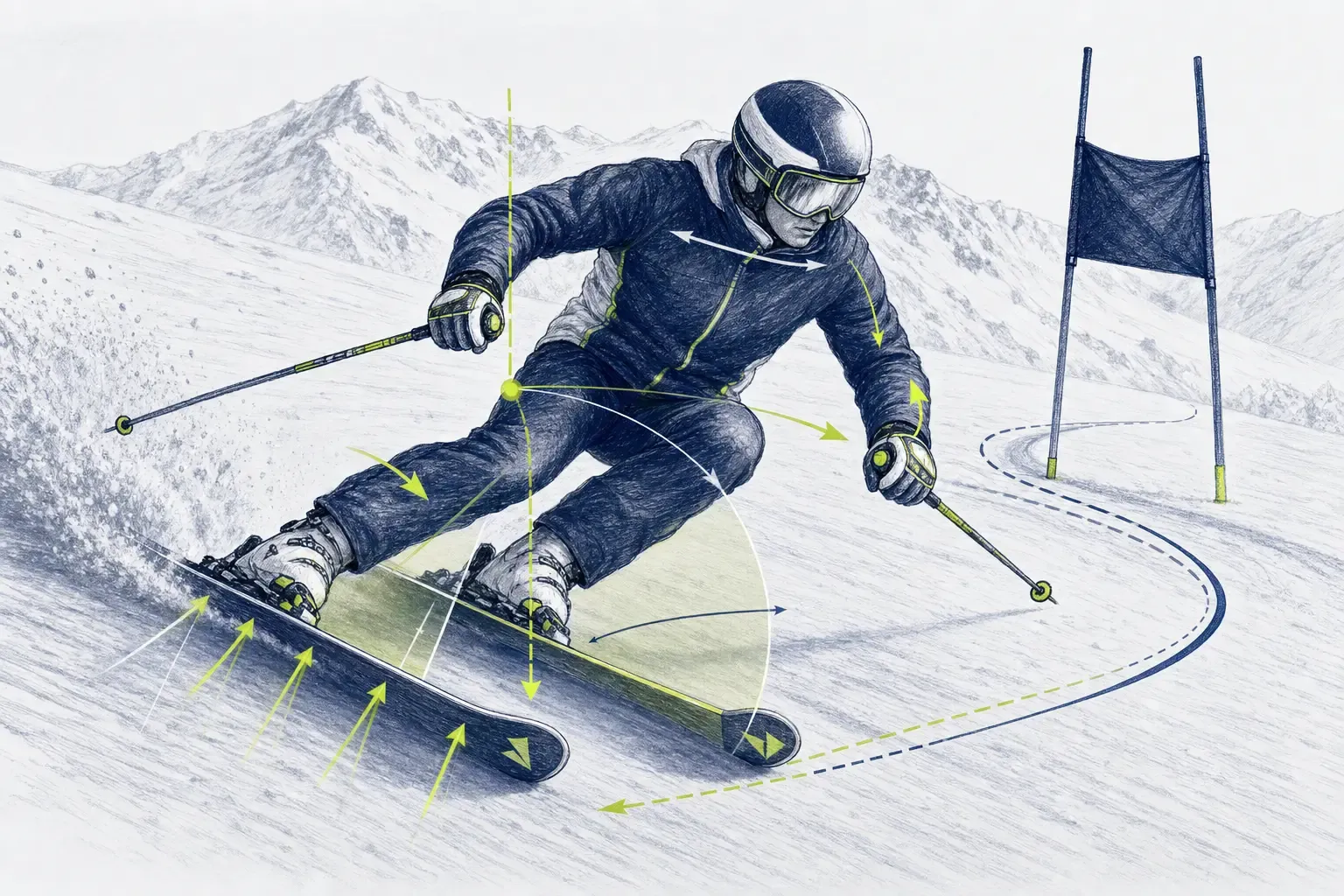
Coordination
Coordination is the ability to purposefully control, time, and adapt body movements to the current skiing situation.
Open entry →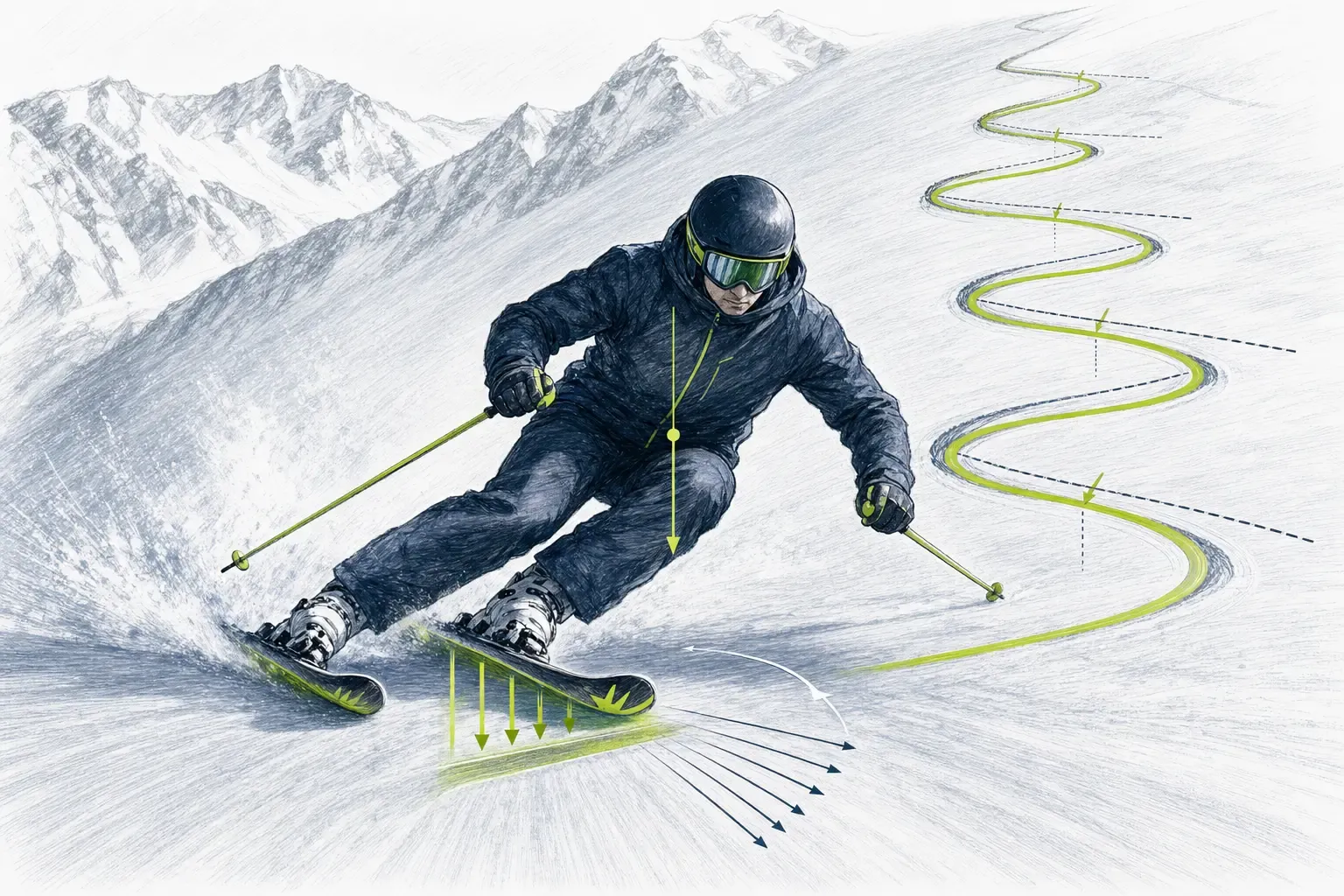
Short turn
A short turn is a series of rhythmically linked parallel turns with a small radius, skied in a narrow corridor and at controlled speed.
Open entry →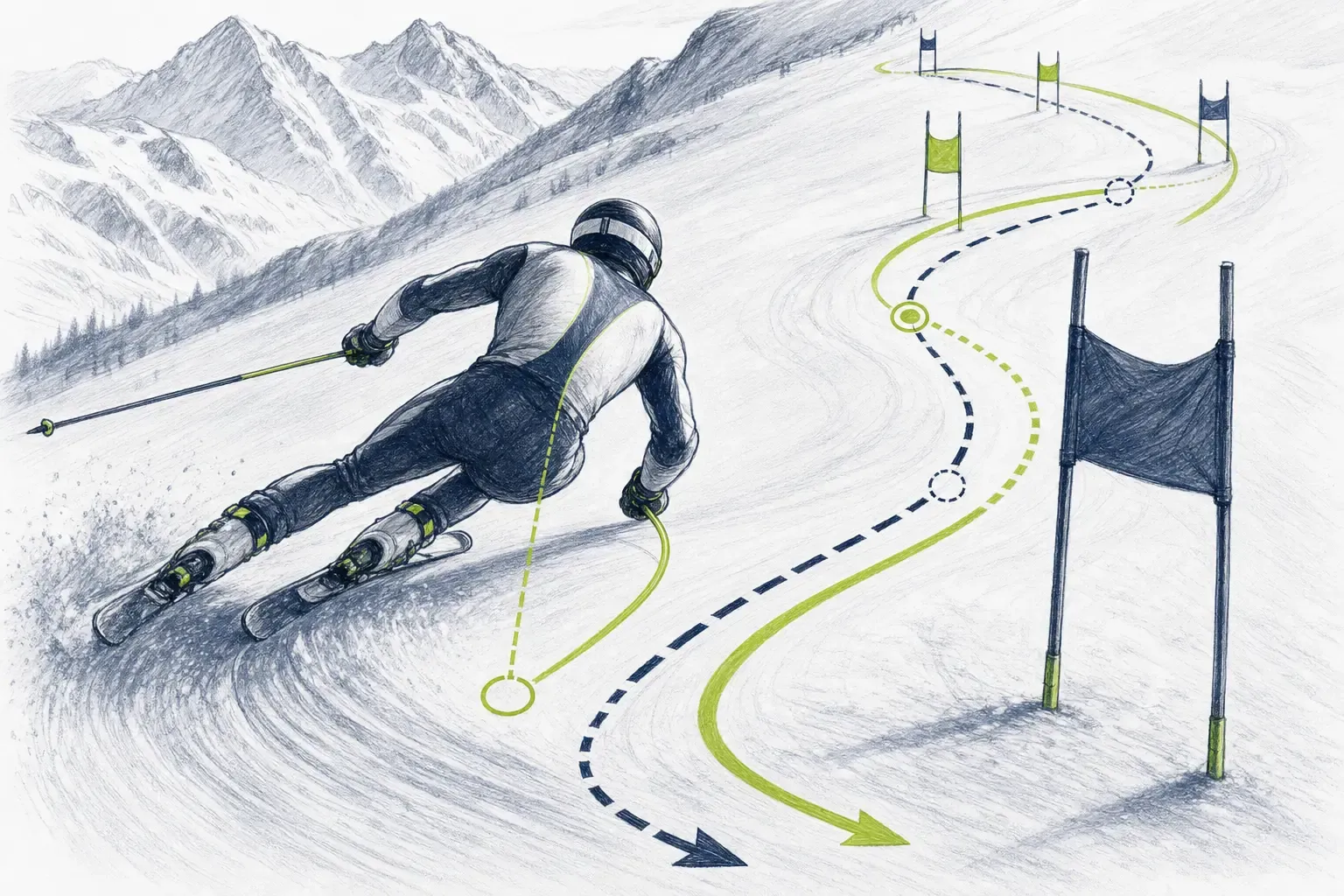
Ski line
The ski line is the path a skier follows down the slope in relation to the fall line, terrain, snow conditions, and in races also the gate setup.
Open entry →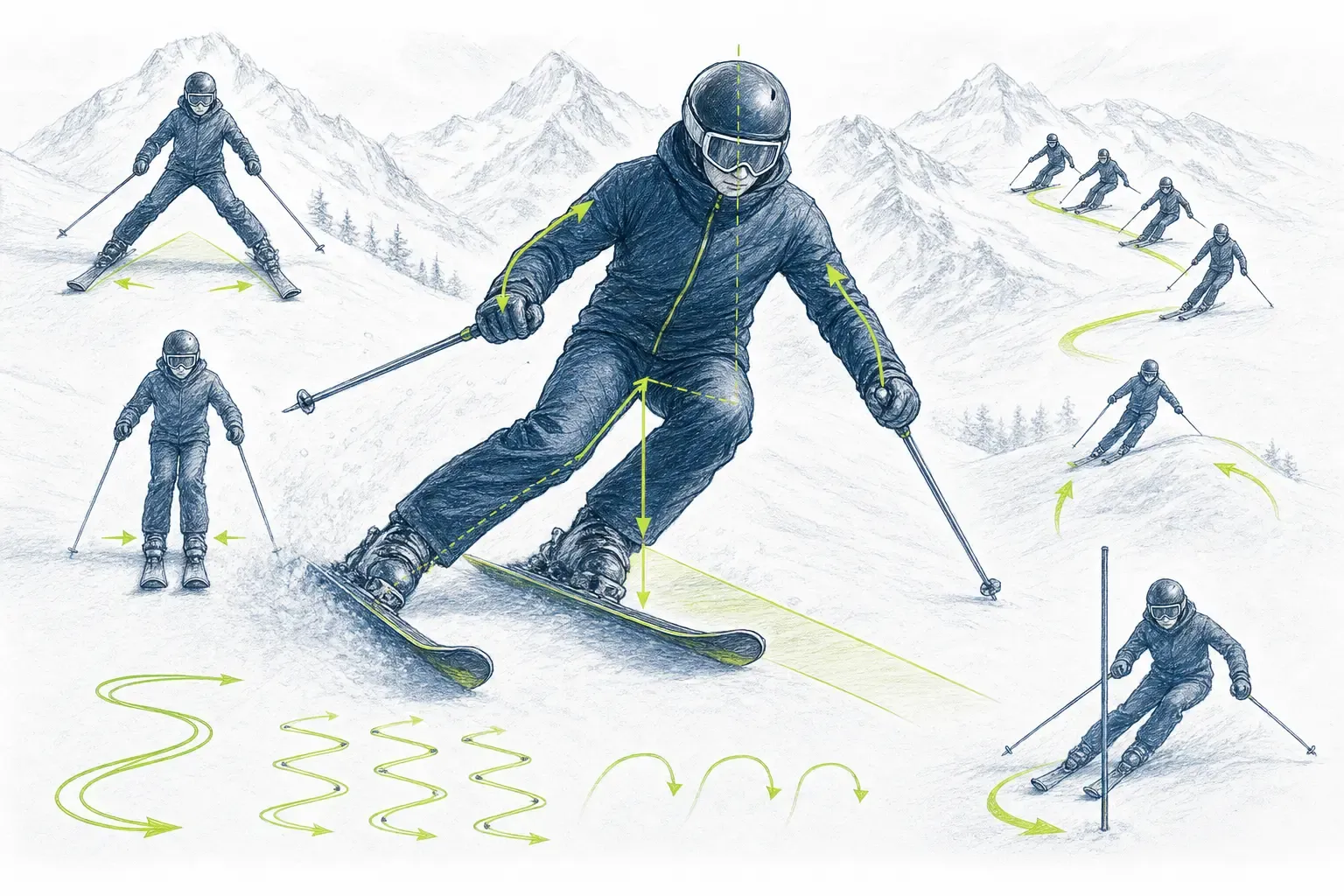
Ski alphabet
A set of simple and gradually more demanding exercises through which a skier learns or improves basic movement skills on skis.
Open entry →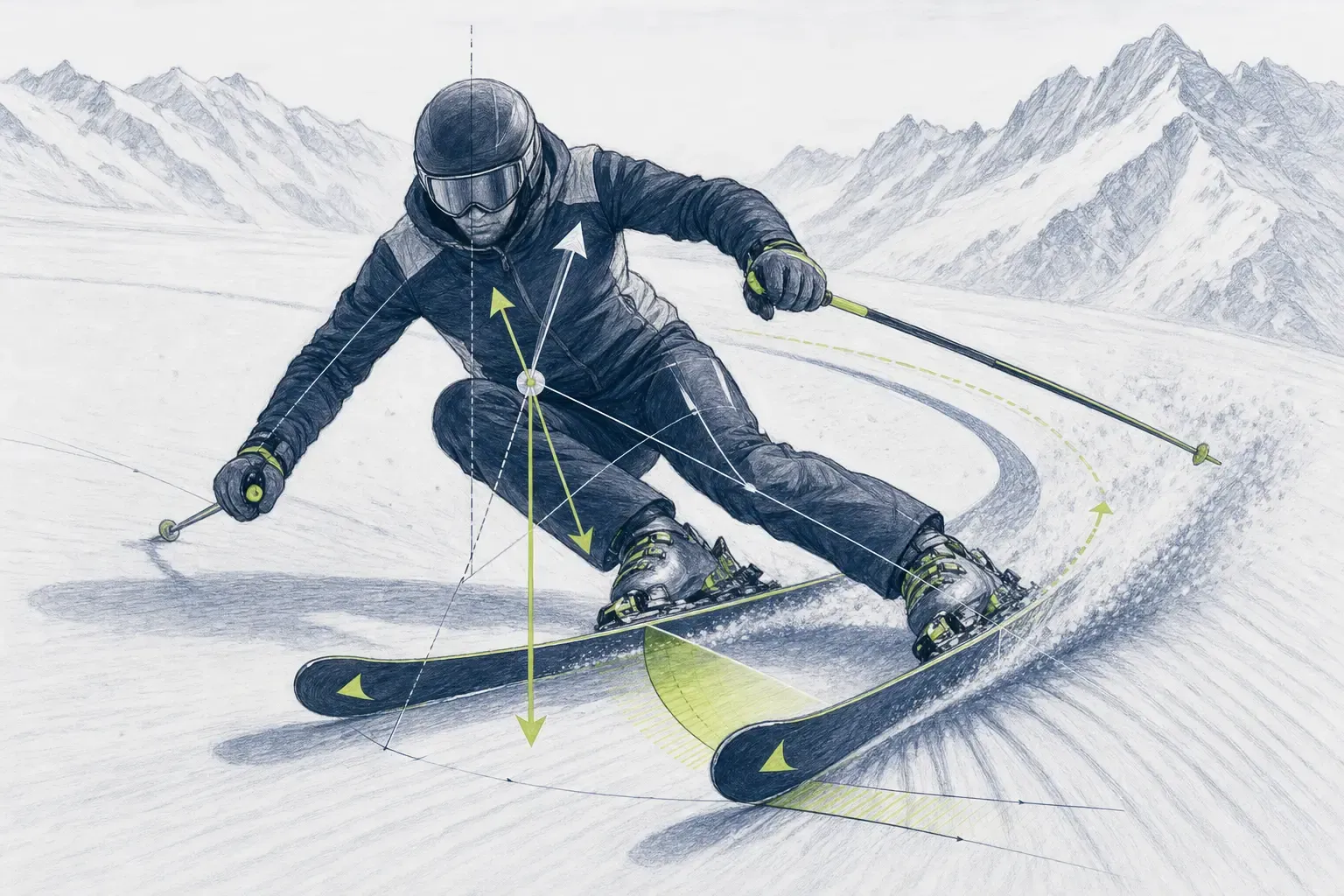
Ski technique
Ski technique is the way a skier coordinates balance, edge control, ski guidance, and pressure management to change direction and speed safely and efficiently.
Open entry →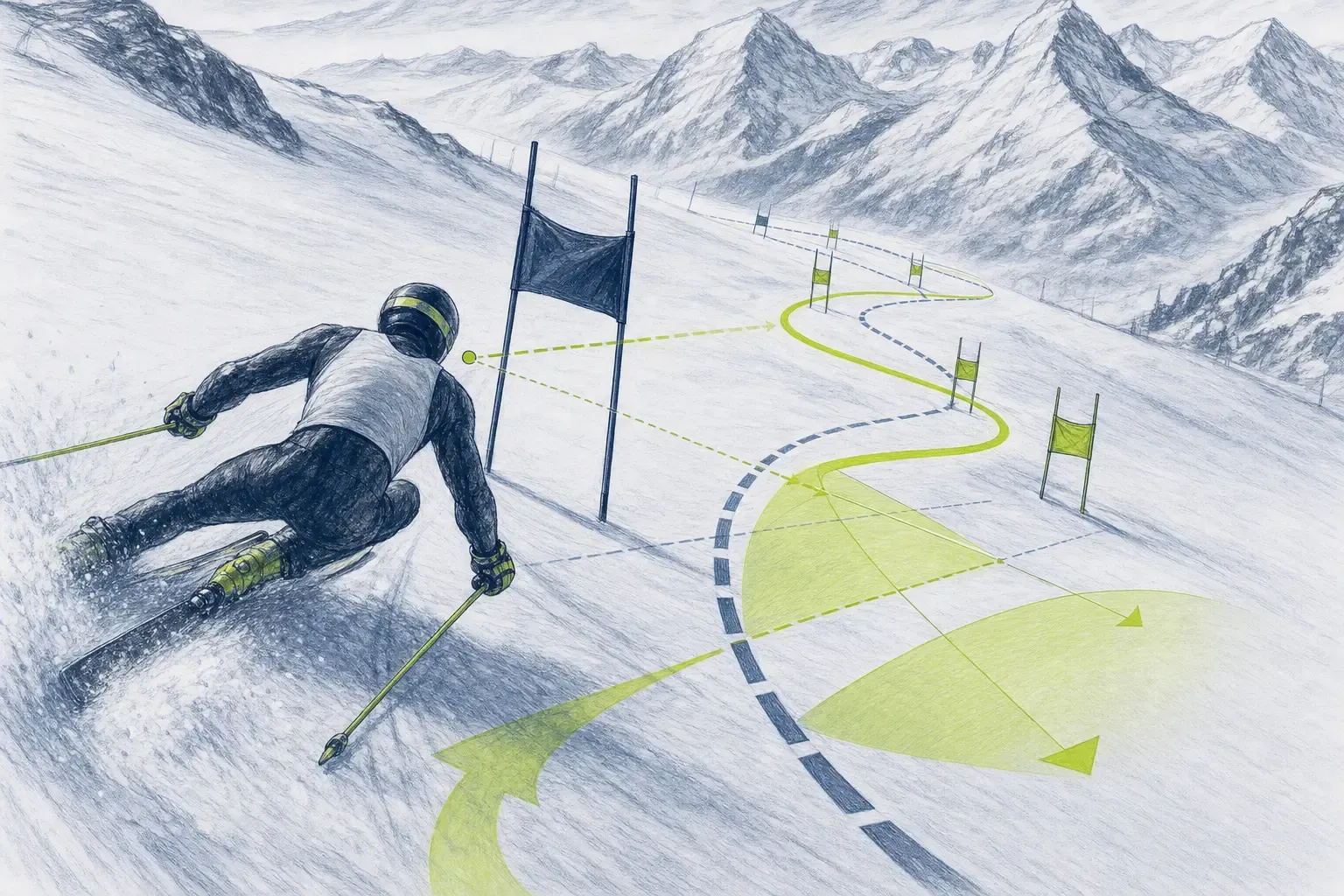
Ski tactics
Ski tactics is the choice and ongoing adjustment of line, turn shape, rhythm, and speed according to the terrain, snow, course setting, and the skier's abilities.
Open entry →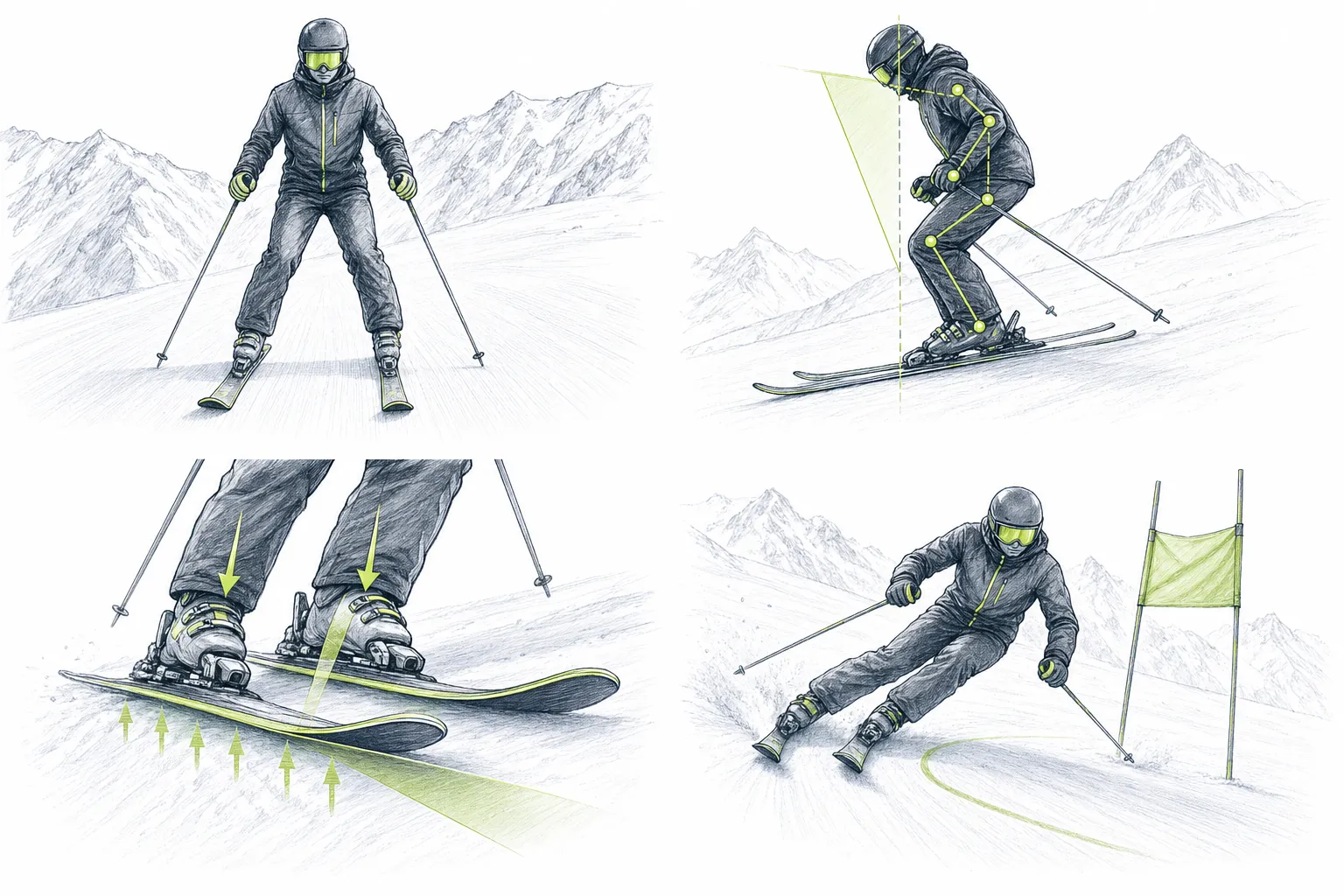
Ski stance
A ski stance is a dynamic and balanced body position above the skis that makes it possible to quickly adjust pressure, edging, and direction of travel.
Open term →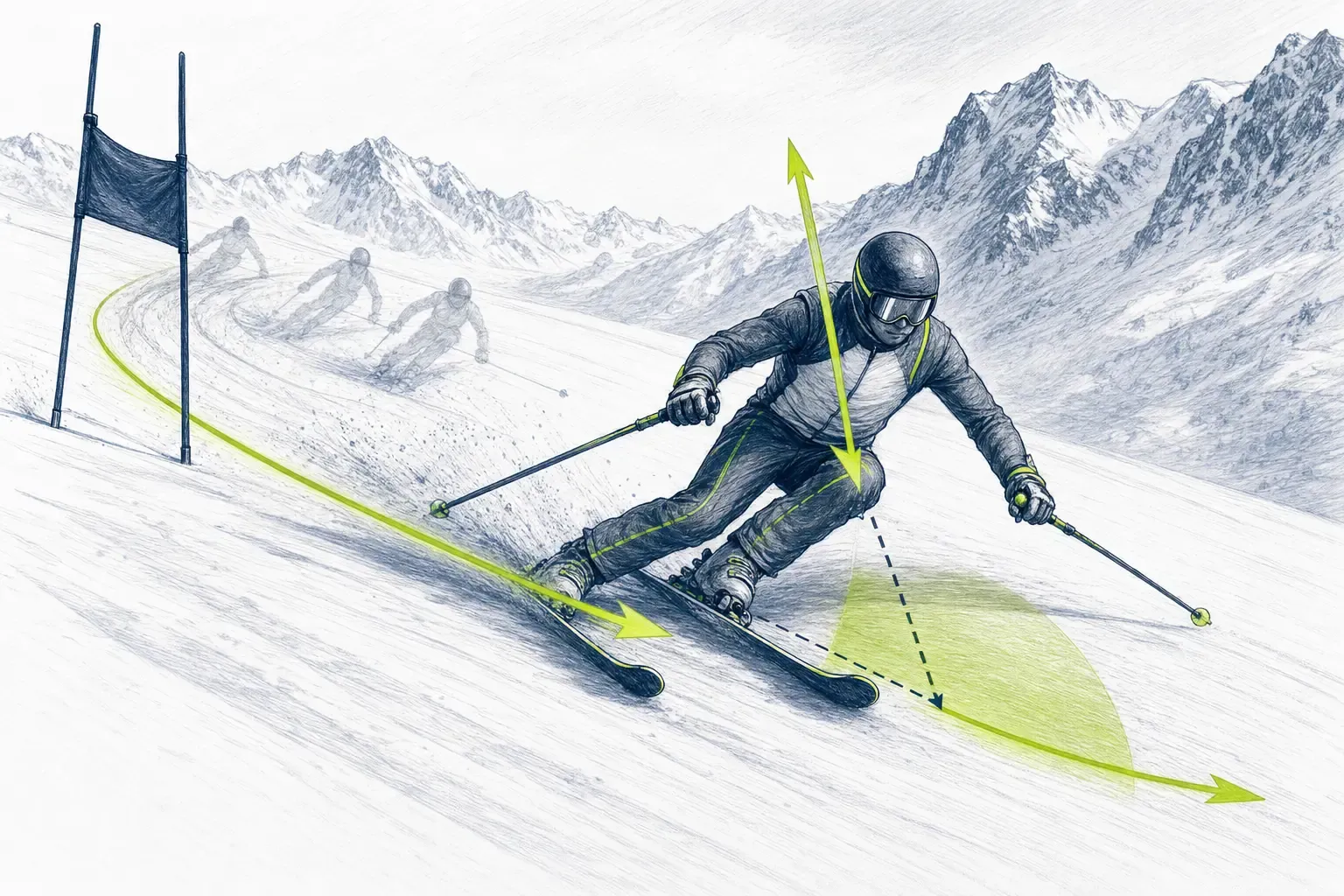
Entry into the turn
Entry into the turn is the opening part of the change of direction, in which the skier releases the old edges, shifts balance, and starts guiding the skis into a new turn.
Open term →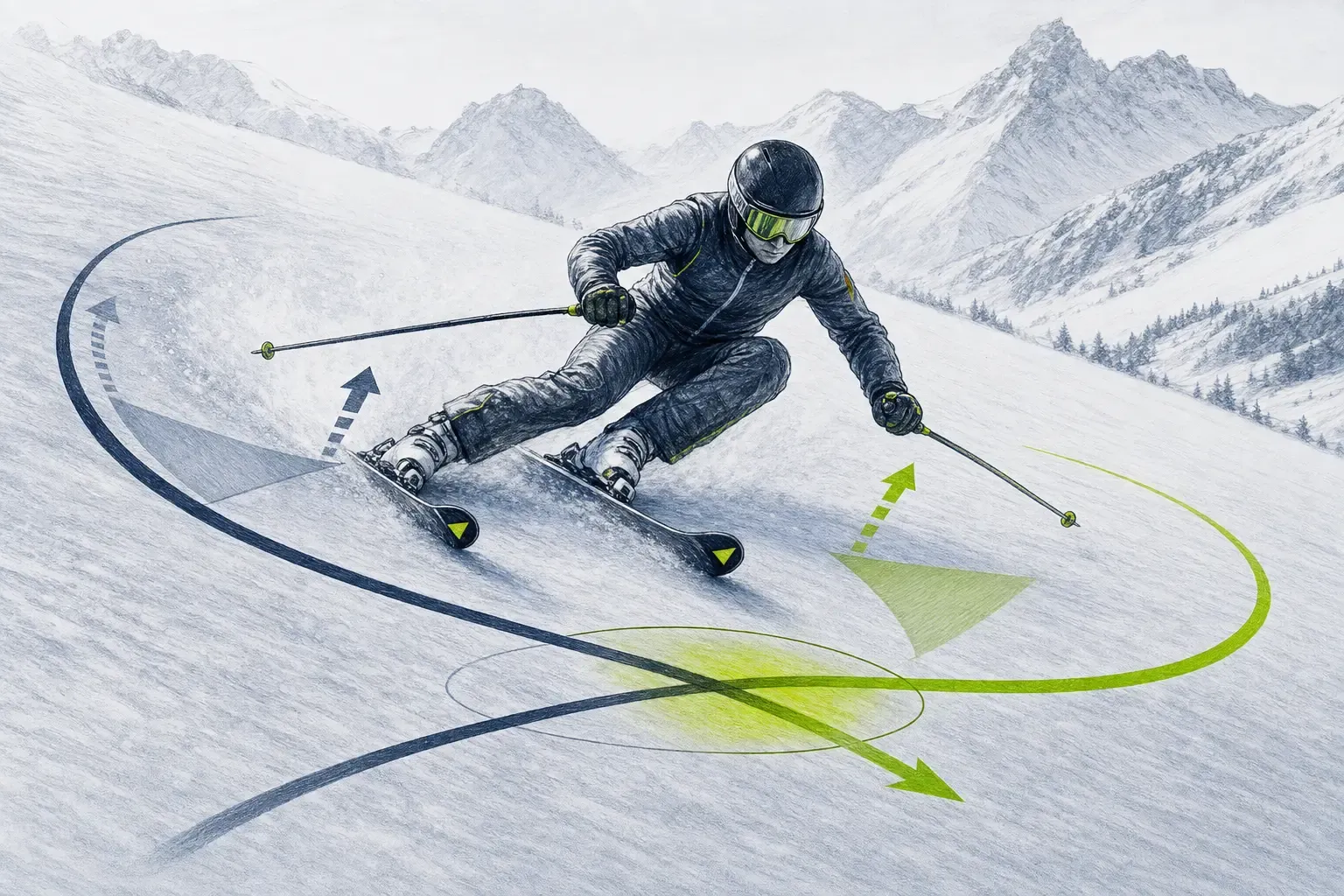
Linking turns
Linking turns is a smooth and controlled transition from one ski turn to the next without an unnecessary stop in movement.
Open term →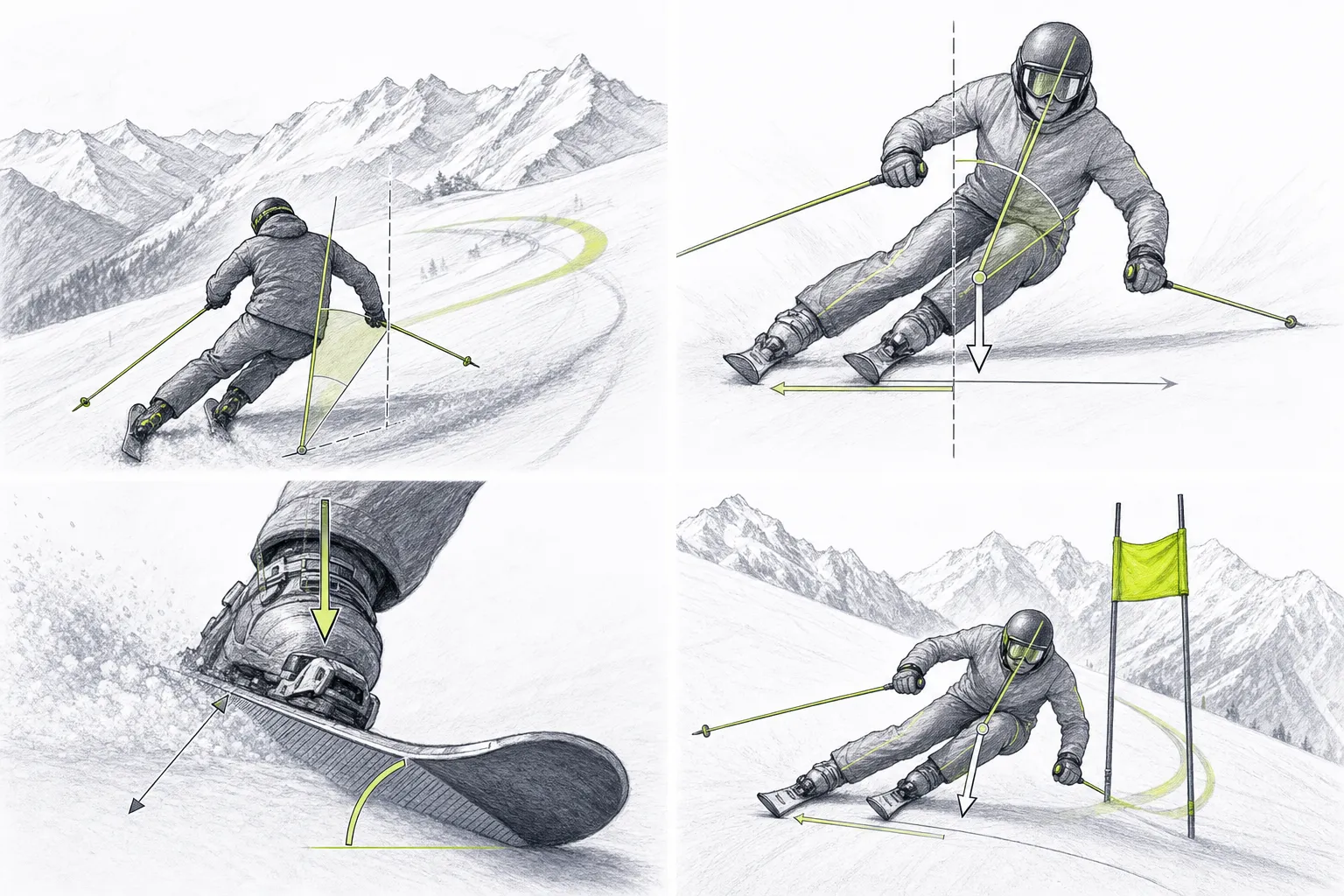
Inclination
A sideways lean of the skier and their center of mass toward the inside of the turn, which helps maintain dynamic balance and create edging on the skis.
Open term →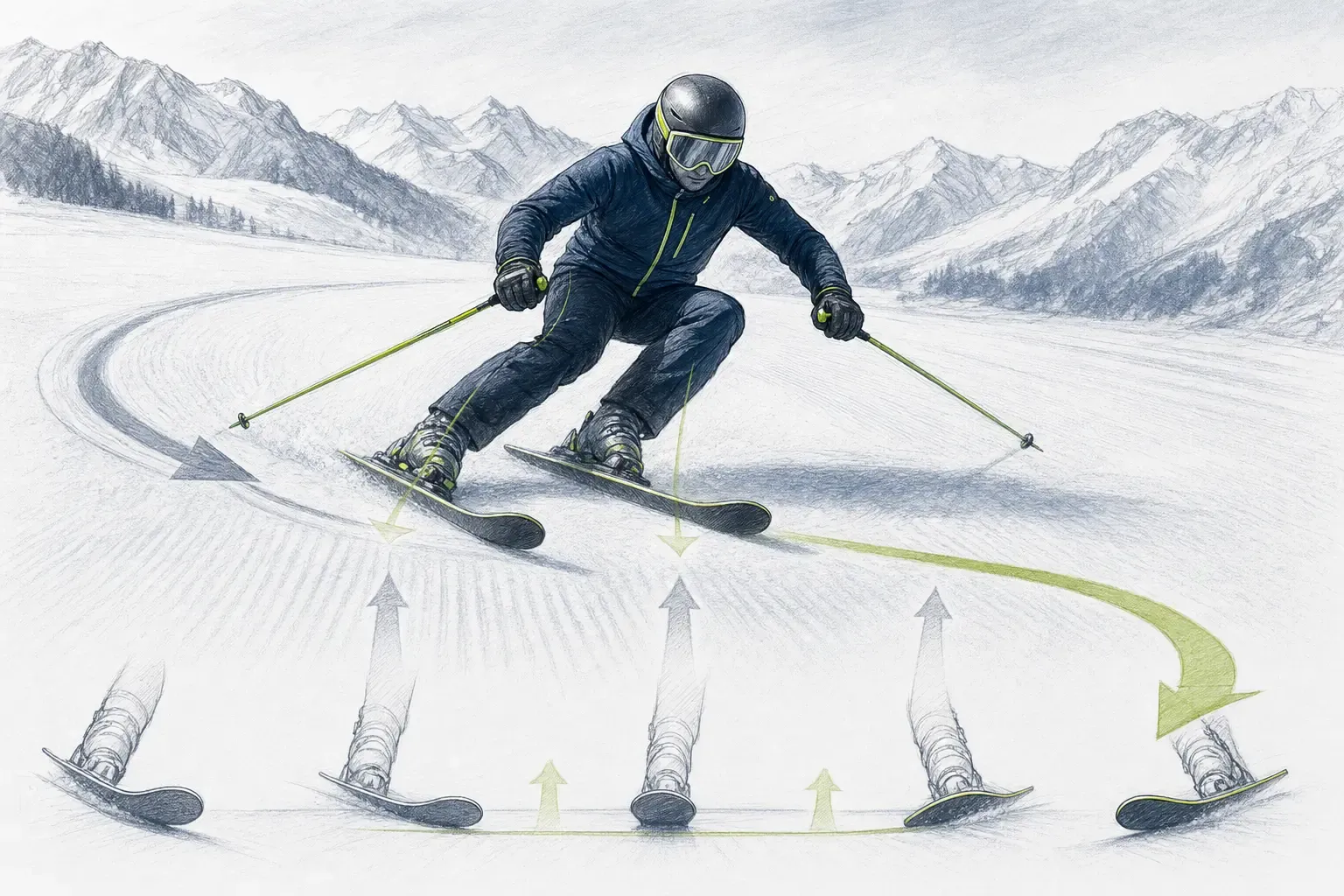
Unweighting the skis
A short-term reduction in pressure on the skis that makes it easier to release the edges, transition between turns, change direction, or adapt to the terrain.
Open term →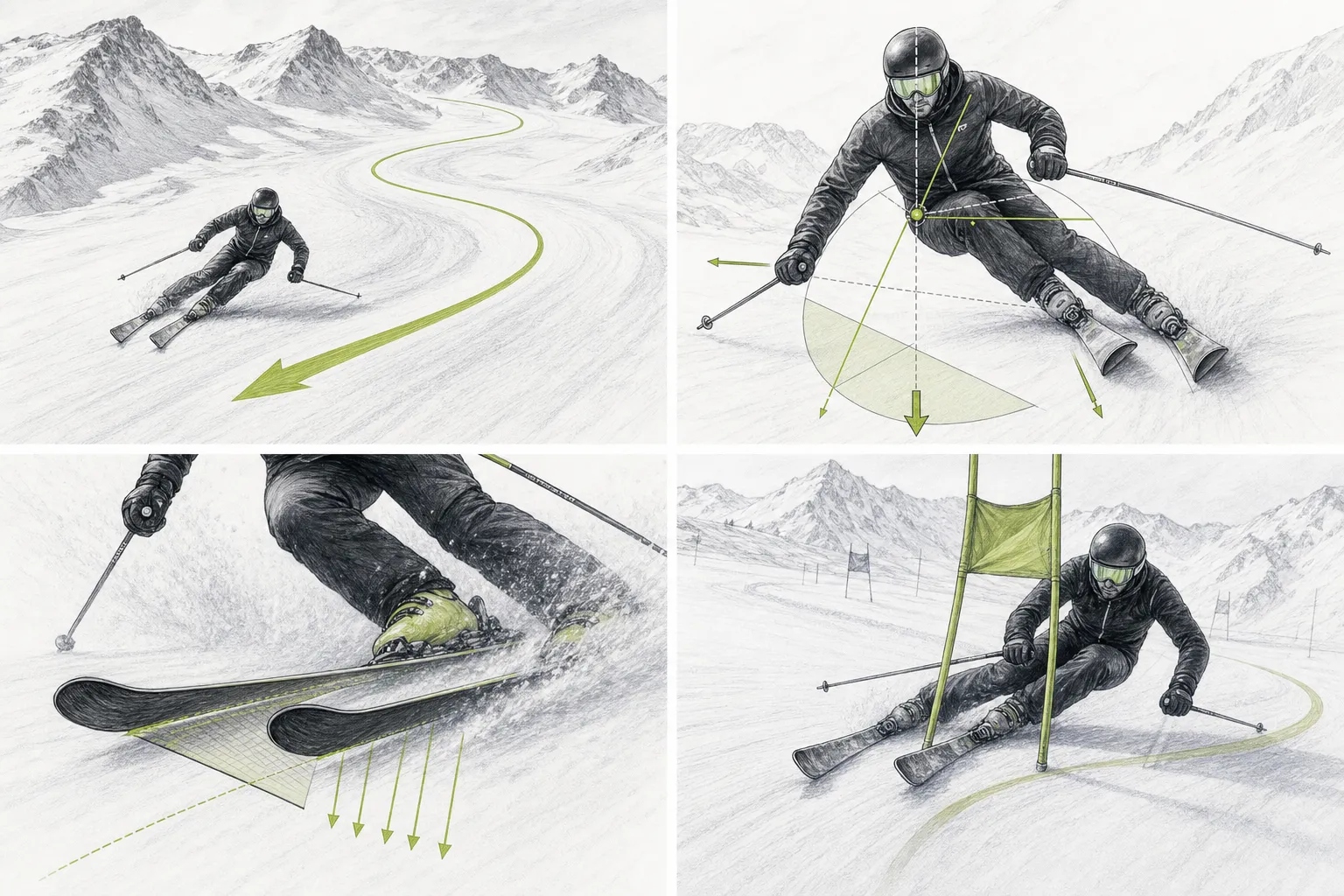
Arc
An arc is a controlled change of direction in which the skier guides the skis by working their edging, direction, and pressure.
Open term →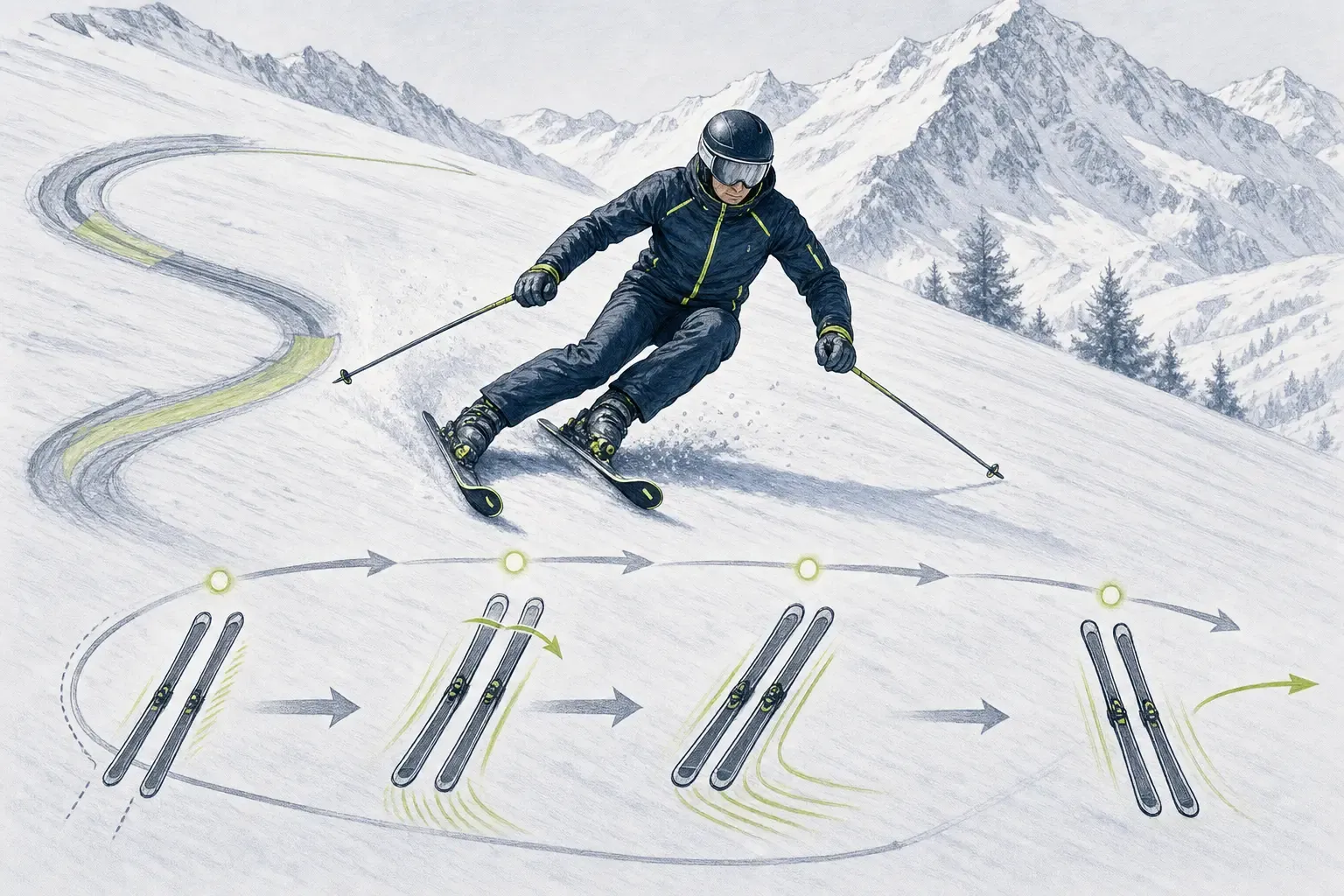
Parallel arc
A parallel arc is a ski turn in which the skis change direction together and keep an approximately parallel position while moving.
Open term →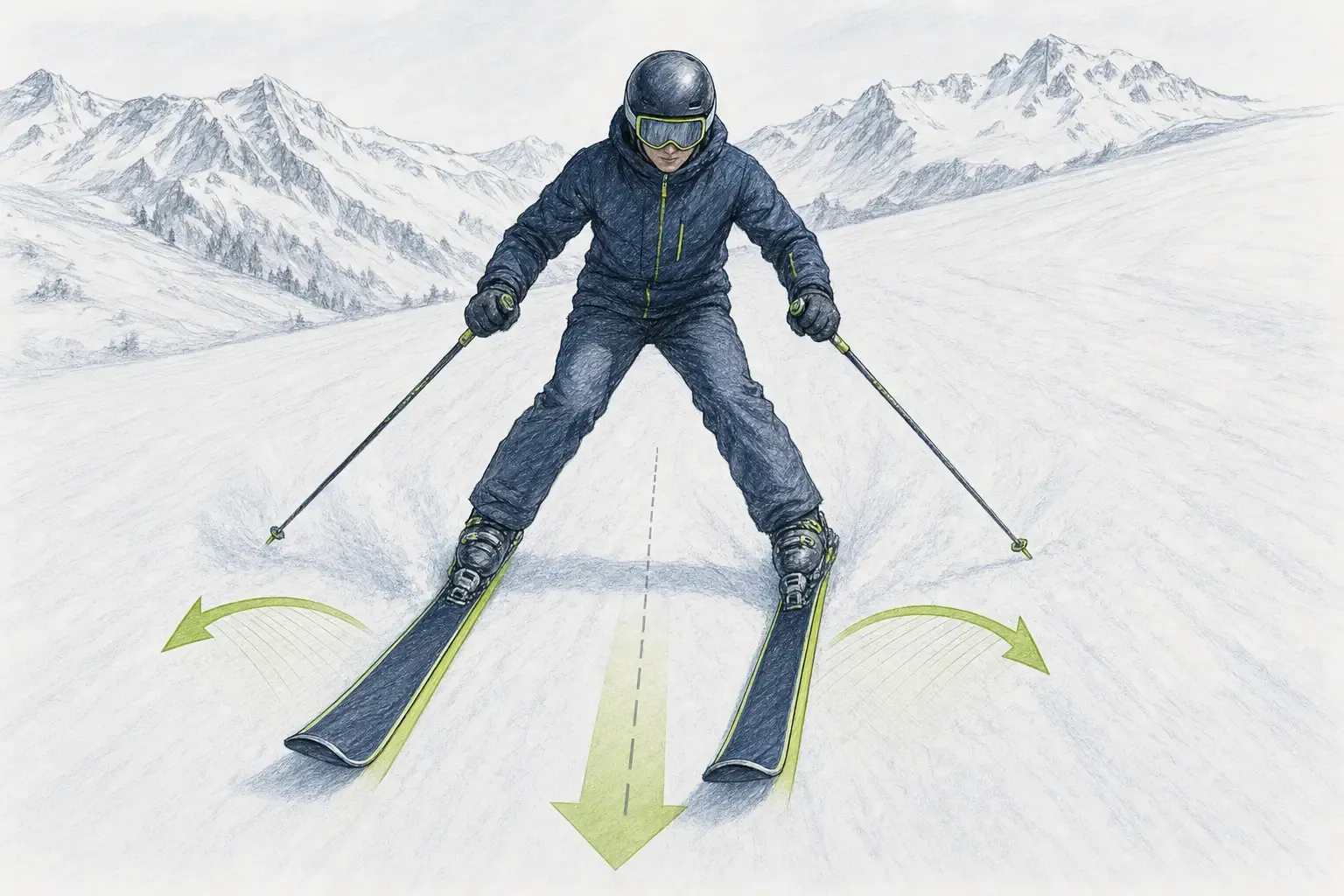
Wedge
A wedge is the basic ski position with the tips closer together and the tails farther apart. It allows a beginner to control speed, stop, and start changing direction.
Open term →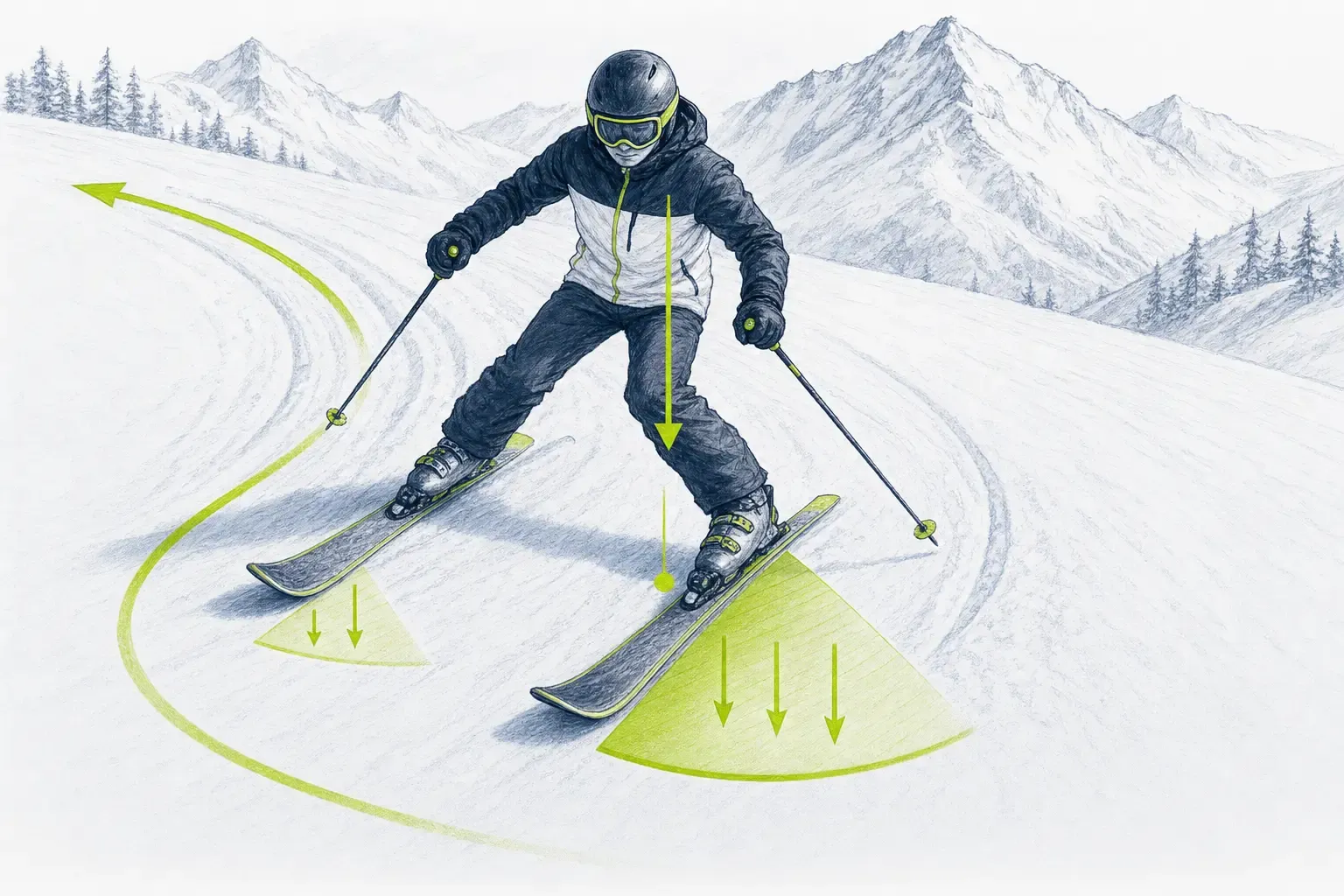
Wedge turn
A wedge turn is a basic controlled change of direction in which the skier steers the skis in a wedge position and regulates speed mainly through the shape of the turn.
Open term →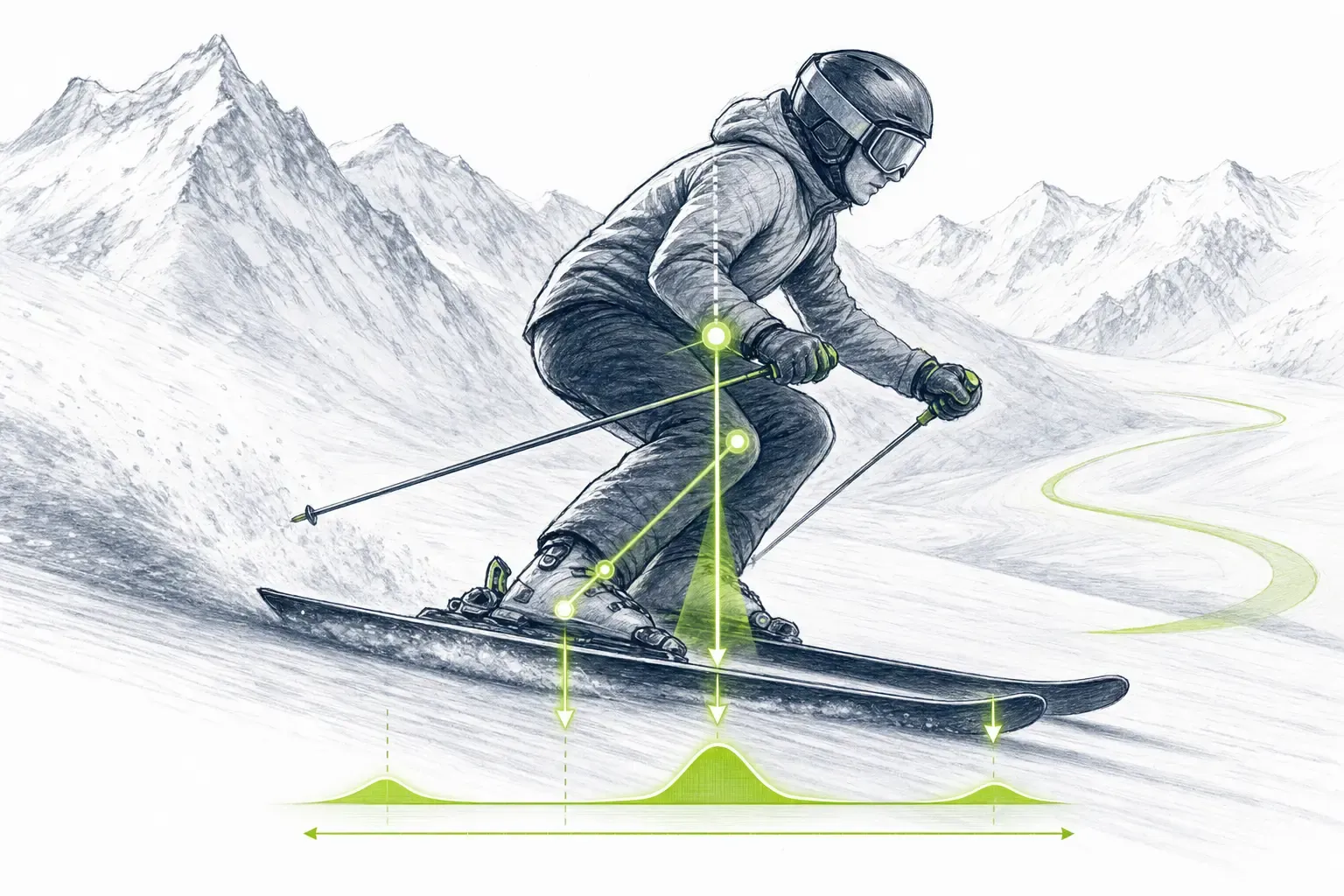
Fore-aft balance
The skier’s ability to continuously adjust body position and pressure along the skis so they stay balanced over the functional part of the feet and can guide the skis through every phase of the turn.
Open entry →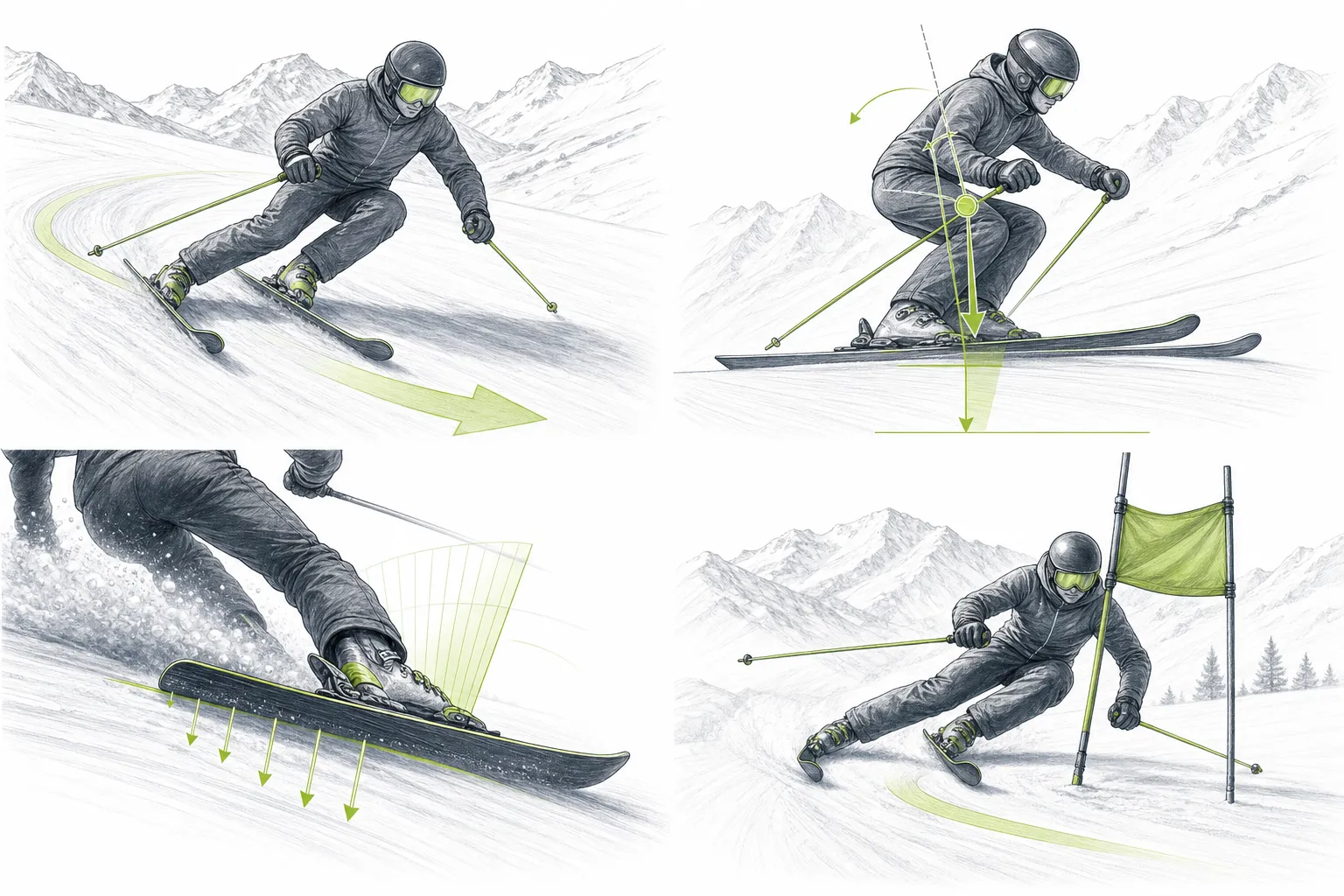
Weight transfer
A smooth change of load between the skis, especially from the old outside ski to the new outside ski when moving from one turn to the next.
Open entry →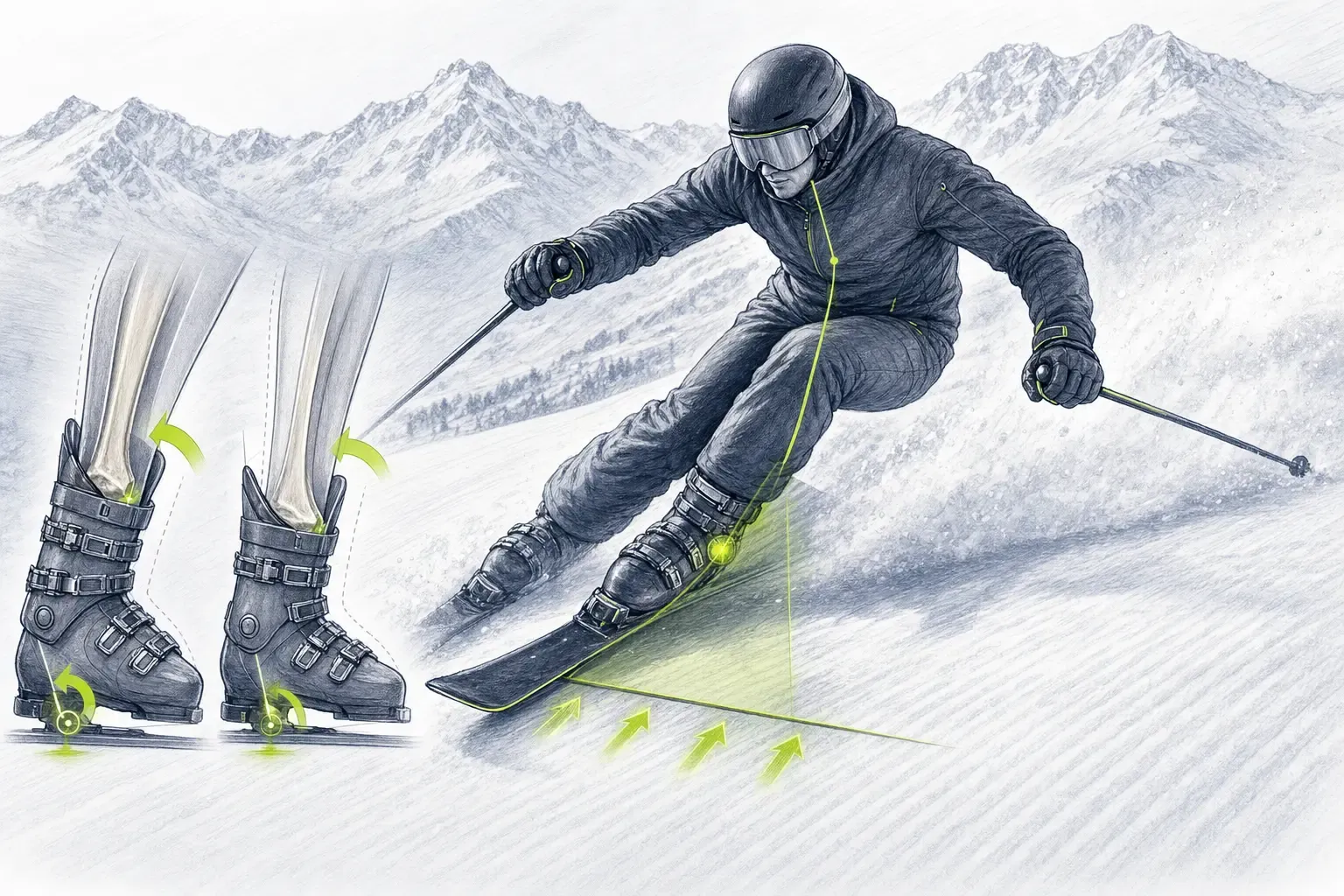
Ankle movement
Fine, coordinated movement of the foot and ankle in the ski boot that helps regulate fore-aft balance, support against the boot shell, edging, and the transfer of forces into the ski.
Open entry →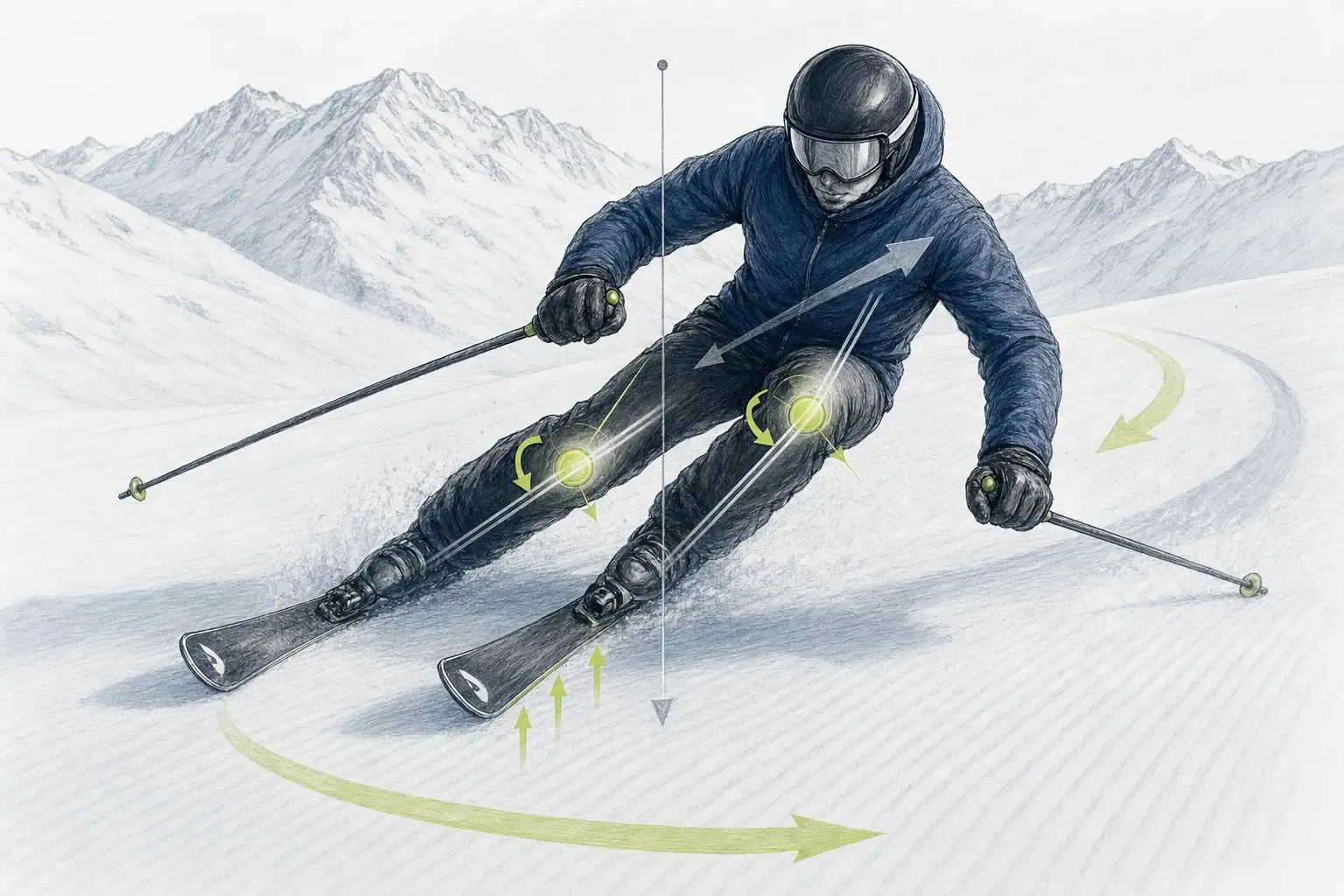
Knee movement
Knee movement is the coordinated bending, straightening, and sideways guiding of the lower limbs, which the skier uses together with the ankles and hips to regulate balance, edging, and pressure into the skis.
Open entry →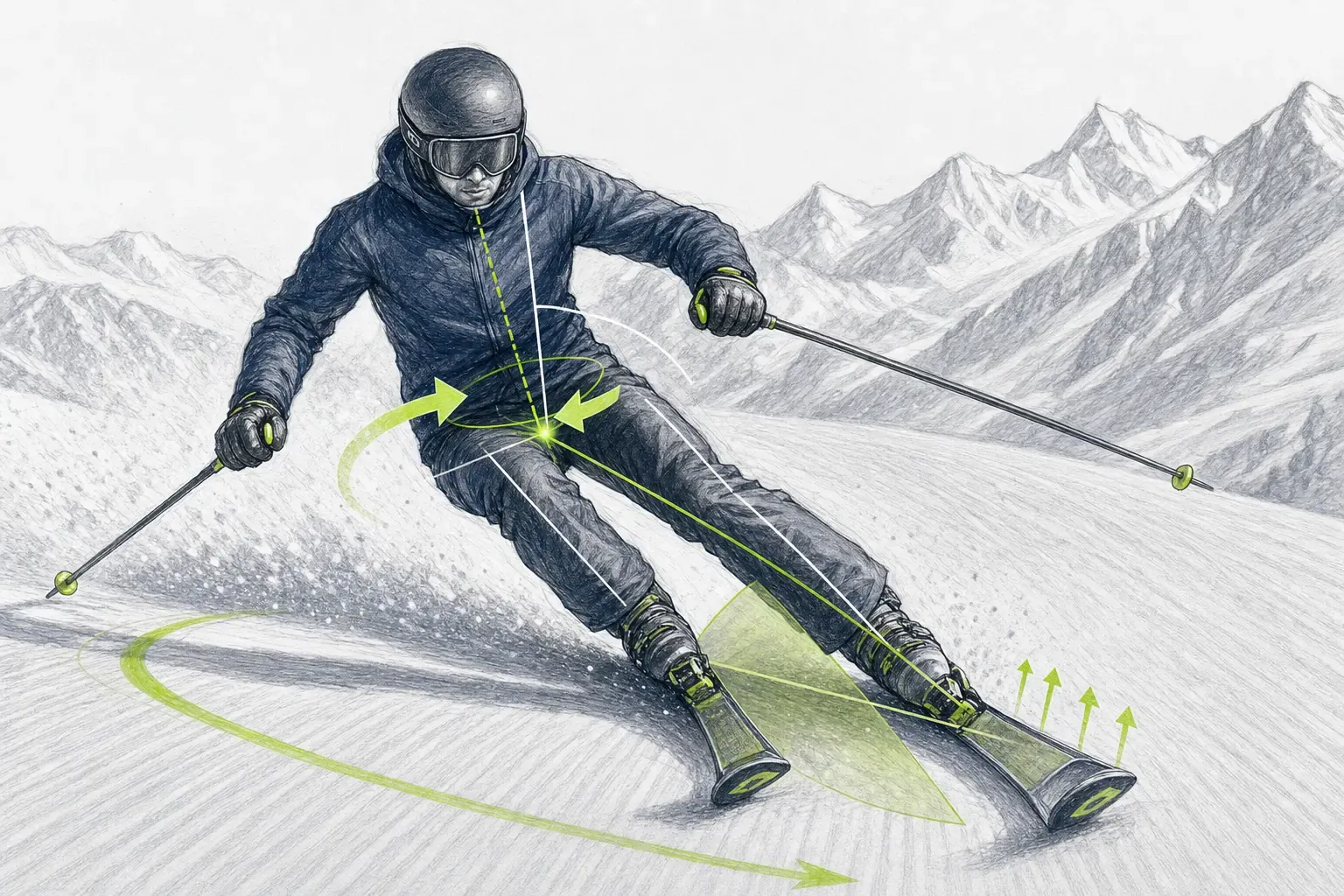
Hip movement
Hip movement is the coordinated movement of the pelvis and hip joints relative to the legs, skis, and torso, helping control balance, edging, and loading of the skis.
Open entry →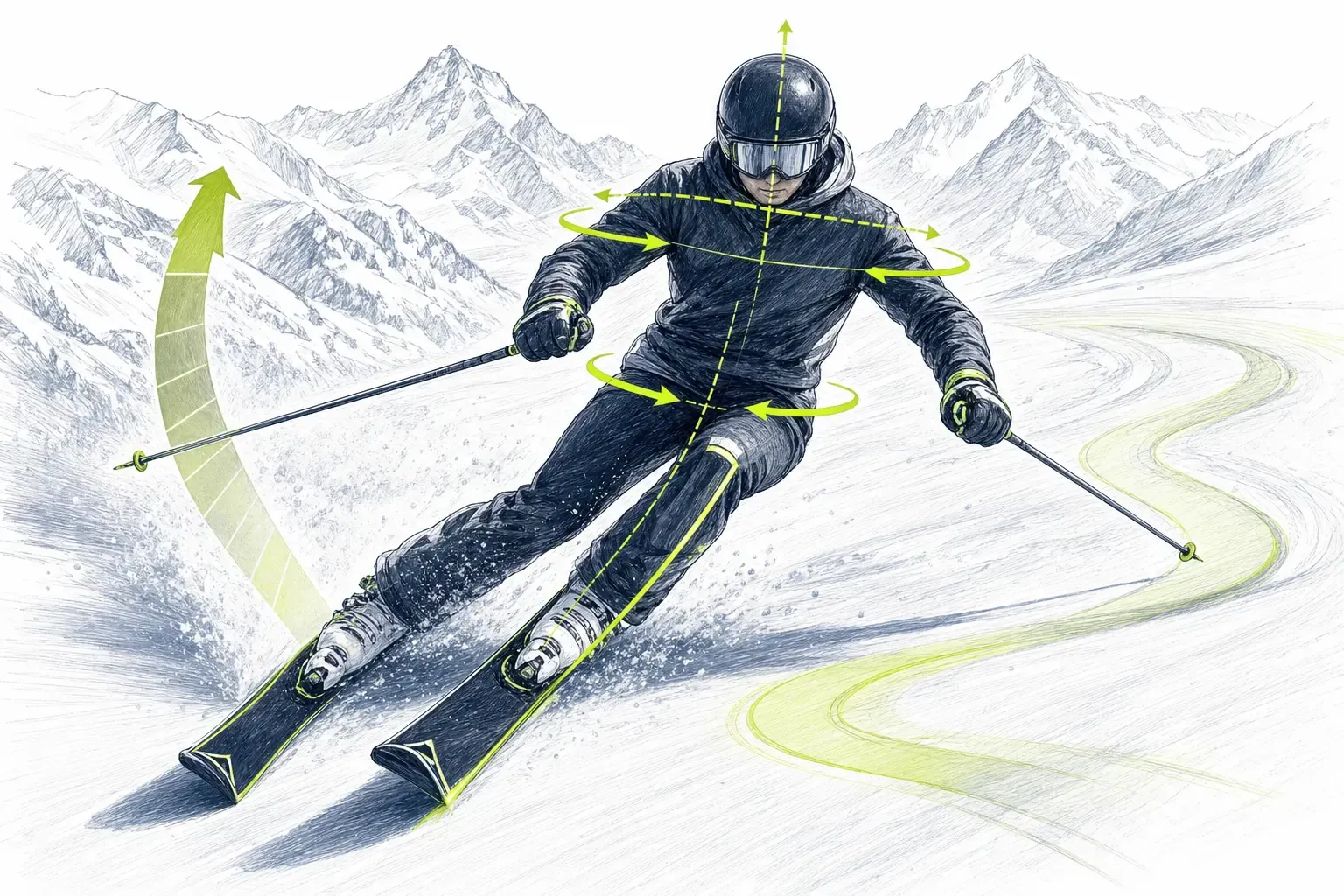
Upper-body movement
Coordinated and suitably stable work of the torso, head, and arms that supports balance, leg movement, turning the arc, and using poles.
Open entry →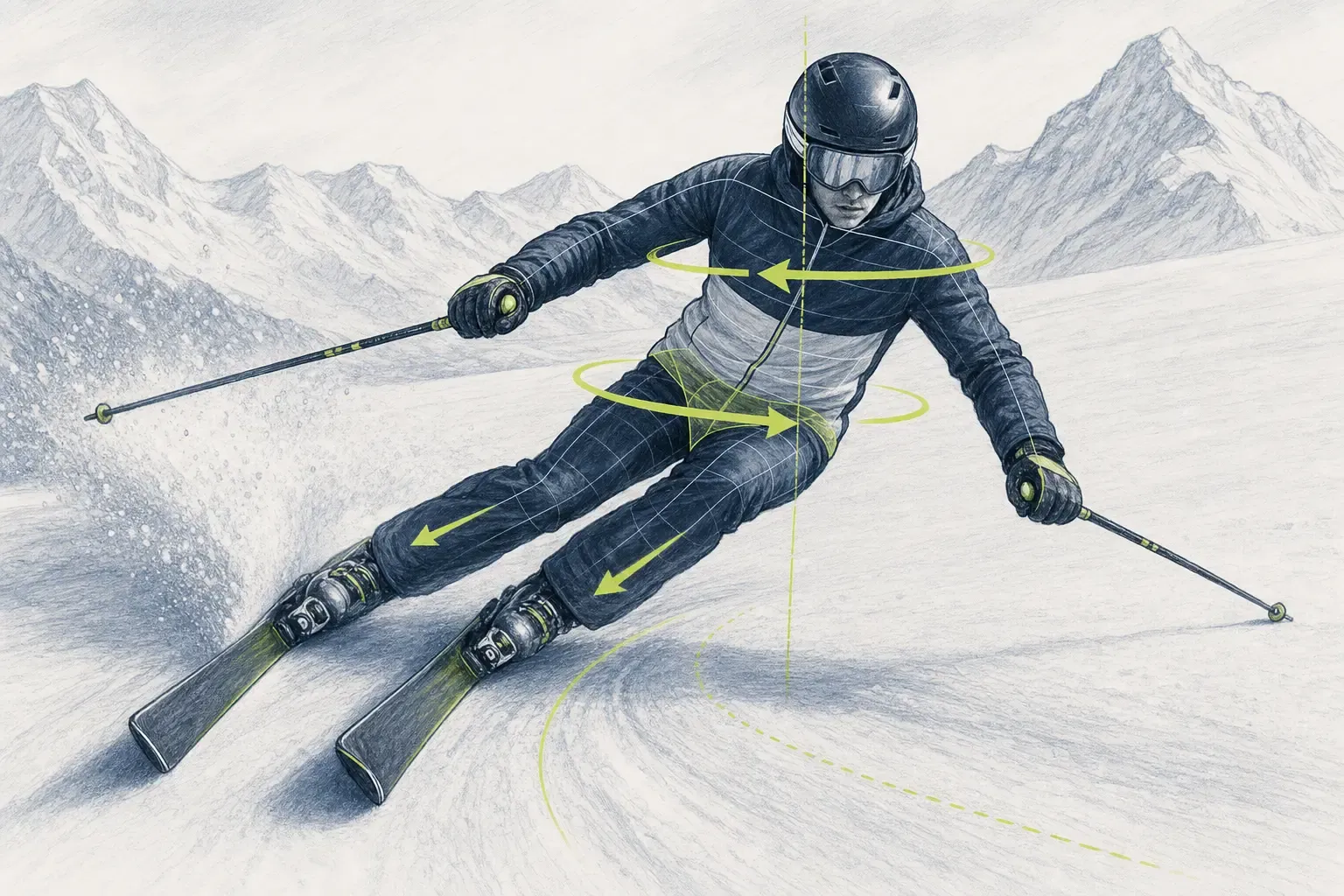
Counter-rotation
Relative rotation of the upper and lower body around the vertical axis in opposite directions, which helps keep the torso stable while the skis and legs change direction.
Open entry →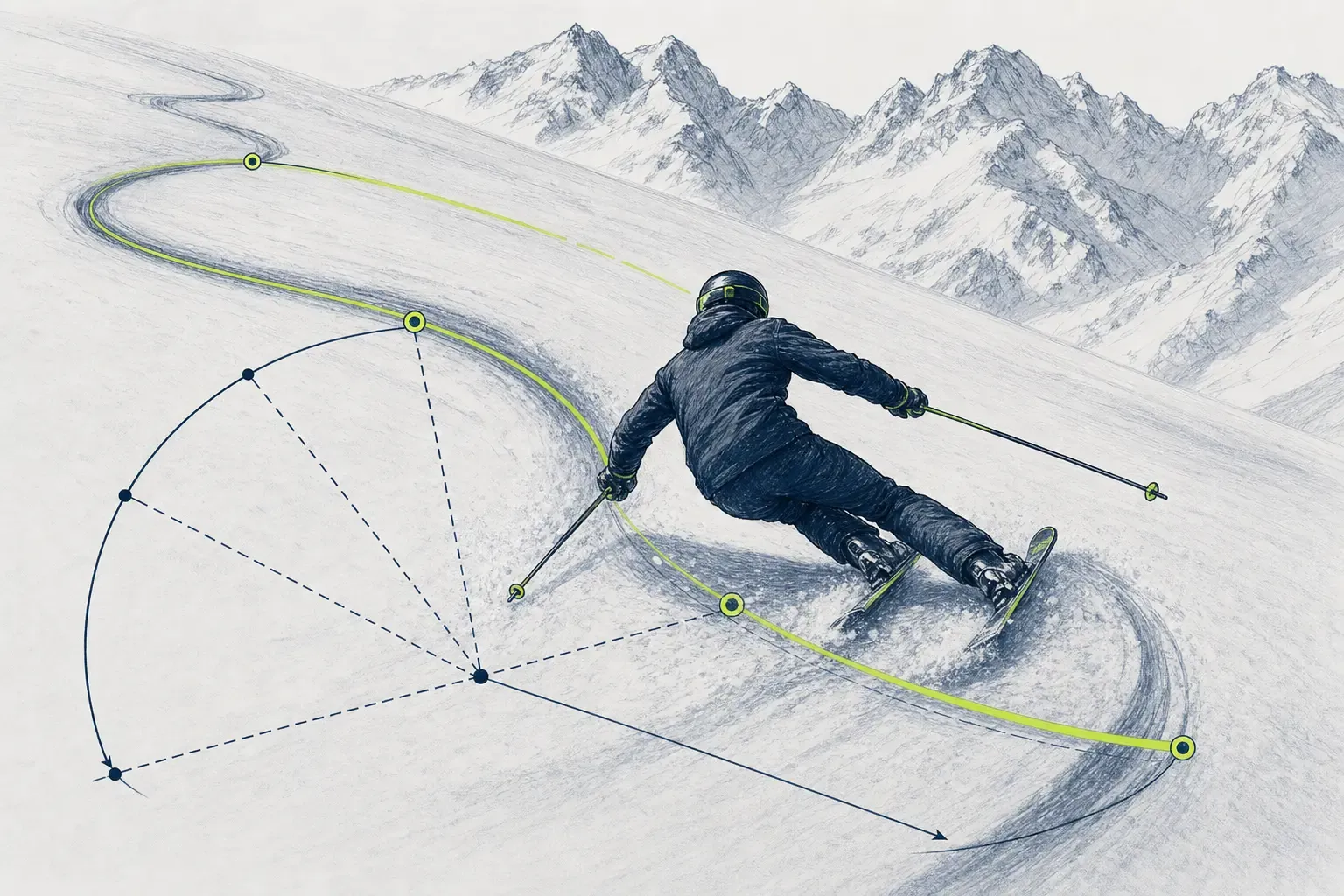
Turn radius
Turn radius expresses the degree of curvature of the skier’s or ski’s path; it must not be confused with the ski’s sidecut construction radius.
Open entry →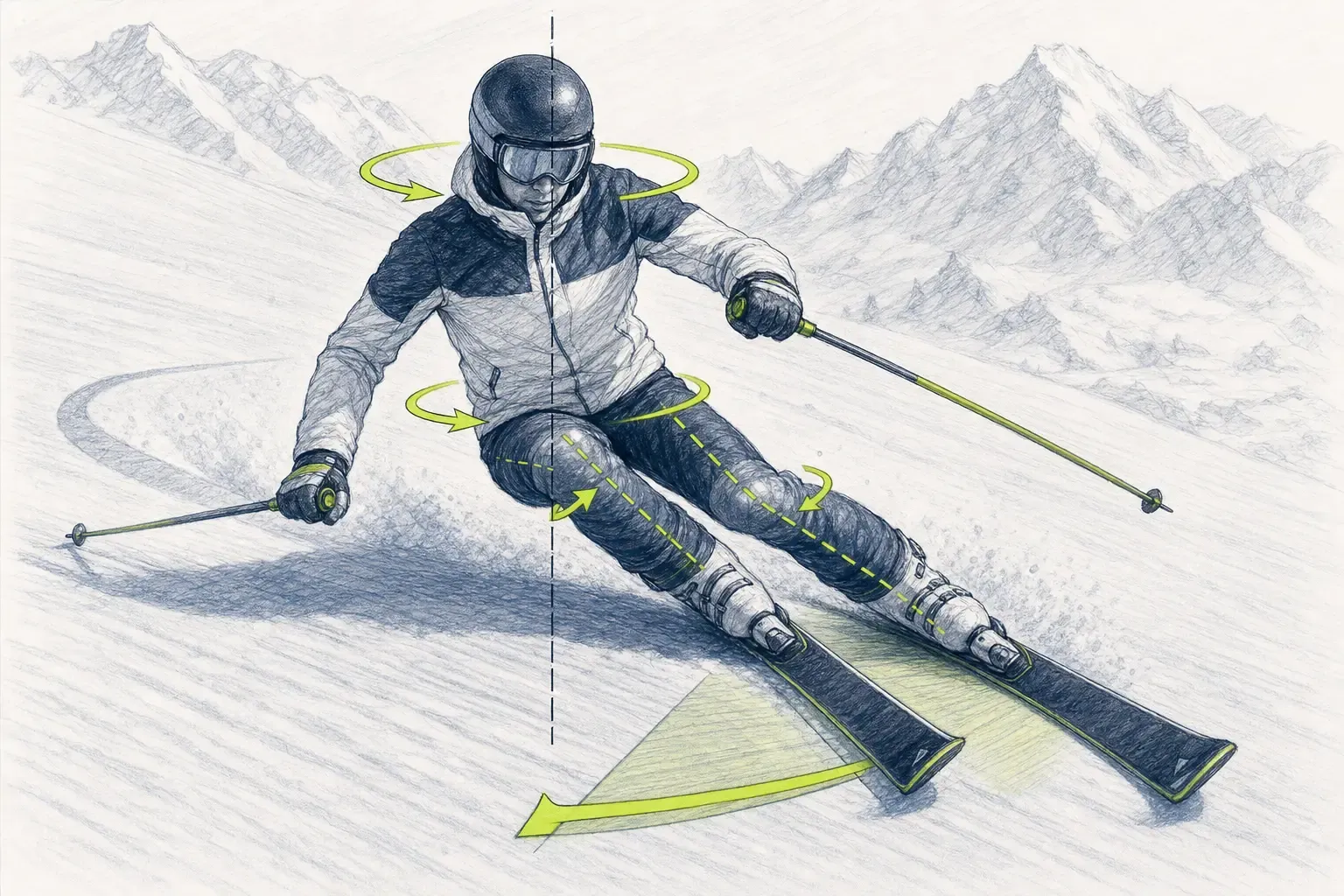
Rotation
Rotation is the turning movement of the legs, skis, or other parts of the body around the vertical axis. When used correctly, it helps change the direction of the skis; excessive torso rotation is often a common technical mistake.
Open entry →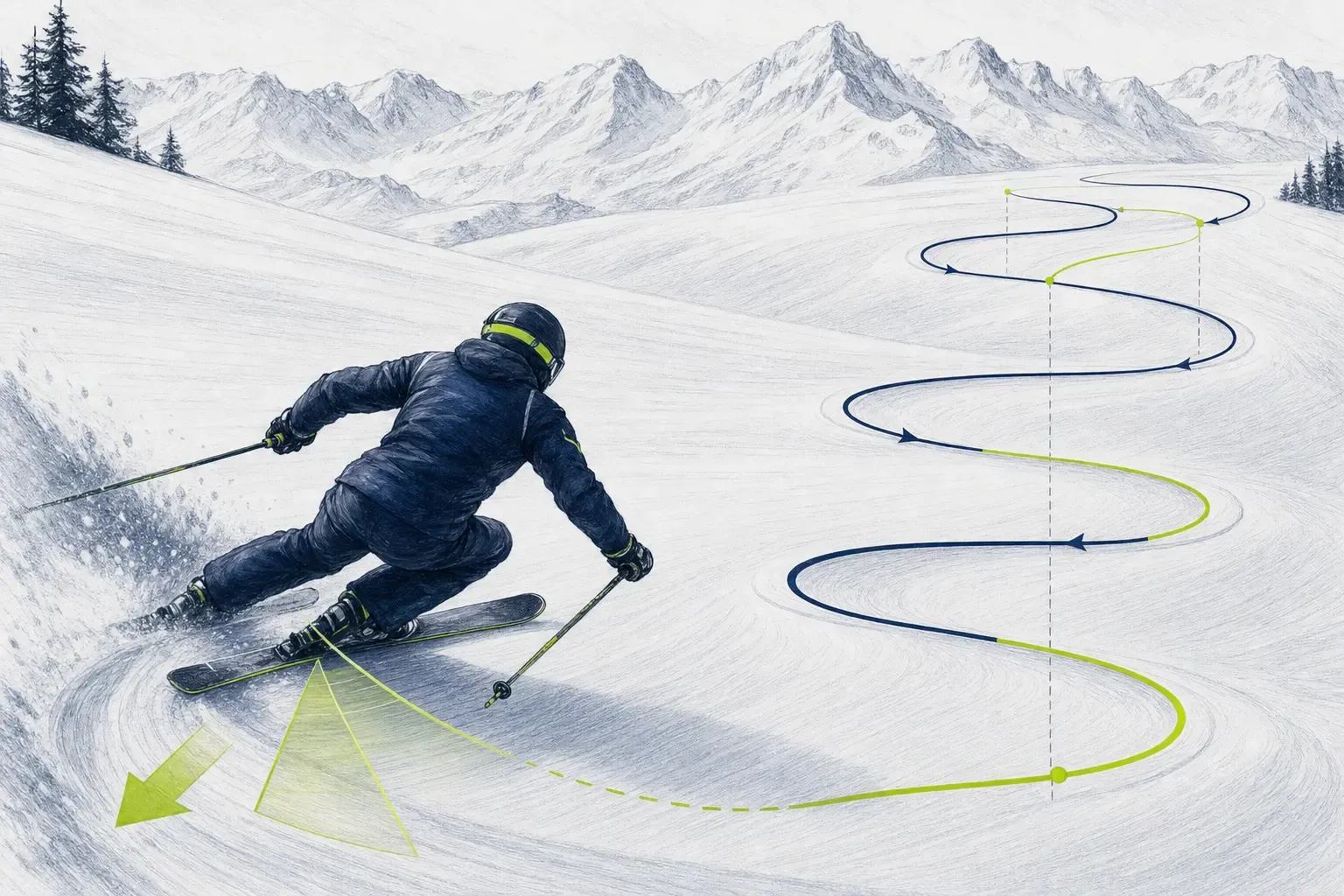
Turn rhythm
Turn rhythm is the temporal and spatial arrangement of linked turns, which the skier adapts to speed, terrain, and the task.
Open entry →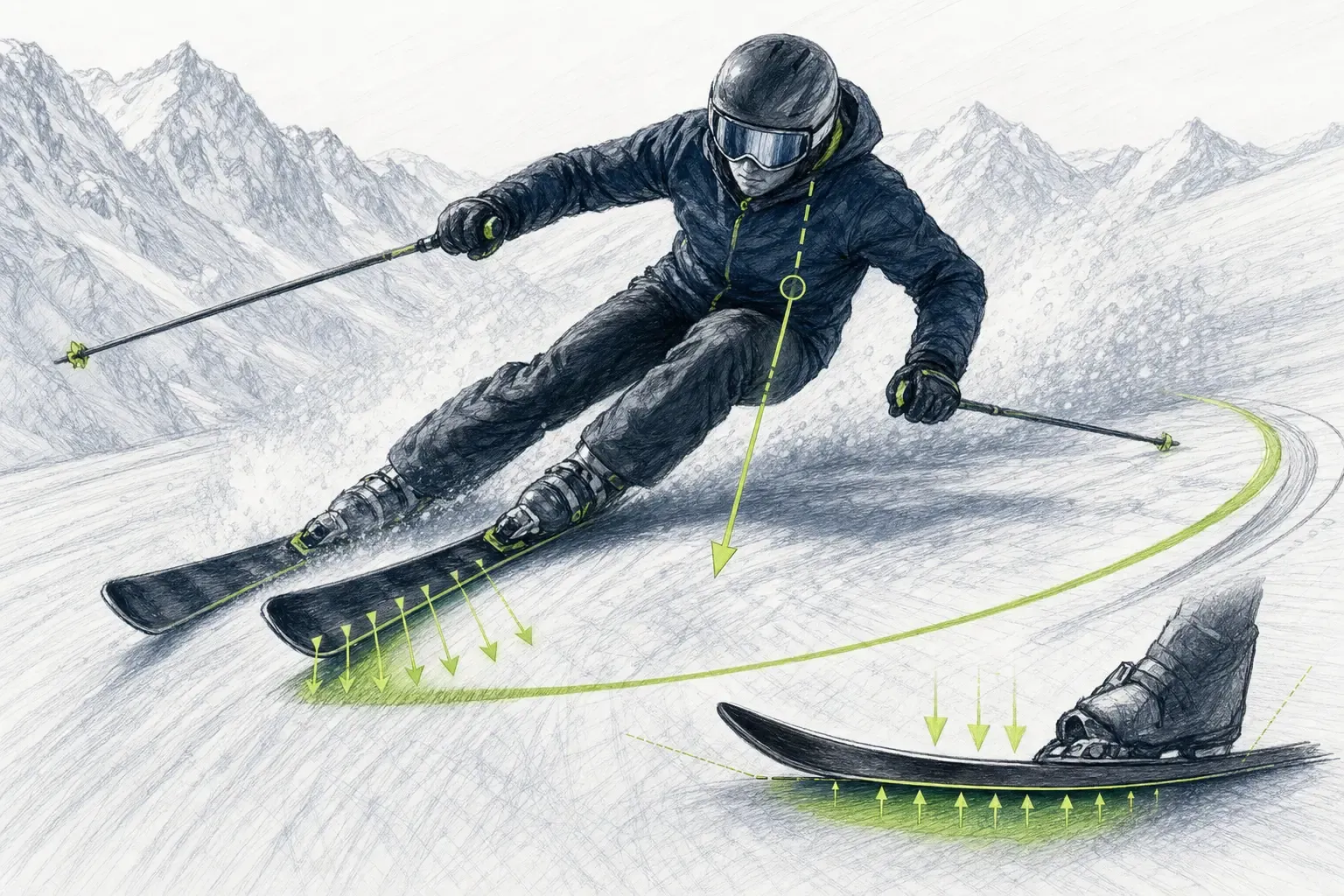
Pressure on the ski
Pressure on the ski is a coaching term for controlling the amount, direction, timing, and distribution of forces between the skier, the skis, and the snow.
Open entry →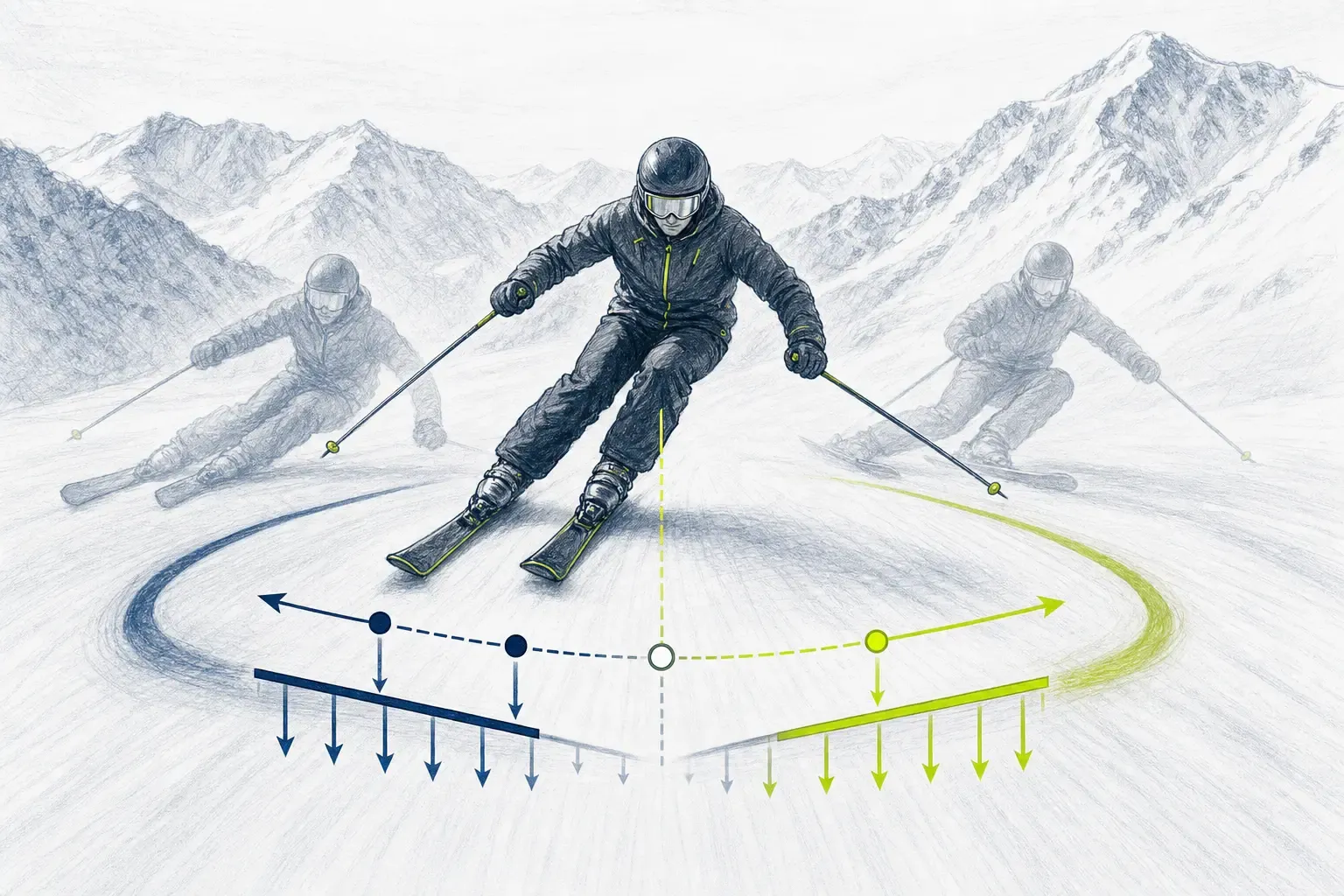
Transition
Transition is the passage between two linked turns, during which the skier releases the old edges, changes edge angle, and creates support for the new turn.
Open entry →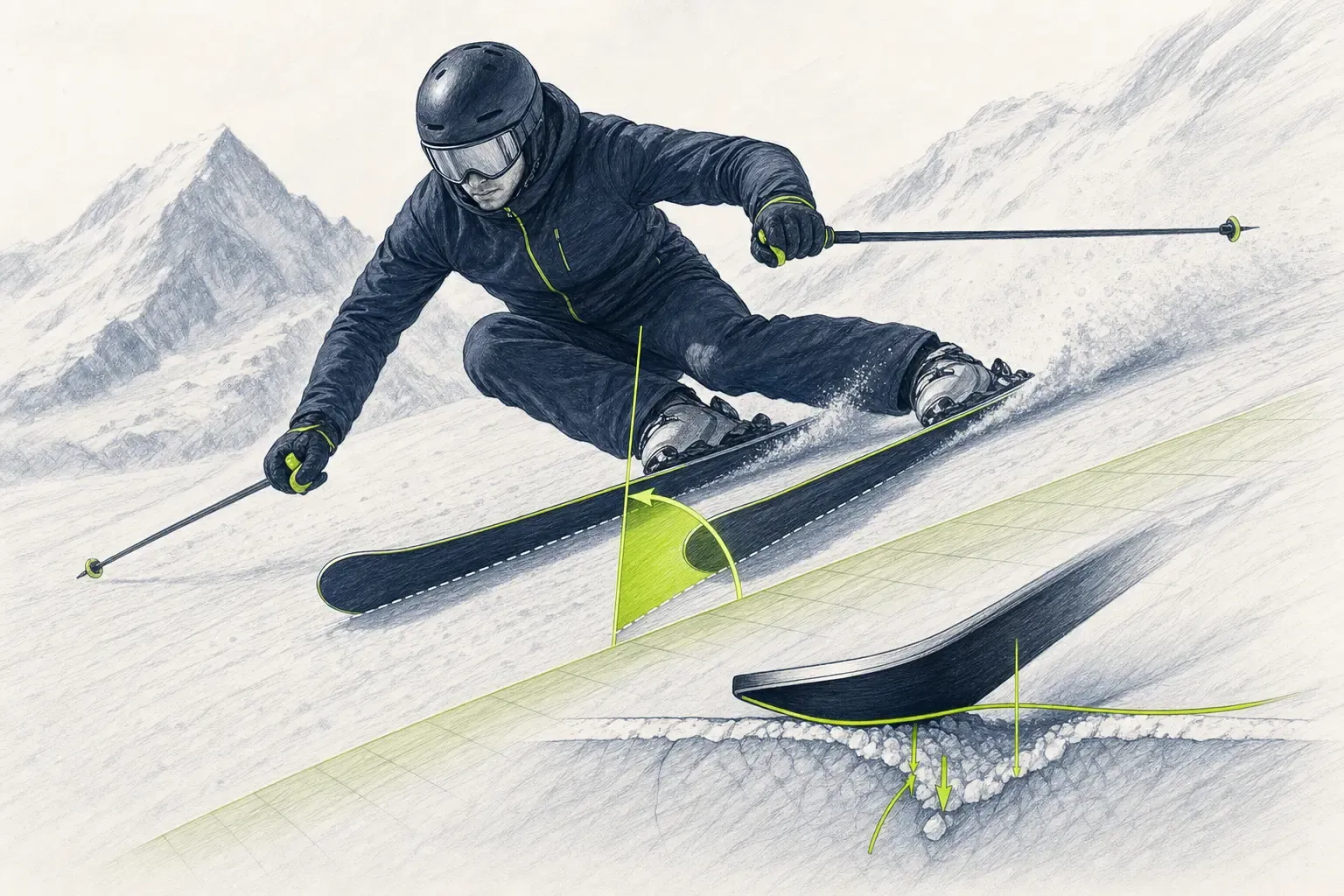
Edge angle
Edge angle is the angle between the base of the ski and the local snow surface. It determines how strongly the ski is tipped onto its edge, but by itself it does not guarantee a clean carved turn or solid grip.
Open entry →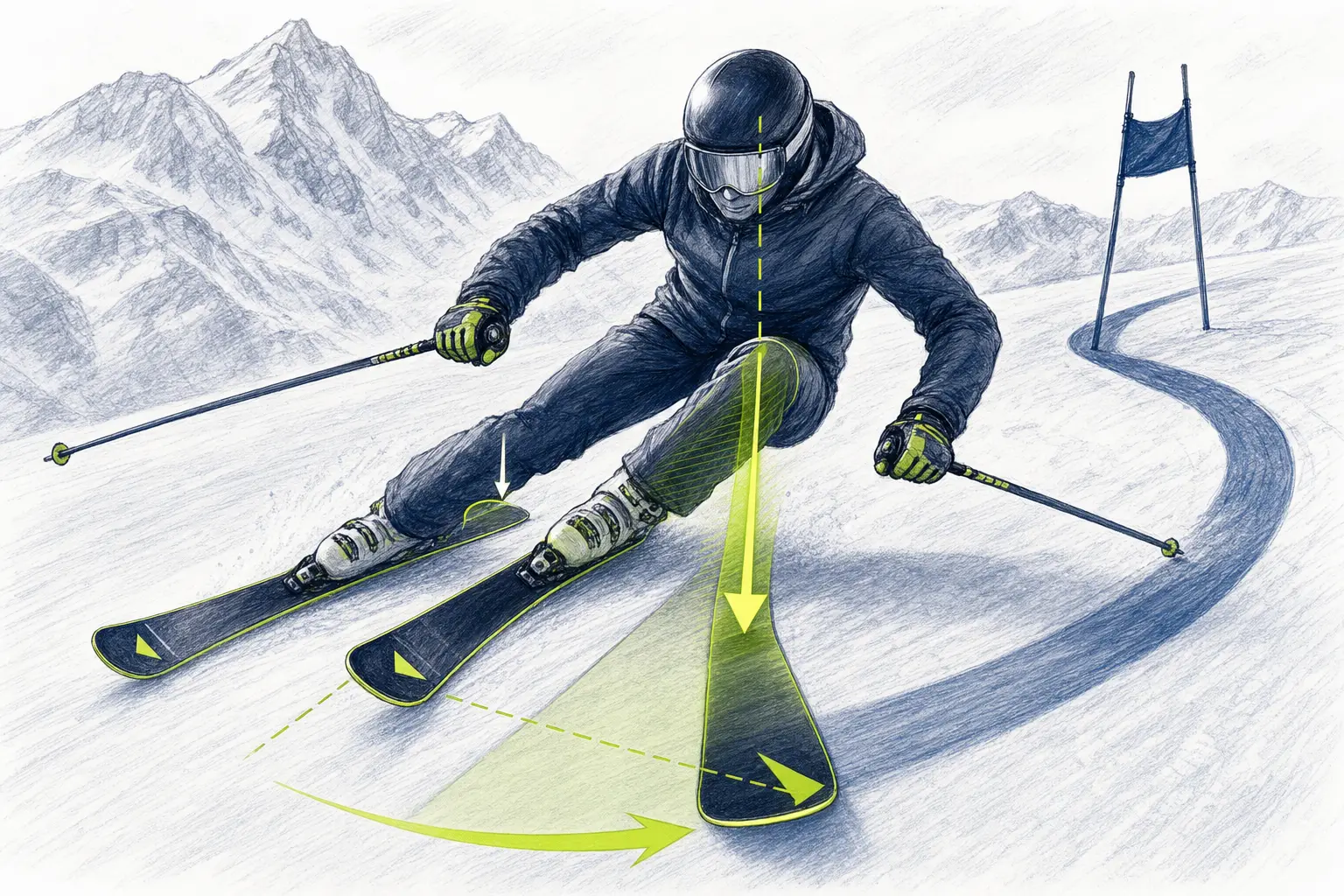
Inside ski
The ski closer to the center of the turn being made; in a left turn it is the left ski, in a right turn the right.
Open entry →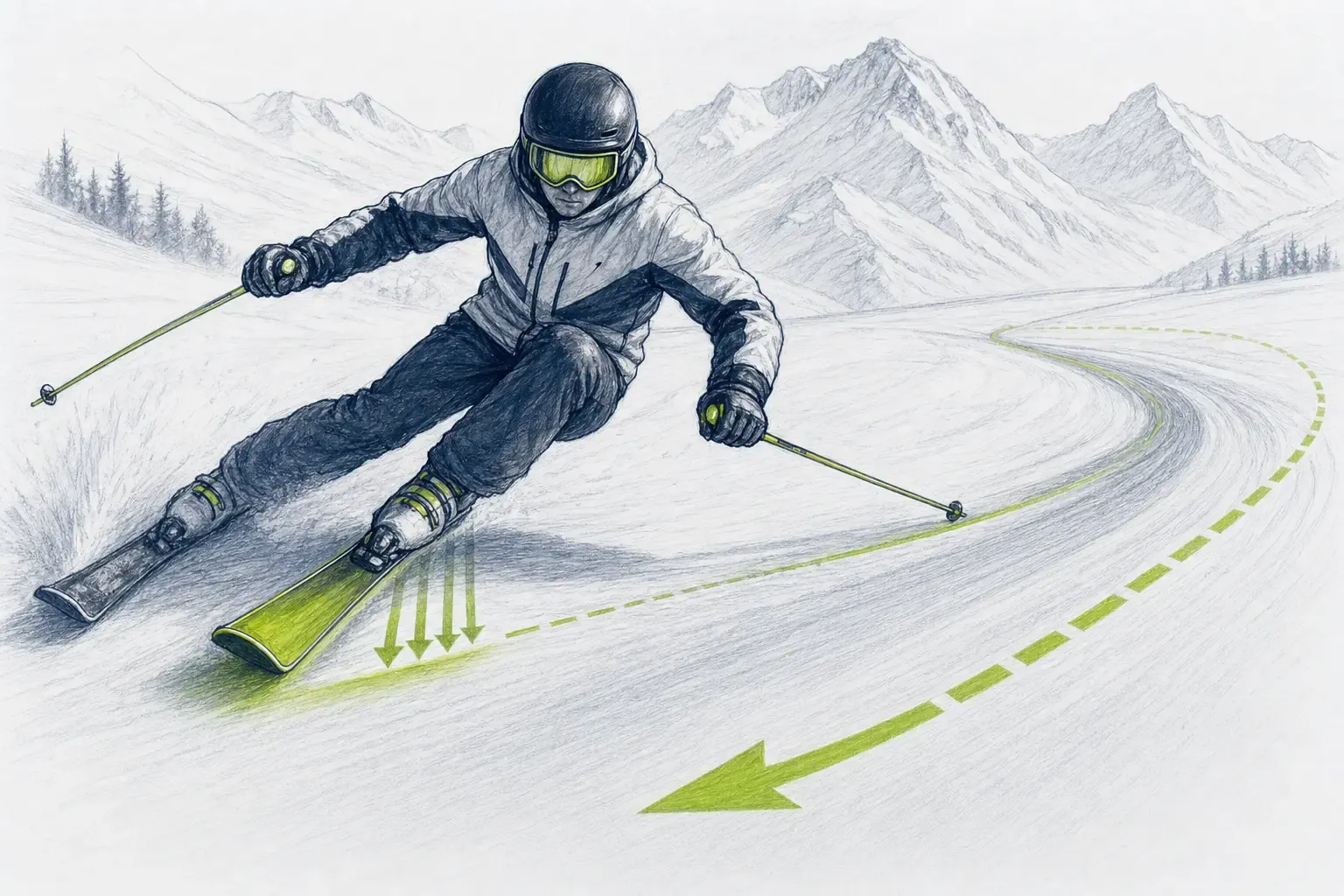
Outside ski
The outside ski is the ski farther from the center of the turn being made. In most turns it provides the skier’s main support, but its load changes smoothly while skiing.
Open entry →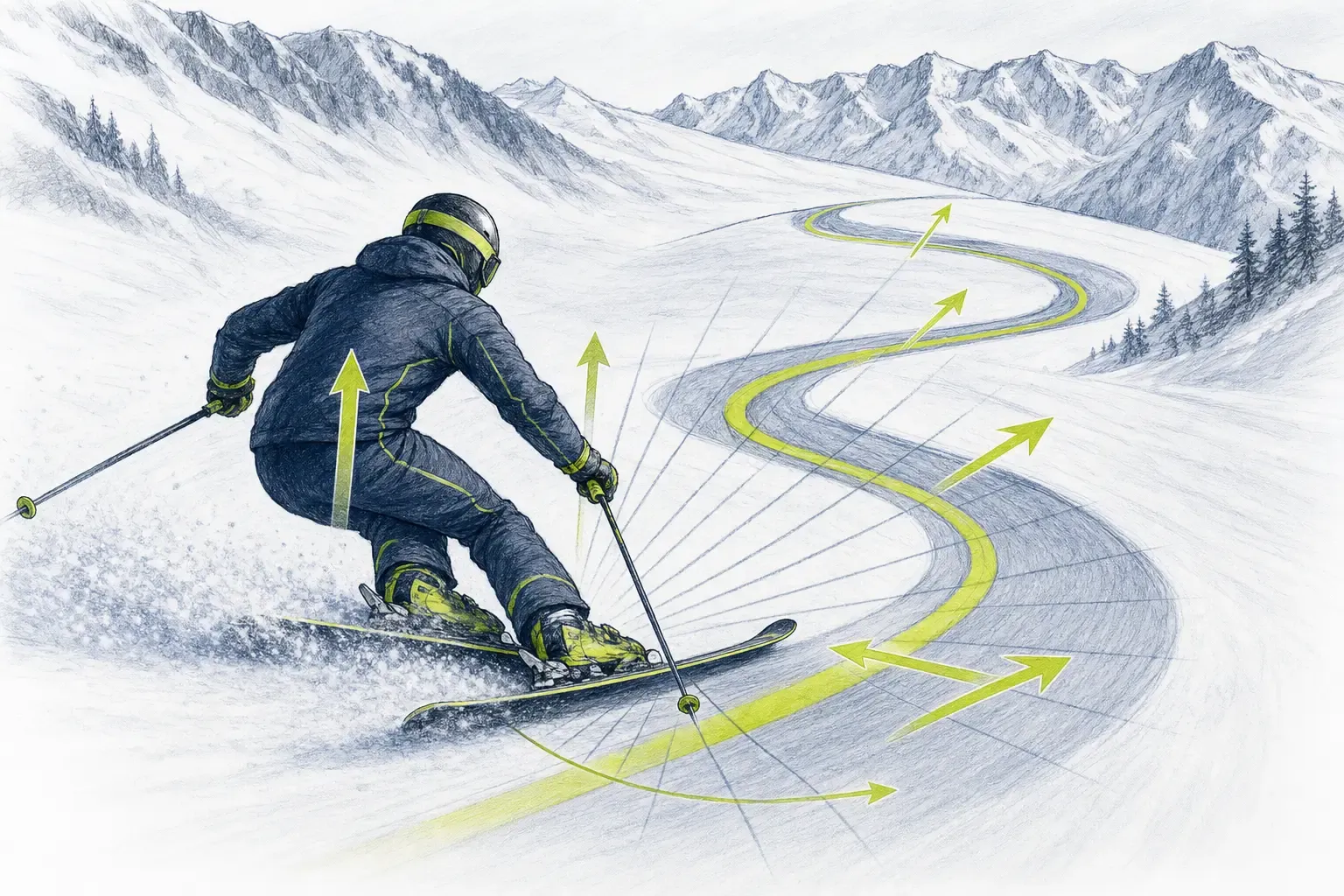
Ski control
Ski control is the continuous guidance of the skis’ direction, edging, and pressure so that the skier creates the desired arc, track, and speed.
Open term →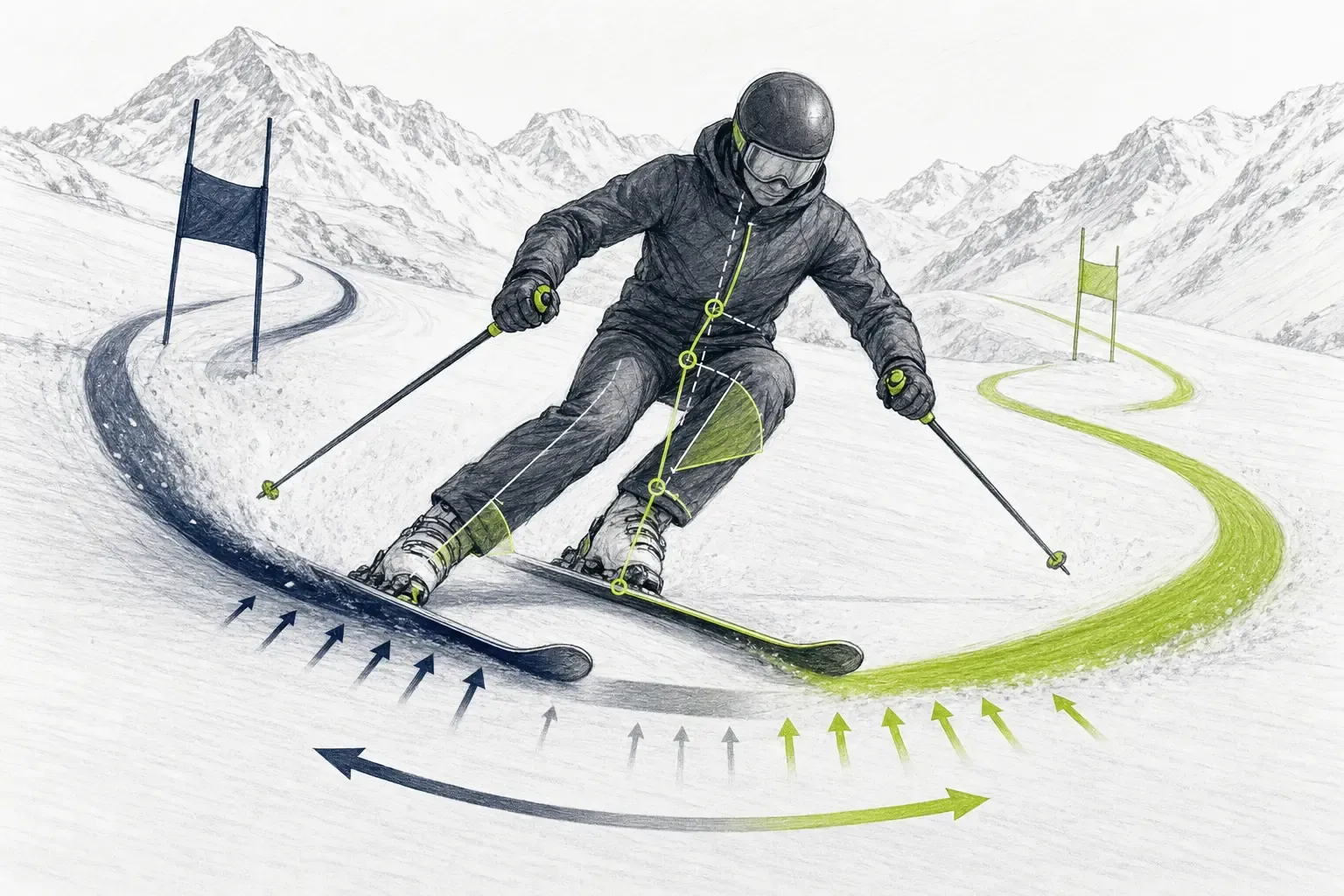
Edge change
Edge change is the transition from the edges used in one turn to the opposite edges needed for the next turn.
Open term →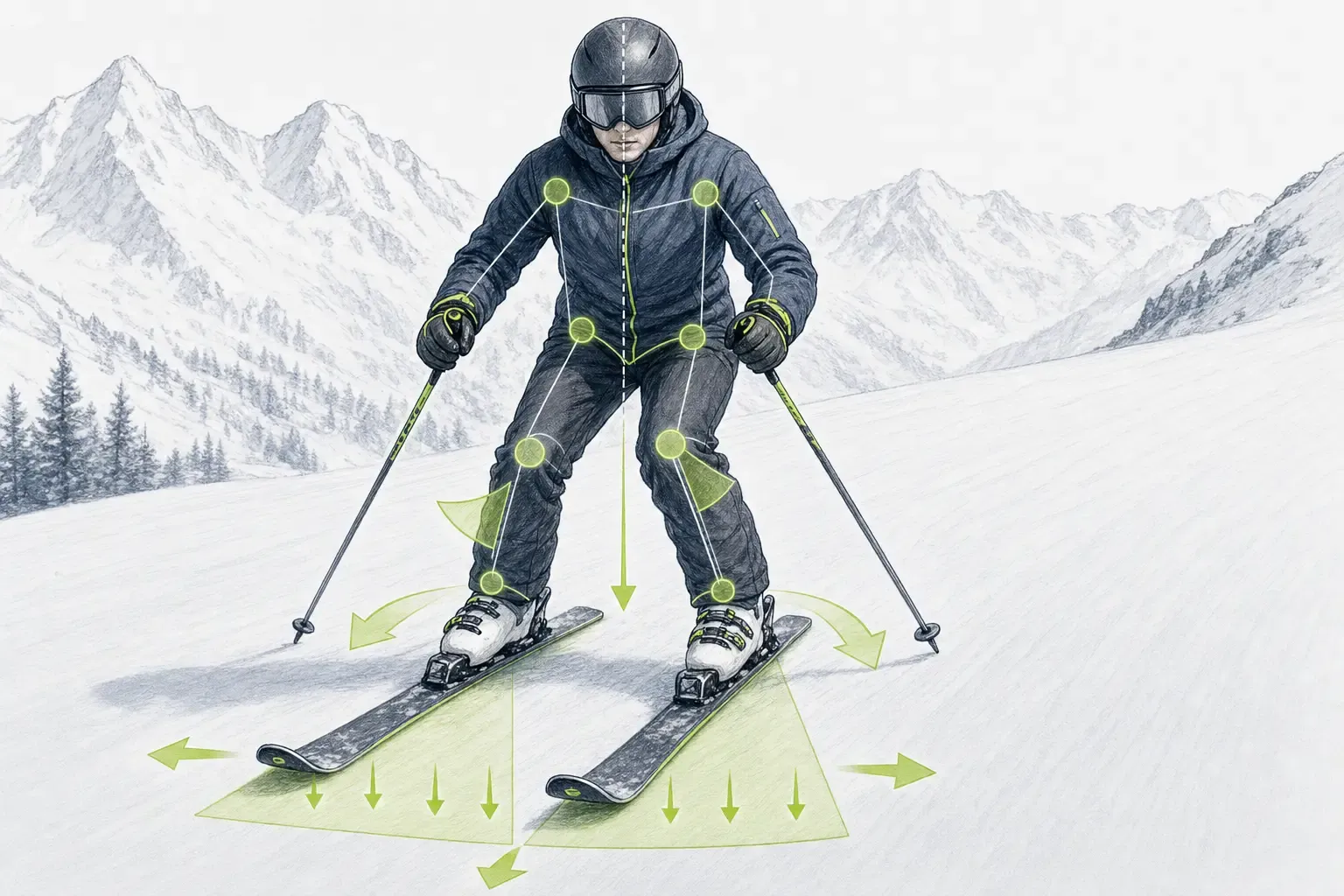
Basic skiing stance
The basic skiing stance is a balanced, flexible, and movement-ready body position above the skis. It allows the skier to respond to changes in direction, speed, slope, and snow conditions.
Open term →Races and course
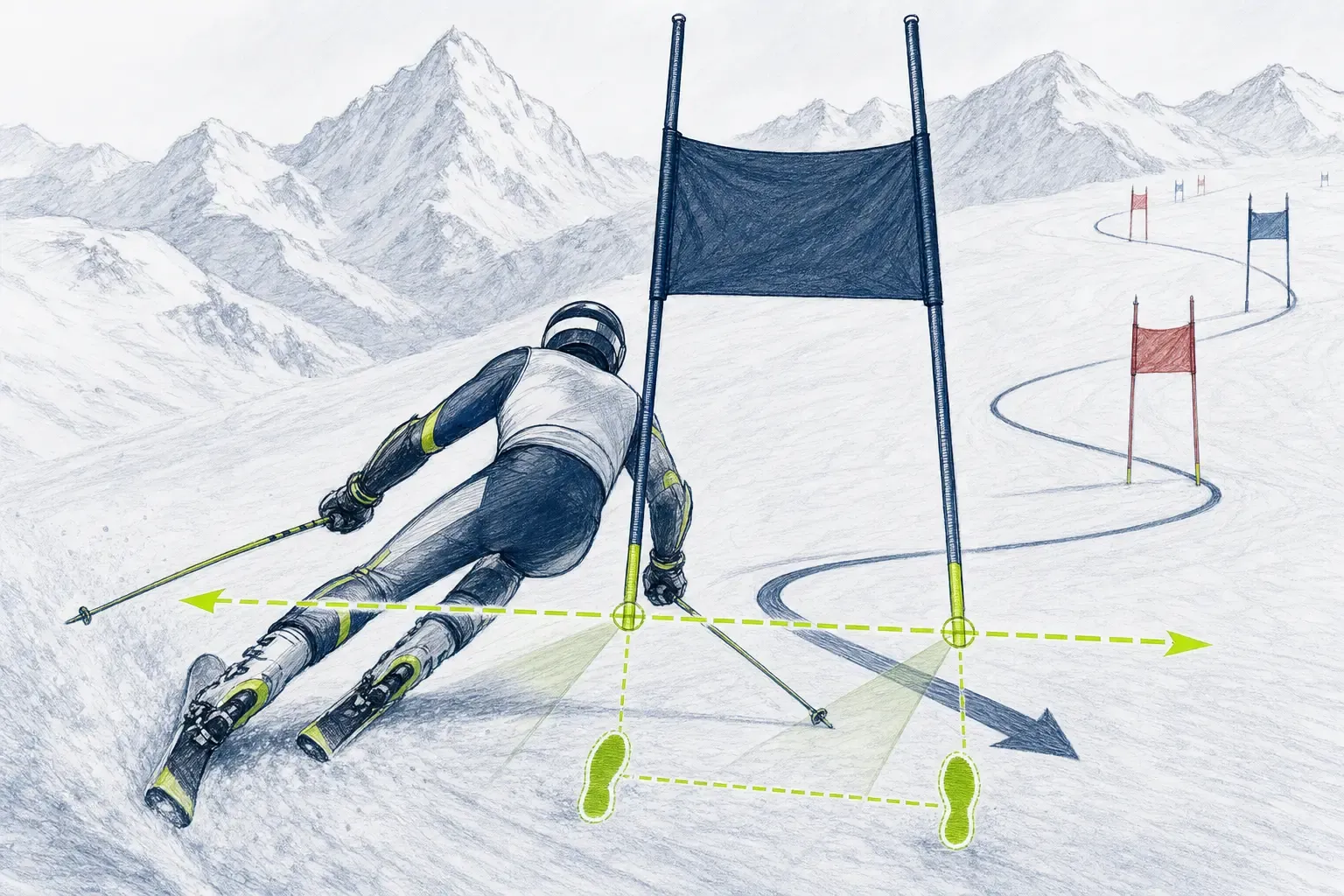
Gate
A gate is the basic element of a ski course that determines the direction of the run and the correct passage point for the skier.
Open term →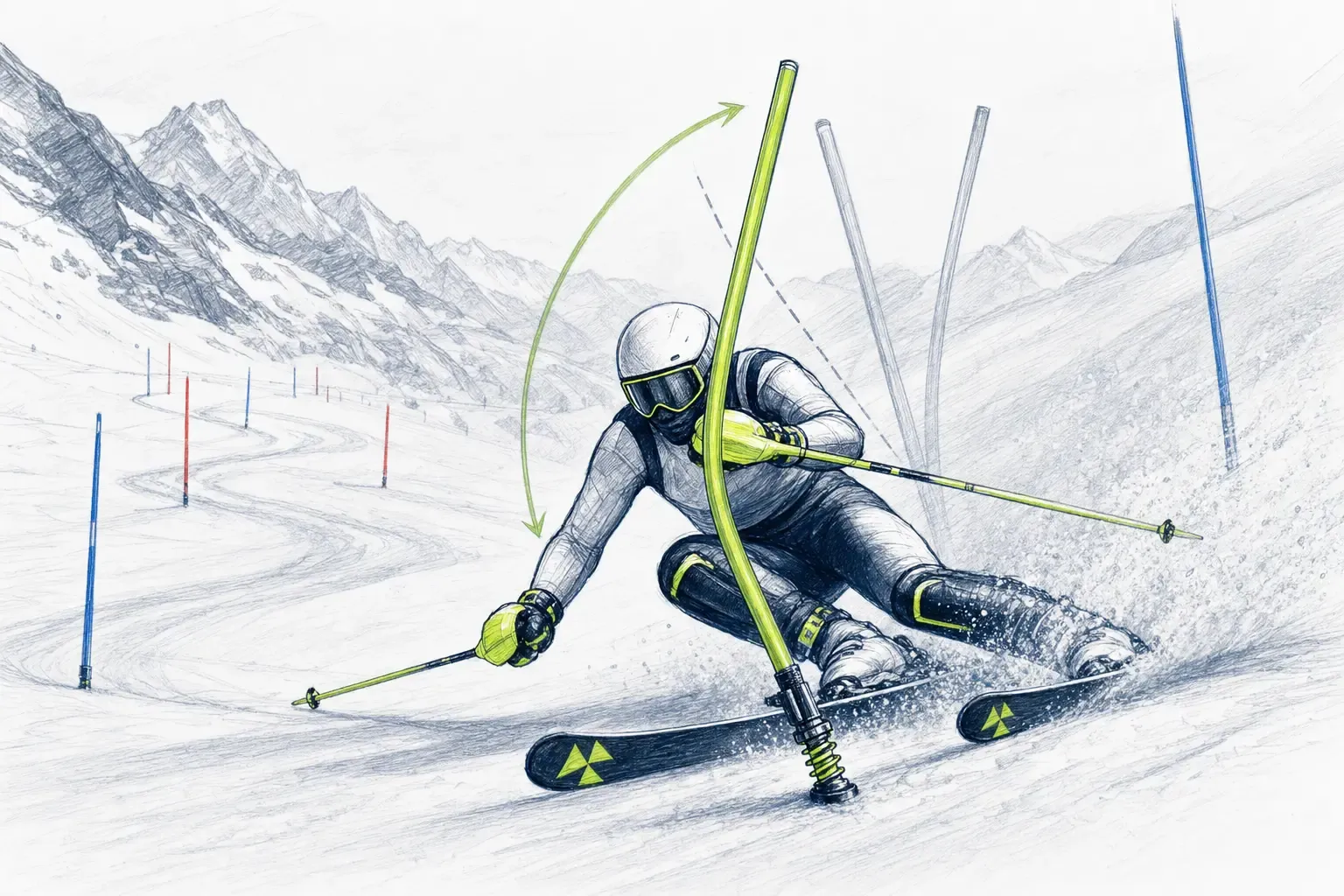
Gate pole
A gate pole is a rigid or flexible element used to mark the direction and position of gates on a race or training ski course.
Open entry →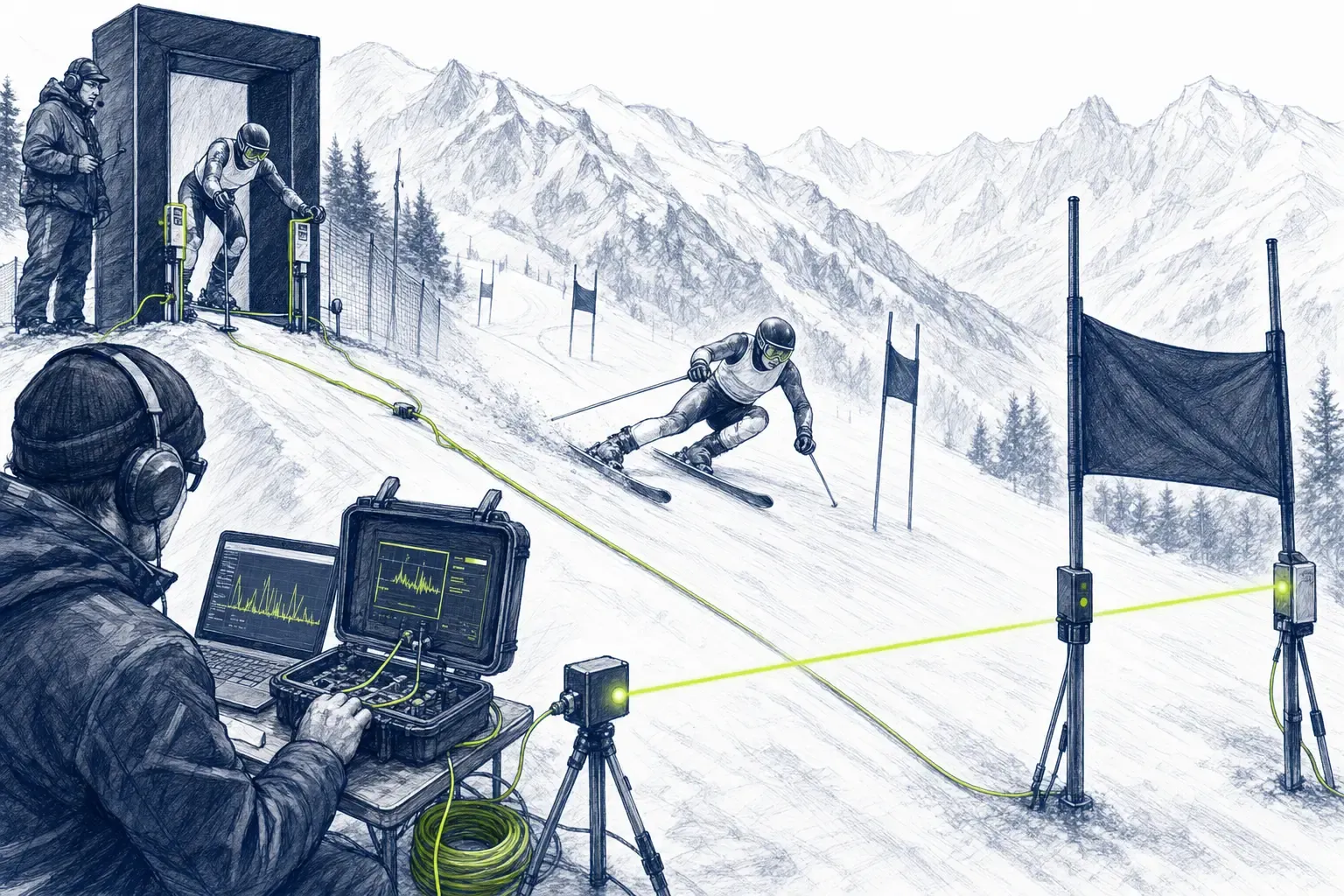
Timekeeping
Timekeeping is a system of equipment, people, and procedures that records a skier’s start and finish impulses and determines the resulting time.
Open entry →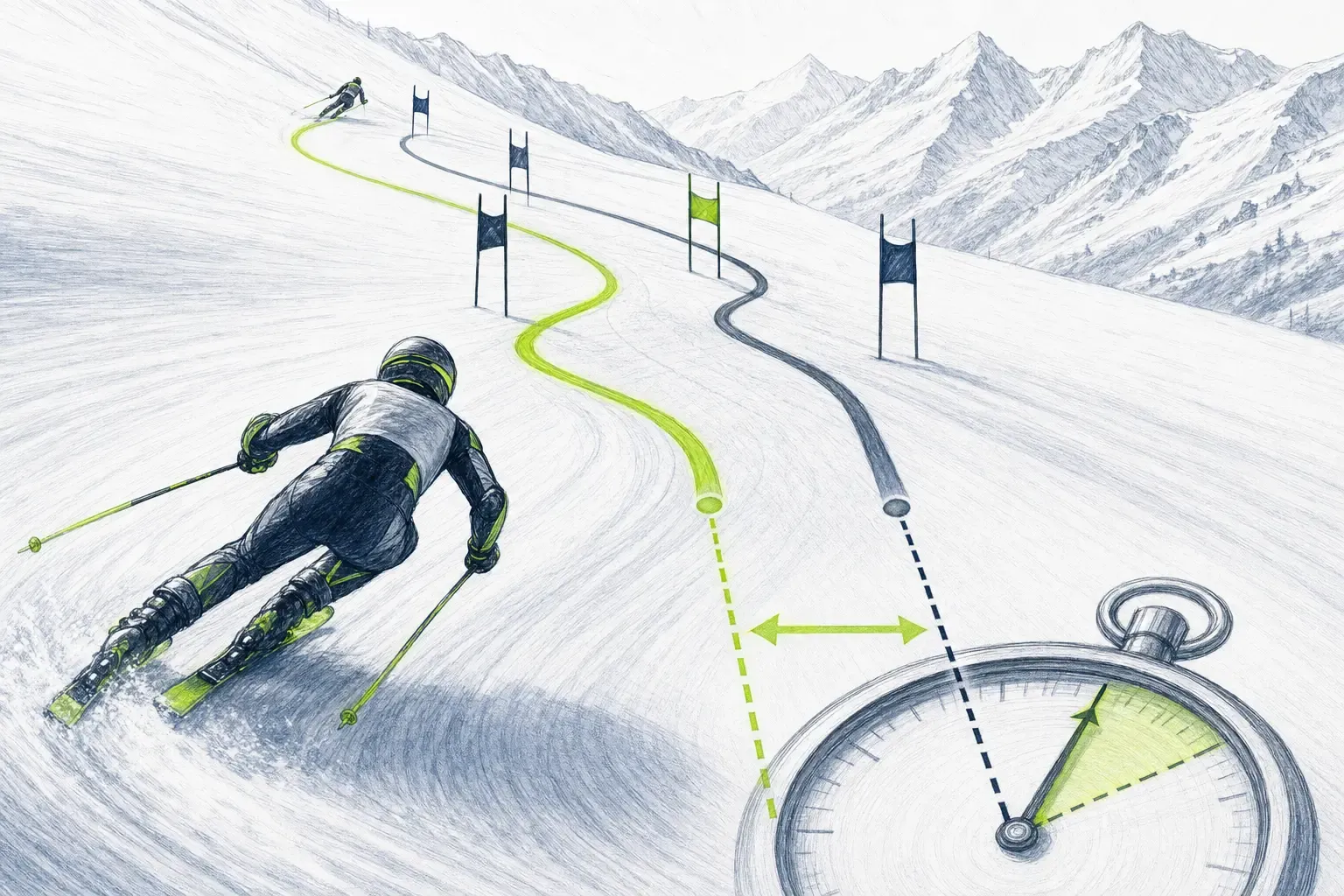
Time loss
Time loss is the difference between a skier’s time and a chosen reference time, most often the time of the leader or the race winner.
Open entry →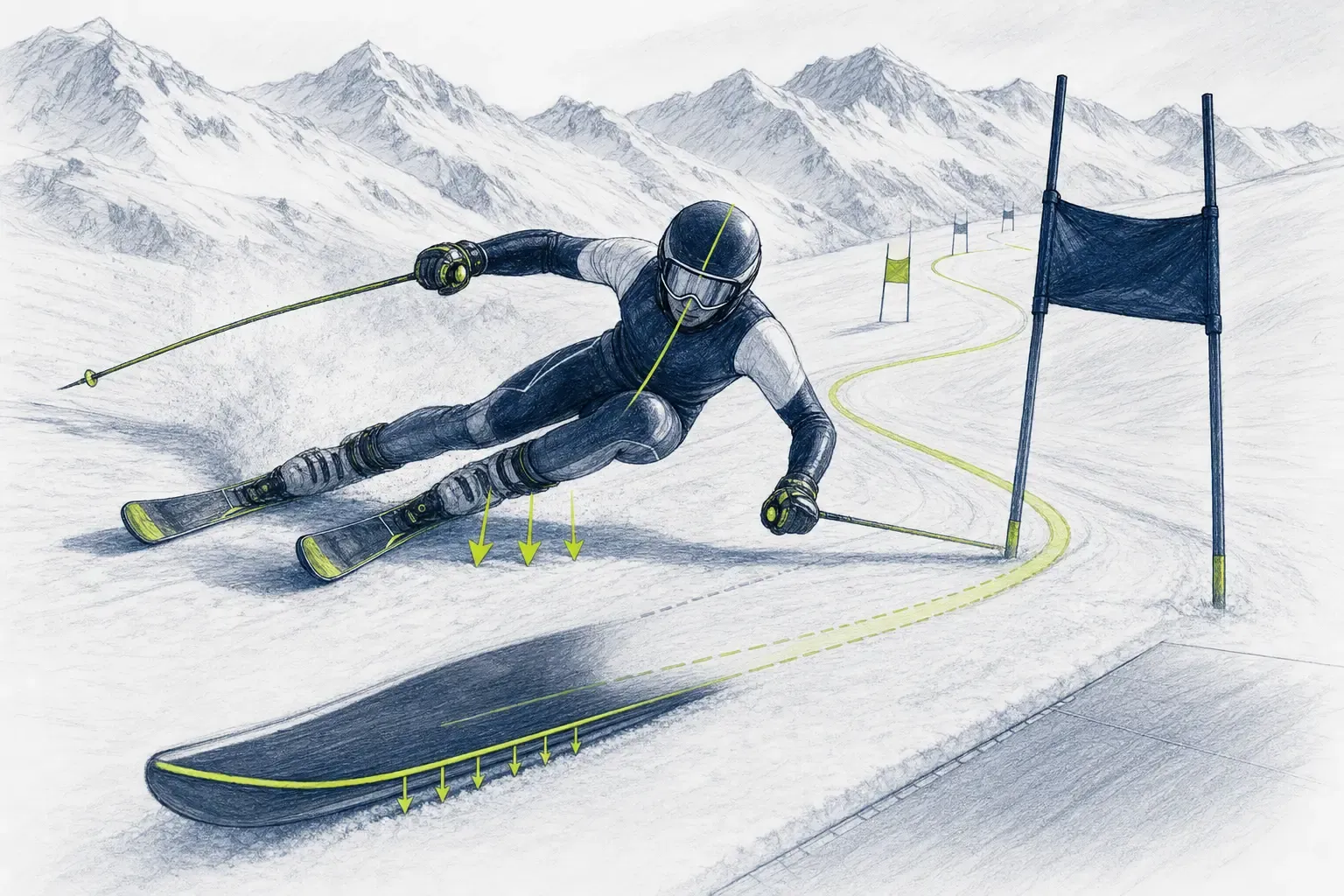
Clean run
Clean run is a training term for a smooth, controlled, and purposeful run without a major technical or tactical mistake. Depending on context, it can mean precisely carved turns or a flawless run through a race course.
Open entry →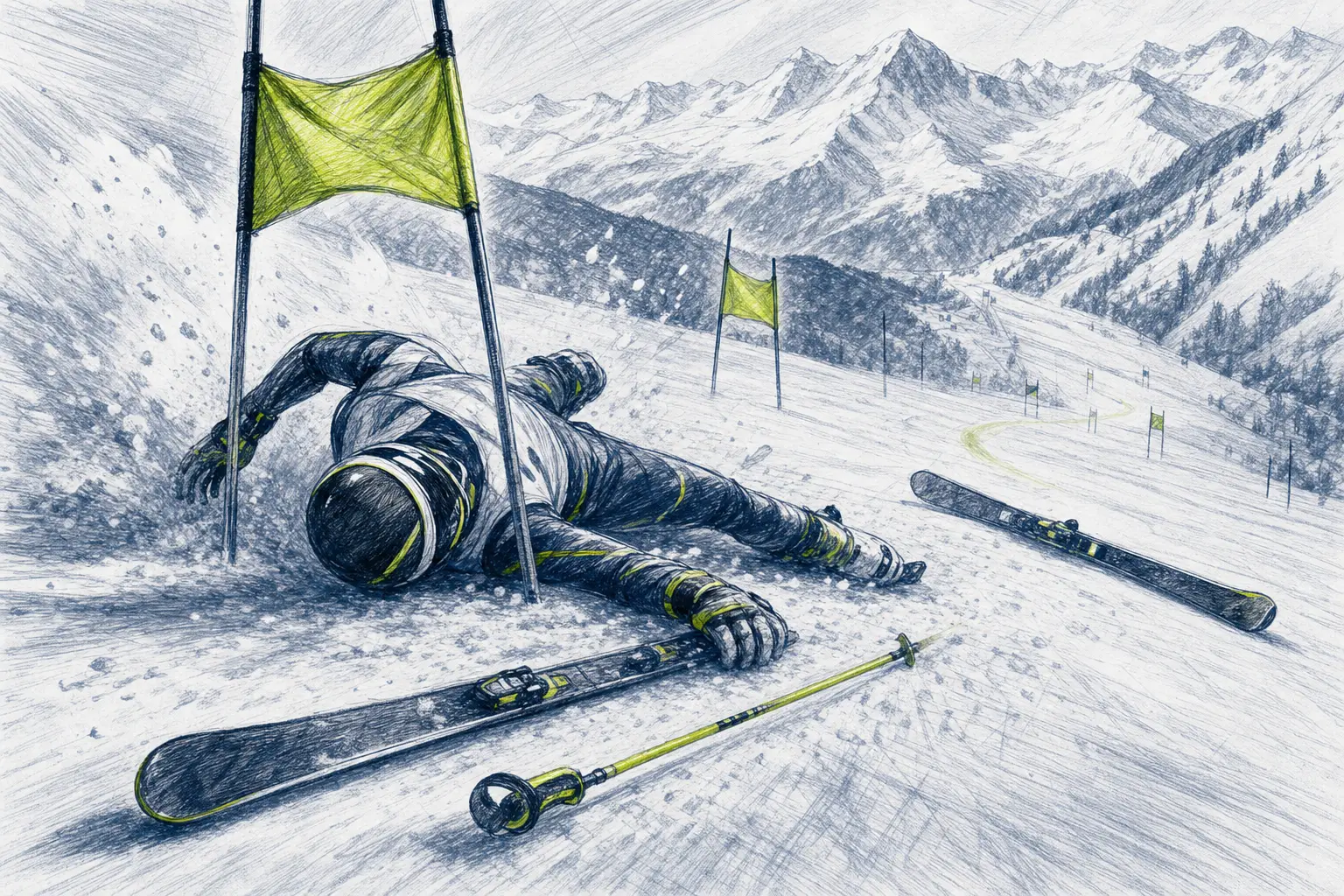
DNF
DNF (Did Not Finish) means that the competitor started but did not complete the run.
Open entry →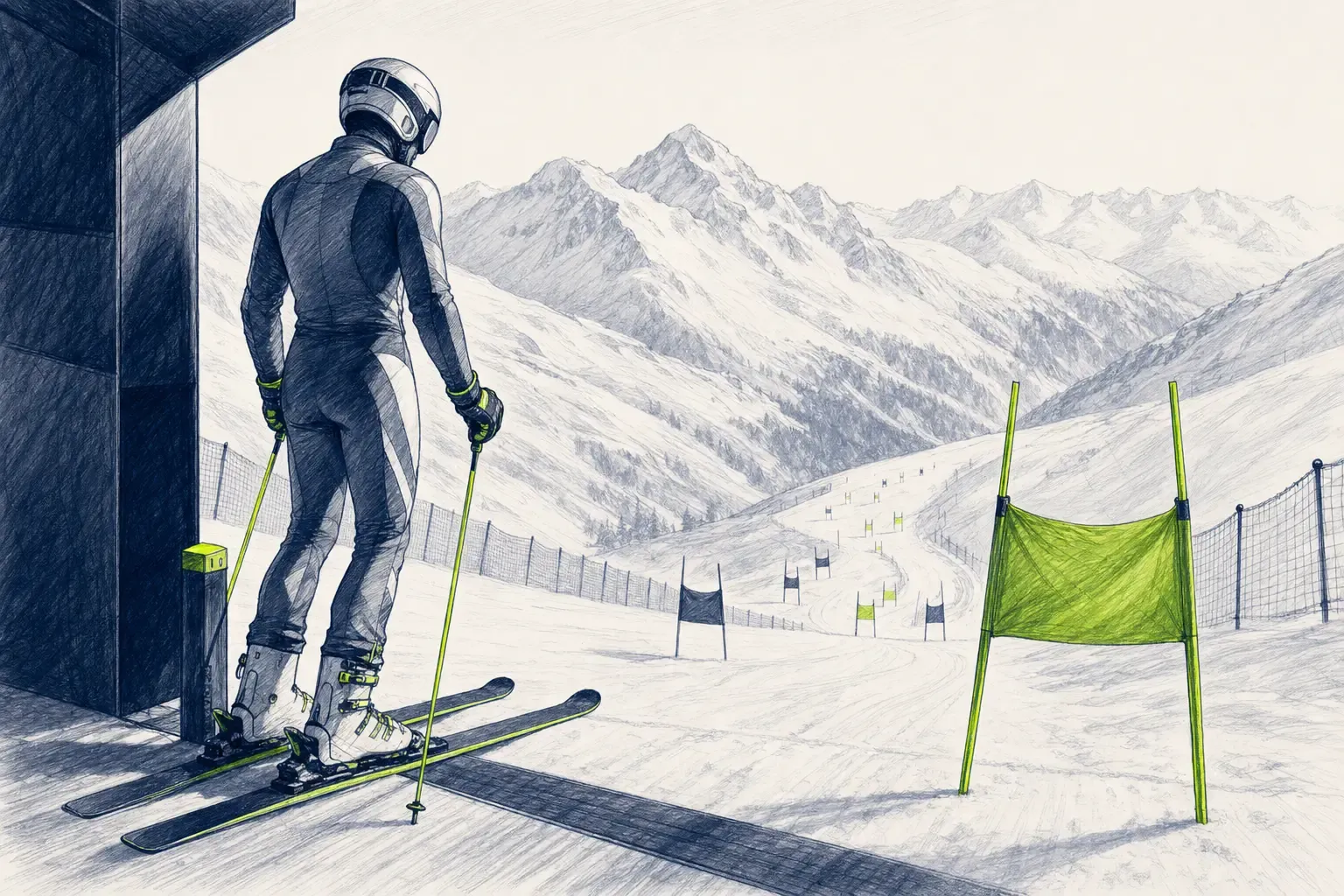
DNS
DNS is an abbreviation of the English "Did Not Start" and refers to a competitor who did not start the given run or race.
Open entry →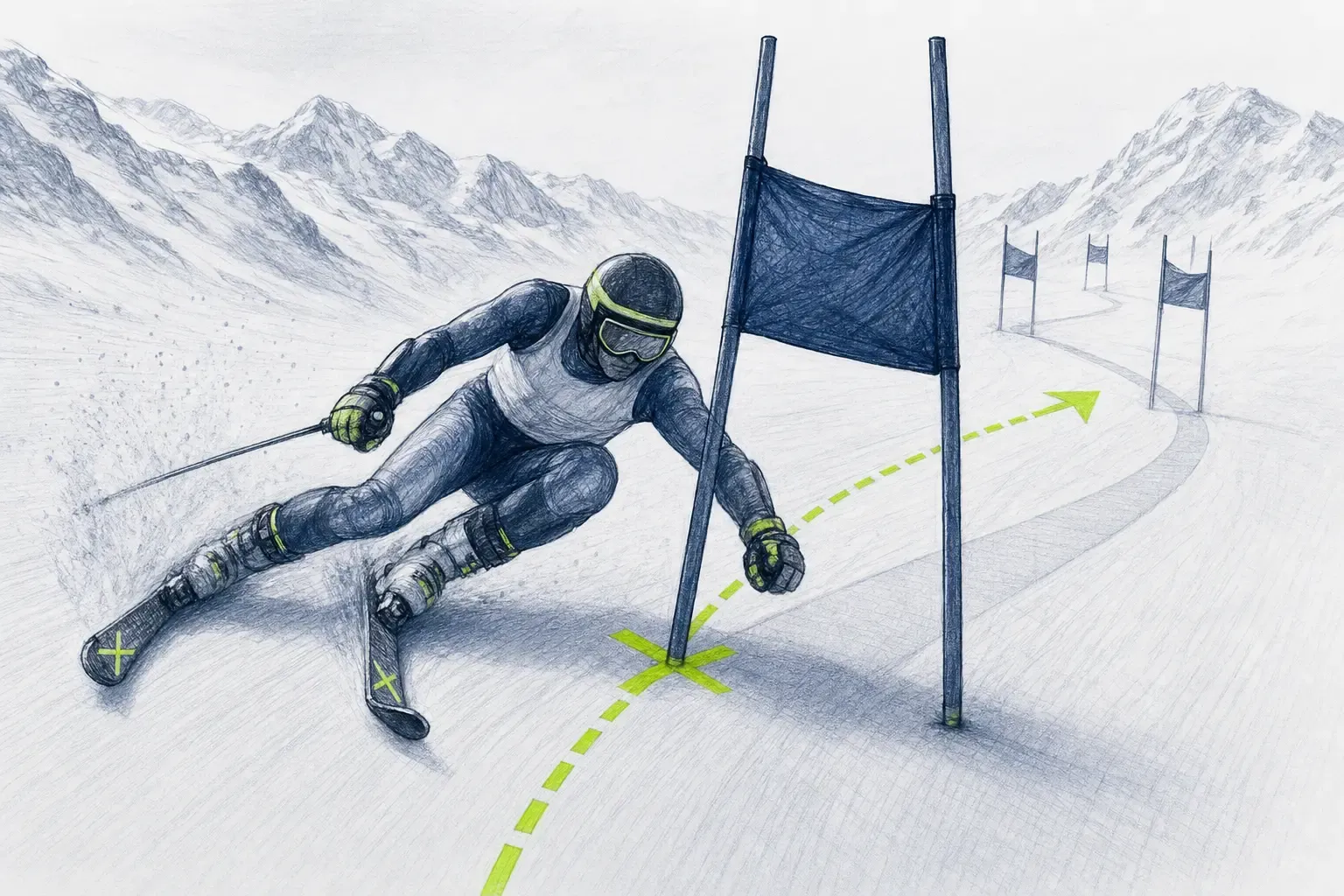
DSQ
DSQ is an abbreviation of the English "disqualified". In ski results, it marks a competitor whose result was not accepted due to a rule violation.
Open entry →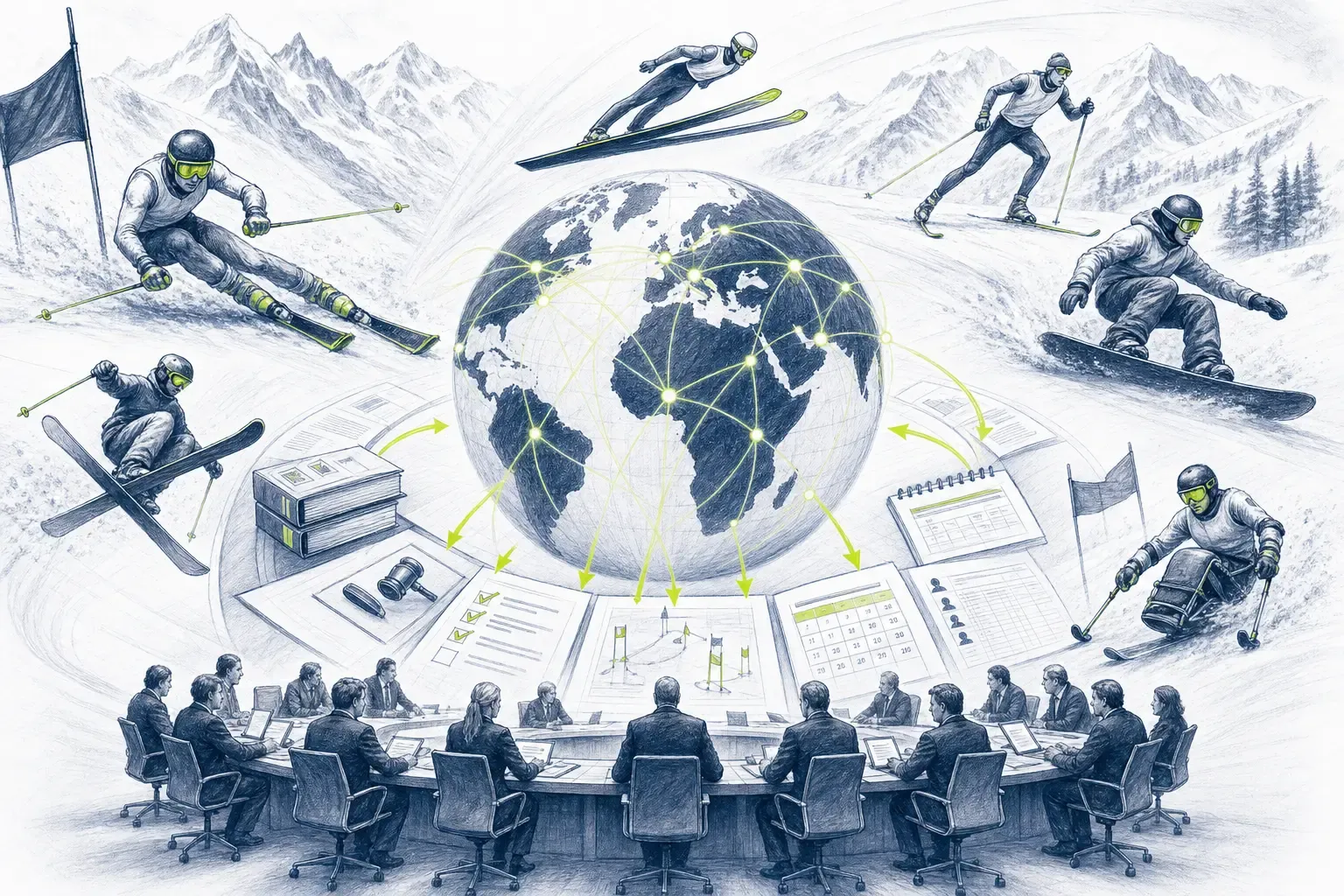
FIS
FIS is the International Ski and Snowboard Federation, which creates the rules and oversees international competitions in skiing and snowboarding.
Open entry →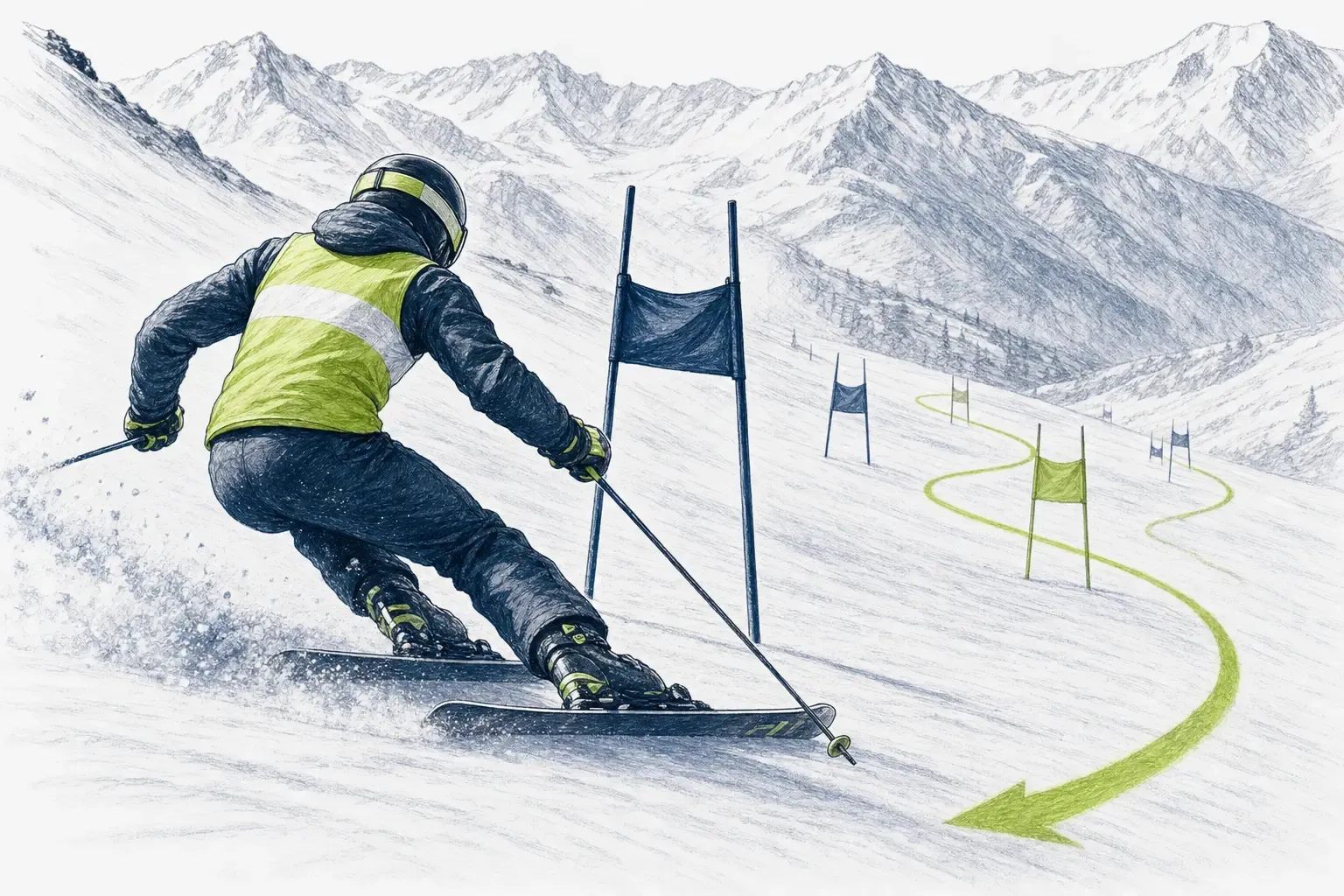
Forerunner and pace setter
Forerunner is the English term for a pace setter — a skier who, outside the competition, goes through the marked course before the first competitor or after the race is interrupted and provides the jury with information about its condition.
Open entry →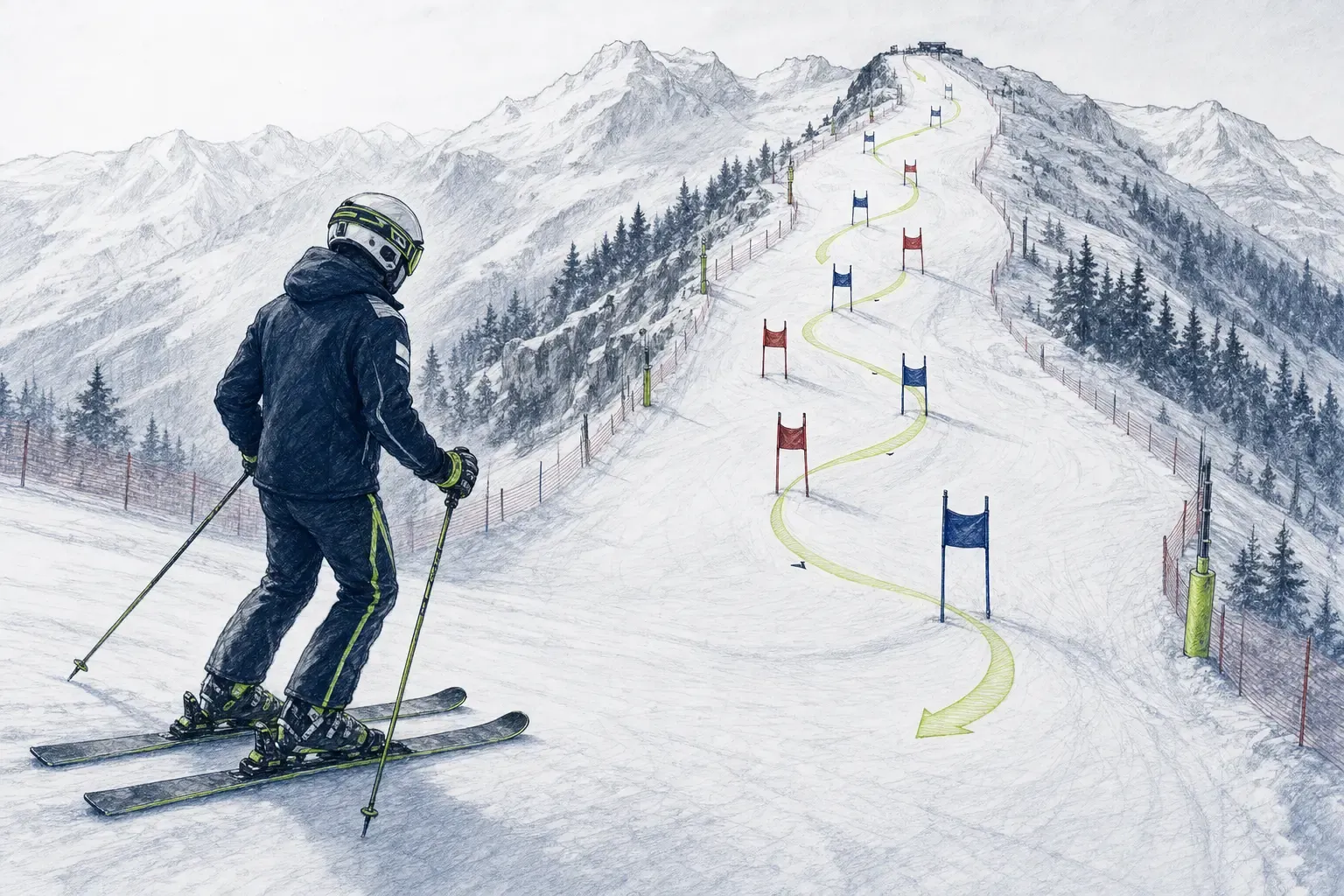
Course inspection
The pre-start inspection of the final race course, during which the skier studies the gates, terrain, surface, and possible line to take at the scheduled time.
Open entry →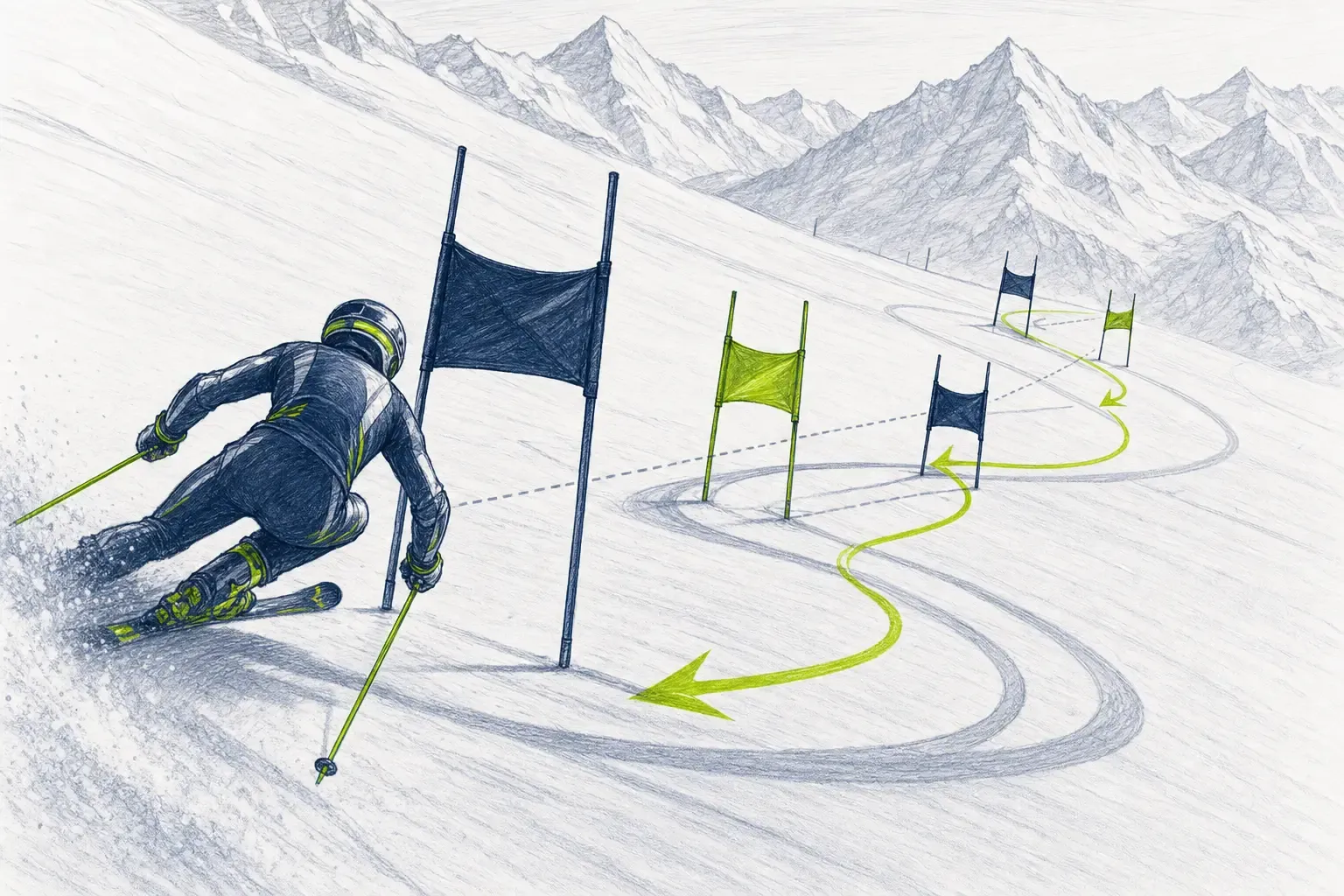
Combination of gates
A combination of gates is a section of a slalom course in which two or more closely following gates create one shared technical and rhythmic task.
Open entry →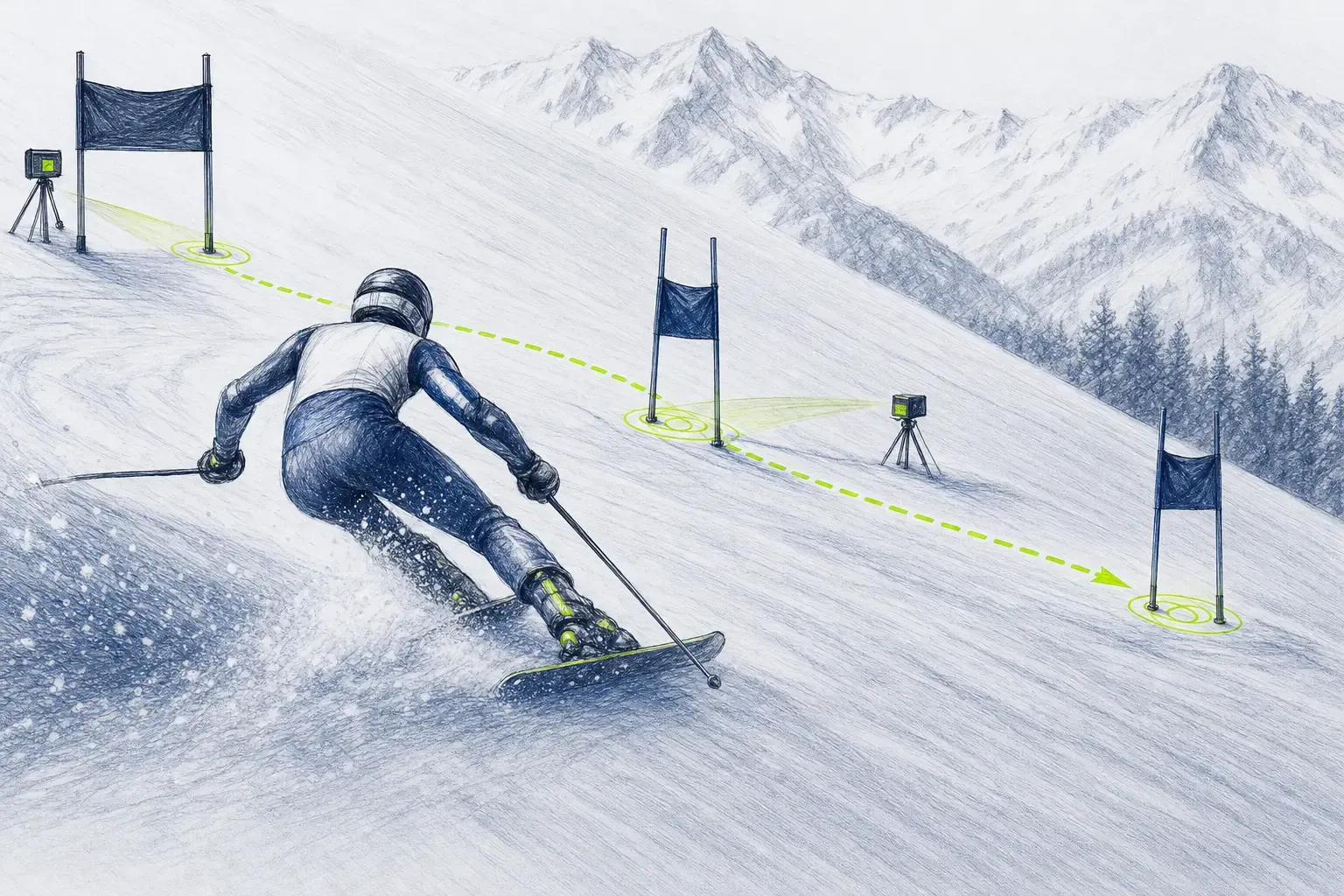
Split time
Split time is the racer’s time measured from the start to a designated point on the course. It is used to track the run and analyze individual sections, not as a separate race result.
Open entry →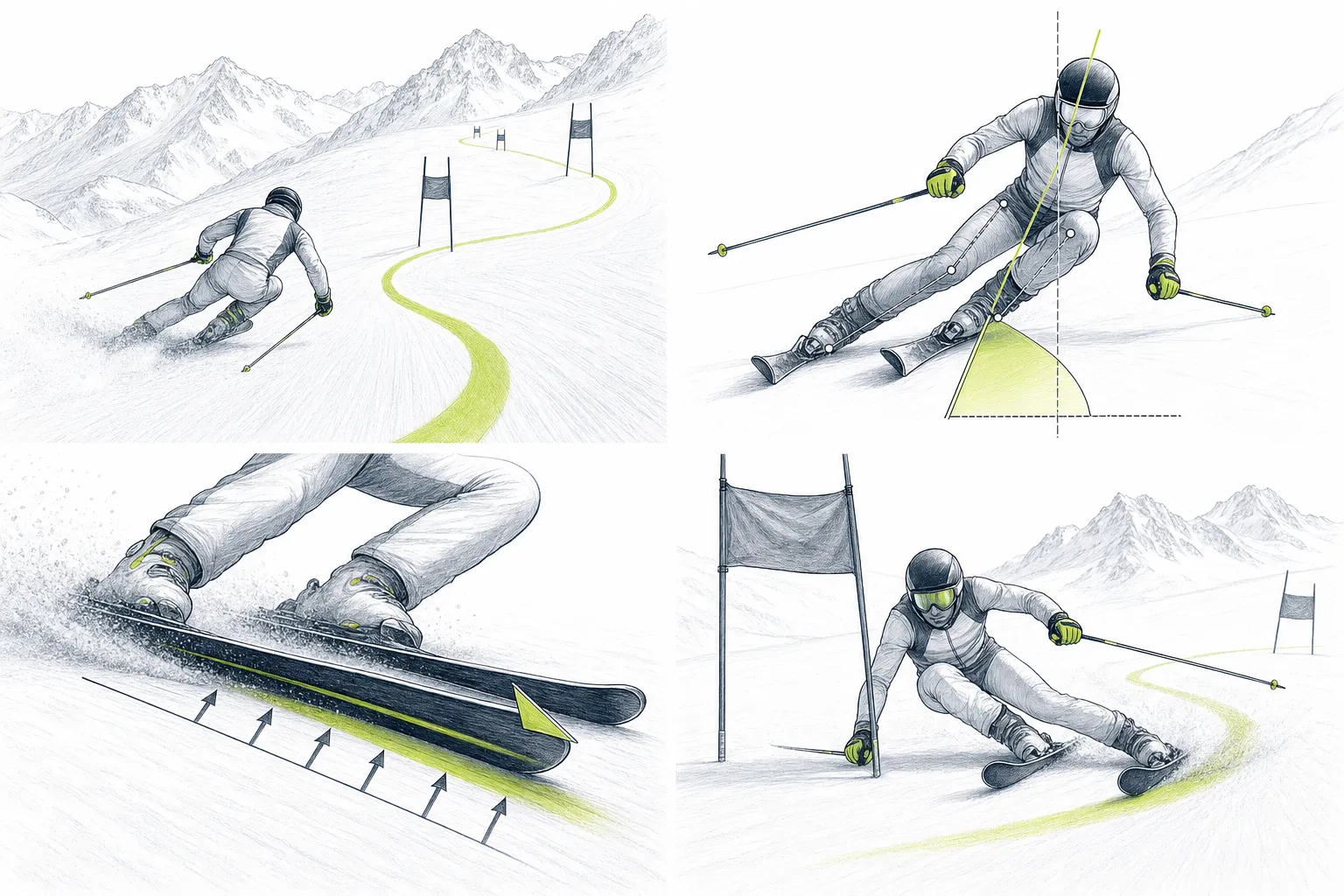
Giant slalom GS
Giant slalom (GS) is a technical alpine skiing discipline with wider gate spacing and longer turns than slalom. The race tests line precision, ski control at higher speed, and the ability to adapt to the terrain and the course rhythm.
Open entry →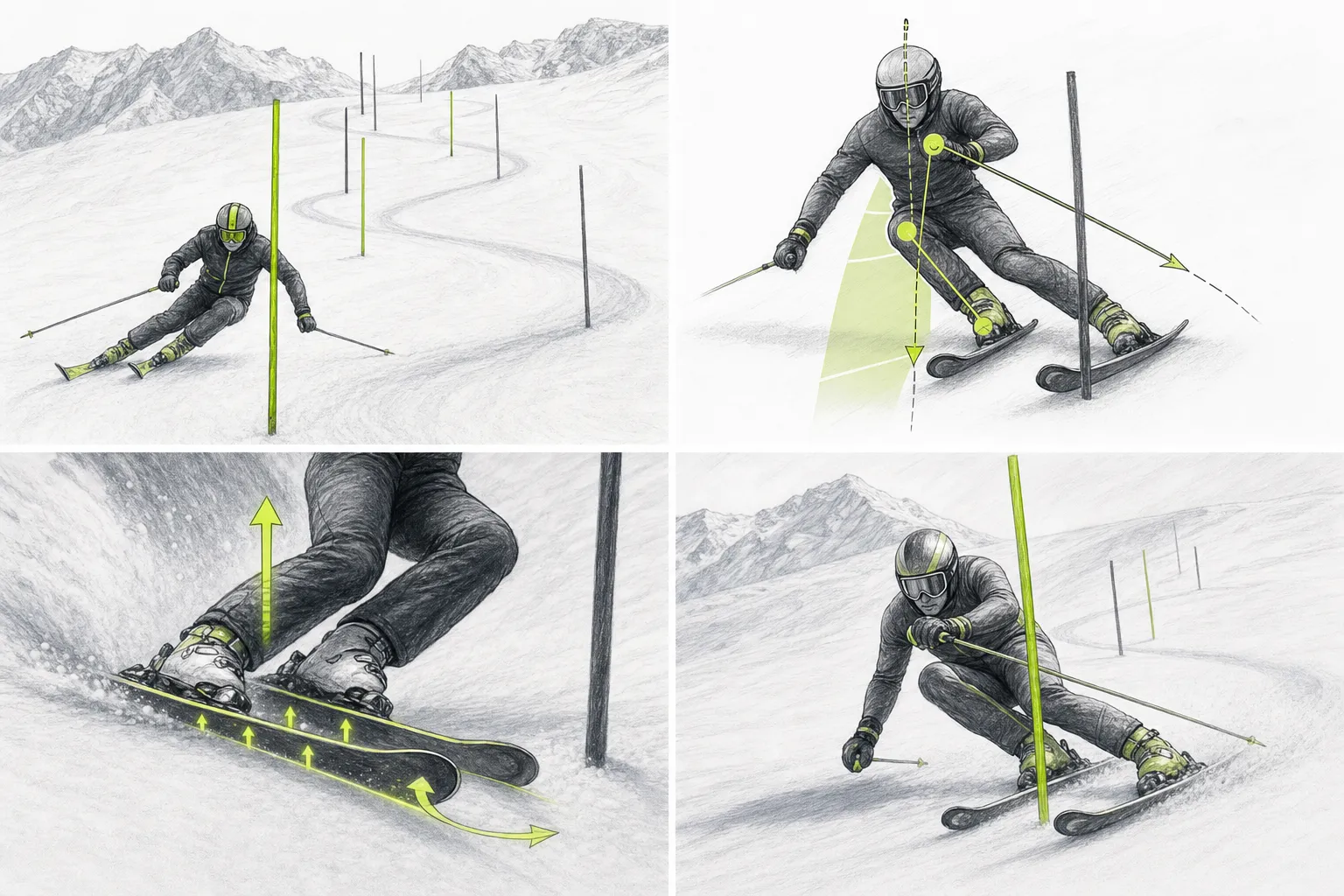
Slalom SL
Slalom (SL) is a technical alpine skiing discipline with short turns, quick changes of direction, and precise passage through the gates.
Open entry →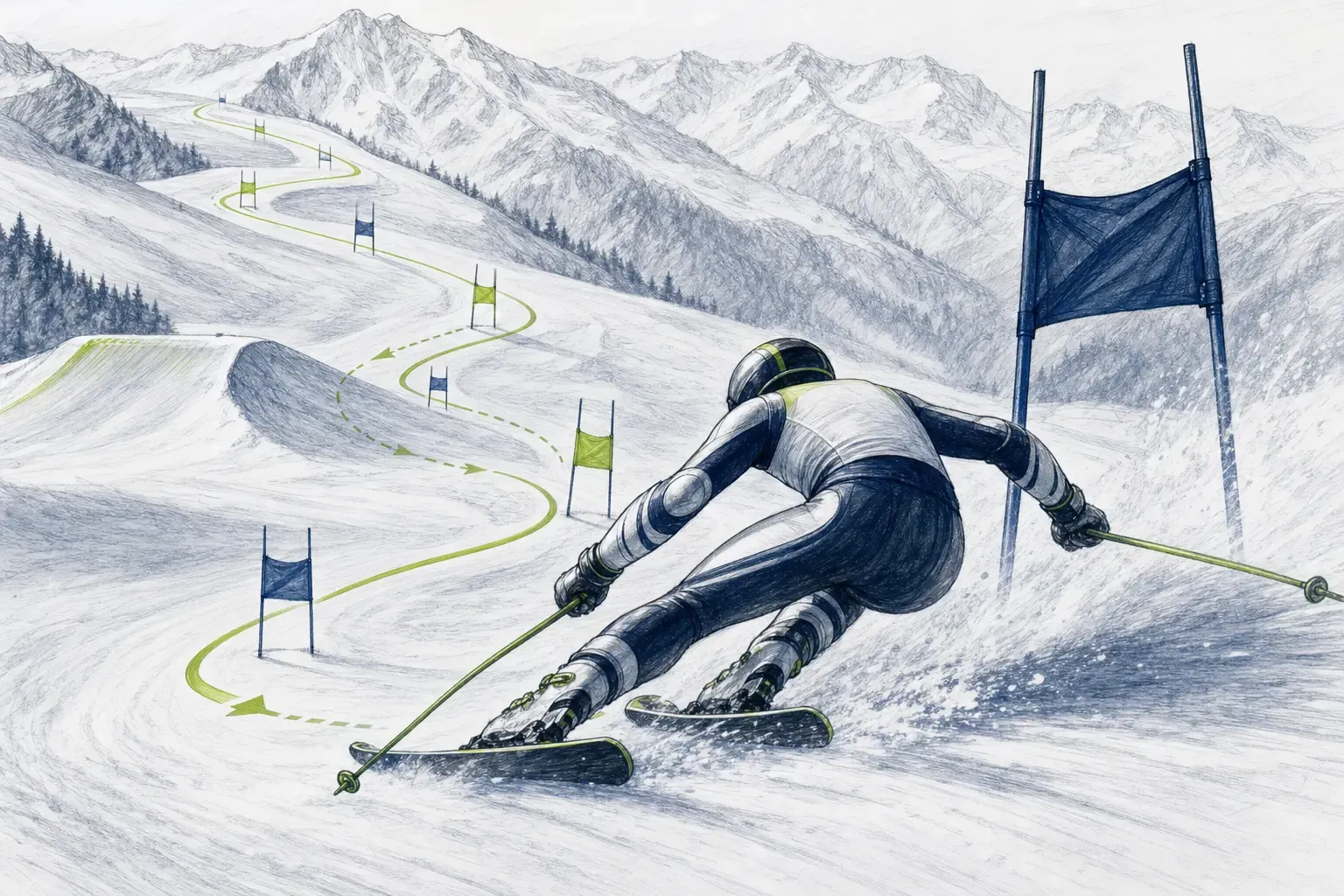
Super-G SG
Super-G (SG), in Slovak super giant slalom, is an alpine skiing speed discipline raced in a single timed run.
Open entry →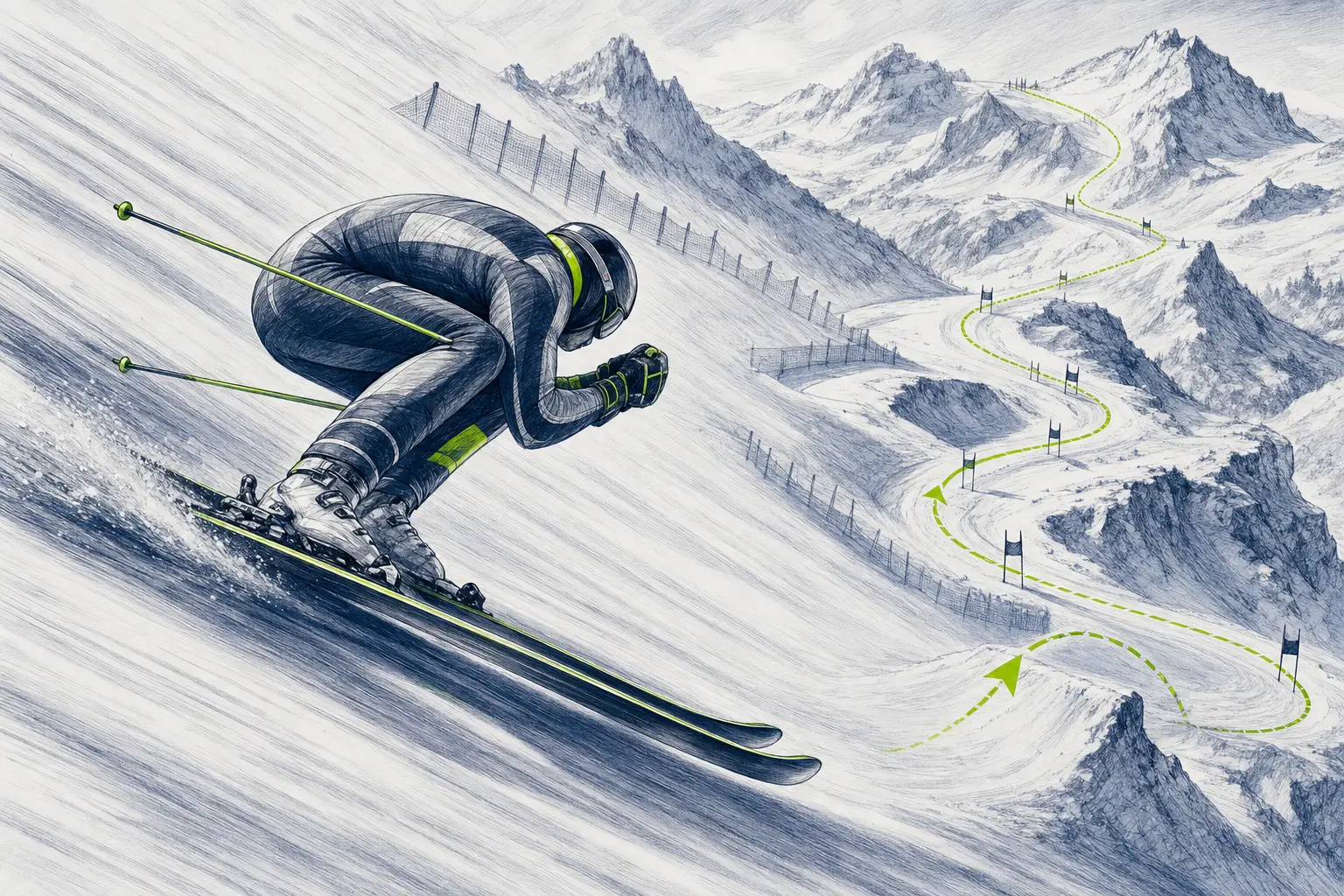
Downhill DH
Downhill (DH, downhill) is a speed discipline in alpine skiing in which a racer completes one timed run on a long homologated course with wide turns, terrain breaks, jumps and gliding sections.
Open entry →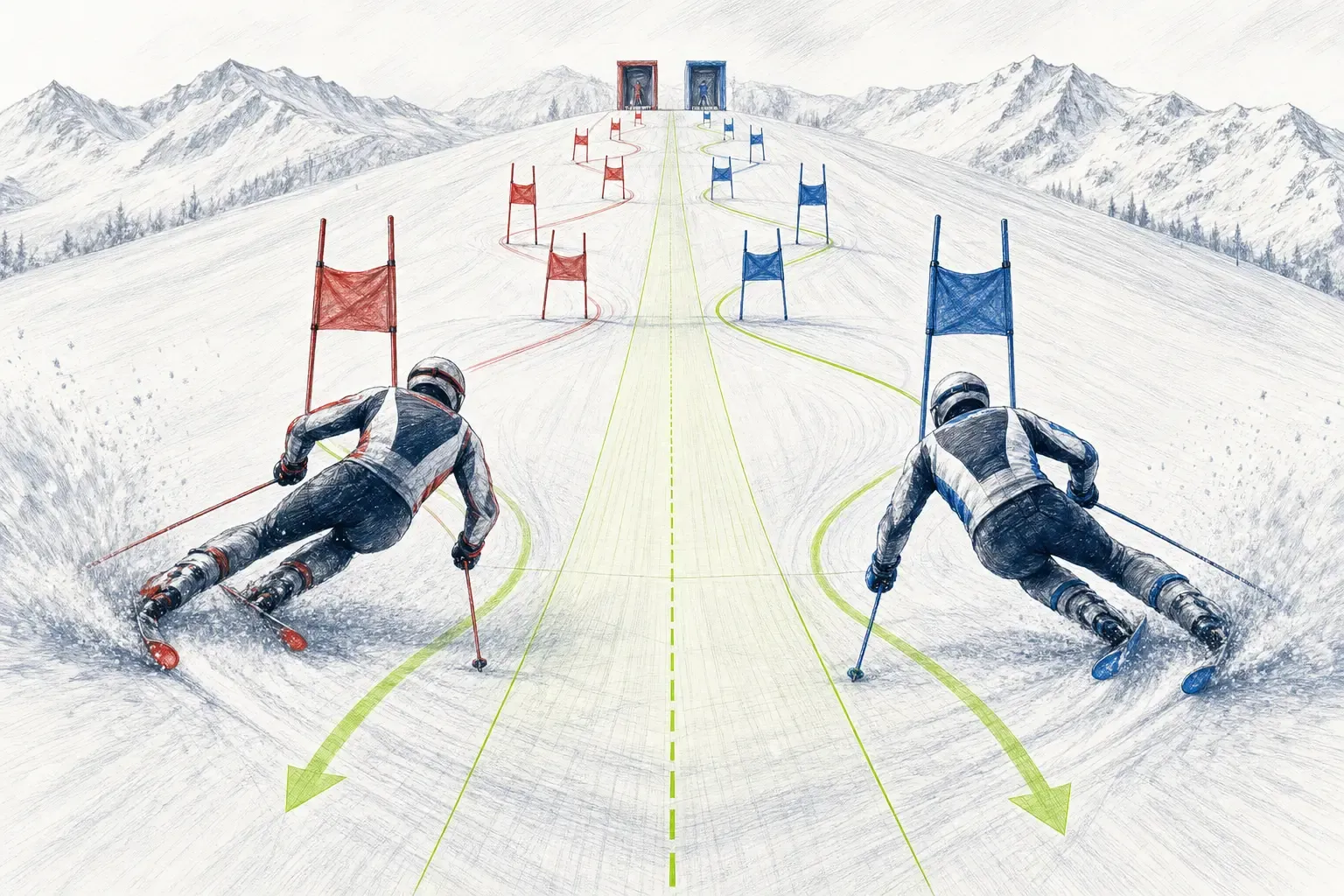
Parallel slalom
Parallel slalom is a competition format in which two skiers start at the same time on adjacent courses and directly compete for a better result or advancement.
Open entry →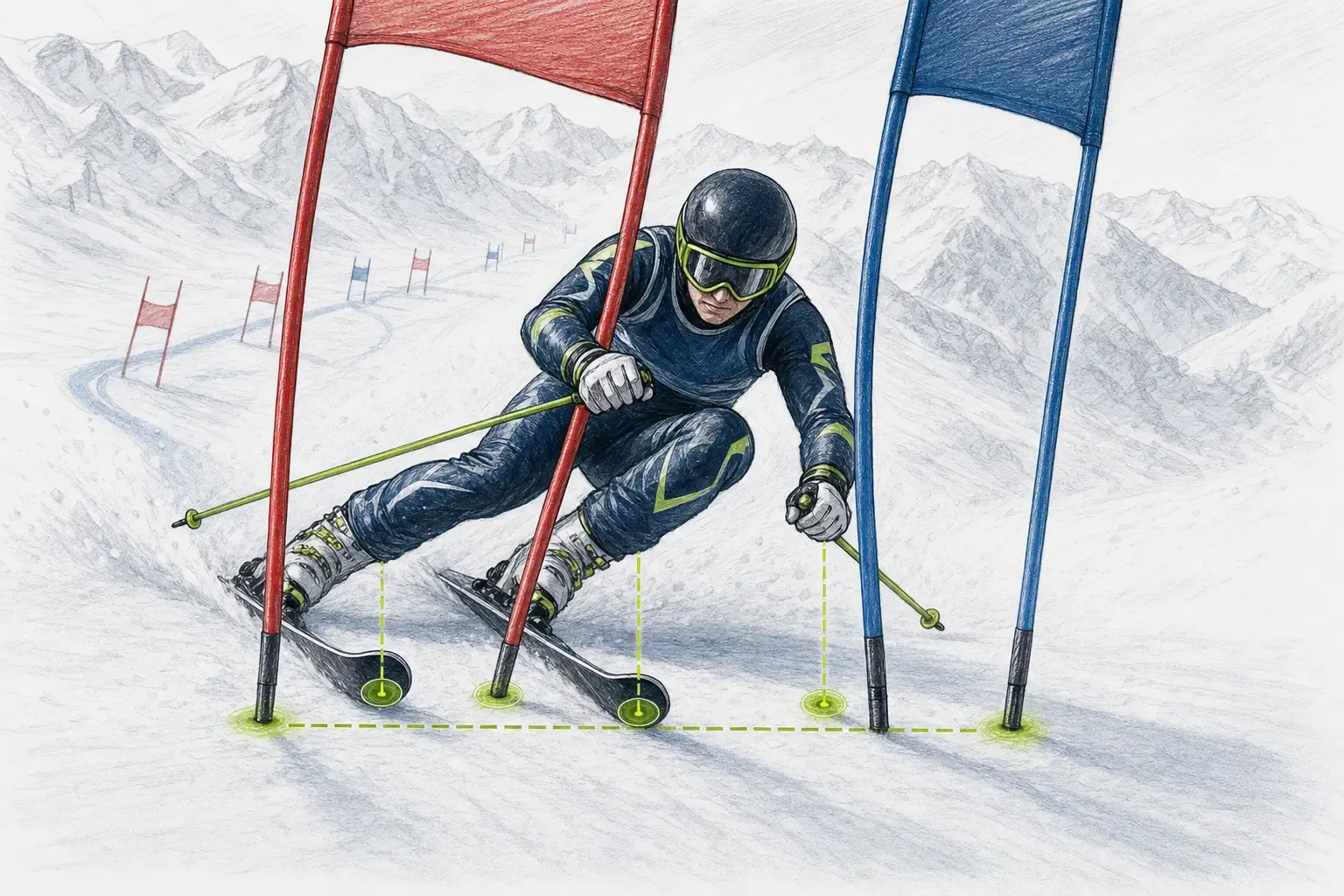
Passing through a gate
A gate passage is valid when both ski tips and both feet of the racer cross the prescribed gate line.
Open entry →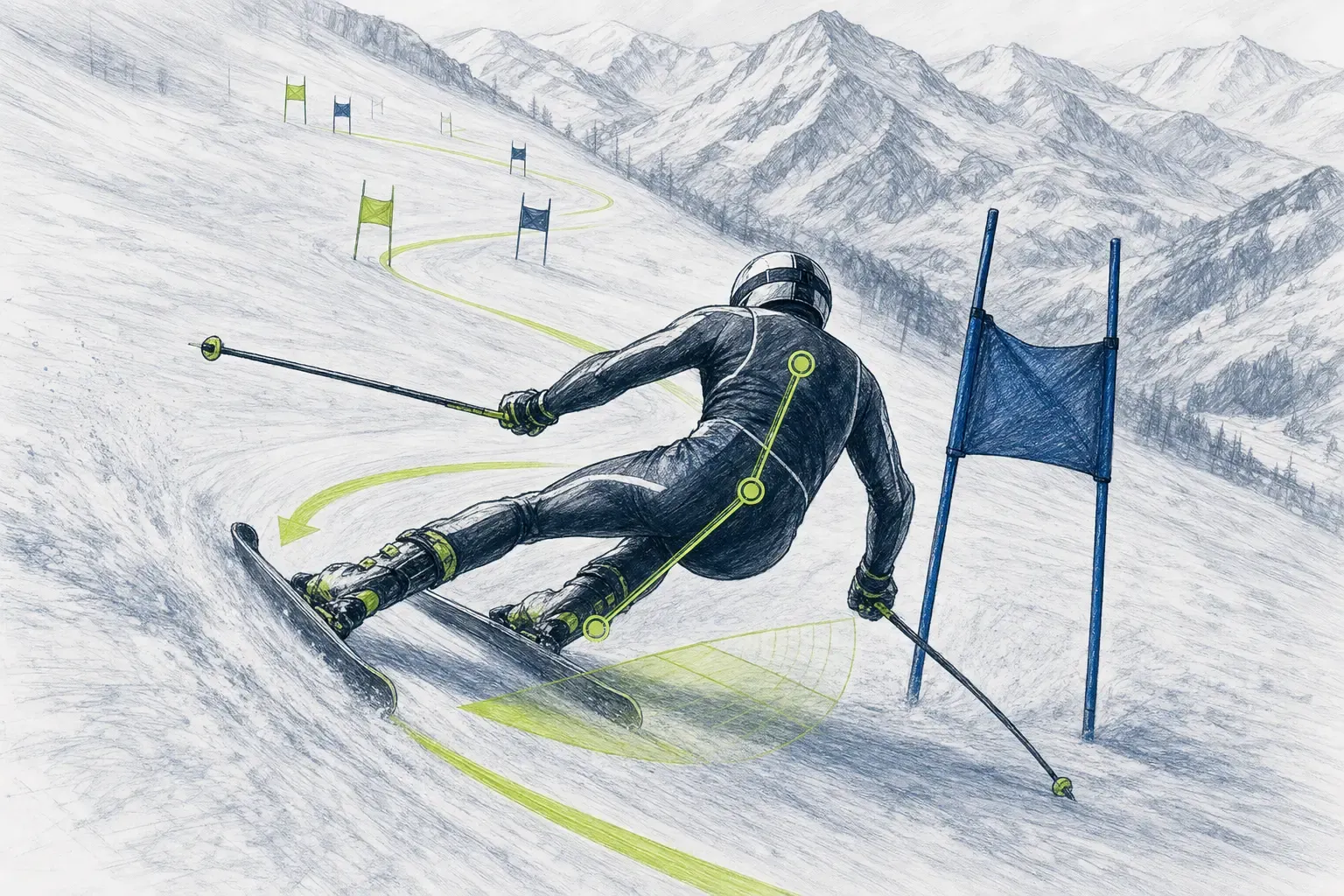
Race run
A race run is a timed passage through a marked course in which the skier combines technique, line choice, tactics and speed control while following the rules.
Open entry →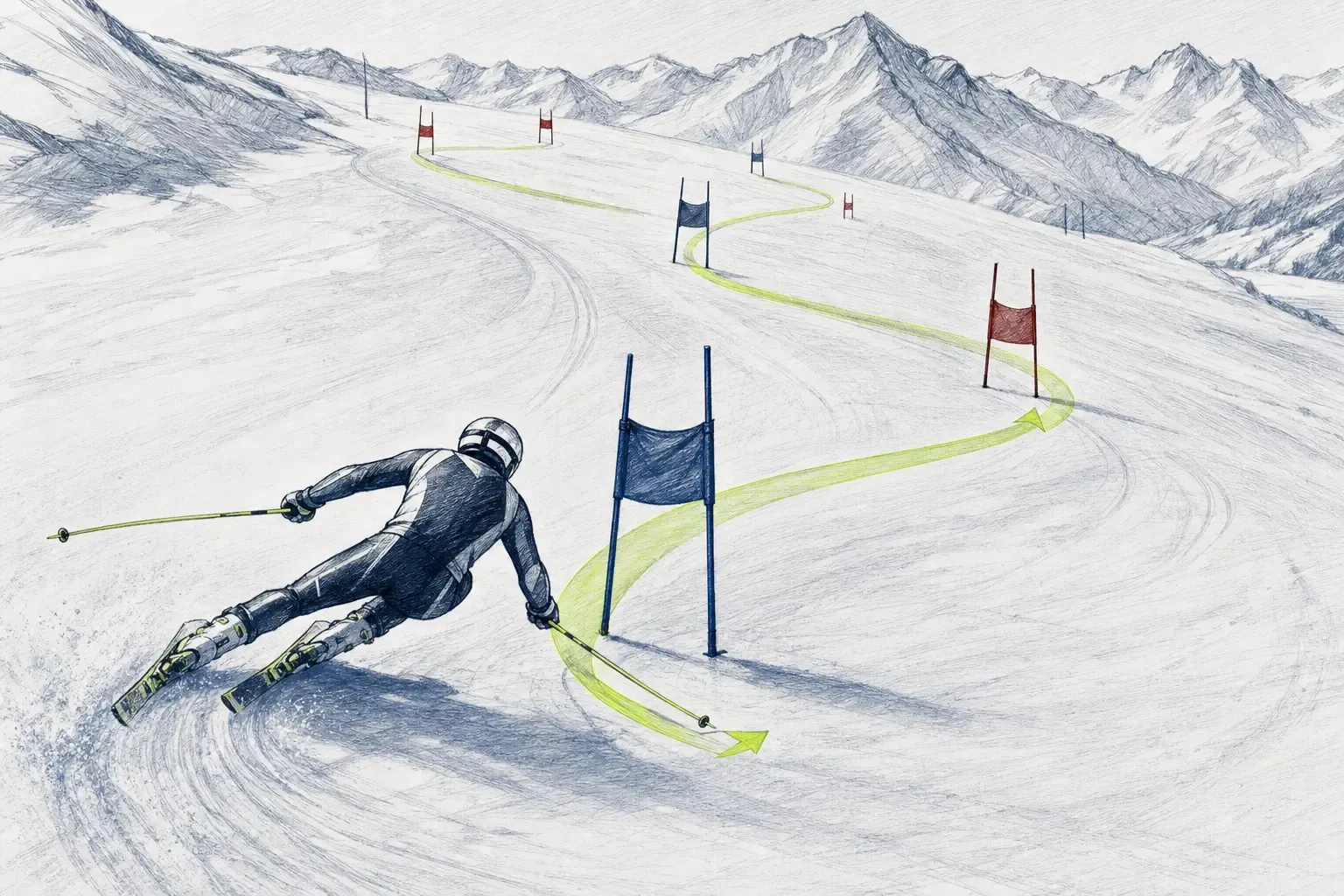
Race line race line
The race line is the skier’s chosen trajectory between the gates, balancing course length, speed, turn shape and preparation for the next section of the course.
Open entry →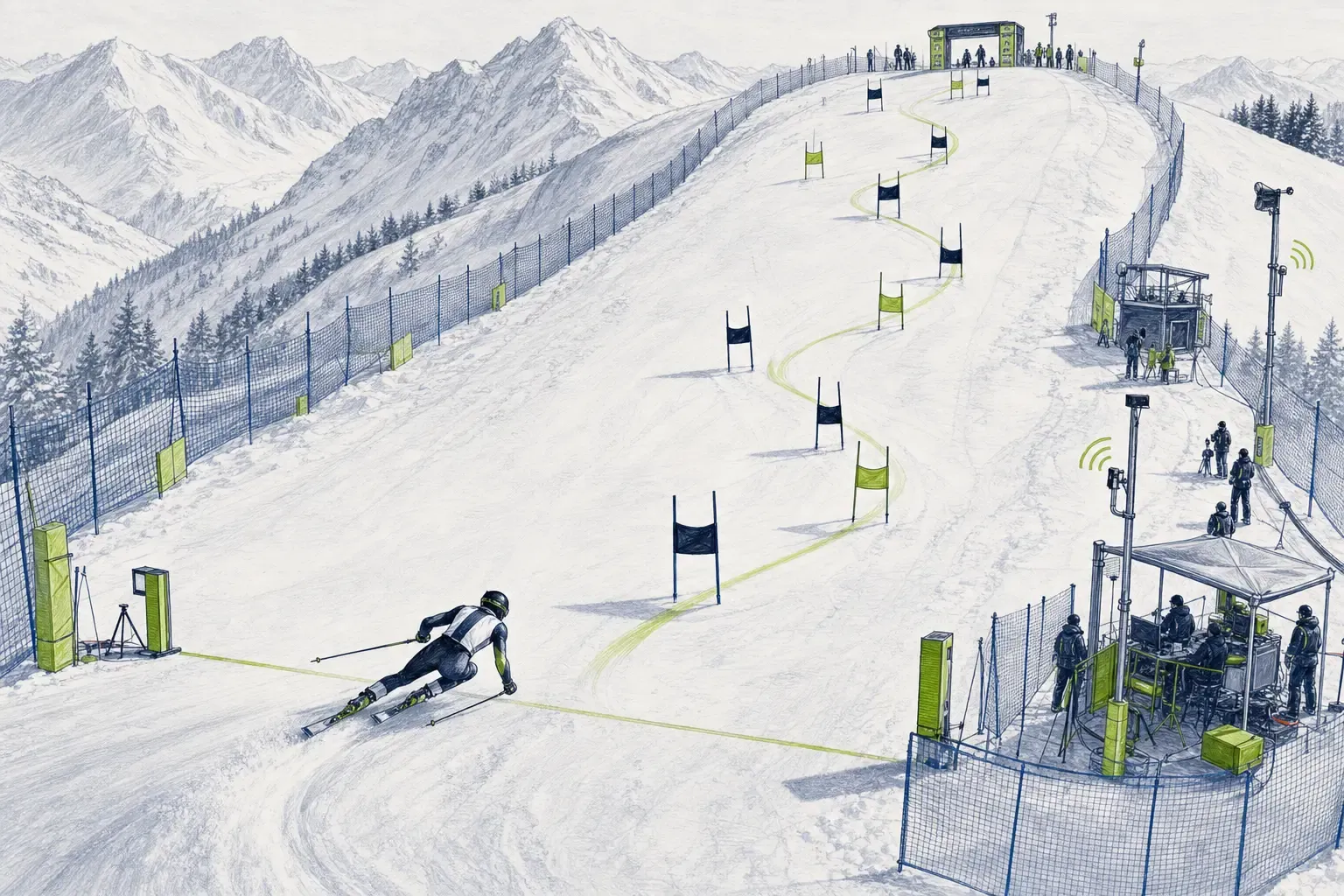
Race course
A marked, prepared, and secured section of a slope where a ski competition or race training takes place.
Open entry →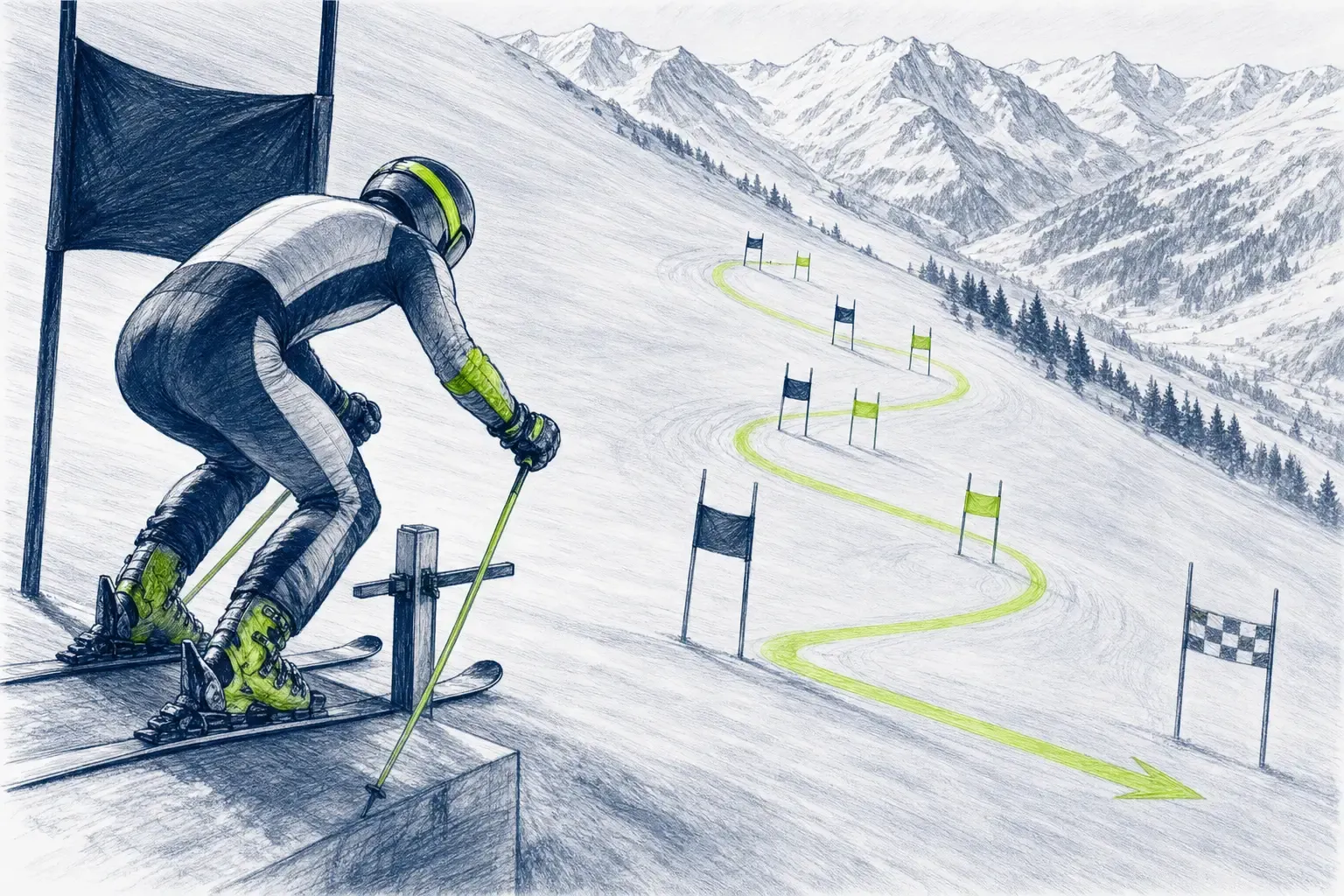
First run
The first run is the opening competitive run in two-run ski races, and its time and validity affect both the overall result and the start order for the second run.
Open entry →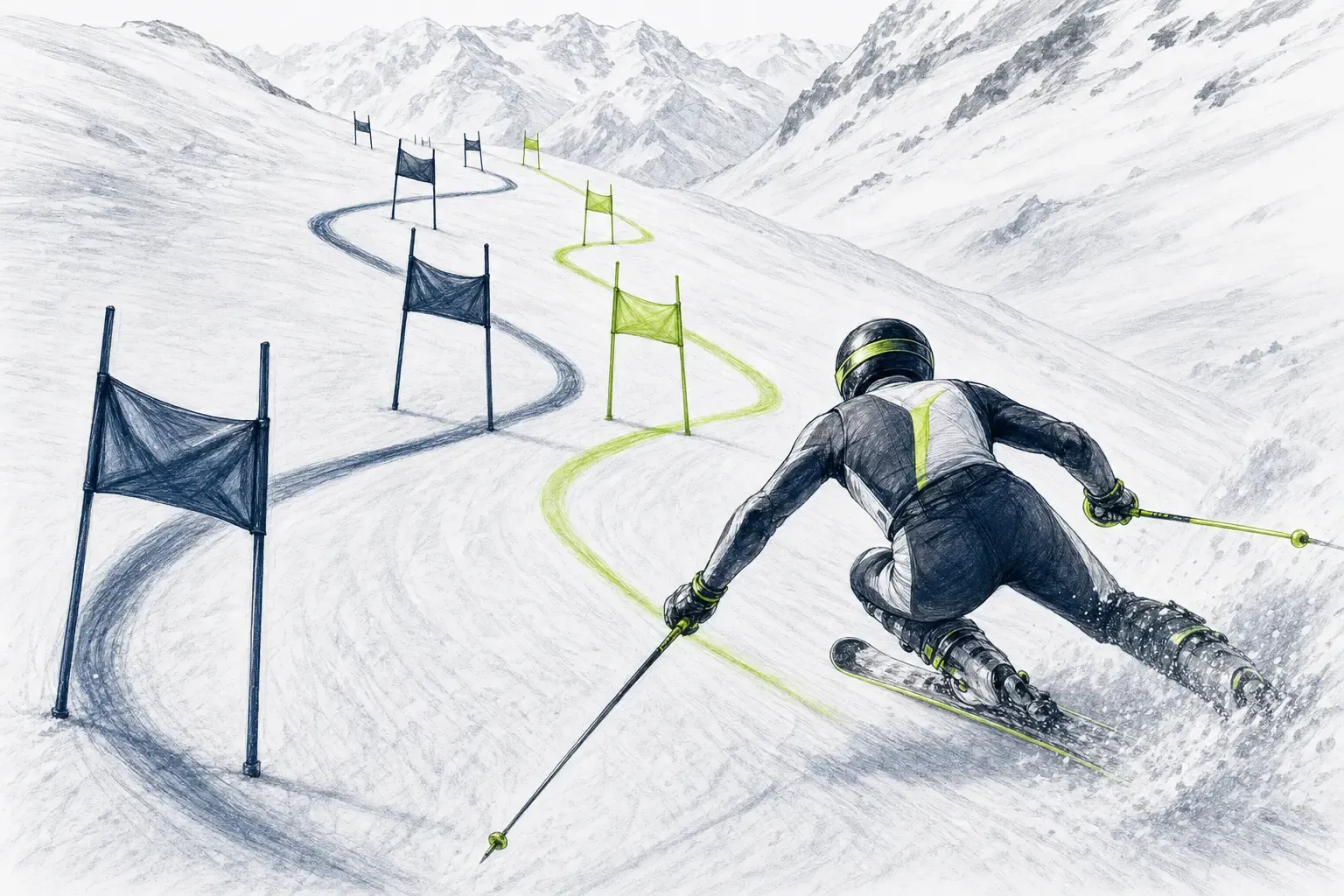
Second run
The second run is the second competitive run in a race whose result is made up of two runs. The order is usually decided by the sum of the times from both runs.
Open entry →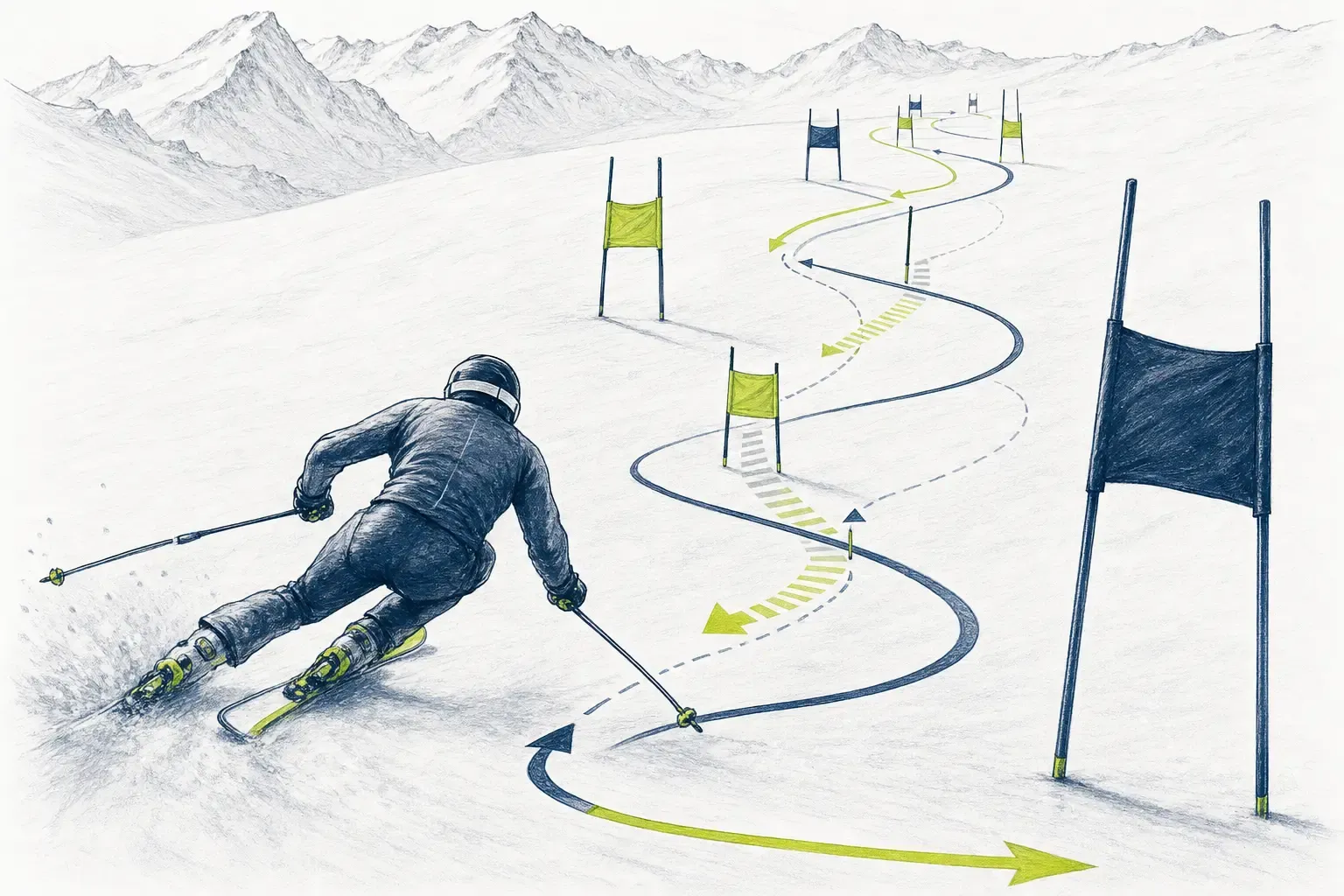
Course rhythm
The spatial and temporal arrangement of successive turns, created by the setting of gates, the terrain, and the speed of skiing.
Open entry →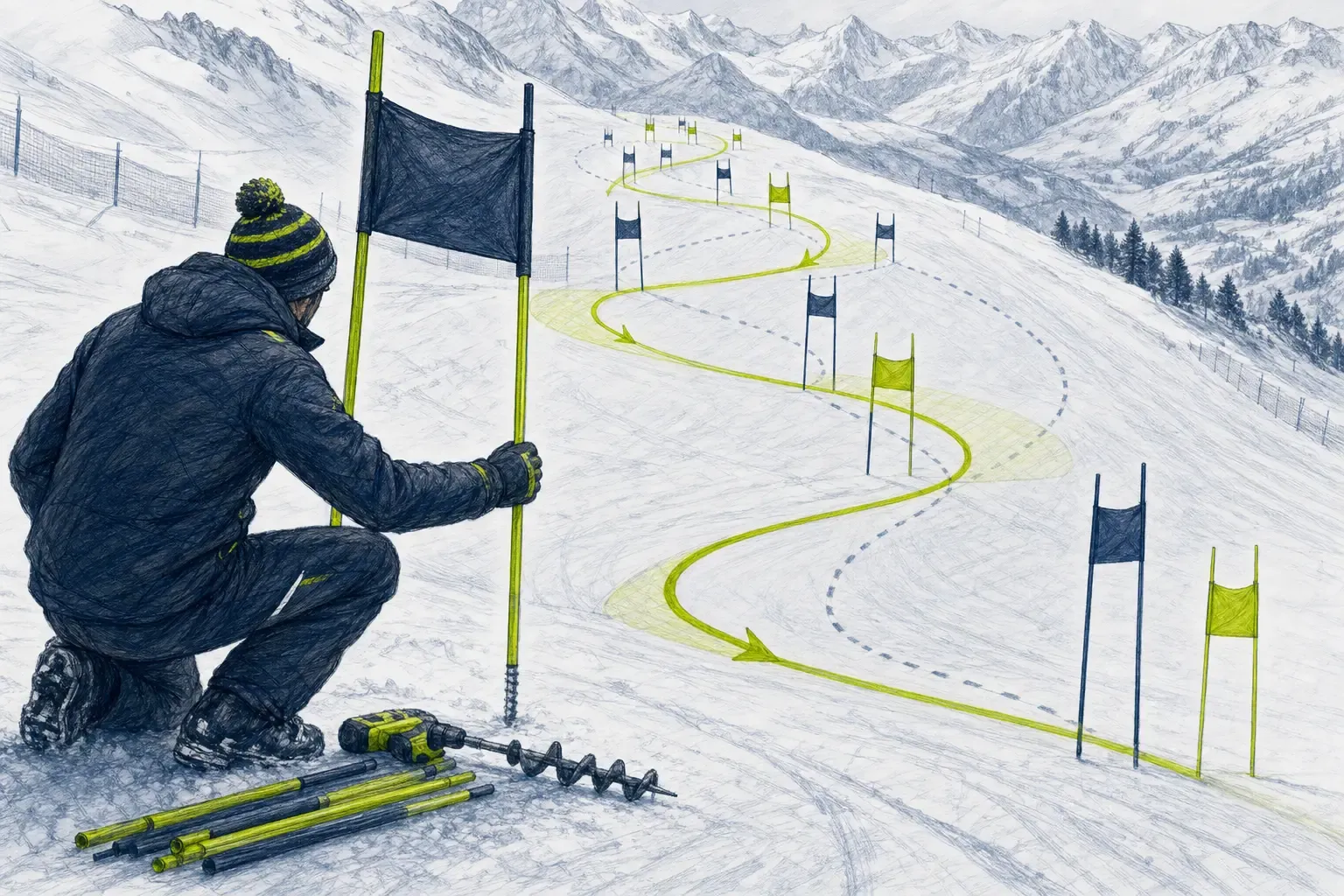
Course setter
Course setter is a specialist who, according to the rules, the terrain, and the level of the racers, places the gates and creates the line of a race or training course.
Open entry →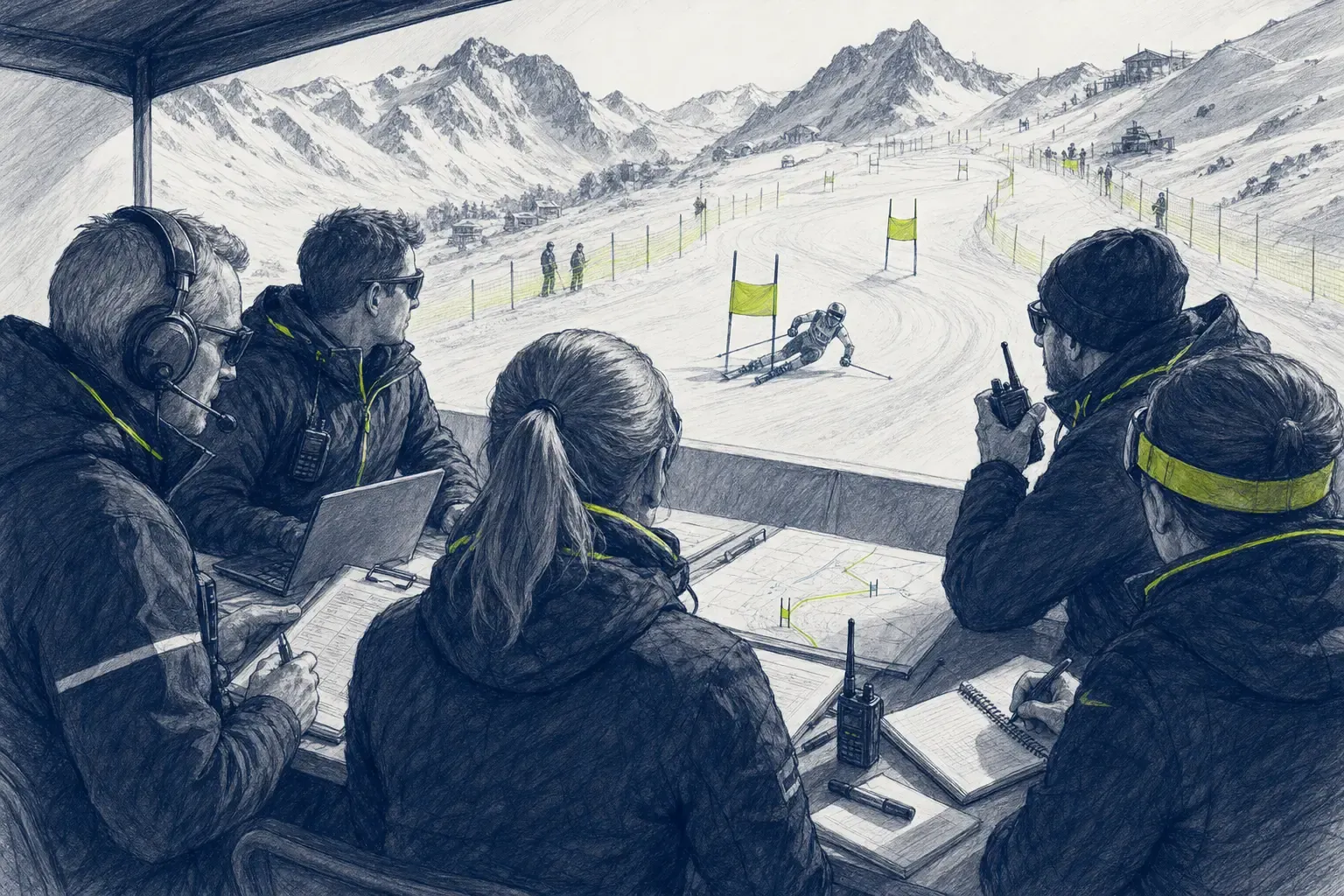
Race jury
The race jury is the decision-making body that oversees compliance with the rules, the safe and proper running of ski races, and decides on protests or the interruption of the competition.
Open entry →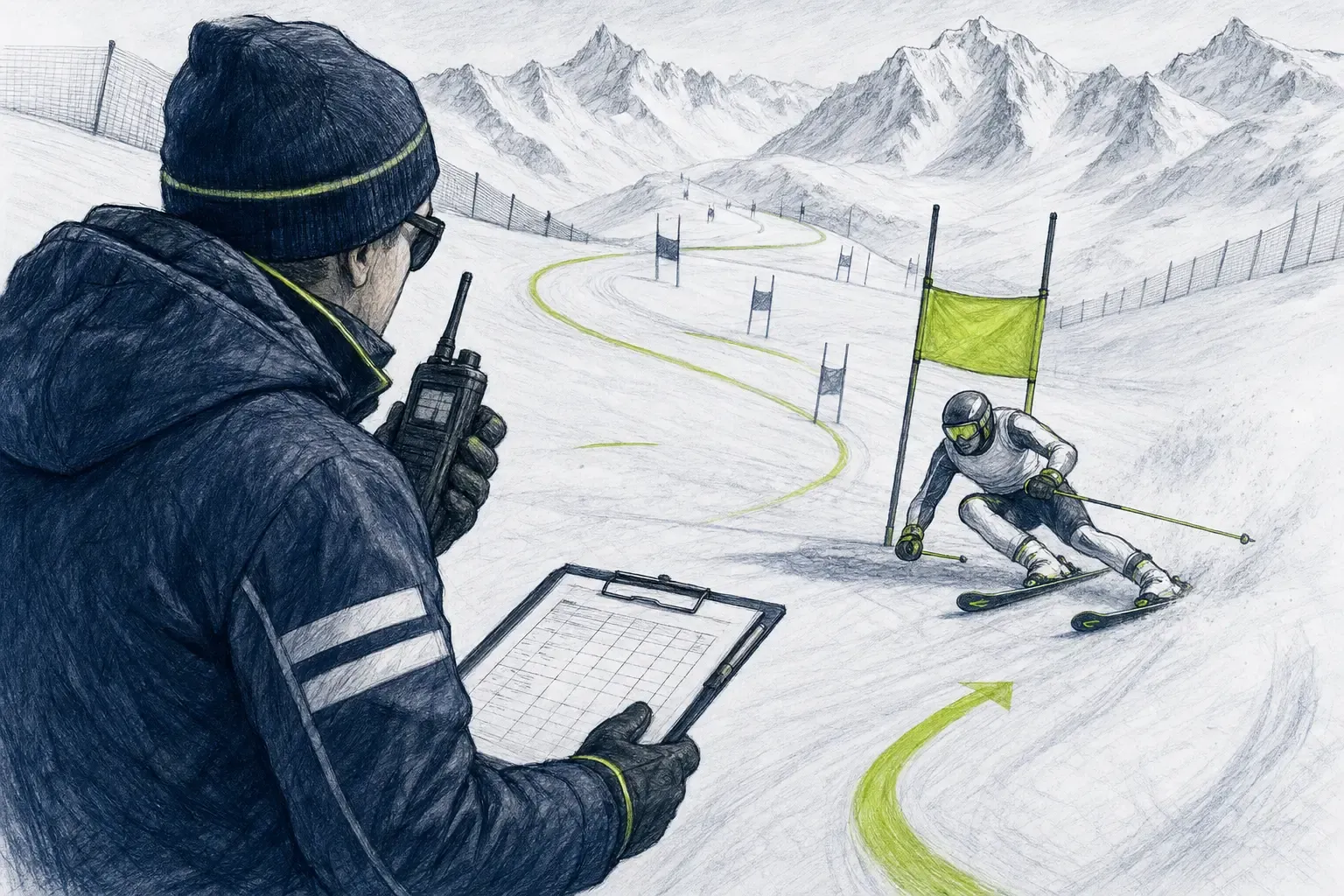
Referee
A referee is a qualified race official who, according to their specific role, monitors compliance with the rules, assesses the course of the competition, and takes part in fair and safe decision-making.
Open entry →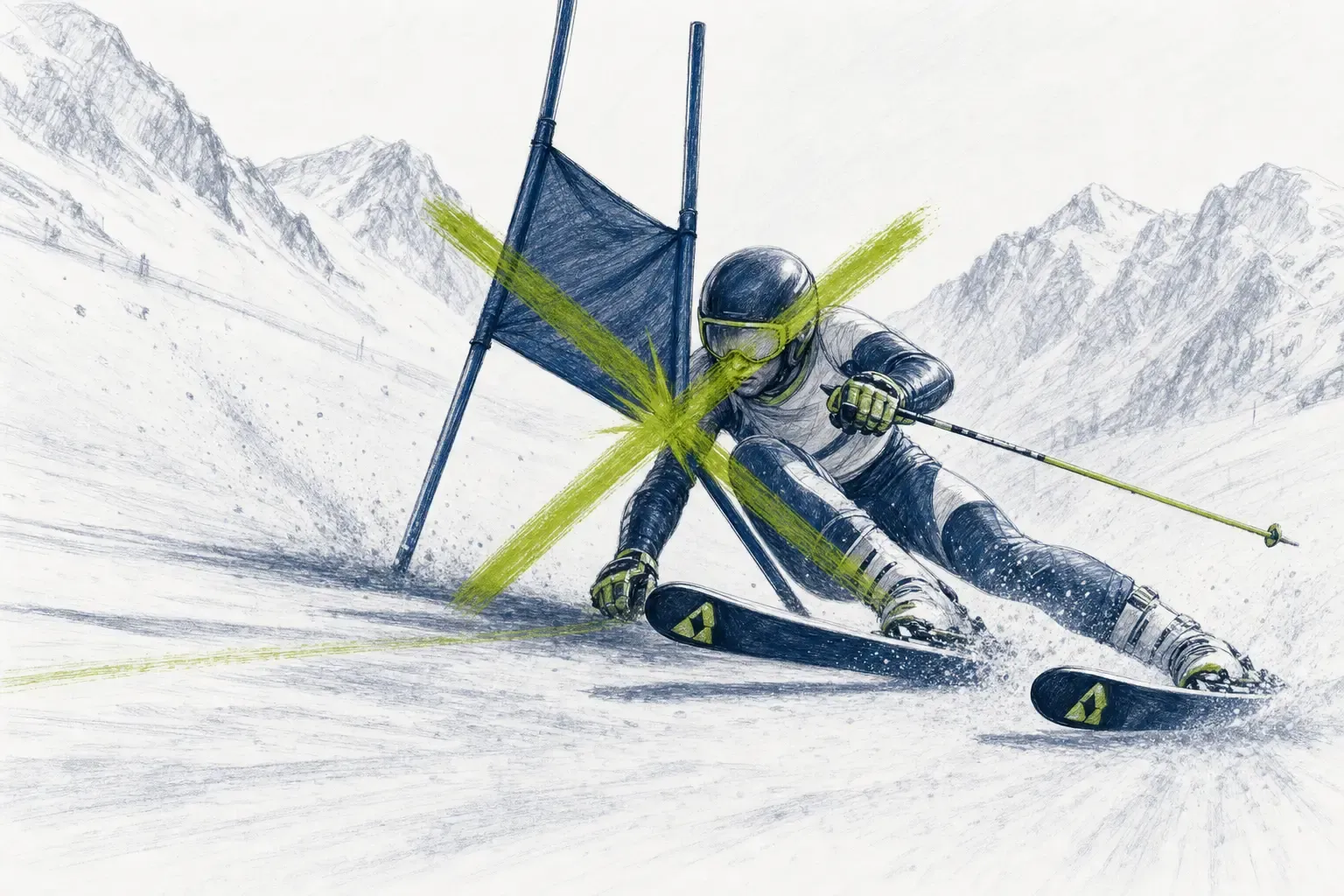
Disqualification
Disqualification (DSQ) is a decision that a racer’s run or result is not recognized because of a violation of the applicable competition rules.
Open entry →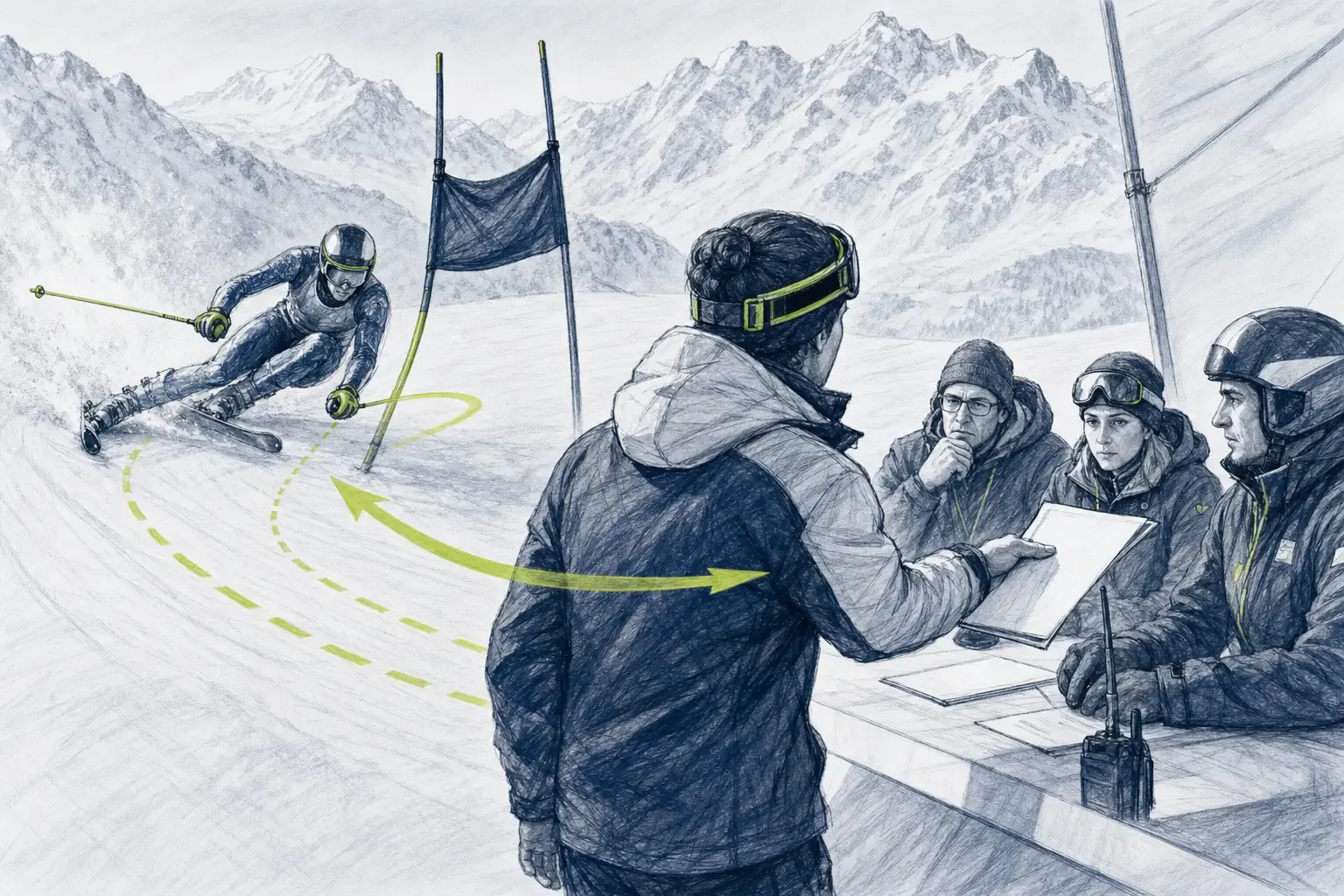
Protest
A protest is a formal, justified, and timely objection to a specified fact or decision in a ski competition.
Open entry →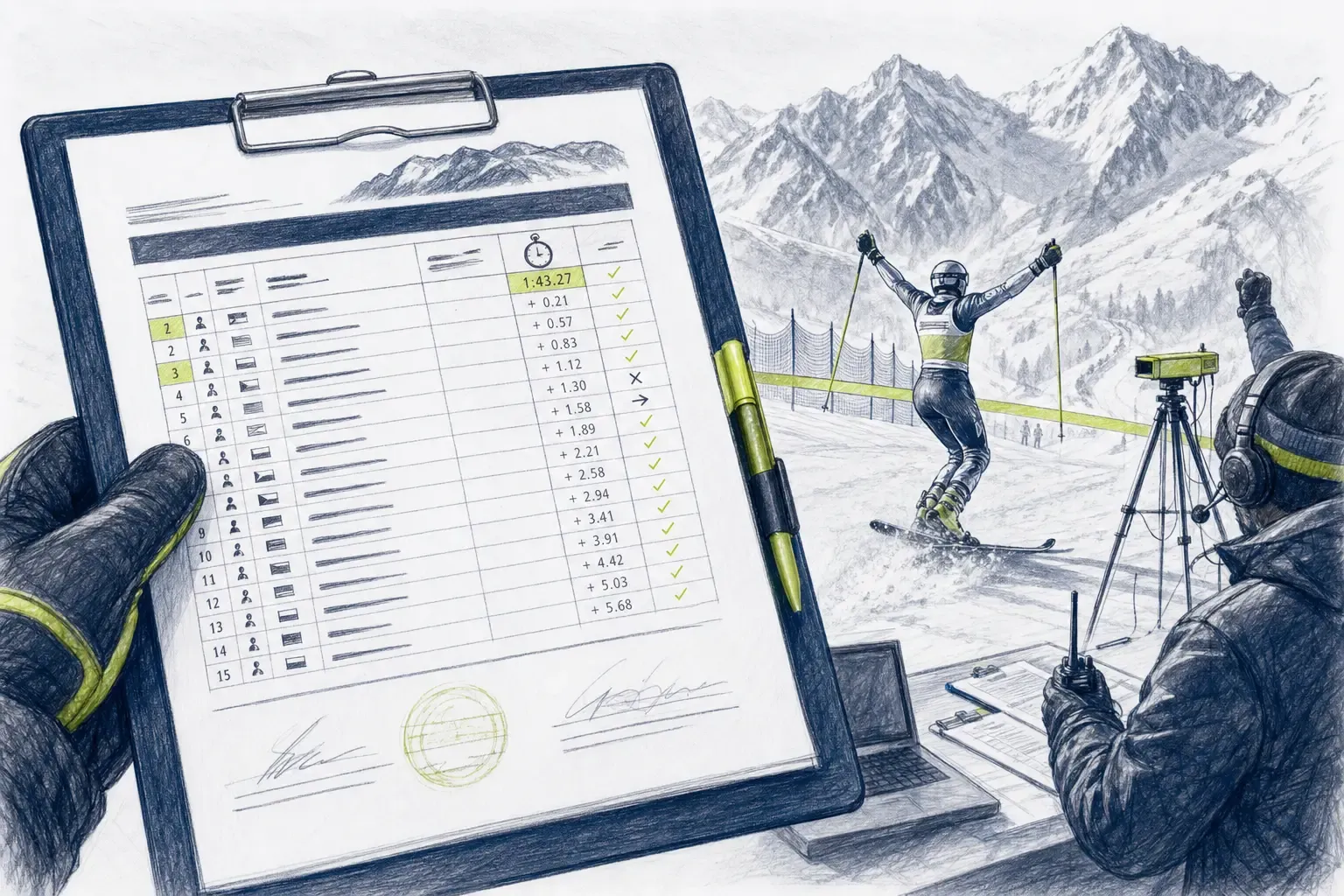
Results list
The official record of the race’s progress and results, showing the ranking, times, time gaps, and status of each competitor.
Open entry →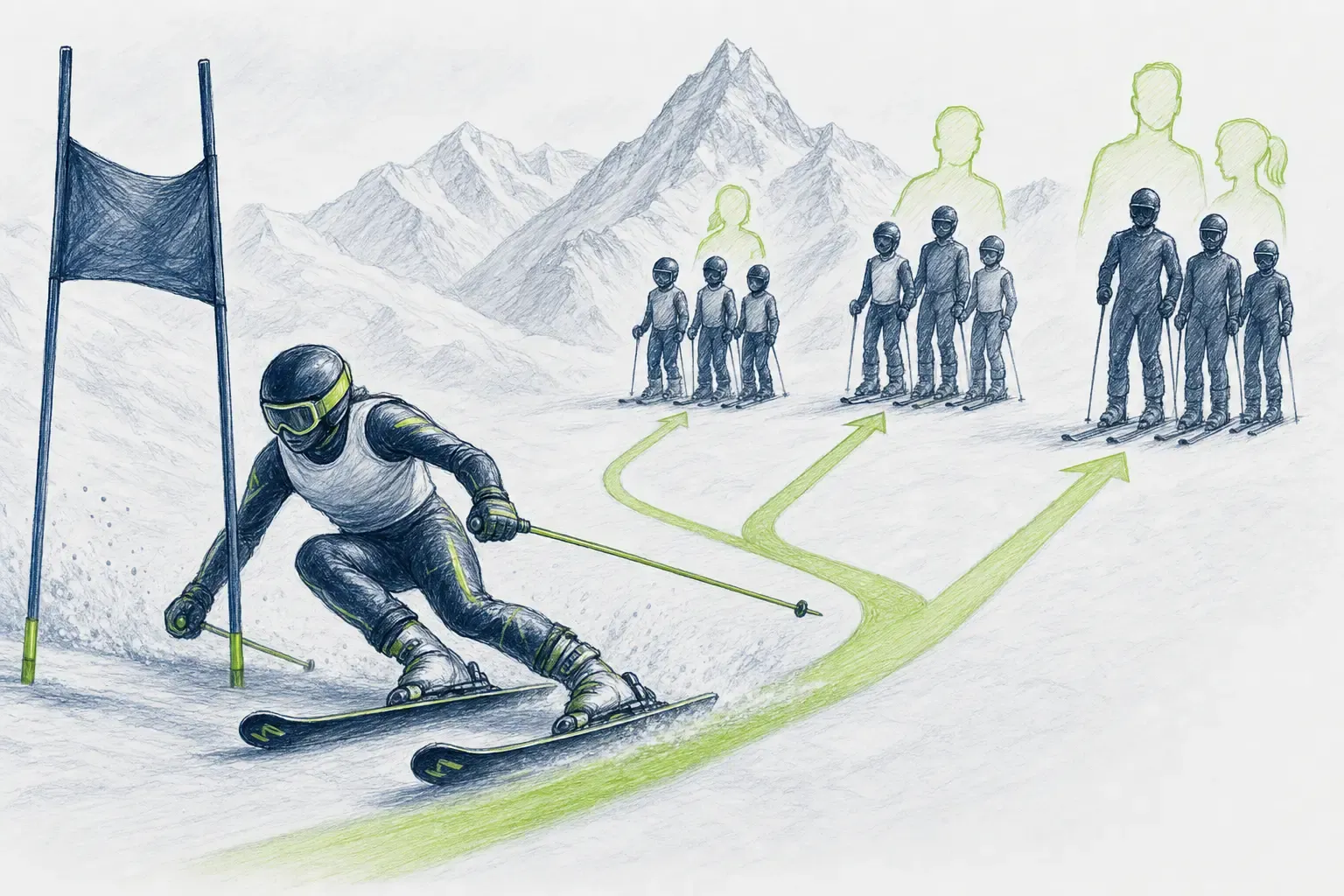
Competitor category
A competitor category is a rule-defined group into which a skier is placed, mainly according to year of birth and gender.
Open entry →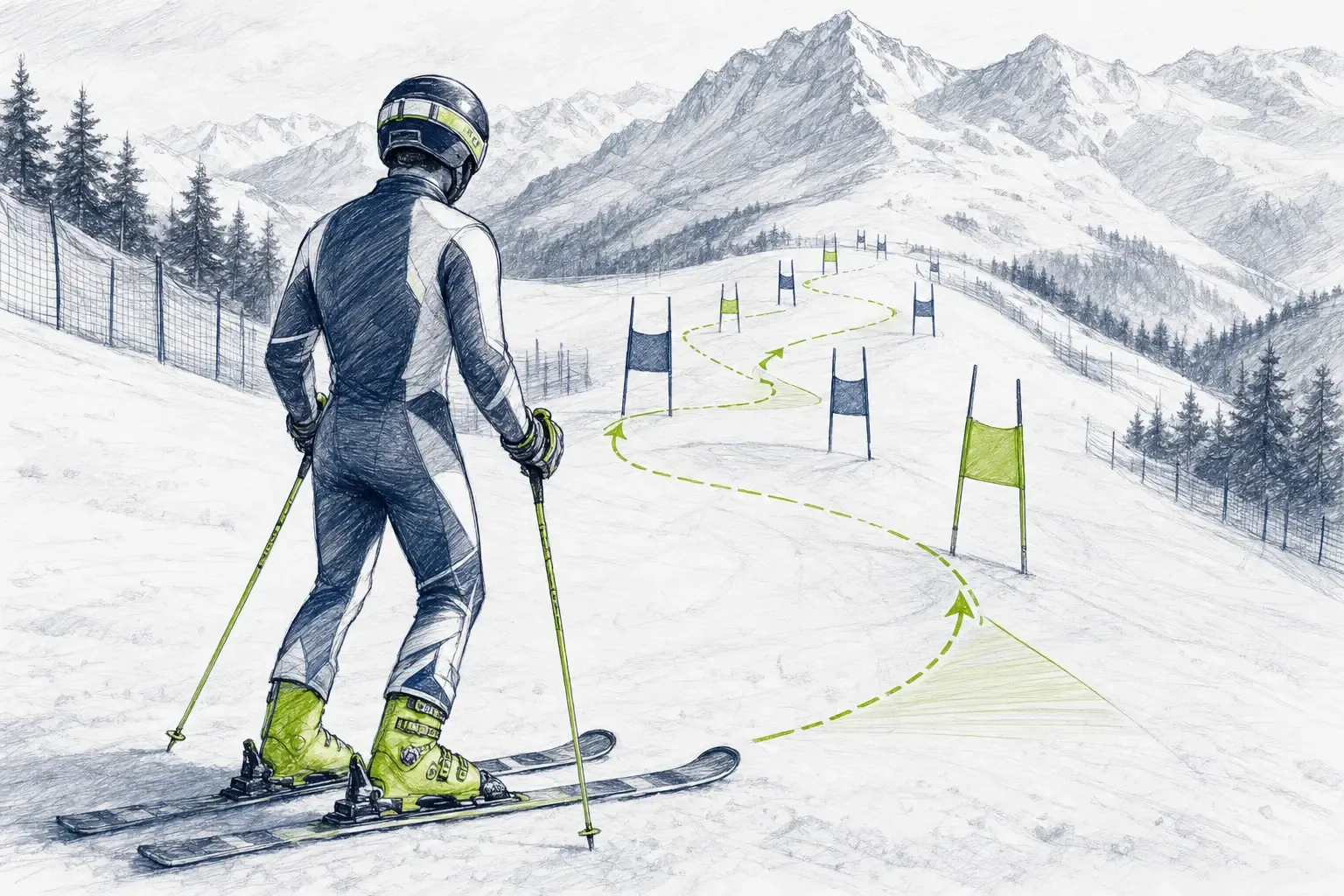
Course inspection
Course inspection is an organized familiarization of the competitor with the marked course before the start; it serves to assess the gates, terrain, conditions, and choose the racing line.
Open entry →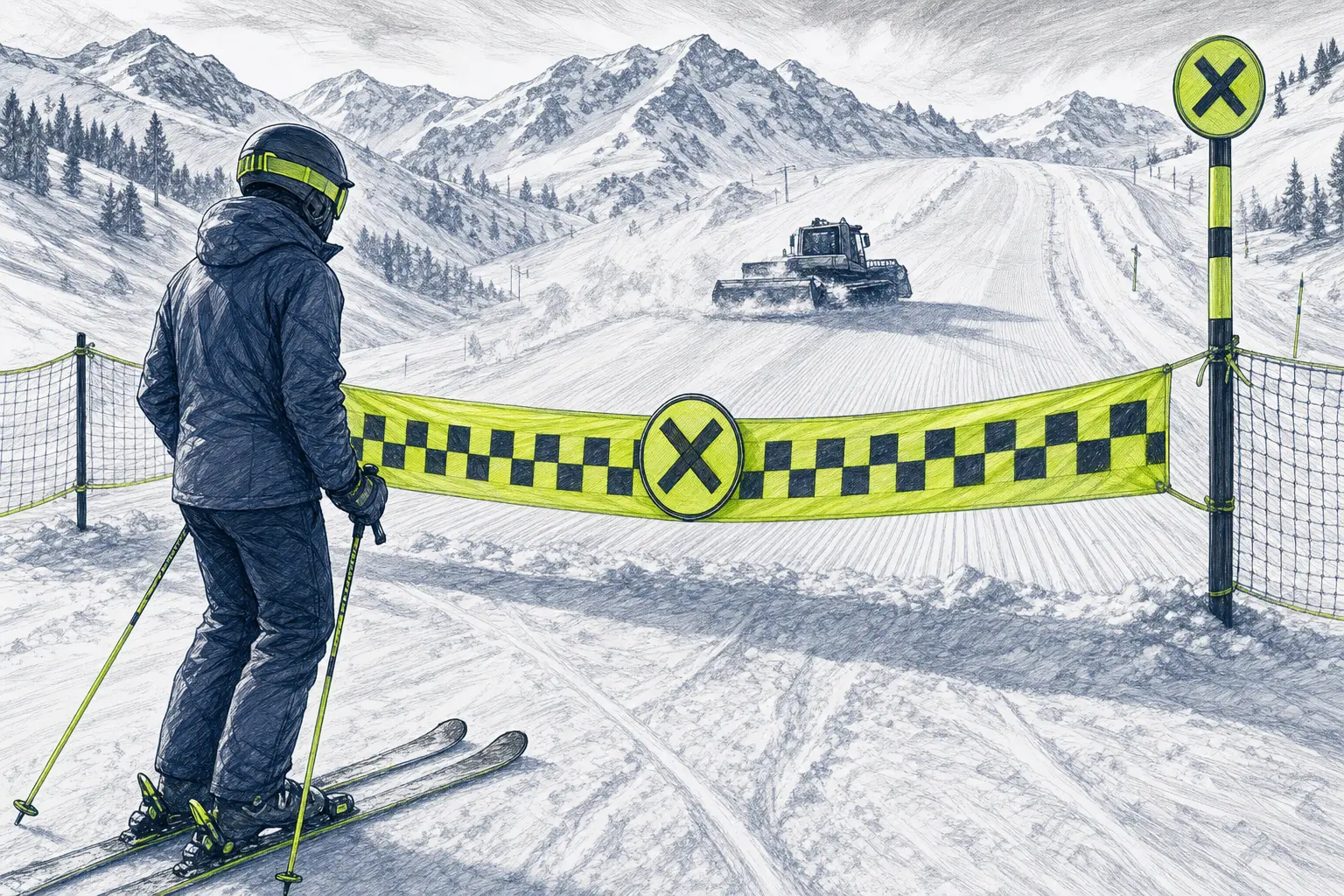
Closed course
A slope, part of a slope, or race course that is temporarily or permanently inaccessible and may not be entered without the consent of the responsible person.
Open entry →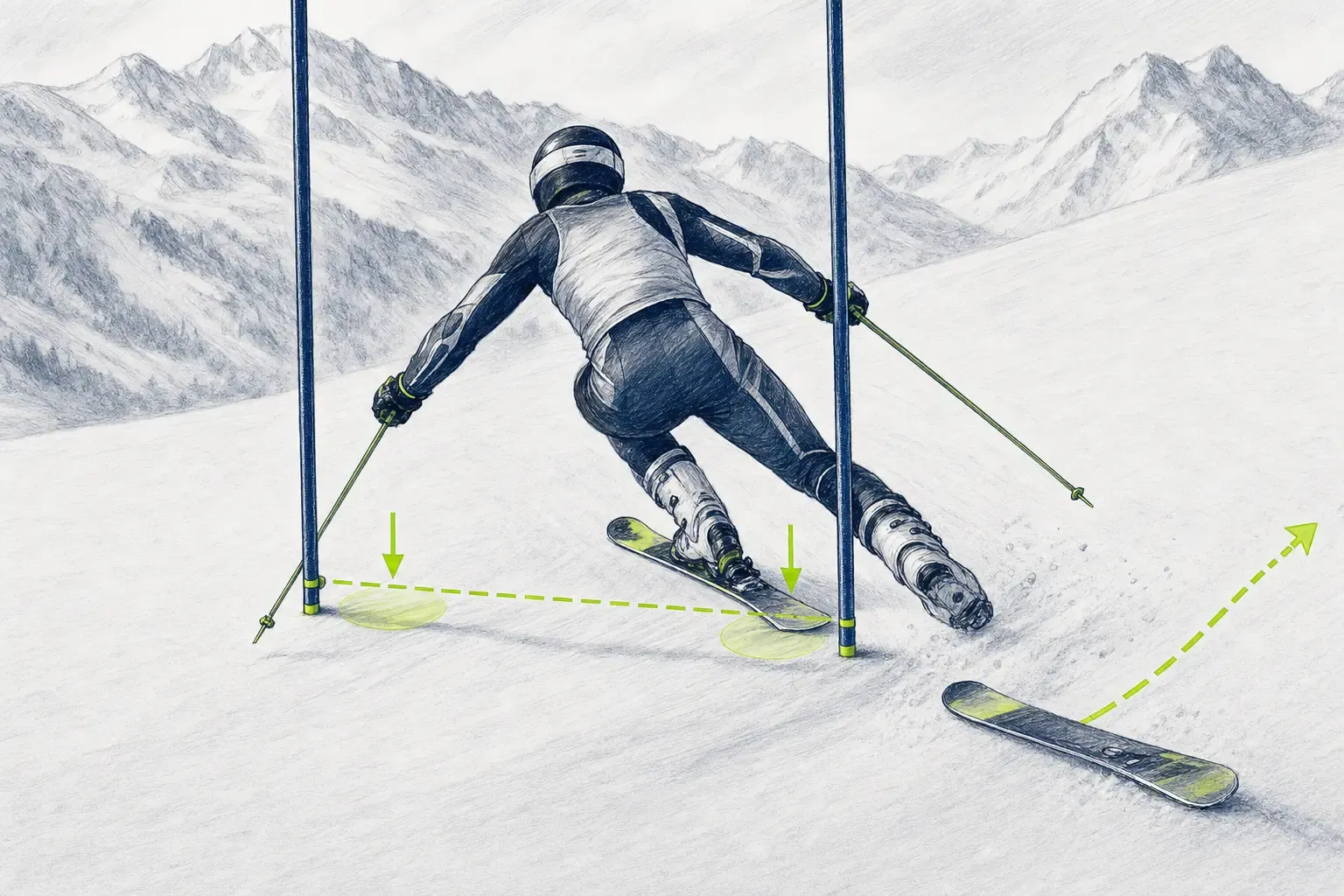
Missed gate
A missed gate is an incorrect passage through a gate in which the skier does not complete the required crossing of the gate line.
Open entry →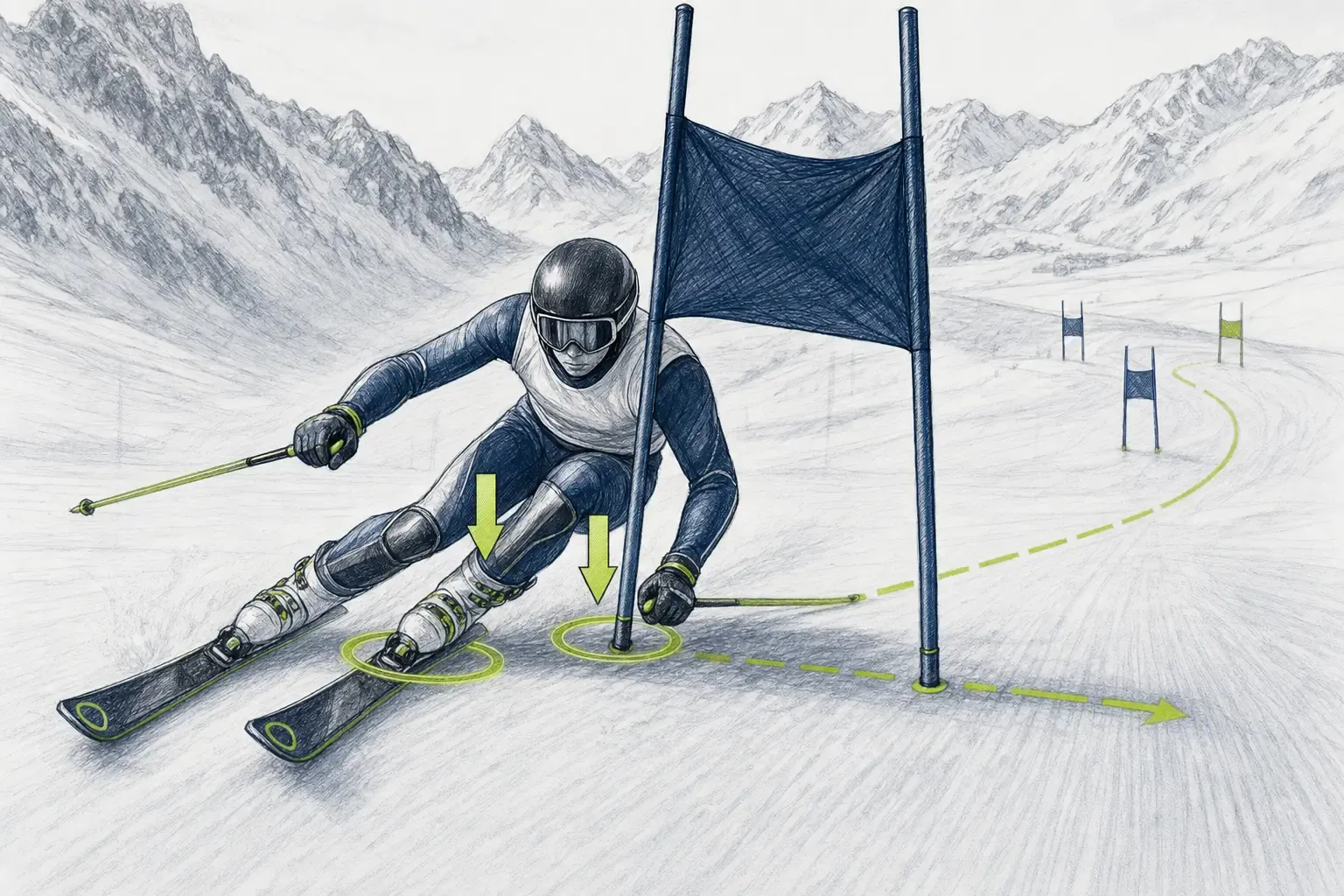
Correct gate passage
Correct gate passage means that both ski tips and both feet of the racer pass the prescribed gate line or the correct side of the turning pole. From a technical point of view, the passage should also be smooth and stable, and prepare the skier for the next gate.
Open term →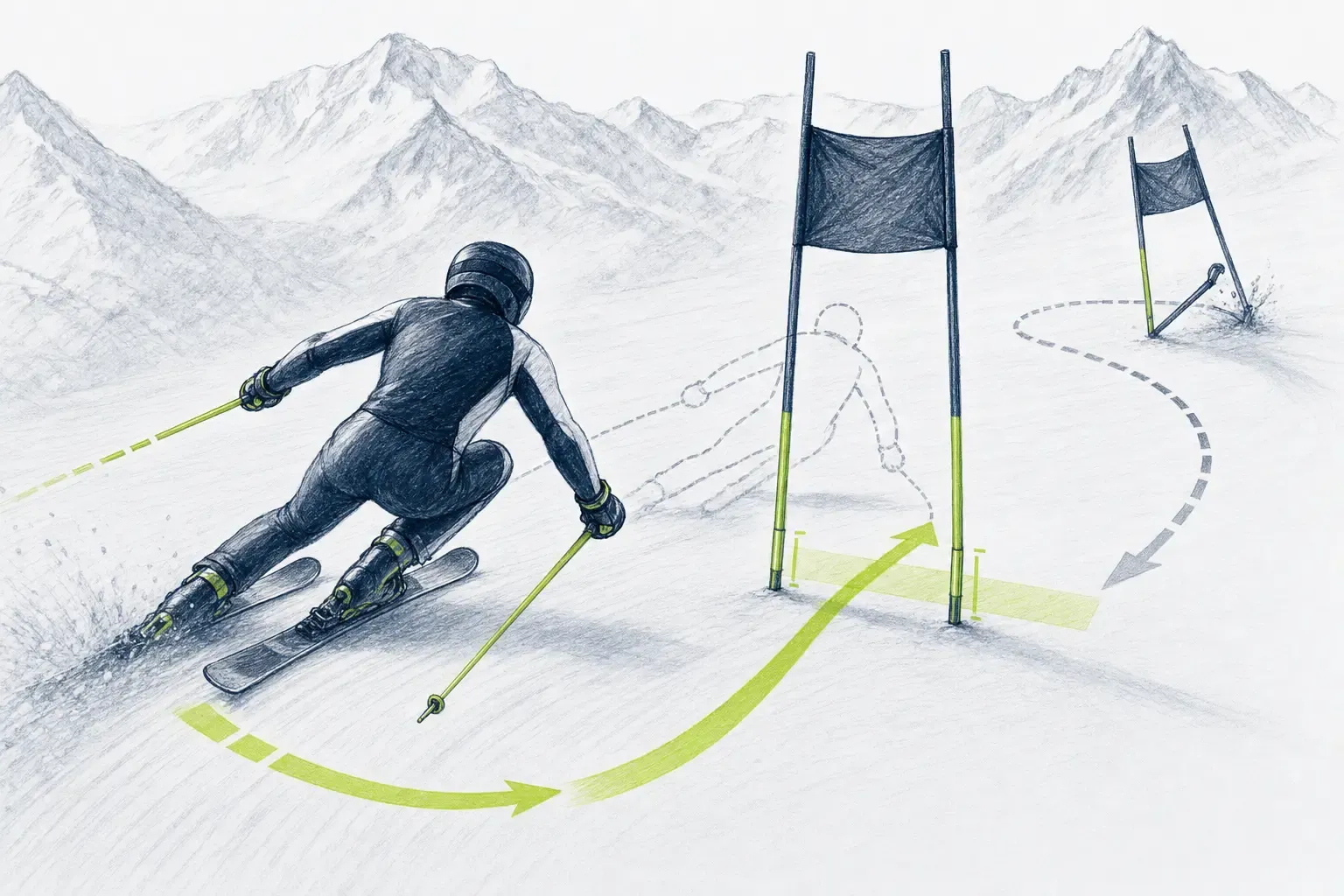
Gate re-passage
Returning to a missed or incorrectly passed gate in order to correct the mistake. In FIS races, this is possible only until the racer’s skis have come to a complete stop and no danger arises for the next starter.
Open term →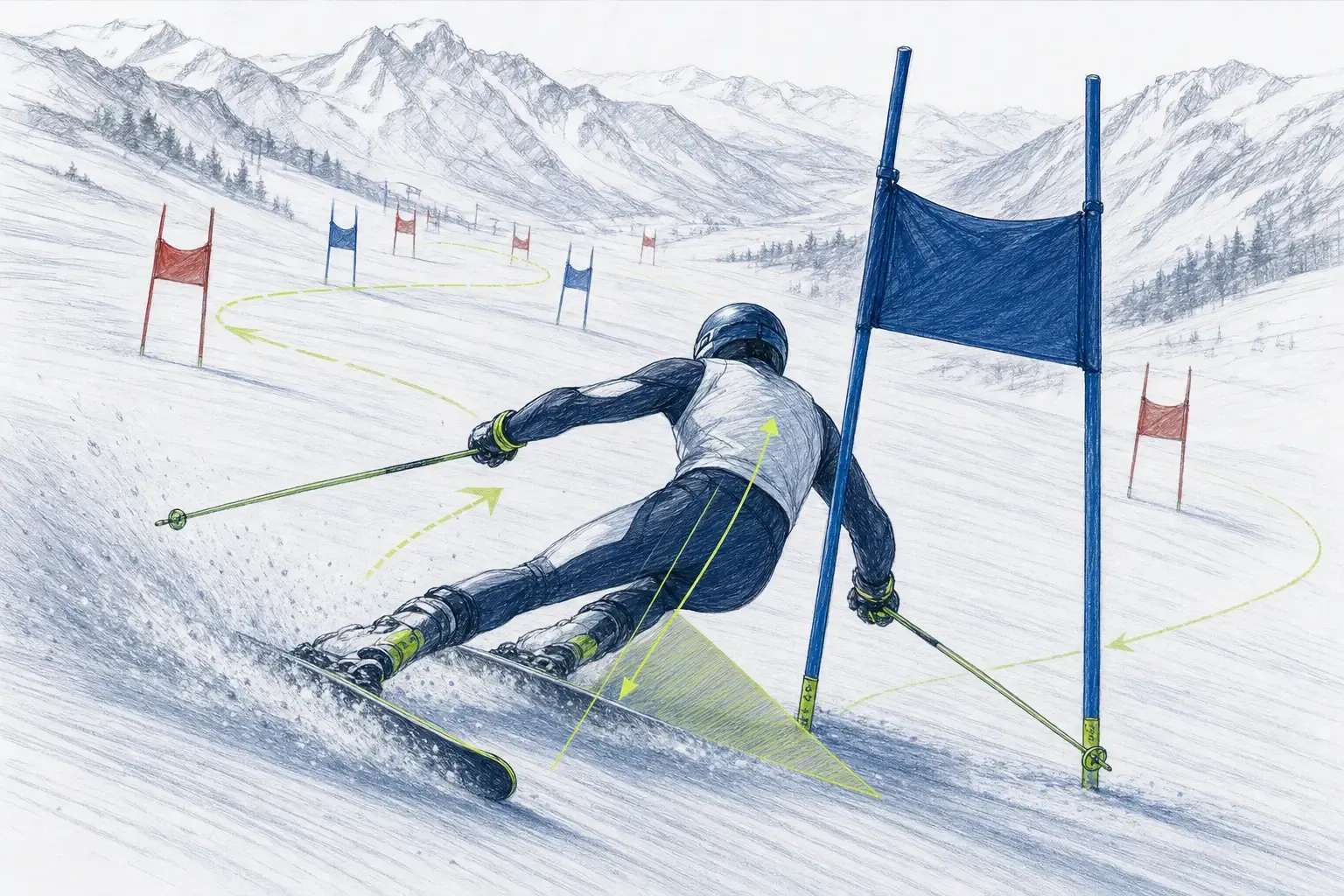
Blue gate
A blue gate is a color-marked element of a ski course that alternates with a red gate in standard alpine disciplines.
Open term →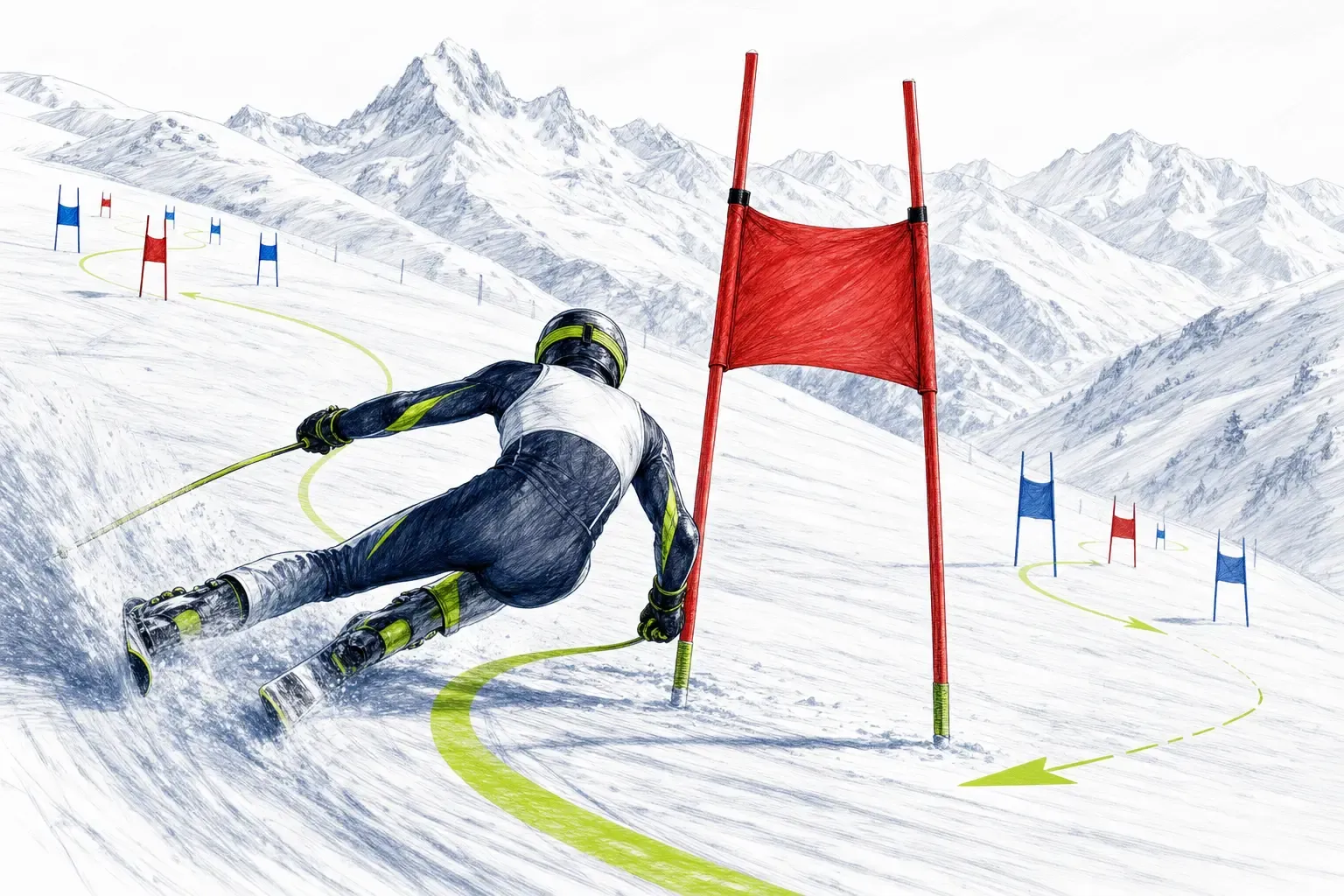
Red gate
A red gate is a color-marked racing gate; the color helps read the course, but does not determine the direction or difficulty of the turn.
Open term →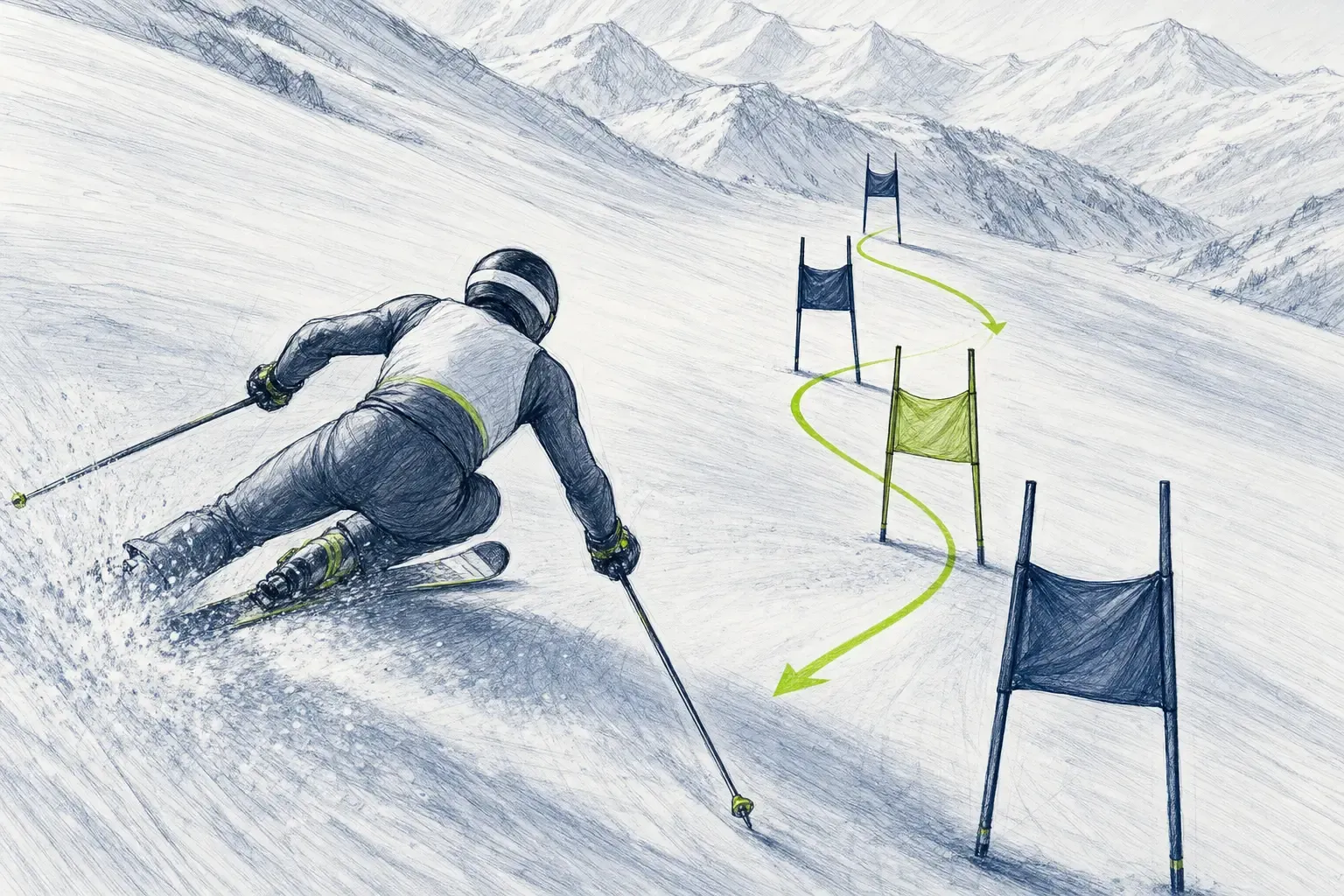
Vertical line
A vertical line is a slalom combination of three or four consecutive closed gates set approximately in the fall line.
Open term →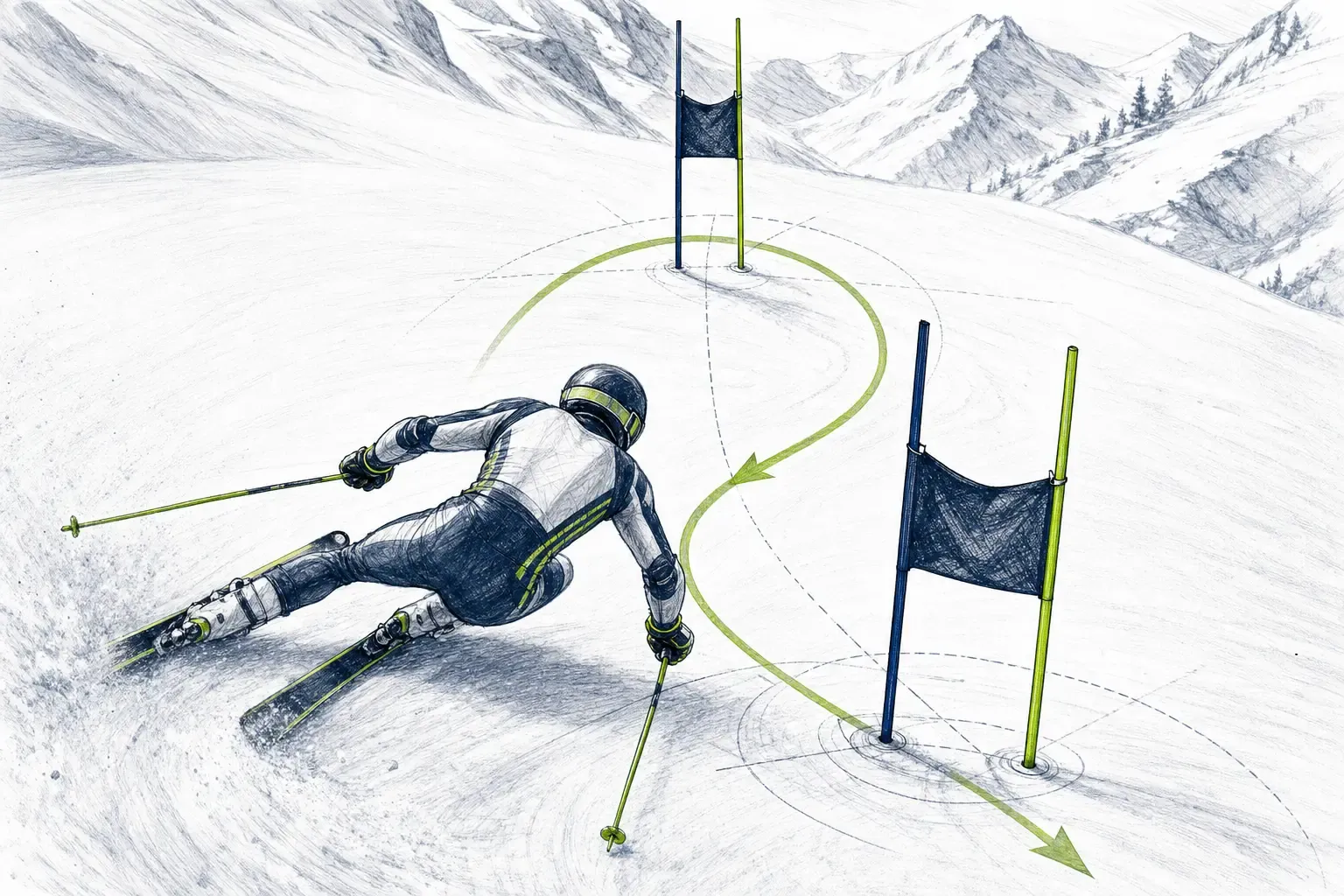
Hairpin turn
A hairpin is a slalom double combination of two closed gates set close together. It requires a precise approach, a quick change of direction, and a correct passage through both gates.
Open entry →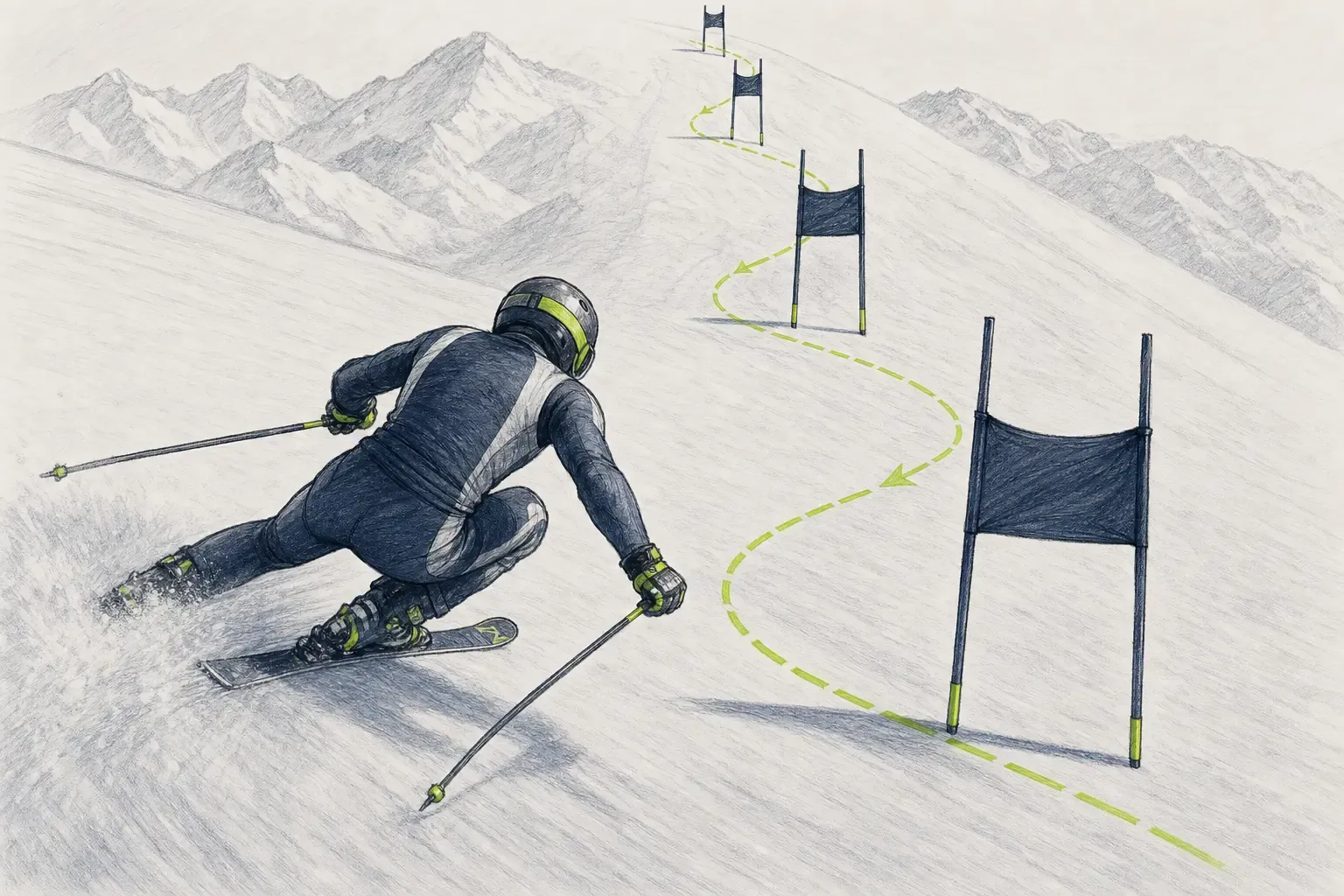
Flush
A flush is a slalom vertical combination of three or four closed gates in a row.
Open entry →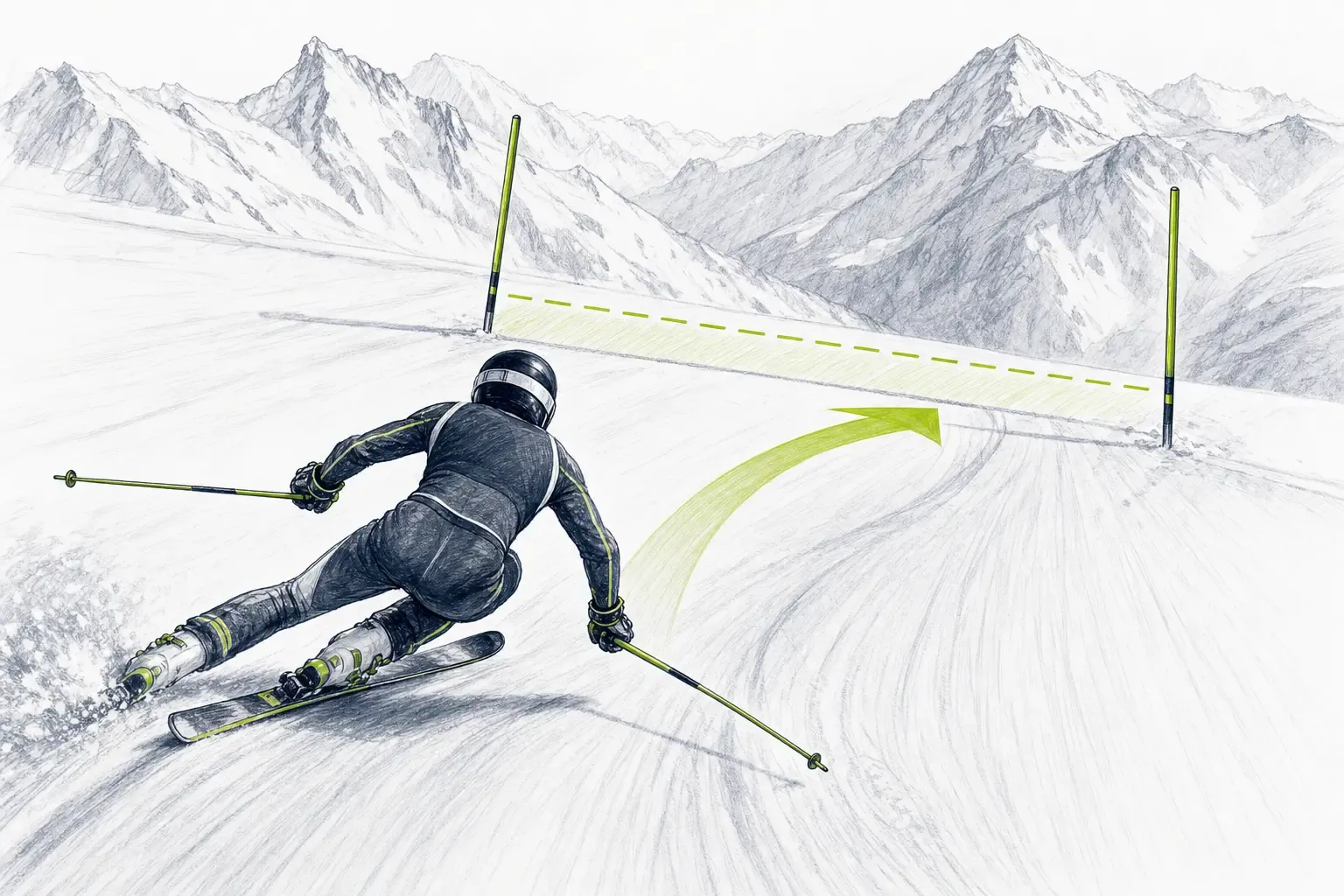
Open gate
A slalom gate oriented mainly across the slope; in FIS rules it is referred to as a horizontal or open gate.
Open entry →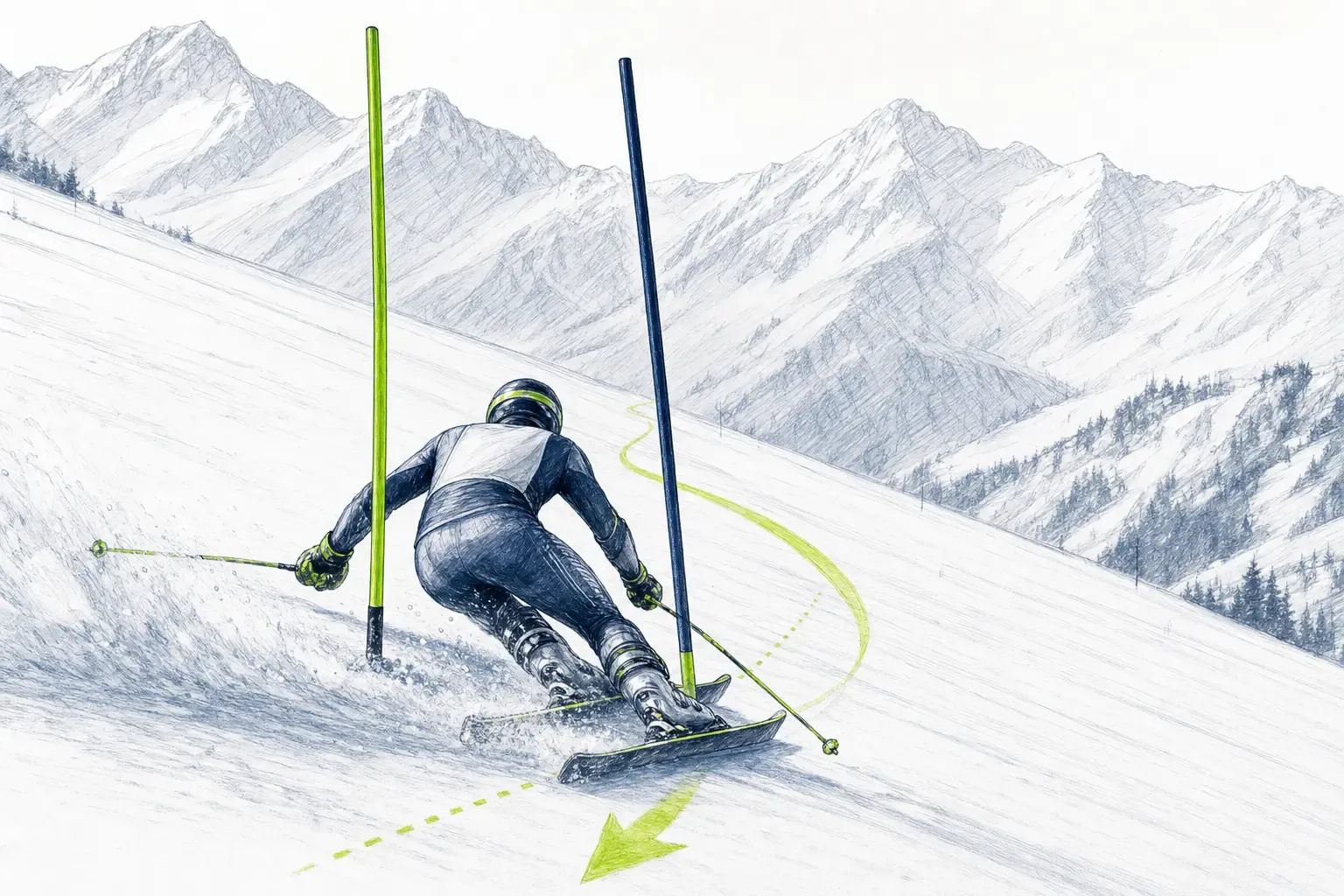
Closed gate
A slalom gate whose two poles are set approximately in the fall line, with one lower on the slope than the other. In the rules it is also referred to as a vertical or closed gate.
Open entry →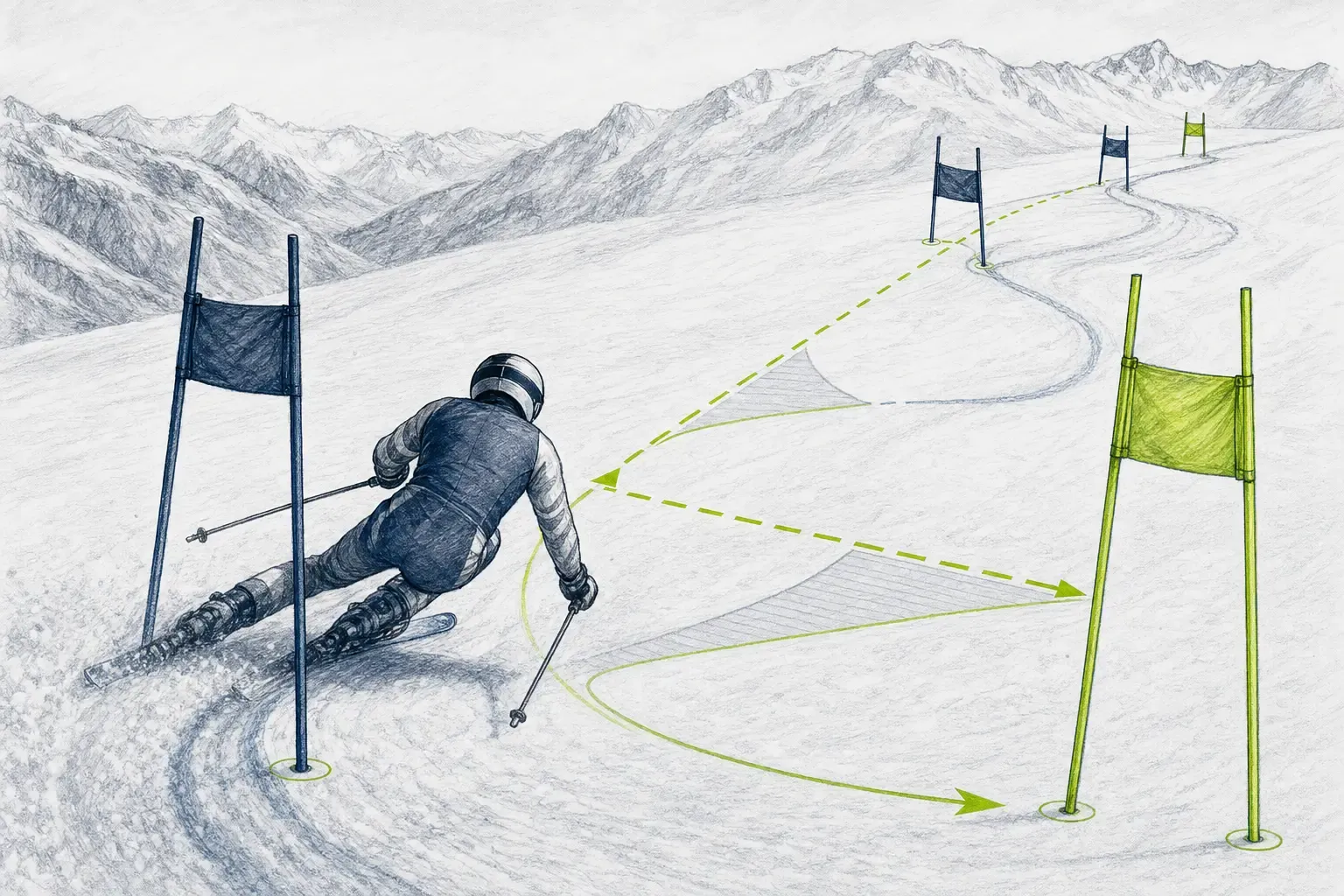
Gate spacing
Gate spacing is the distance between the defined points of consecutive gates; together with the lateral offset, it determines the rhythm, turn radius, and speed on the course.
Open entry →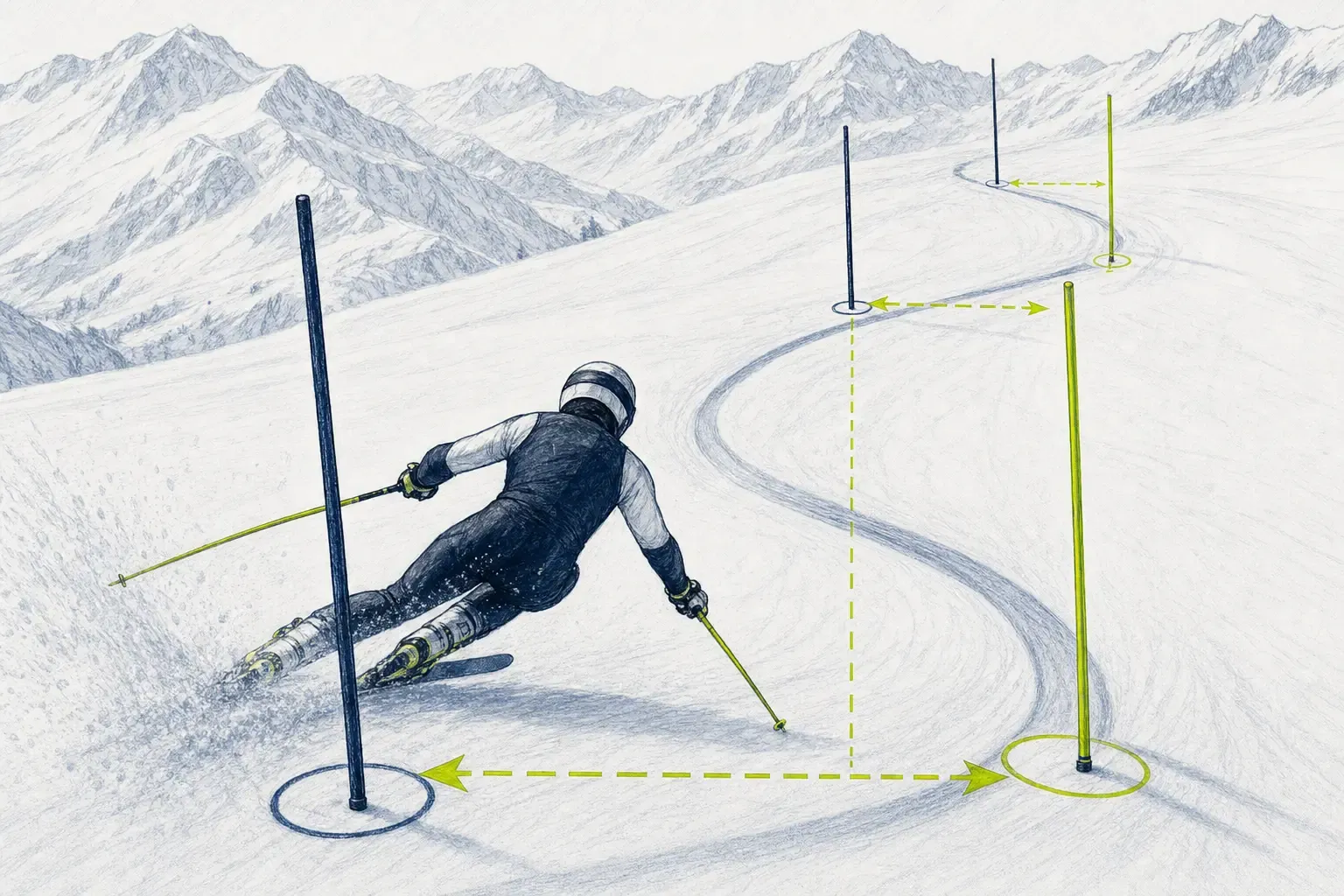
Gate offset
Gate offset is the side offset of consecutive turning poles or gates across the slope. Together with the distance in the direction of travel, it determines the size of the change of direction, the rhythm of the course, and the demands placed on the skier’s technique.
Open entry →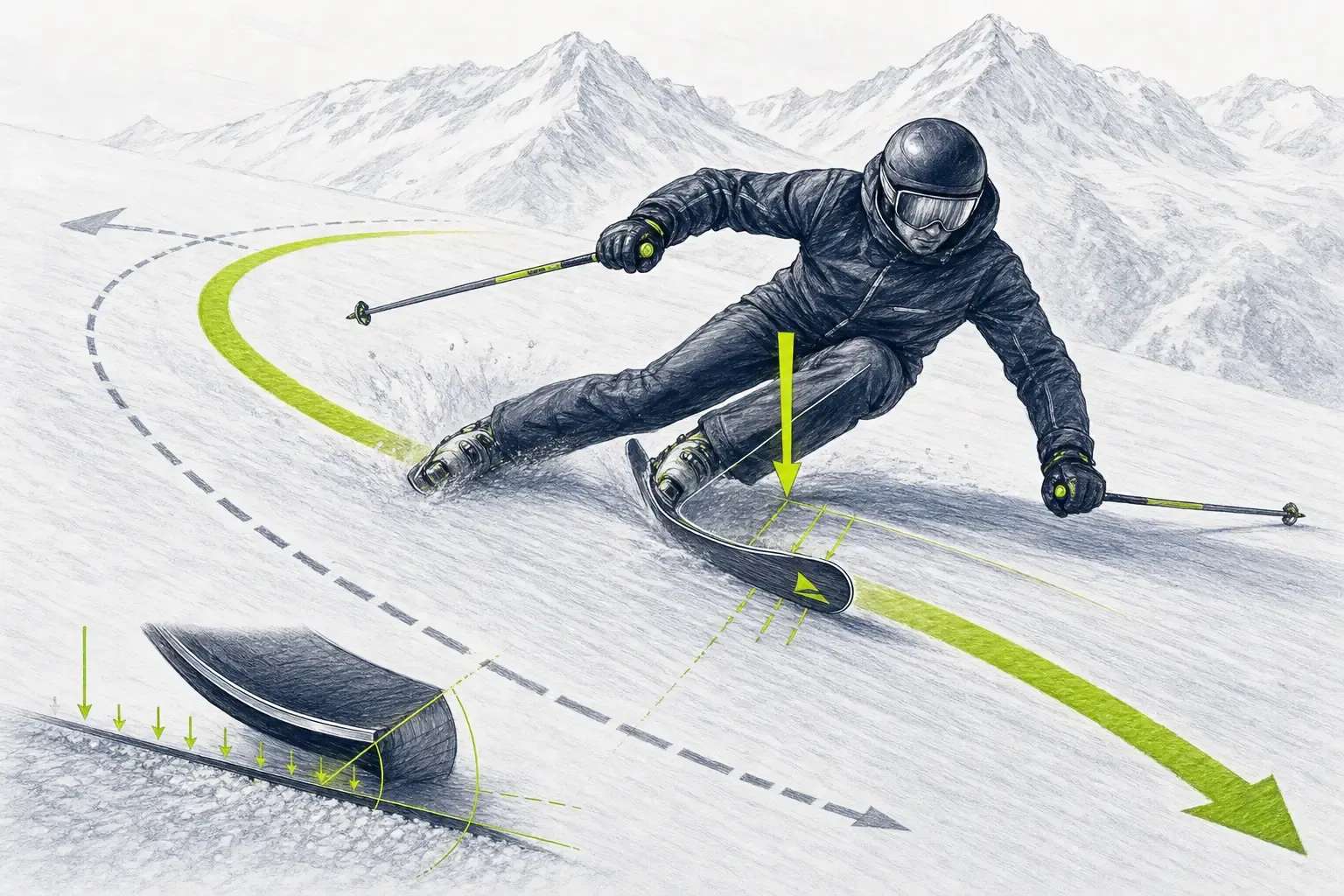
Change of direction
Deflection of the skier’s and skis’ path from the original direction by the forces acting between the skis and the snow.
Open entry →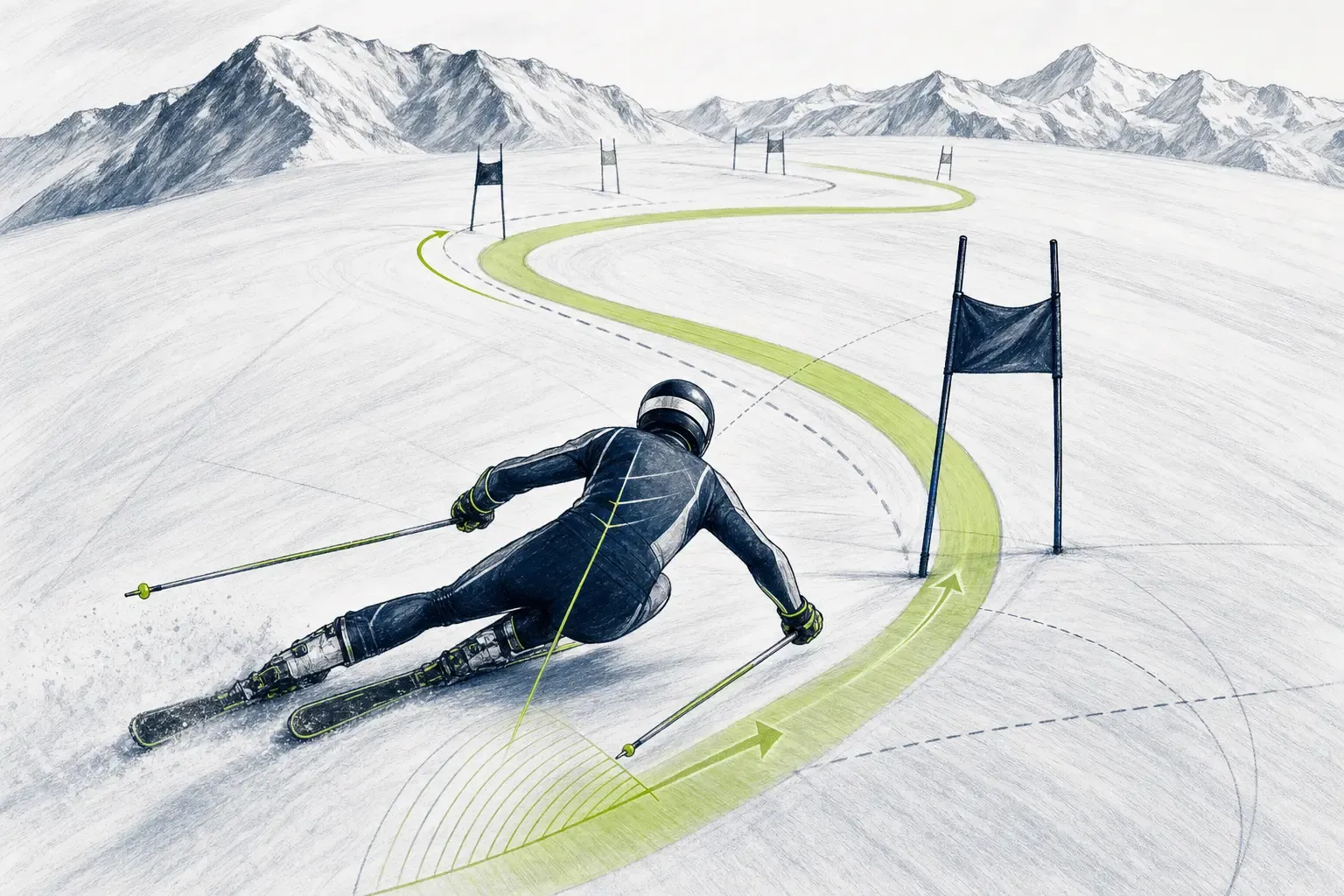
Early line
An early line is a tactical line through a turn in which the skier begins to change edges and create direction sufficiently before the gate, so that they do not have to rescue the turn below it with a sharp turn or braking.
Open entry →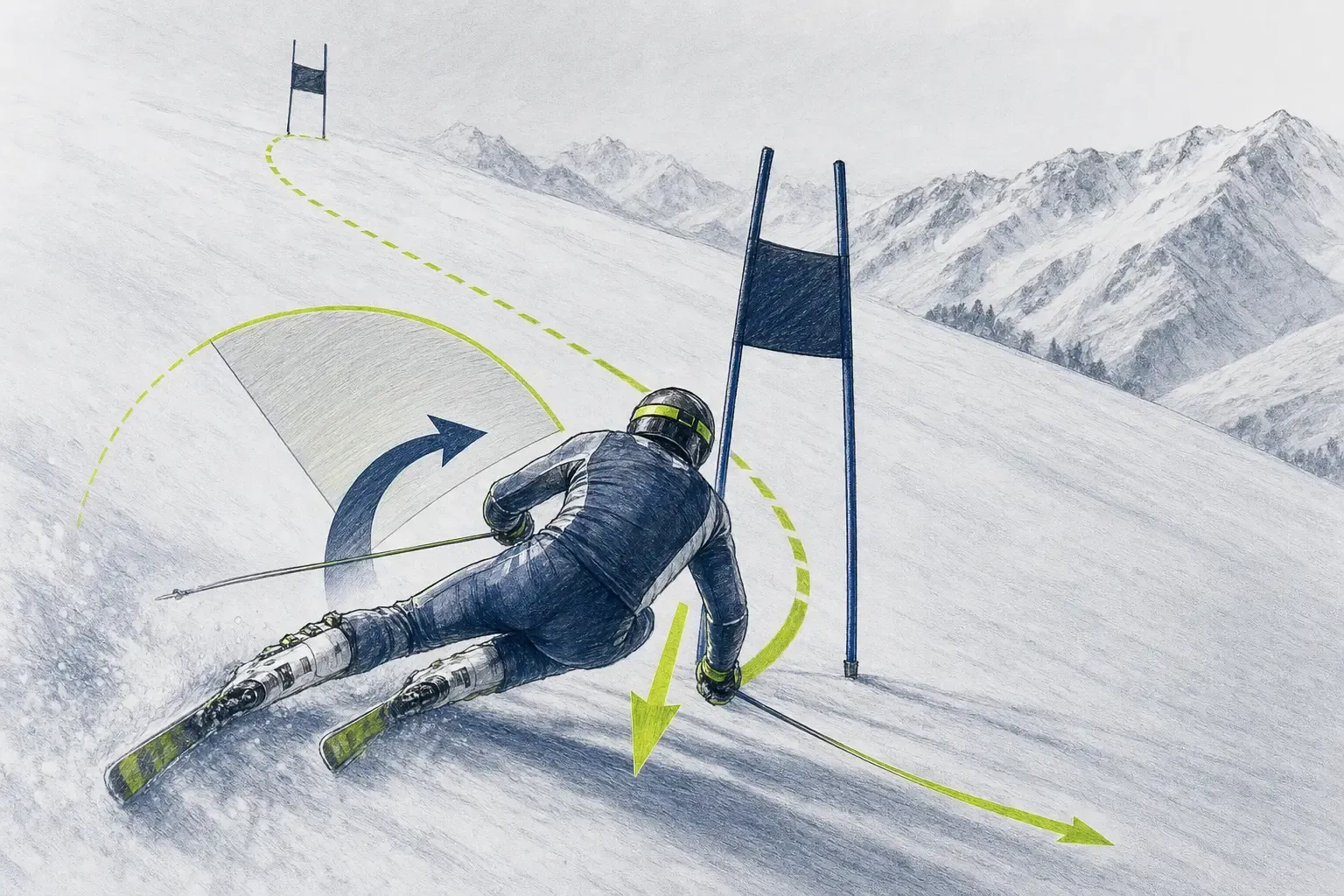
Late line
A late line is an unfavorable trajectory in a gate course in which the skier carries out a substantial part of the change of direction only at the gate or below it. The next gate then becomes a difficult-to-reach target, and the mistake may continue to grow.
Open entry →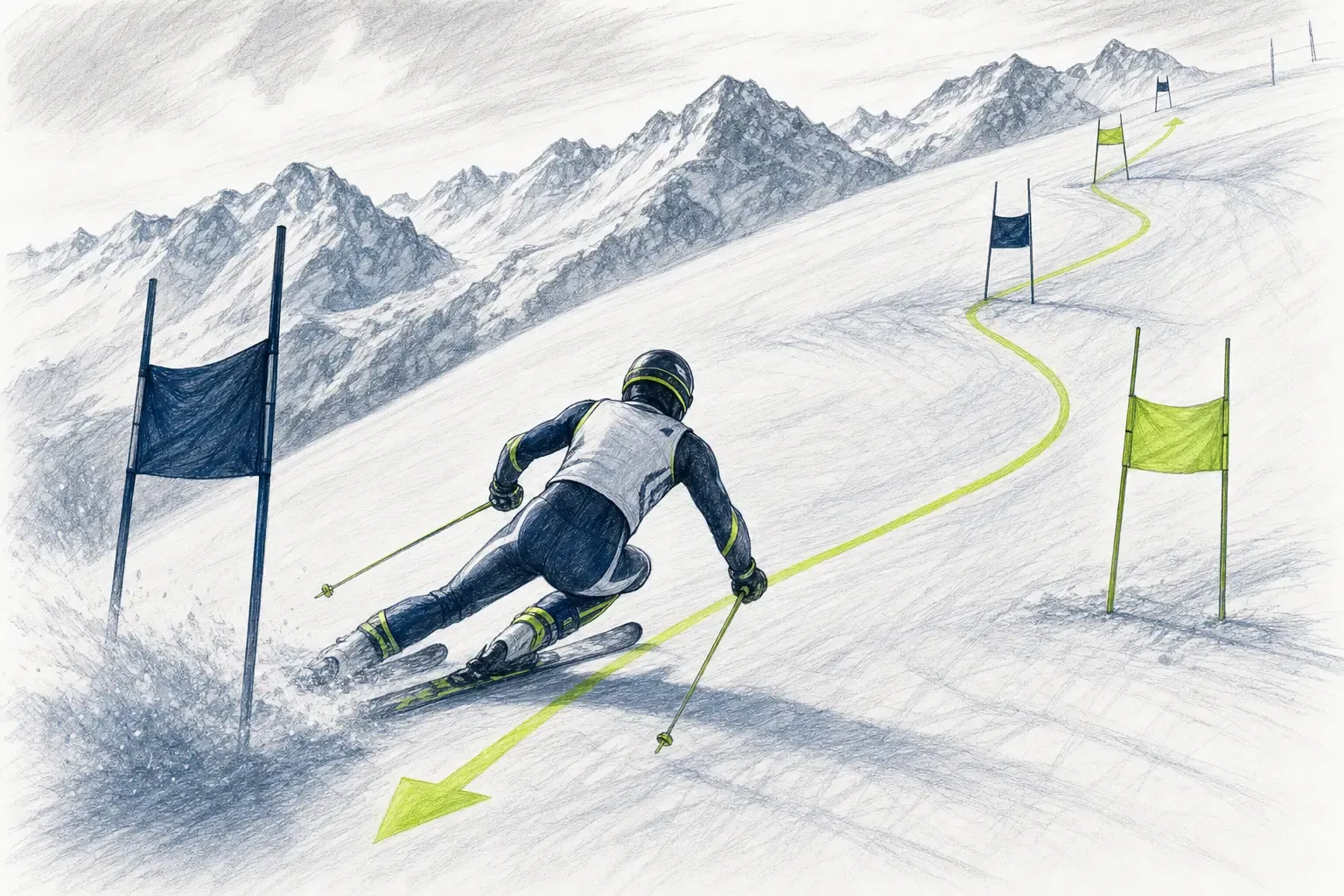
Direct line
The direct line is the tactical choice of the shortest and least deviated line down the slope or between gates, while always maintaining control and smoothness.
Open entry →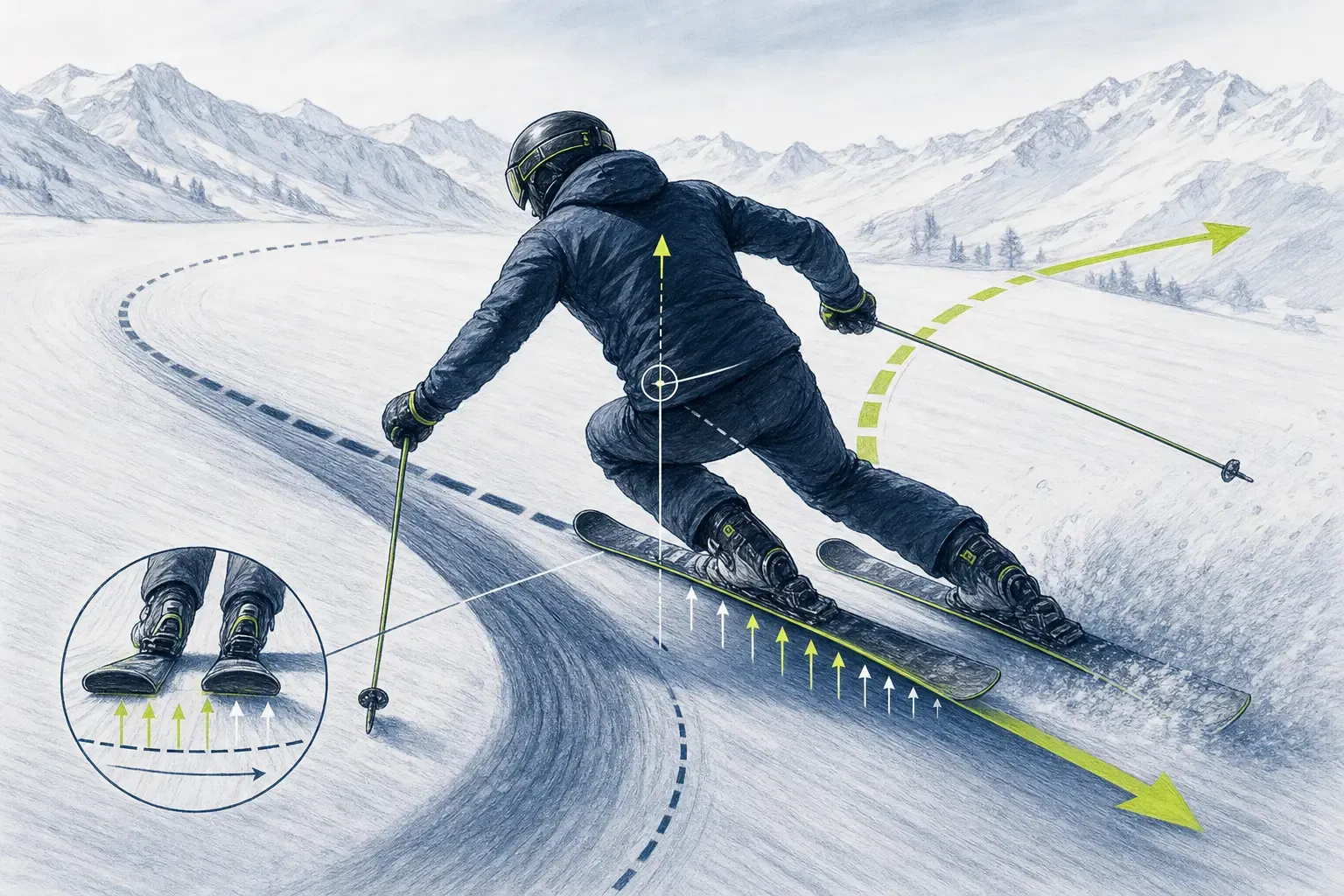
Exit from the turn
The final part of the turn, in which the skier completes the change of direction, regulates speed, and releases the skis for the transition into the next turn.
Open entry →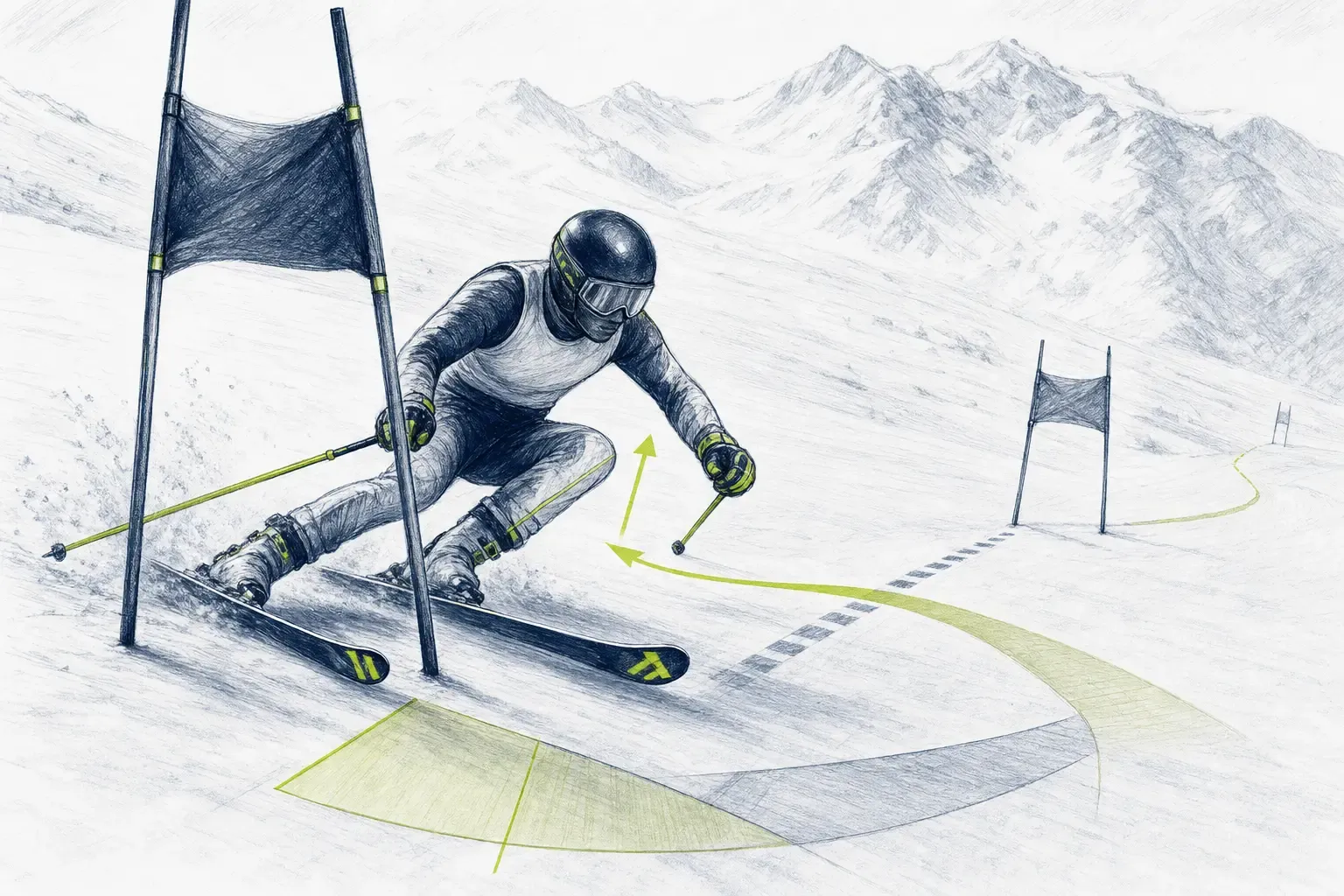
Exit from the gate
The section of skiing immediately after passing a gate, in which the skier completes the change of direction, releases pressure on the skis, and prepares the transition into the next turn.
Open entry →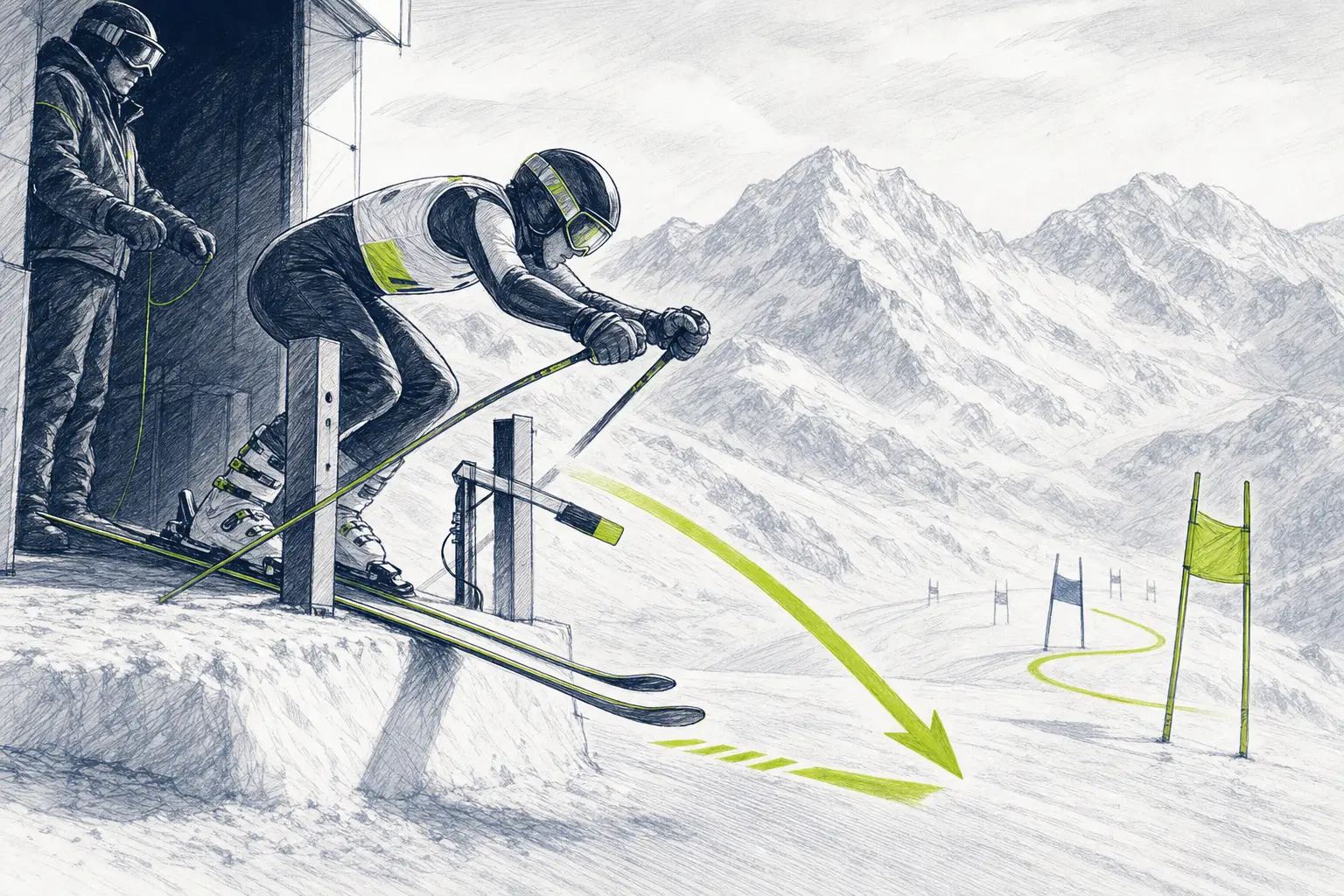
Start
The start is the place, the procedure, and the movement phase by which the skier begins the run. In racing, it includes the start signal, opening of the start gate, the beginning of time measurement, and acceleration to the first gate.
Open entry →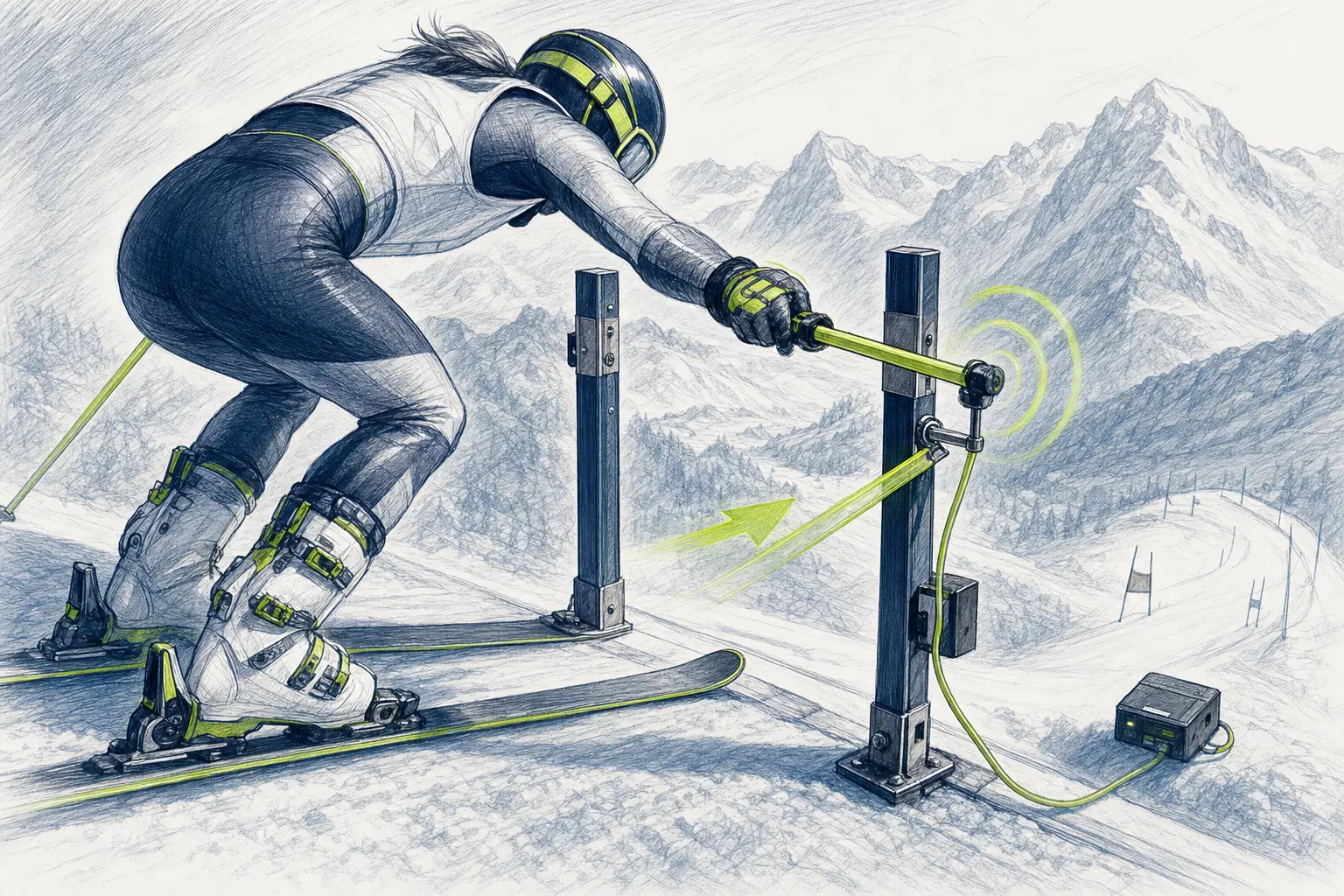
Start gate
The start gate is the device by which the racer triggers electronic timing at the moment of push-off.
Open entry →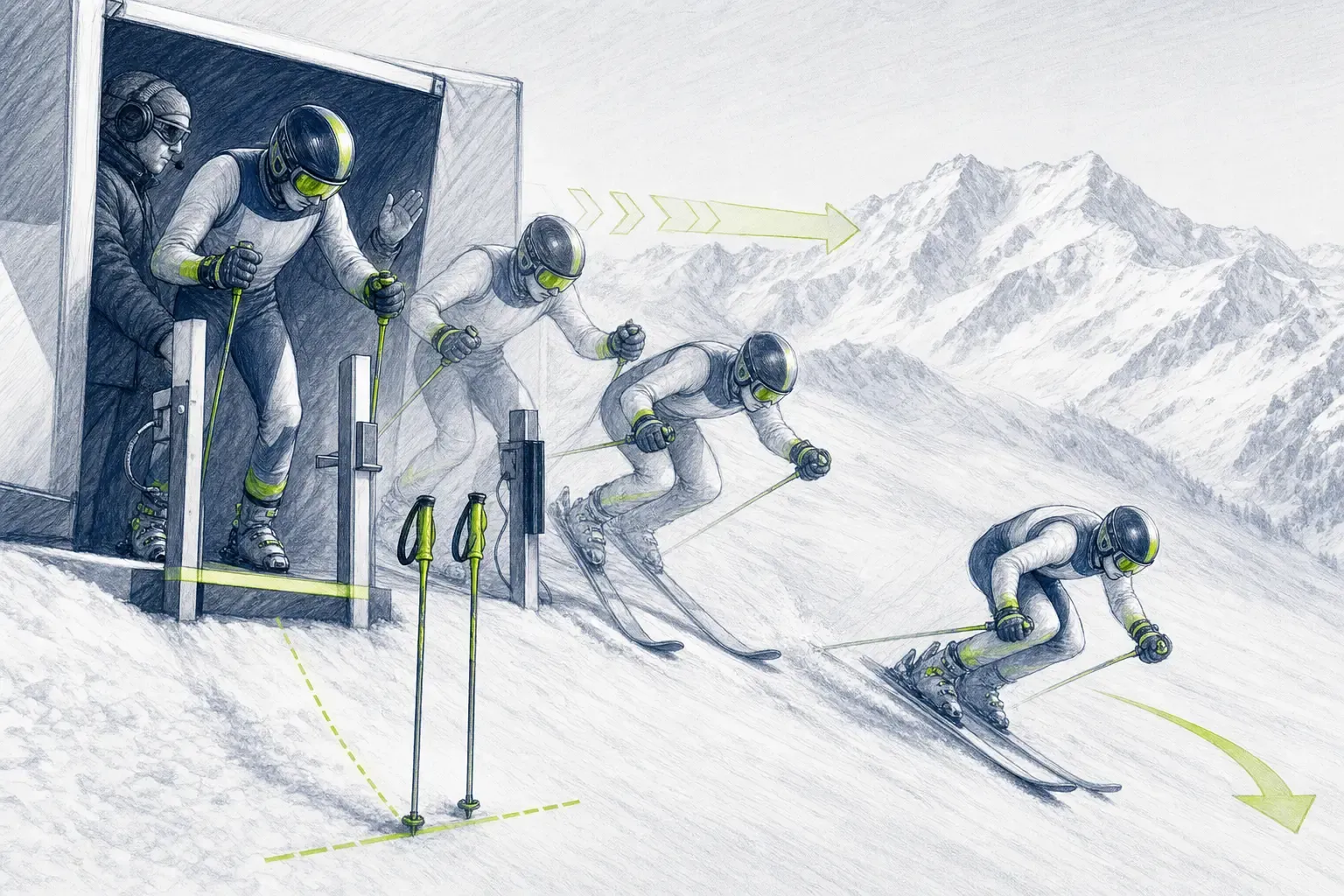
Start procedure
The start procedure is a set of rules, commands, and actions that guide a skier to the start, give the start signal, and begin the timed run.
Open entry →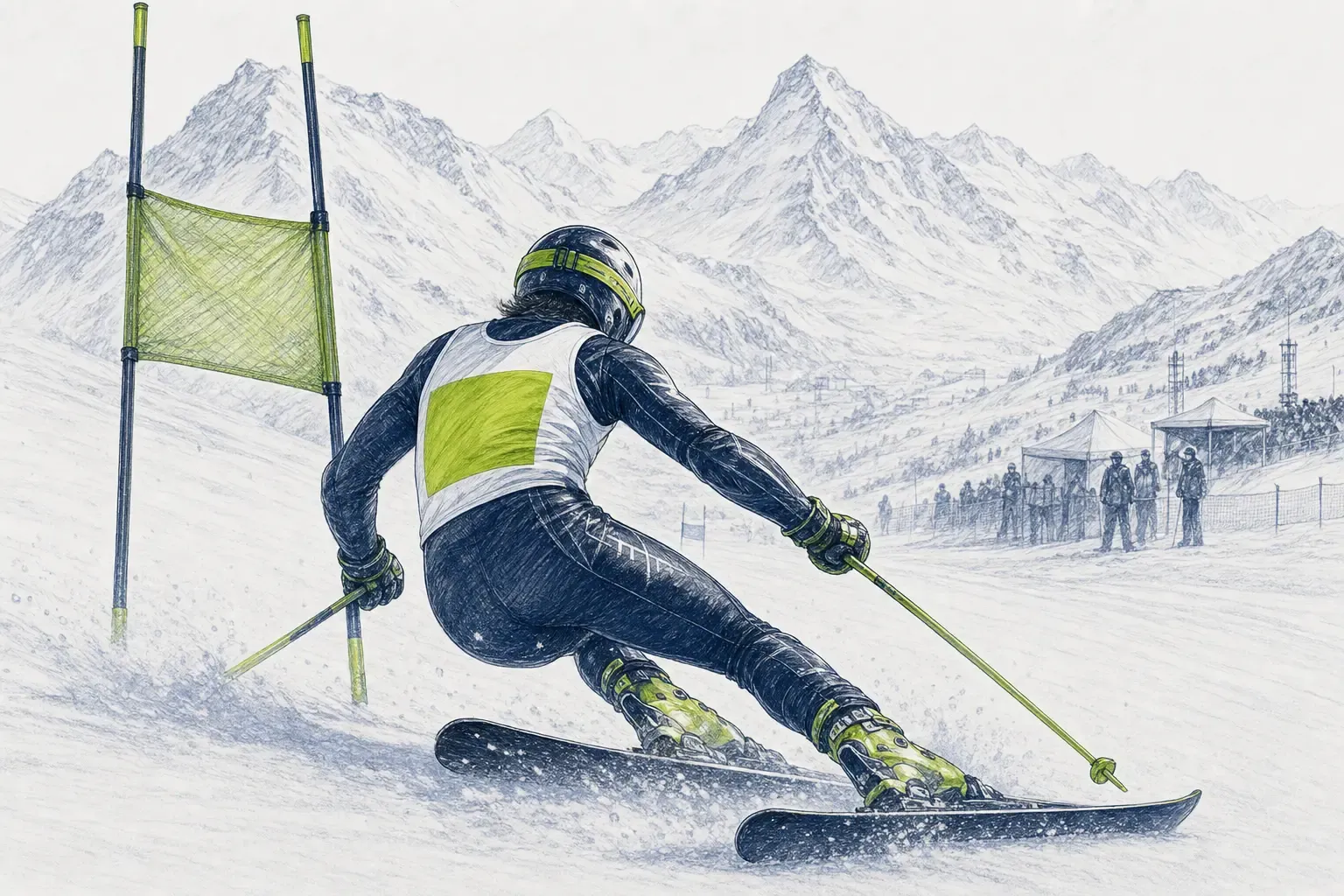
Start number
A start number is the official competitor identification assigned for a specific race and displayed on the competitor’s bib.
Open entry →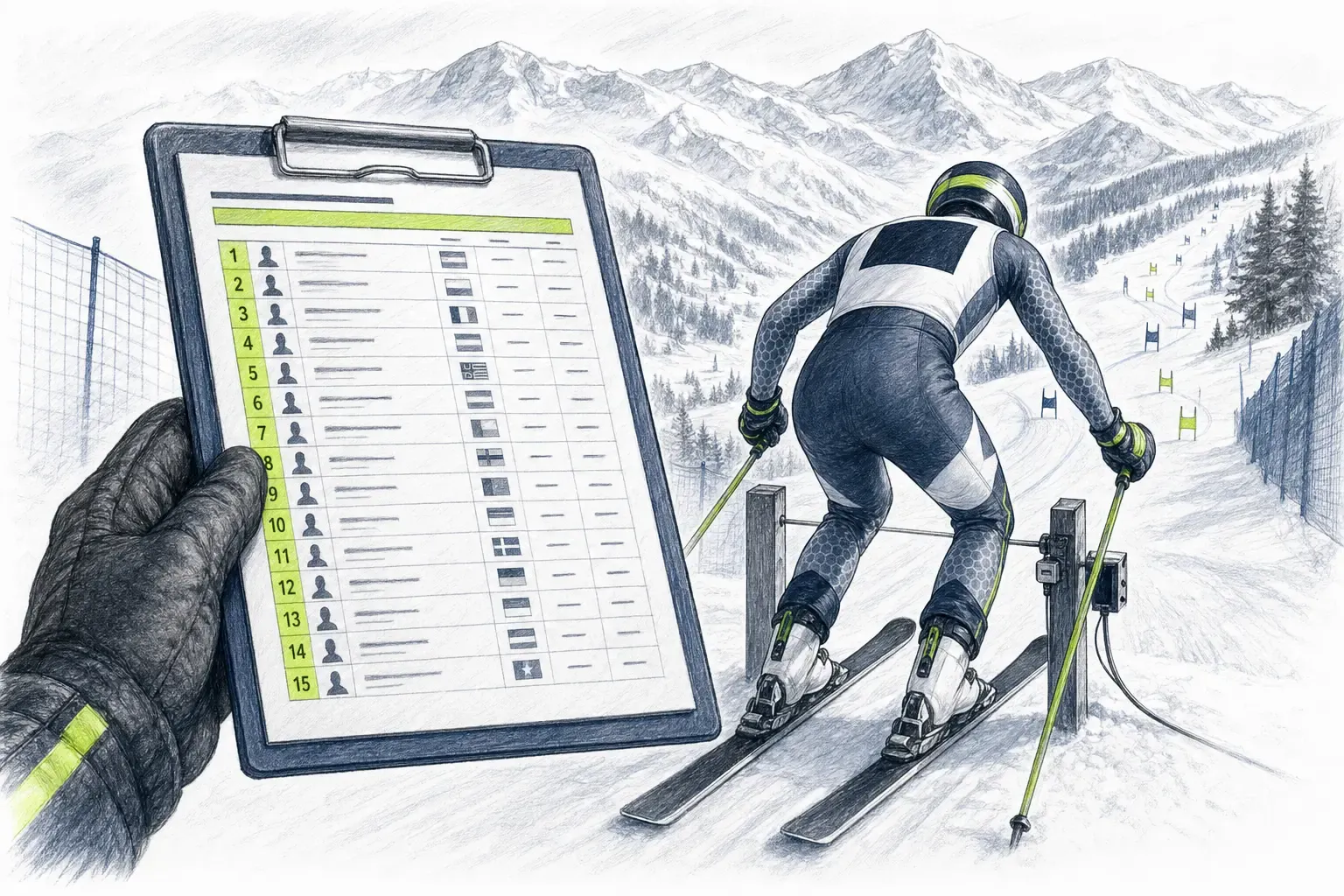
Start list
The start list is the official document that determines the order of competitors and their start numbers for a specific race, training session, or run.
Open entry →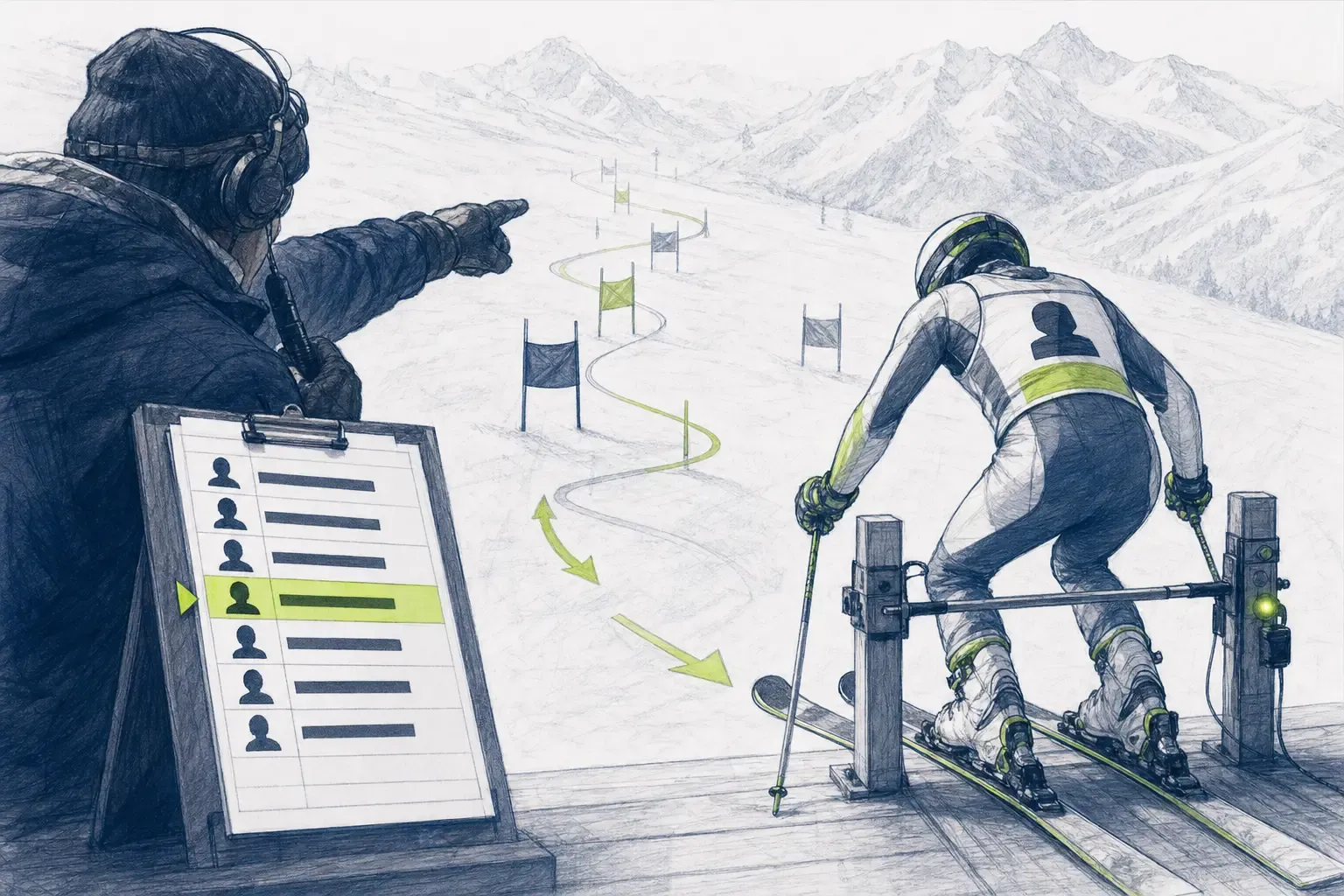
Start order
The sequence, set by the rules, in which competitors take the start for a particular round or run.
Open entry →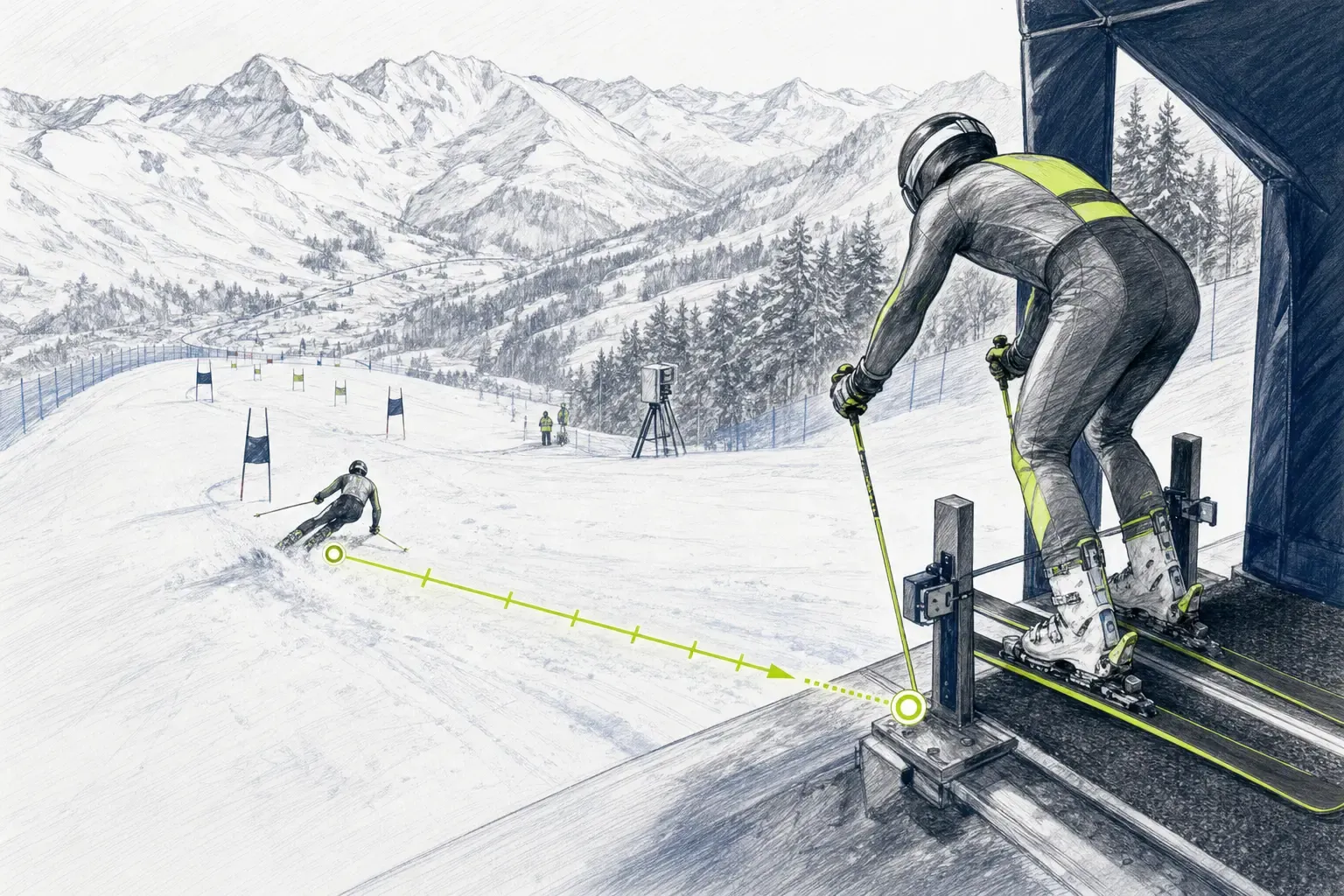
Start interval
The time gap between the starts of two consecutive competitors.
Open entry →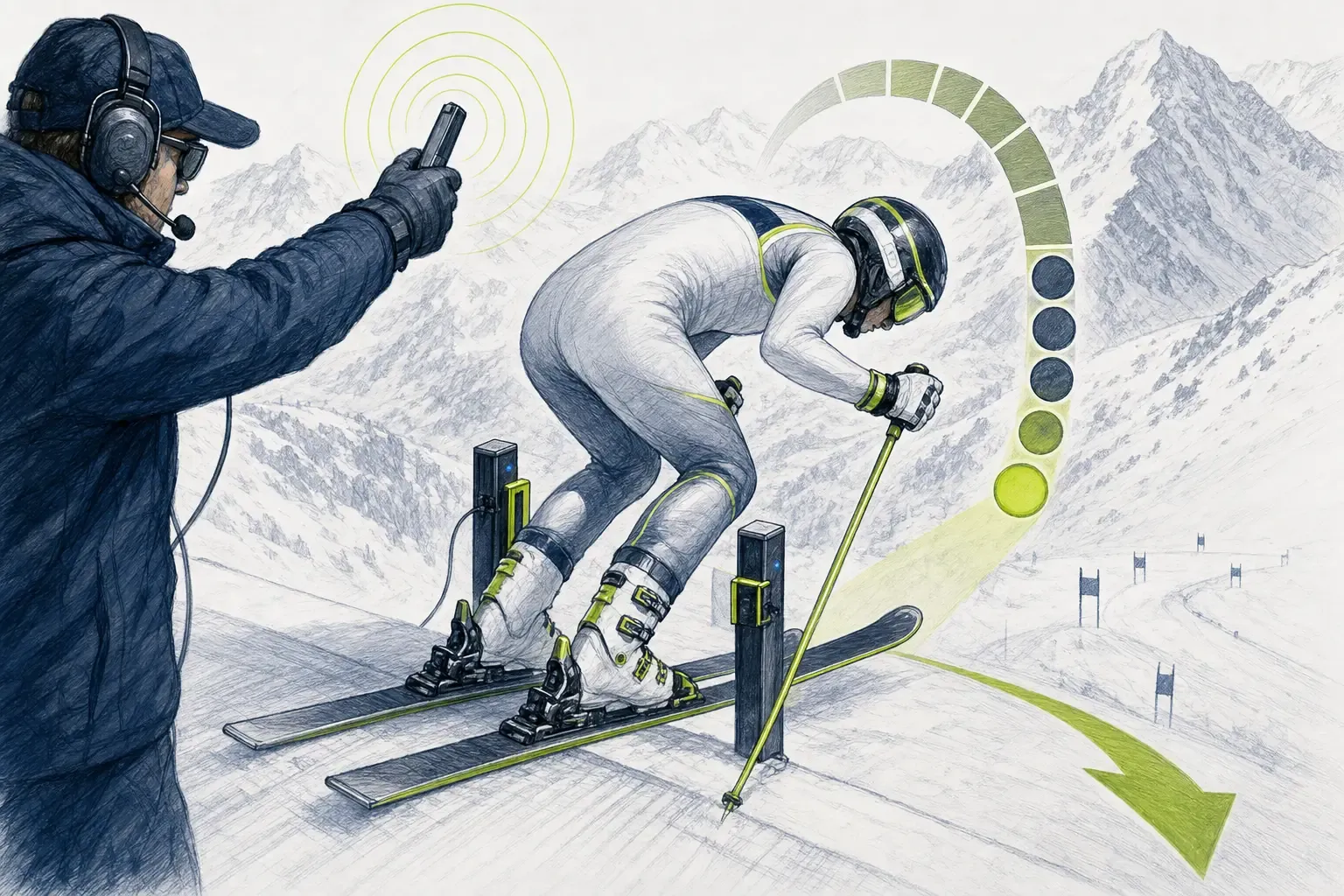
Start signal
The start signal is the official verbal or sound signal that tells the racer to begin the run.
Open entry →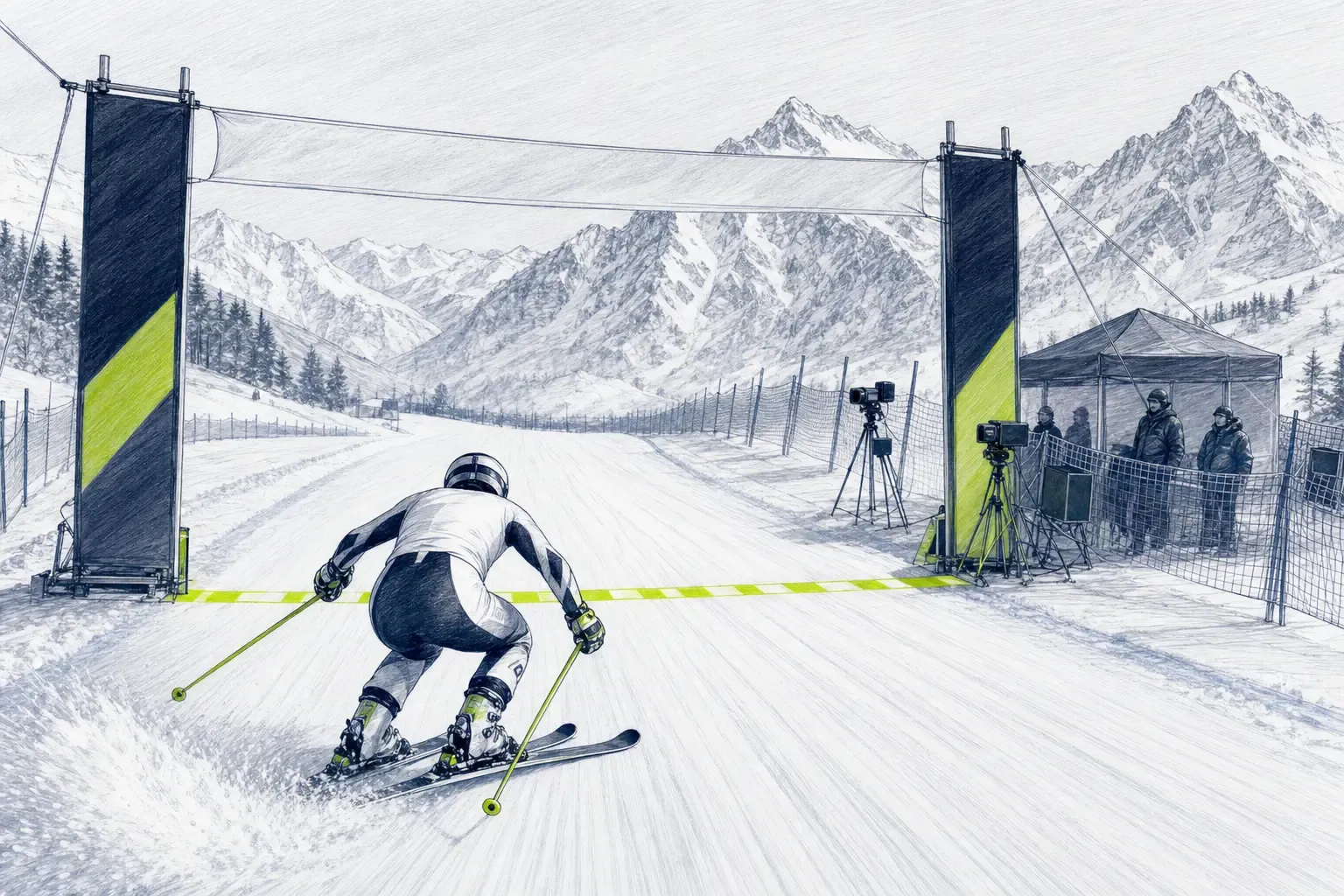
Finish line
A marked boundary at the end of the race course that, when legally crossed, completes the run and triggers the timing of the finish time.
Open entry →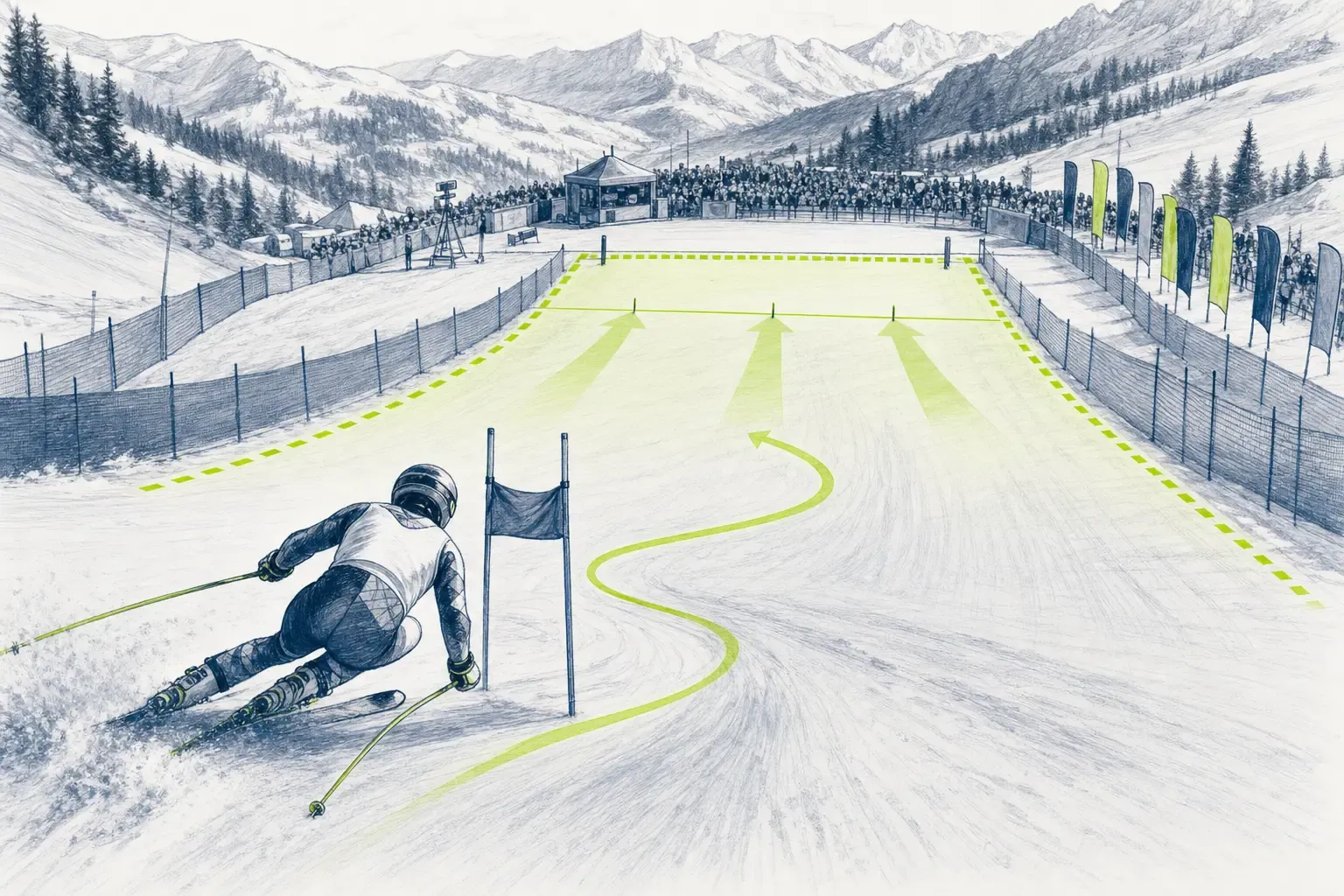
Finish area
The finish area is the controlled and secured part of the course at the finish line, where the racer completes the run, slows down safely, and leaves the course through the designated exit.
Open entry →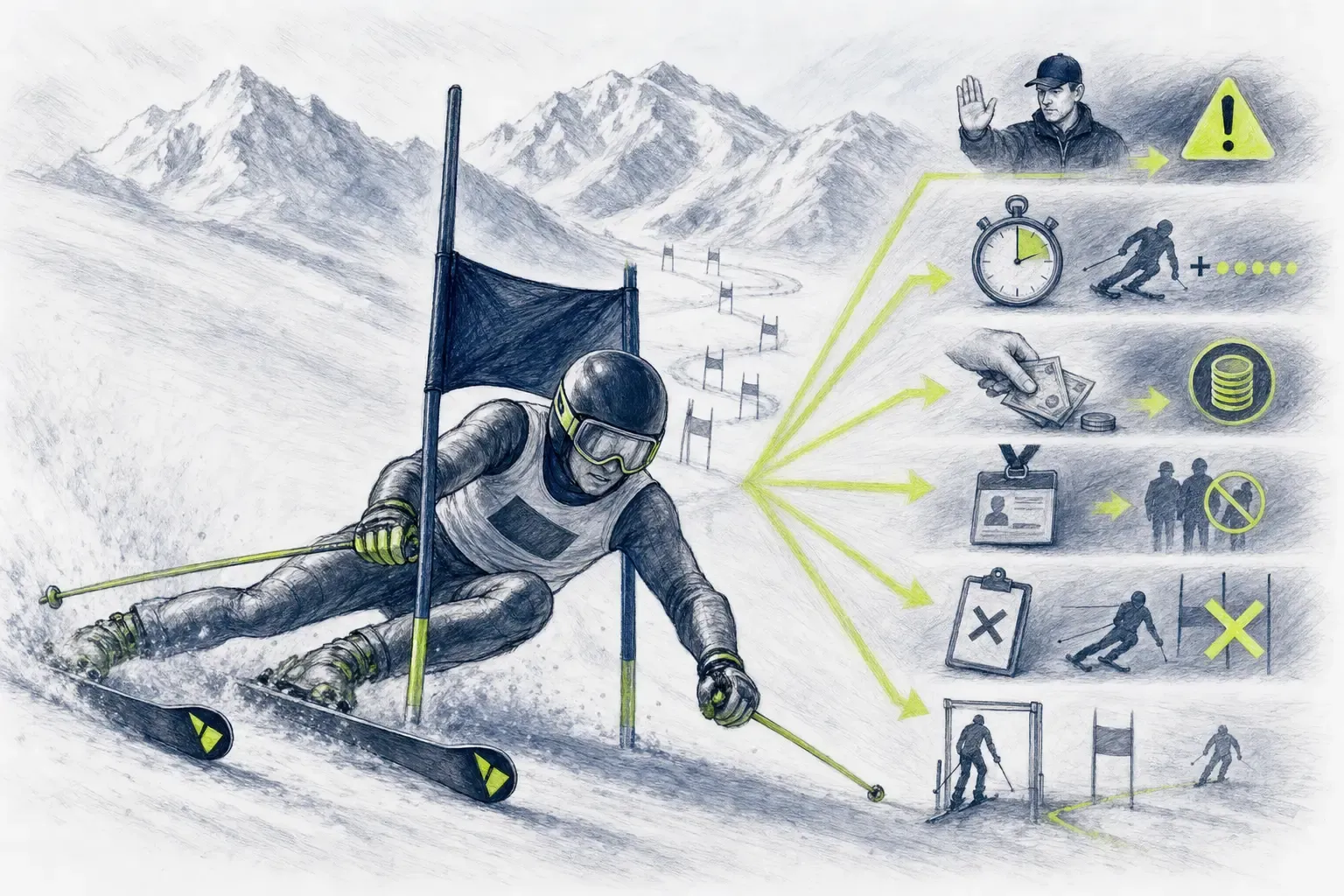
Penalty
A penalty is the consequence of breaking a competition rule. In skiing, it can also refer to the calculation penalty used when determining FIS points, which is not a punishment for the racer.
Open entry →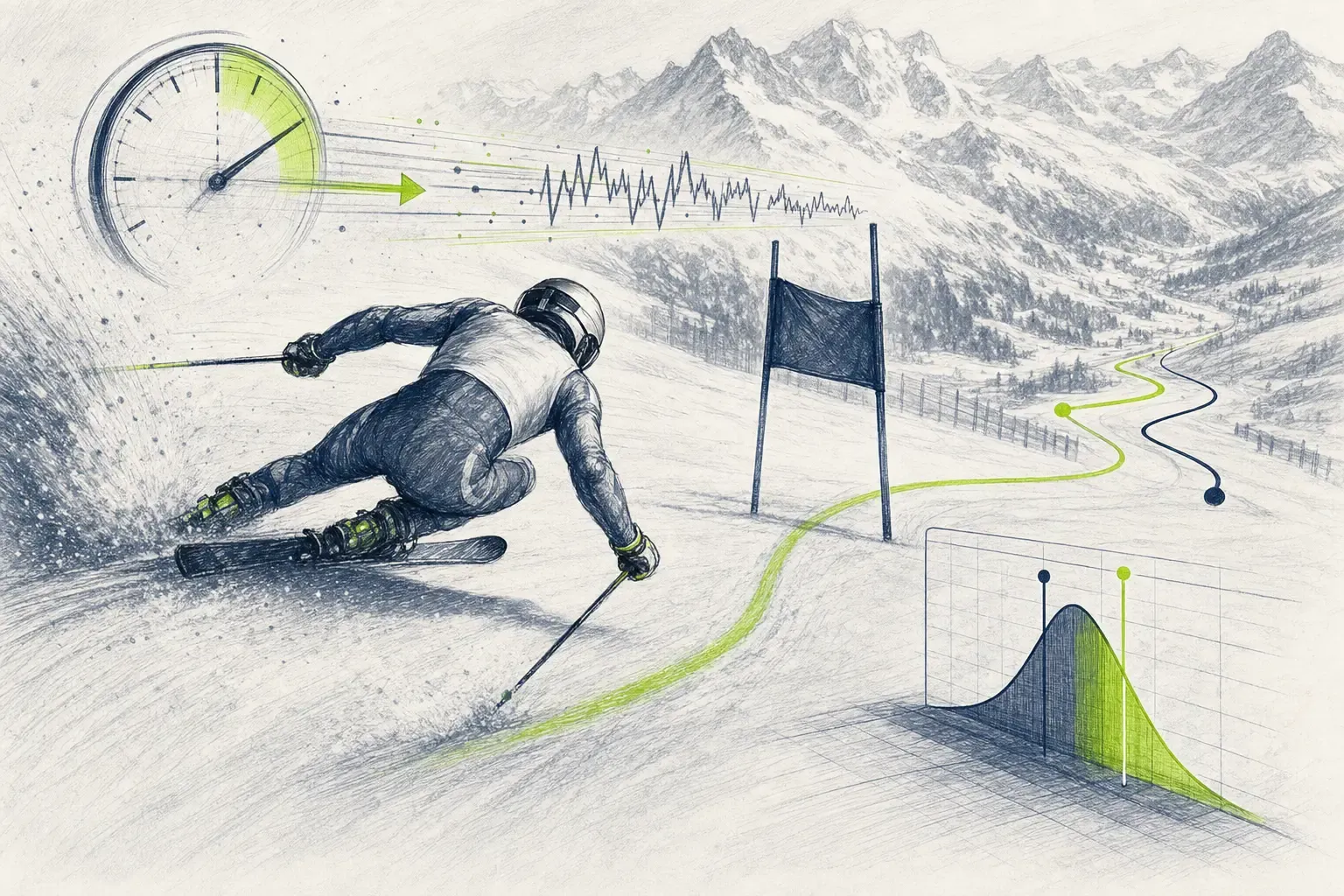
Race points
A numerical expression of a skier’s result or placing in a competition. In alpine skiing, it is necessary to distinguish race points calculated from time loss, FIS points for performance ranking, and cup points awarded for placing.
Open entry →Equipment and service
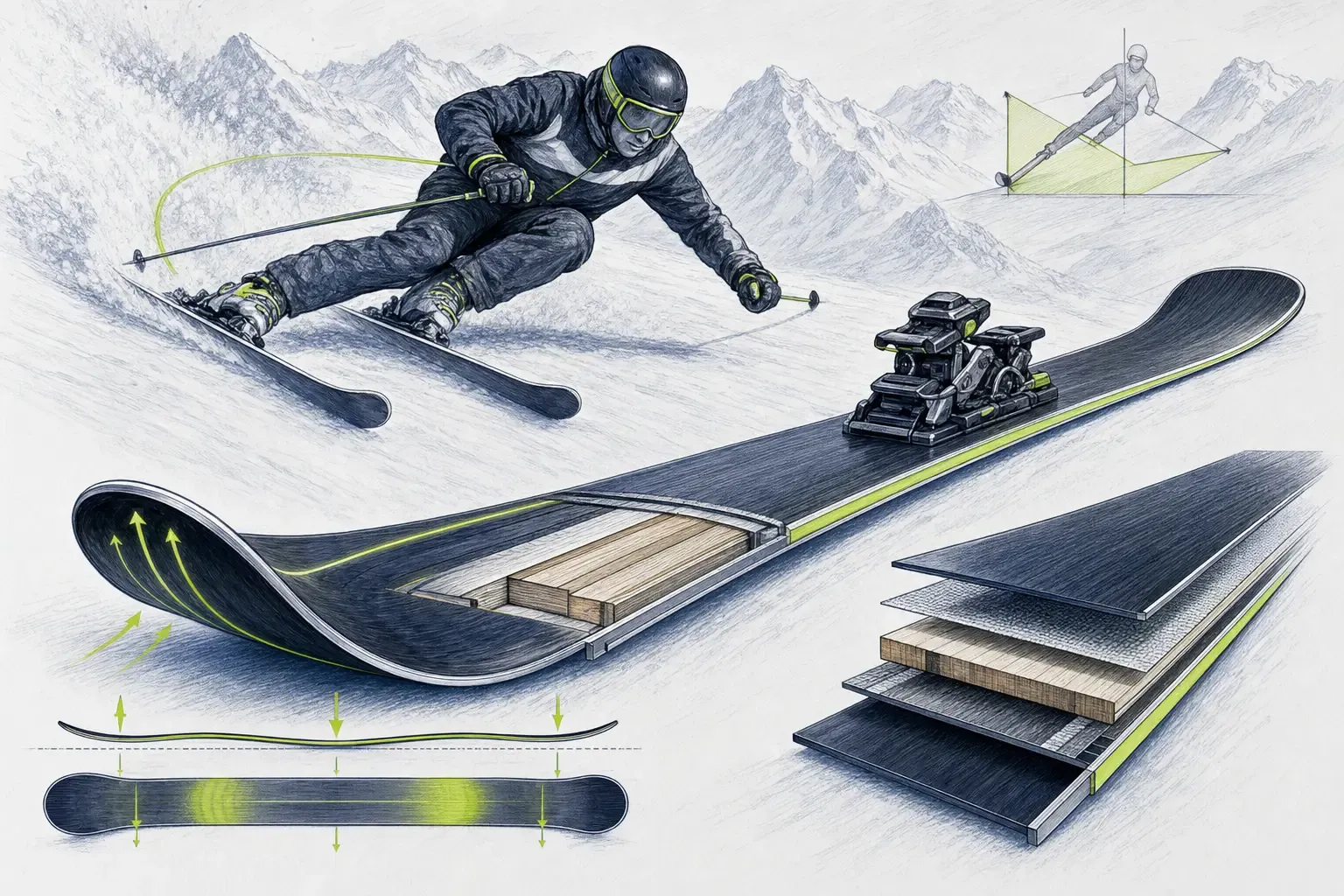
Skis
Skis are the basic sports equipment used for gliding, turning, and controlling speed on snow.
Open term →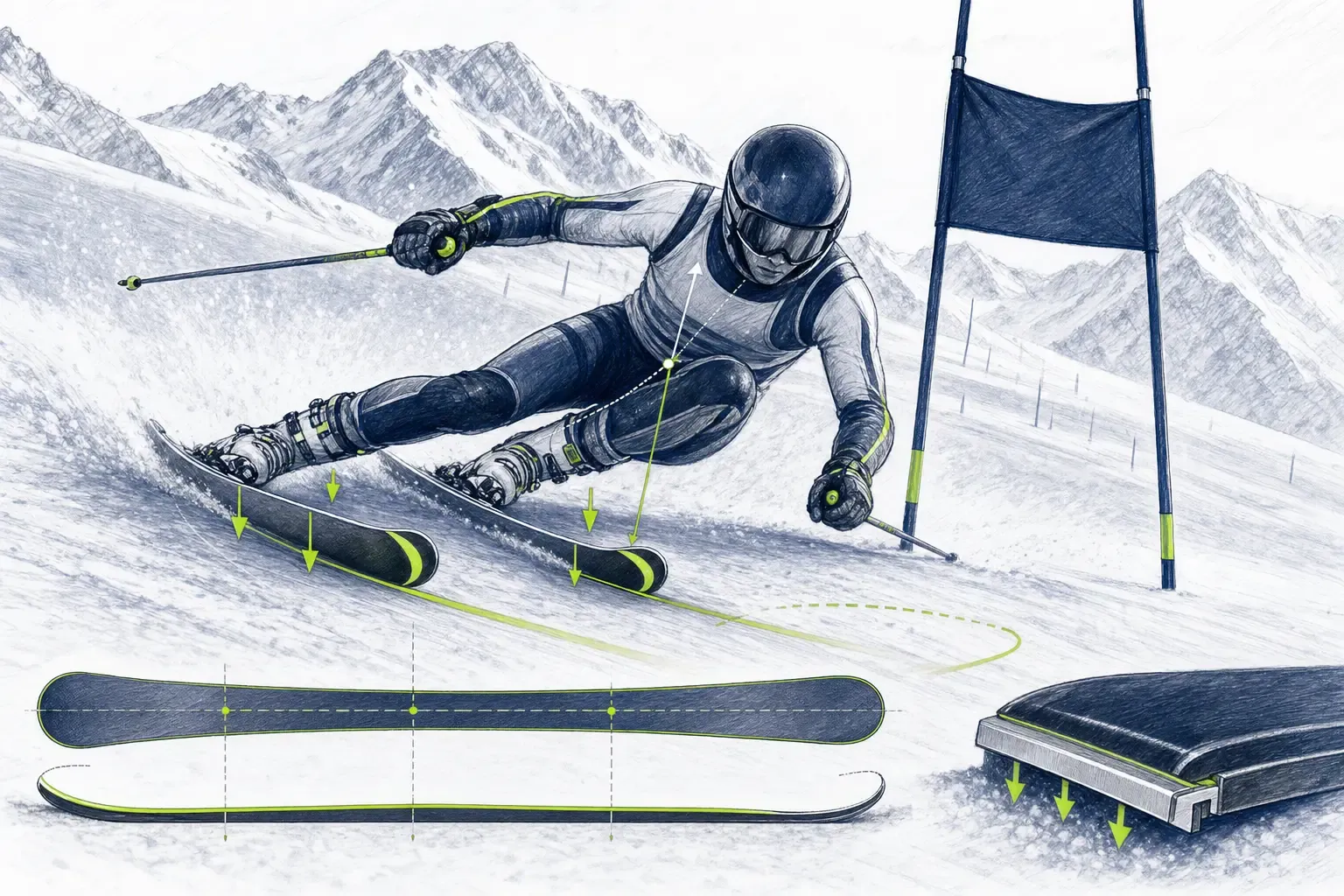
Racing skis
Racing skis are alpine skis designed for skiing between gates and on hard, prepared snow; their geometry, stiffness, and construction are adapted to a specific discipline and skier level.
Open term →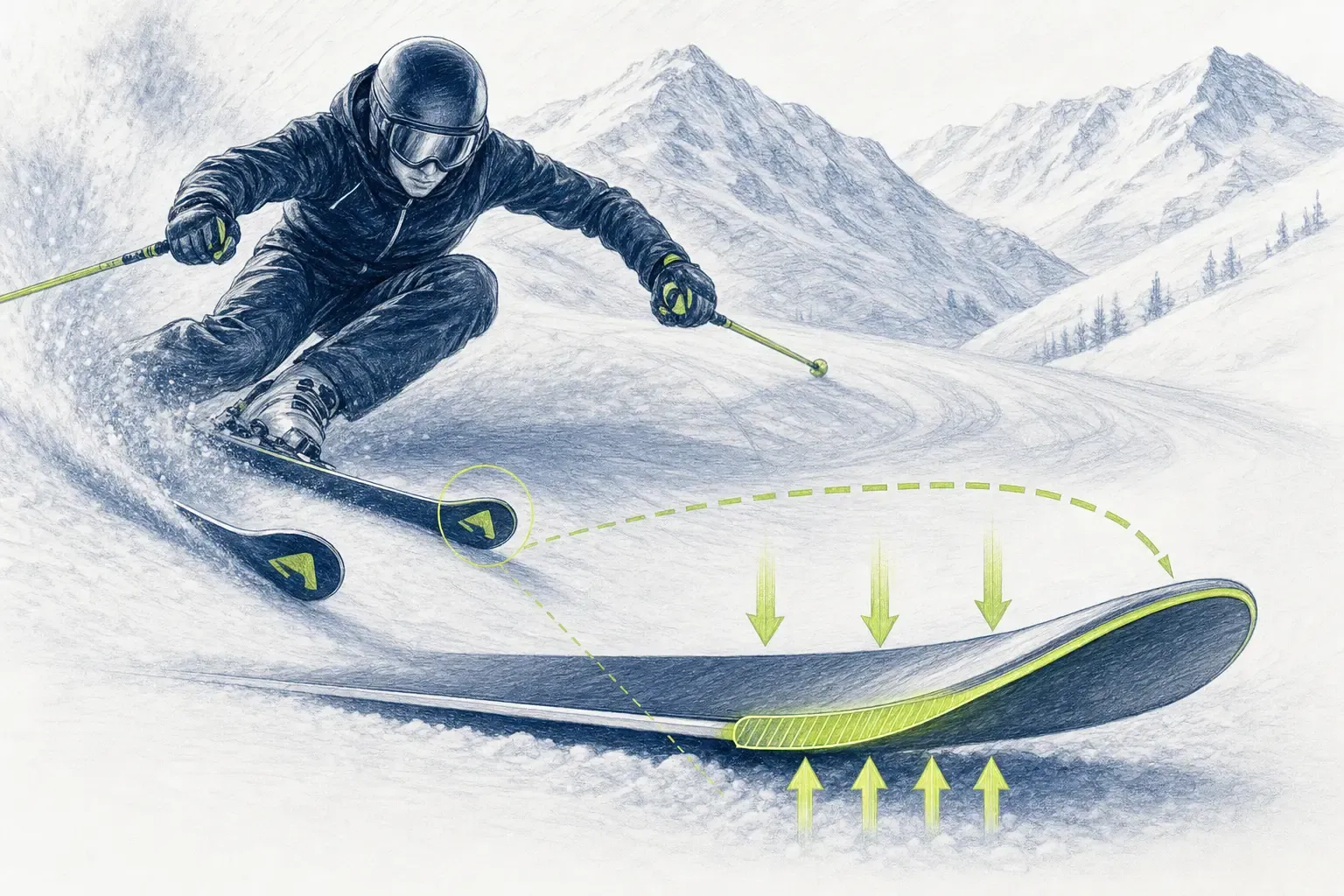
Ski tip
The ski tip is the front, upward-curved end of the ski; in coaching language, this often also means the entire front part of the ski in front of the binding.
Open term →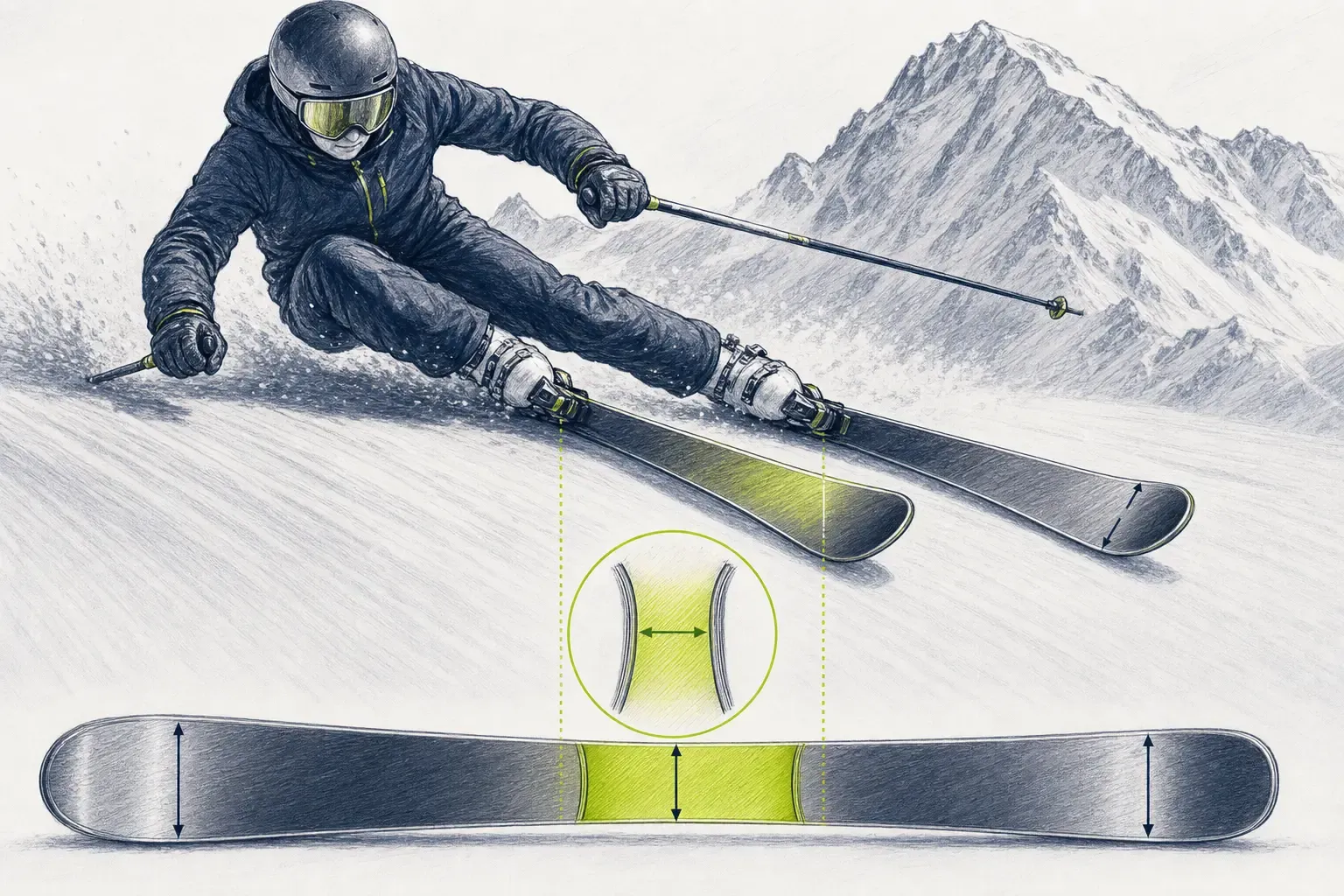
Ski waist
The ski waist refers to the middle part of the ski. When describing dimensions, it usually means the ski’s waist — the narrowest point of the base. In training language, the term can also refer to the area under the boot, through which the skier balances pressure on the ski.
Open term →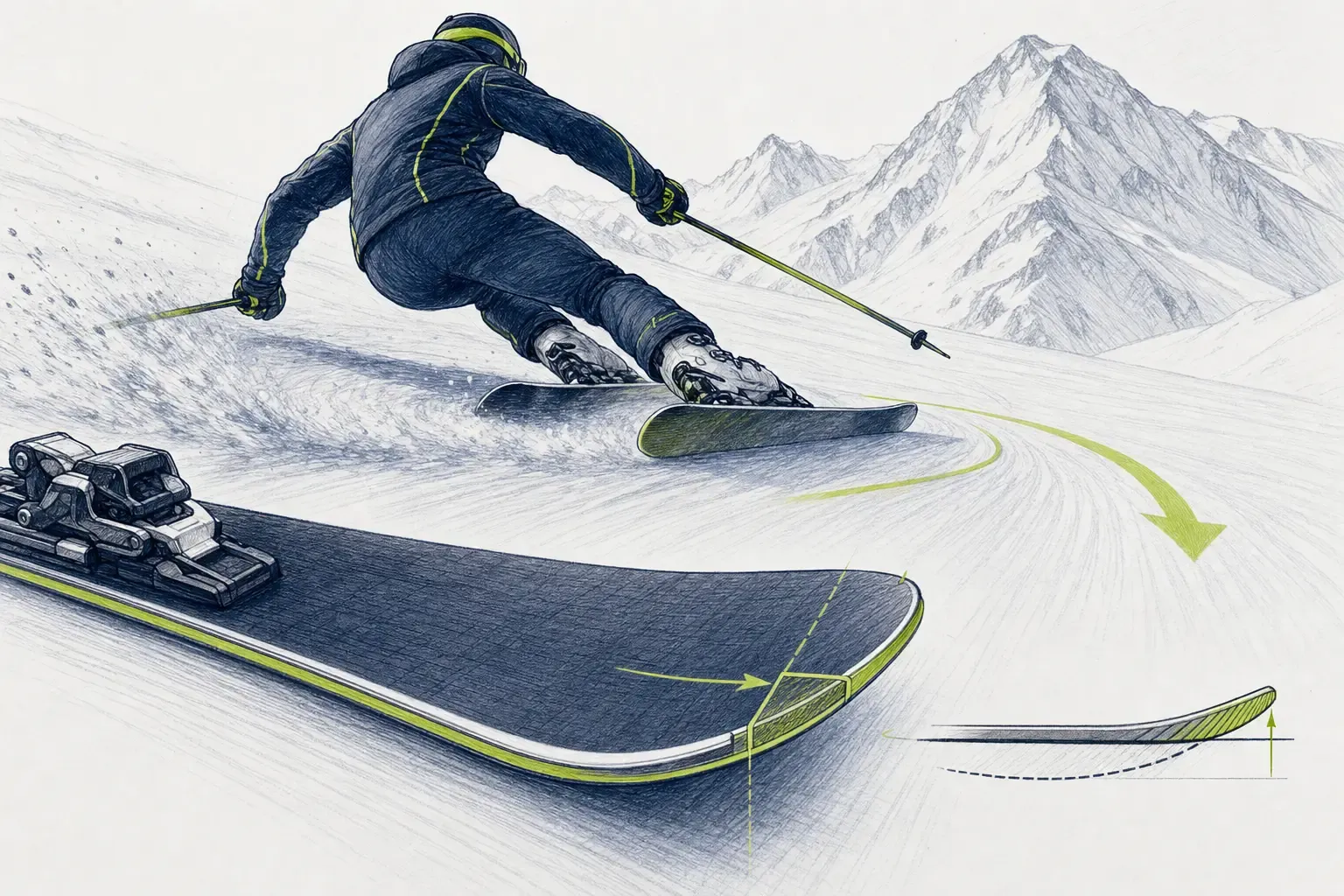
Ski tail
The ski tail is the very back end of the ski; in everyday speech, this also refers to the wider rear part behind the binding.
Open entry →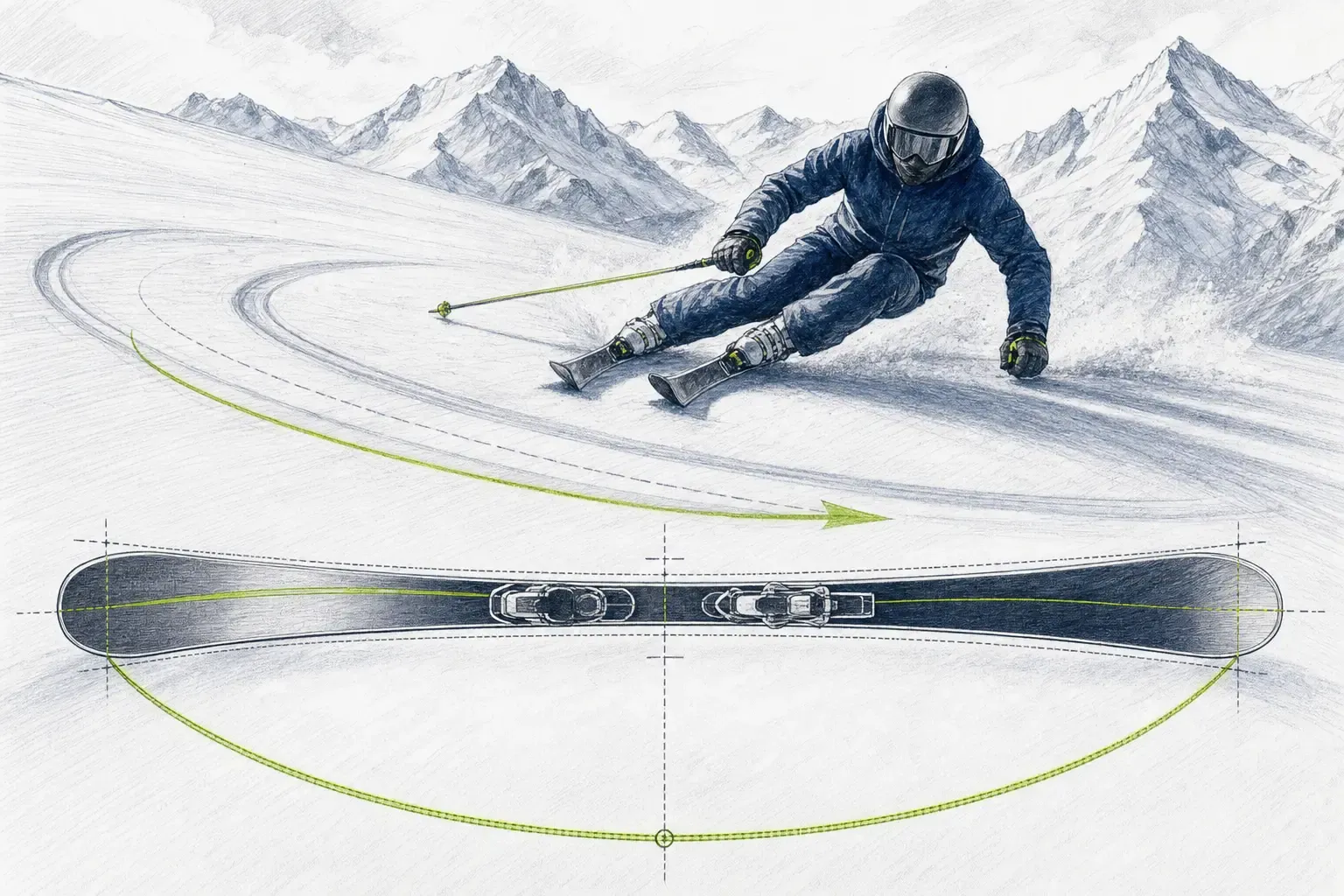
Ski radius
Ski radius is a geometric value in metres that expresses the degree of sidecut in a ski. It affects the turn shape the ski naturally supports, but it does not determine the actual radius of every turn.
Open entry →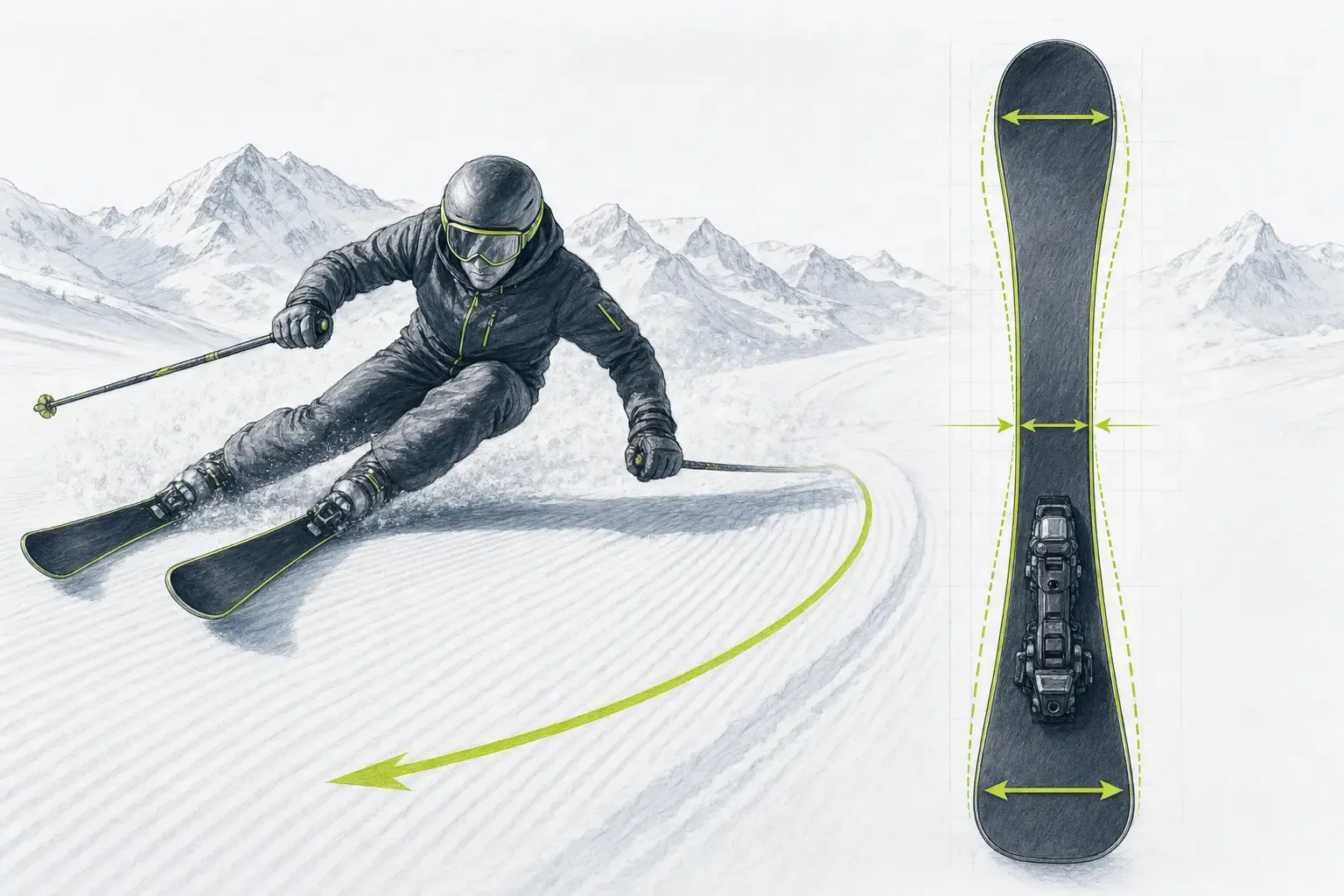
Sidecut and ski shaping
Sidecut, or shaping in Slovak, is the ski’s side profile created by the different widths of the tip, waist, and tail. It is described numerically mainly by the sidecut radius.
Open entry →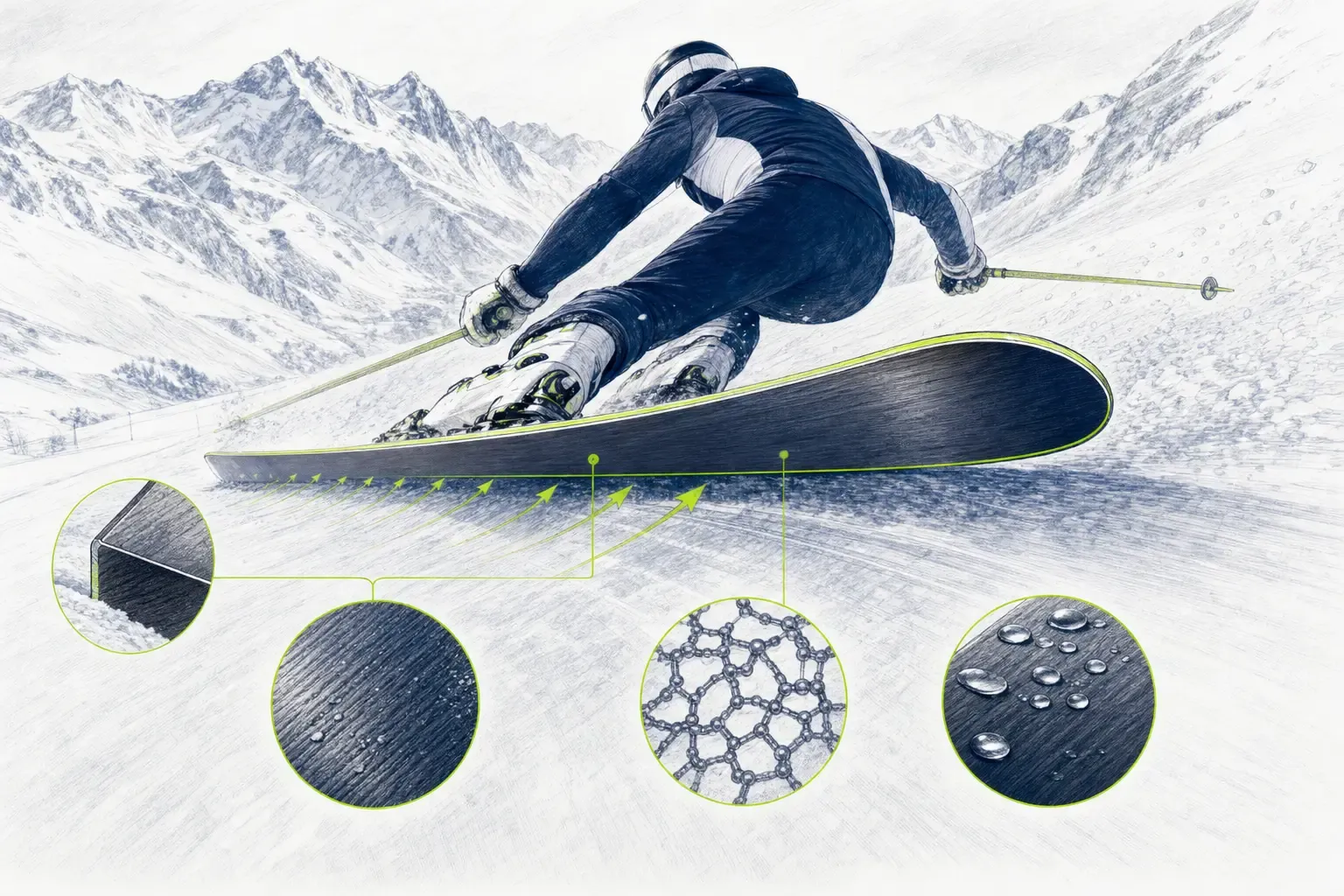
Ski base
The ski base is the lower plastic surface of the ski between the edges, which is in contact with the snow and, together with the structure, wax, and surface condition, affects glide.
Open entry →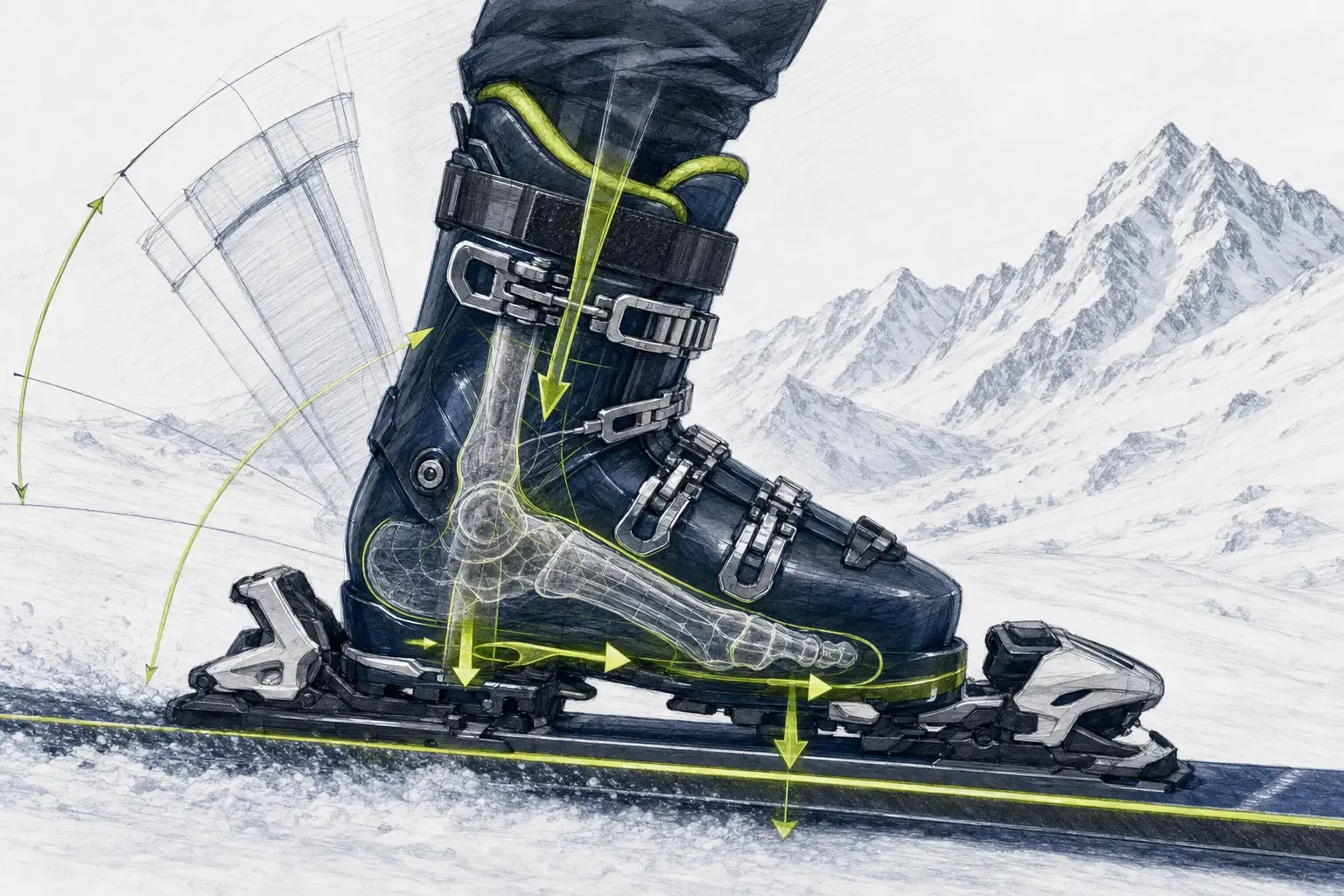
Ski boots
Ski boots are rigid footwear that transfers the skier’s movements to the skis and forms a safety-critical interface with the binding. The correct size, shape, appropriate stiffness, and a compatible sole are decisive.
Open entry →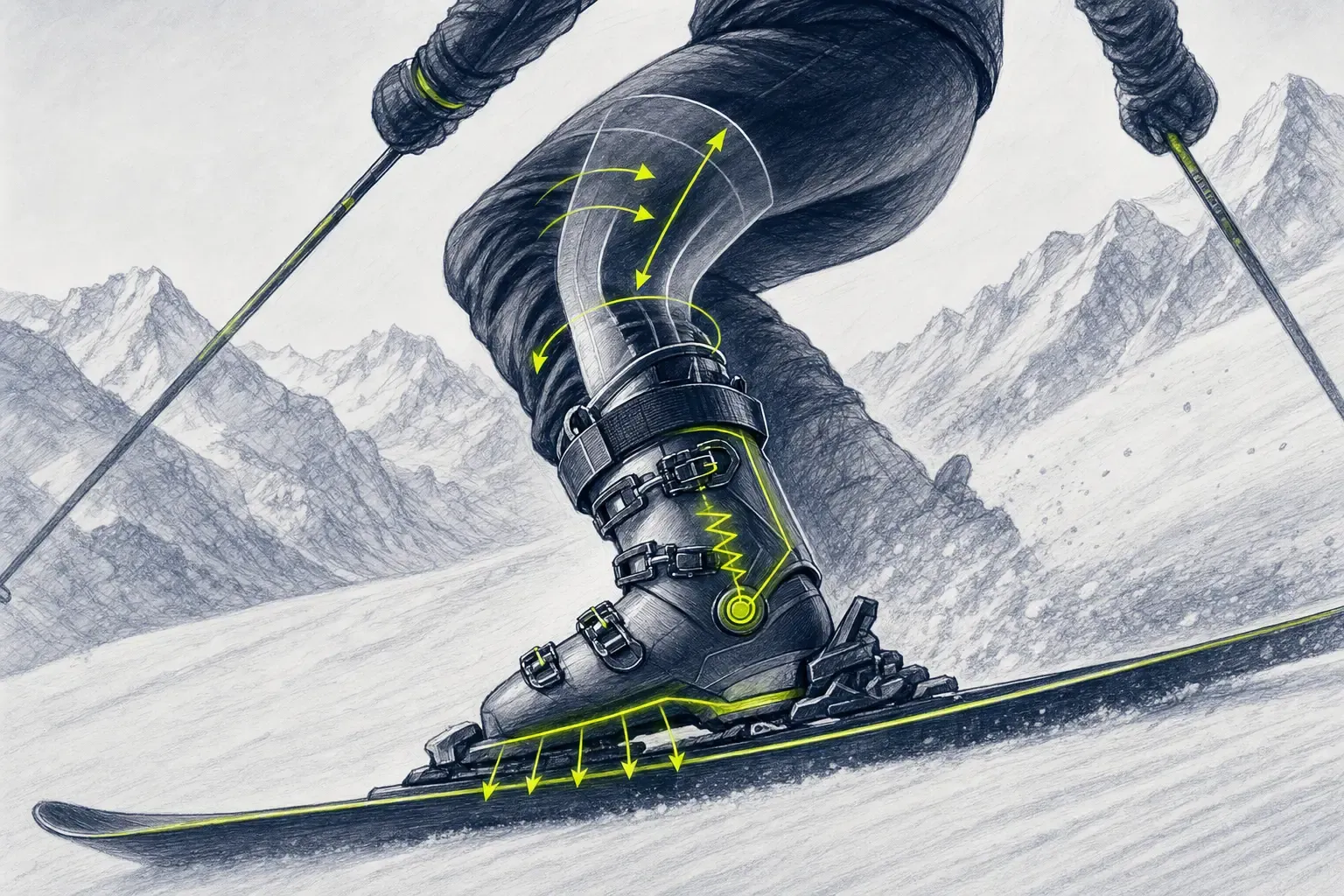
Boot flex
Boot flex expresses the resistance of the shell and cuff to forward flex. A higher number usually means a stiffer boot, but the flex index is not standardized across manufacturers.
Open entry →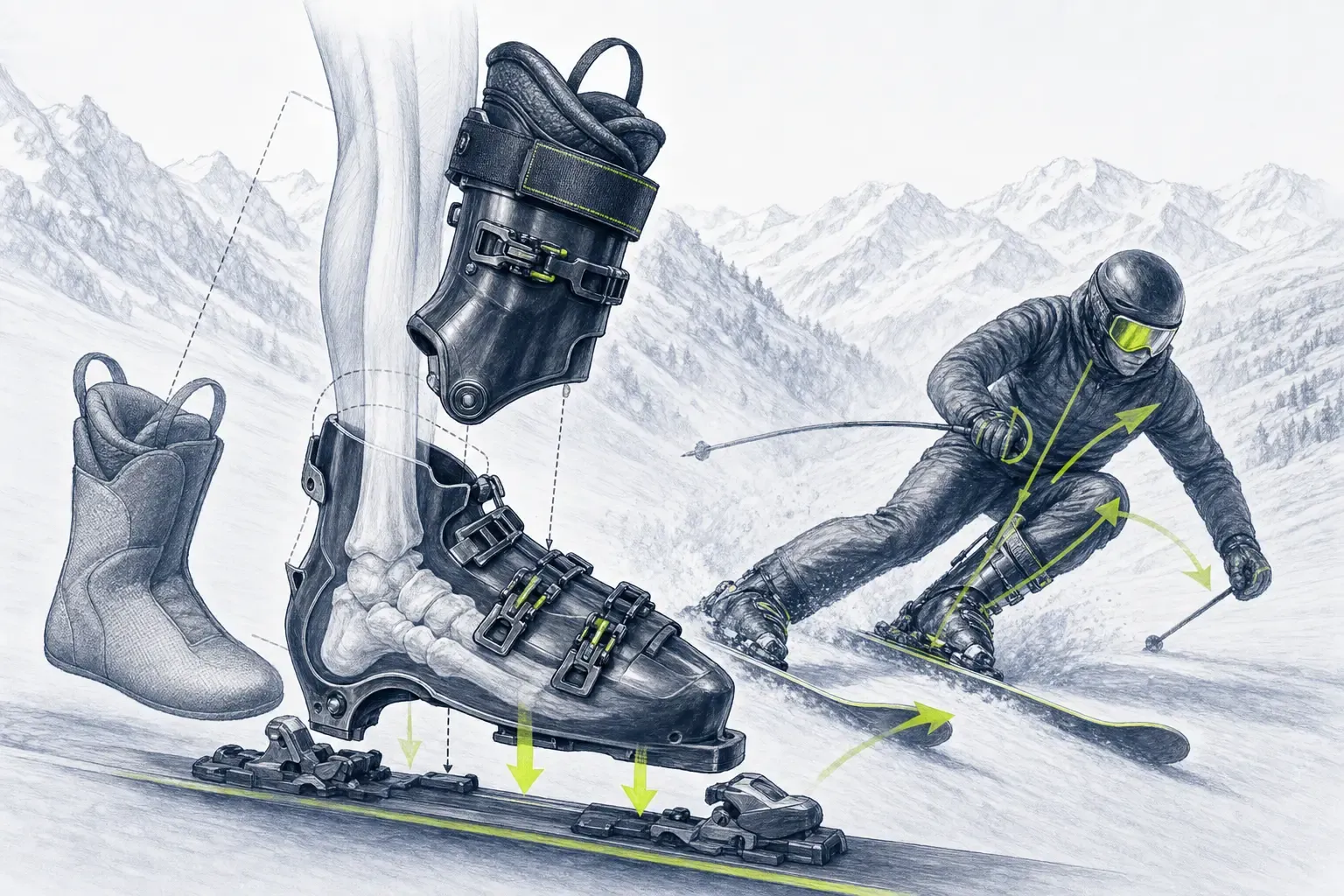
Boot shell
The boot shell is the rigid outer part of the ski boot that holds the foot and lower leg, transfers movement to the ski, and forms the interface with the binding.
Open entry →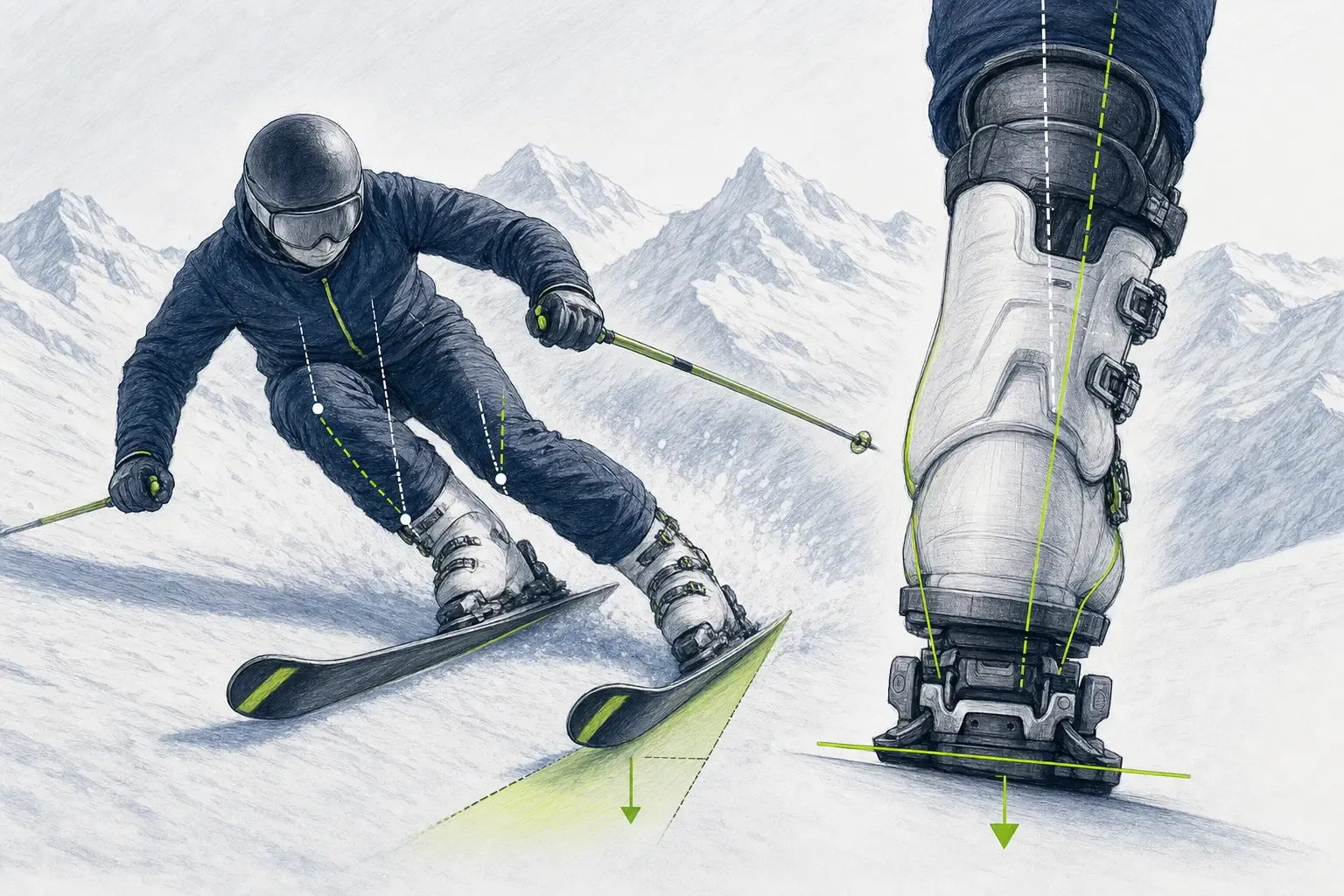
Canting
Canting is the technical lateral adjustment of a ski boot relative to the ski, used to fine-tune the skier’s lateral stance. It should not be confused with cuff adjustment of the boot.
Open entry →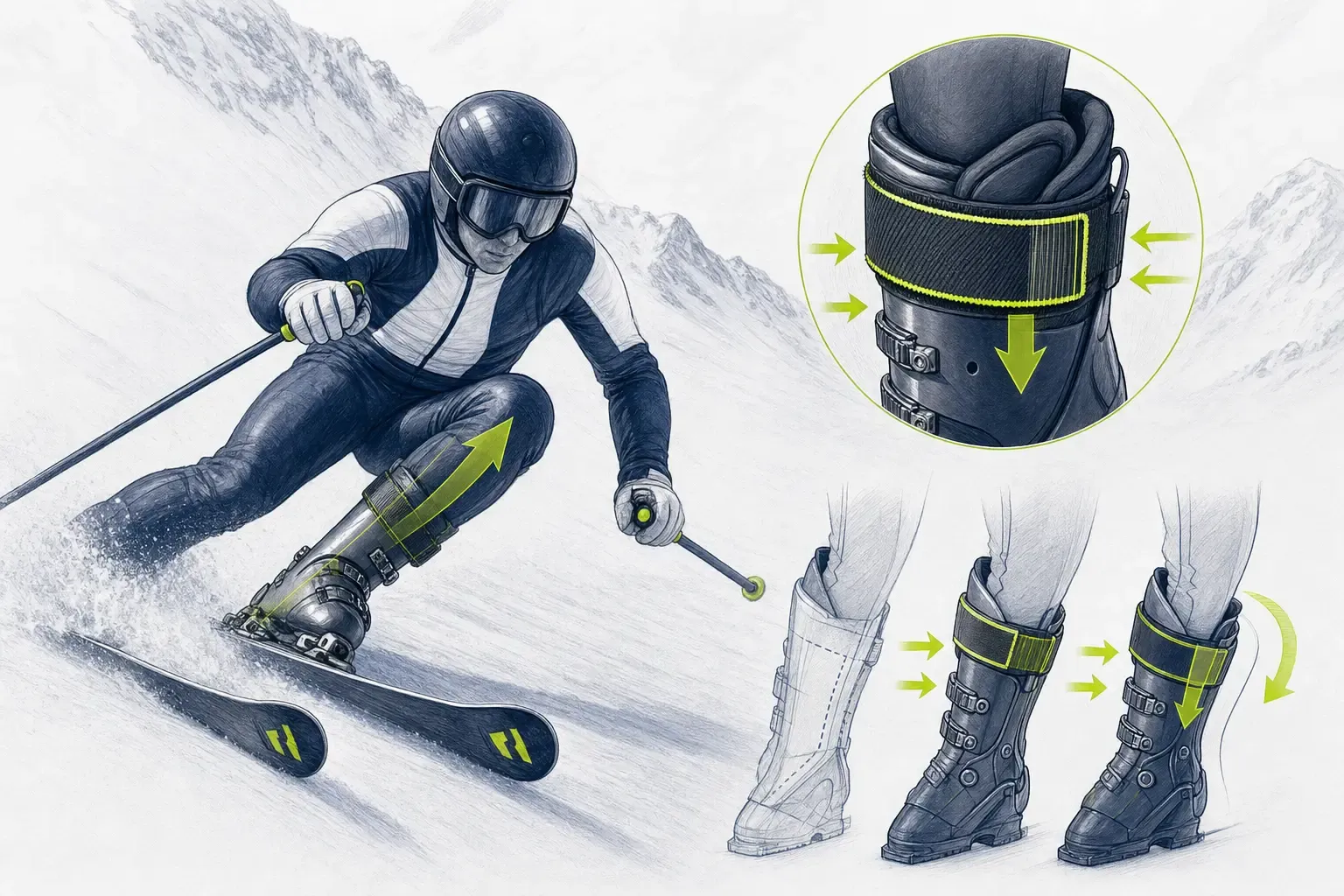
Power strap
The power strap is the upper tightening strap of the ski boot, which wraps around the cuff and helps keep the lower leg in stable contact with the tongue and cuff.
Open entry →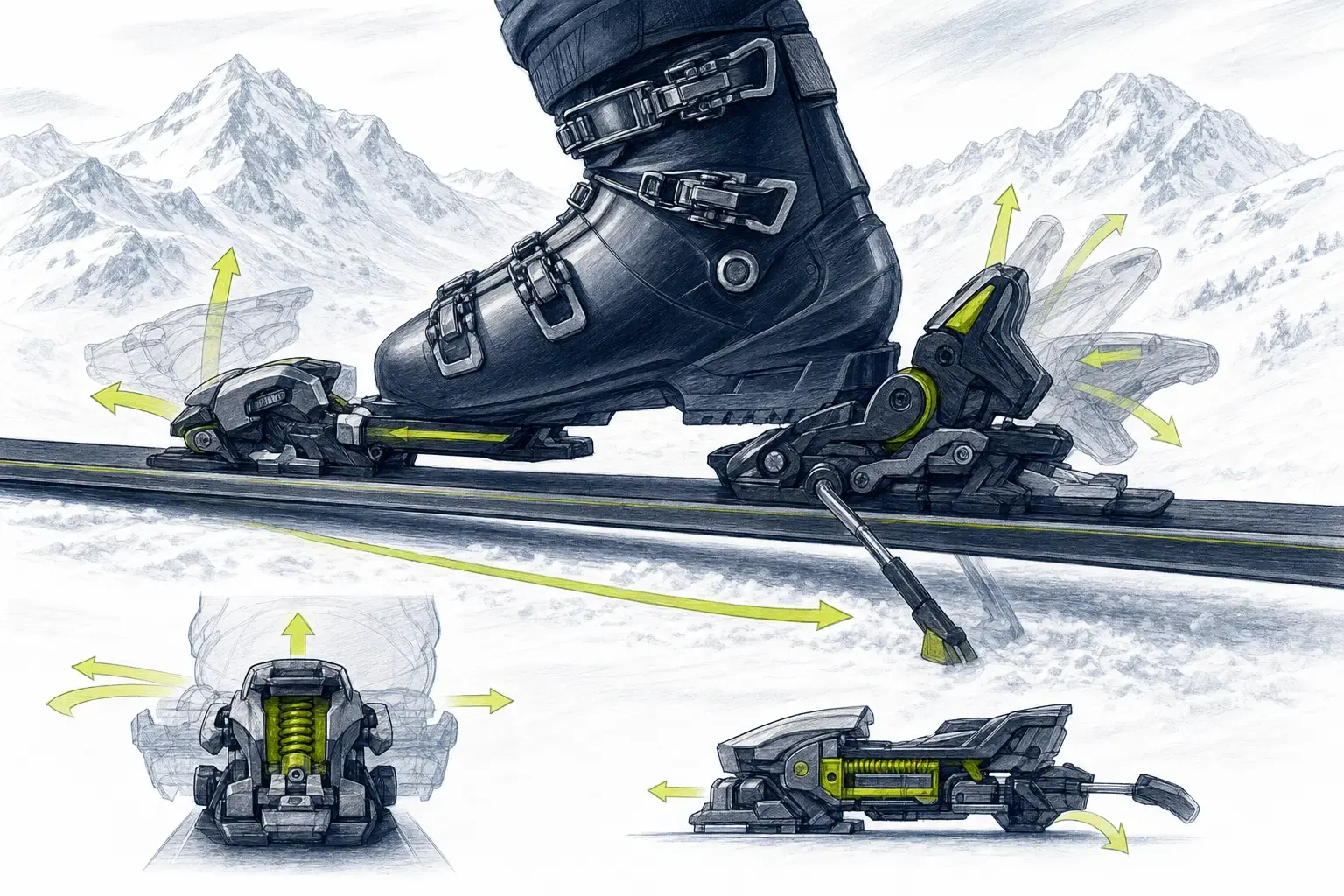
Binding
The ski binding connects the boot to the ski, transfers forces while skiing, and can release the boot under a set load.
Open entry →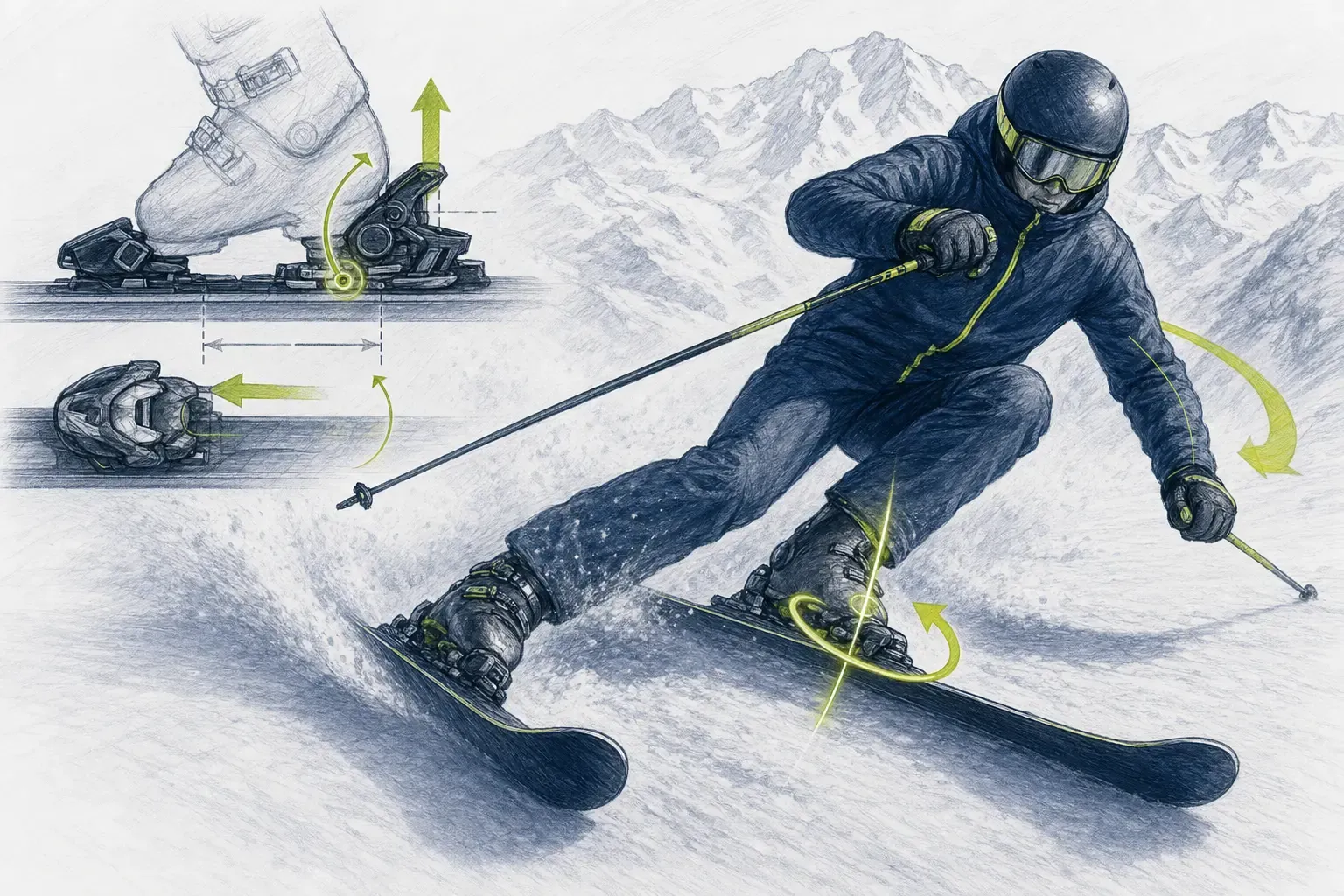
Release force of the binding
The release force of the binding refers to the load at which a ski binding releases the boot. In technical terms, the release moment is assessed in particular; the number on the binding scale is not a force in newtons.
Open term →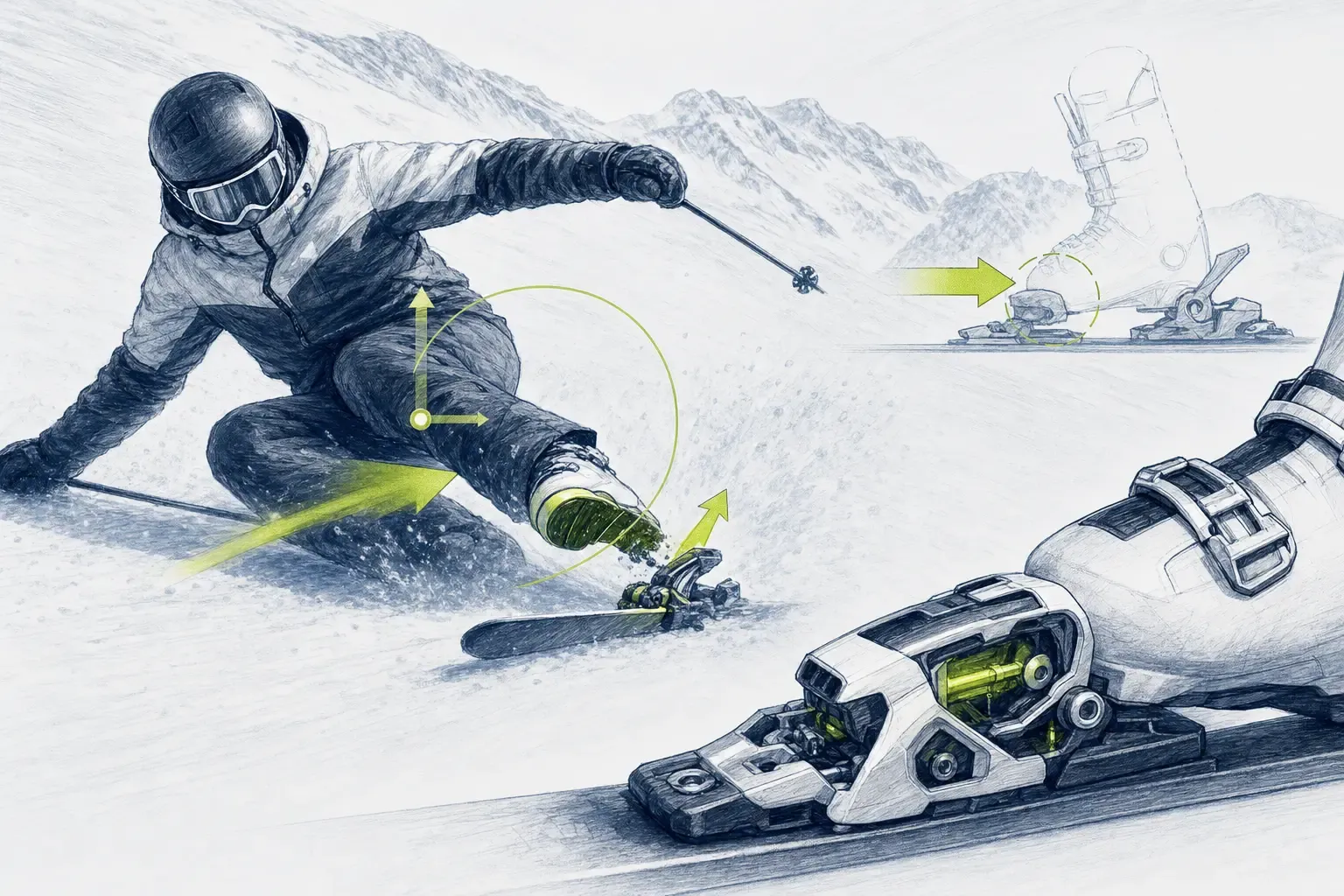
DIN
DIN is the commonly used designation for the set release value of an alpine ski binding; it is neither body weight nor a universal number based on age.
Open term →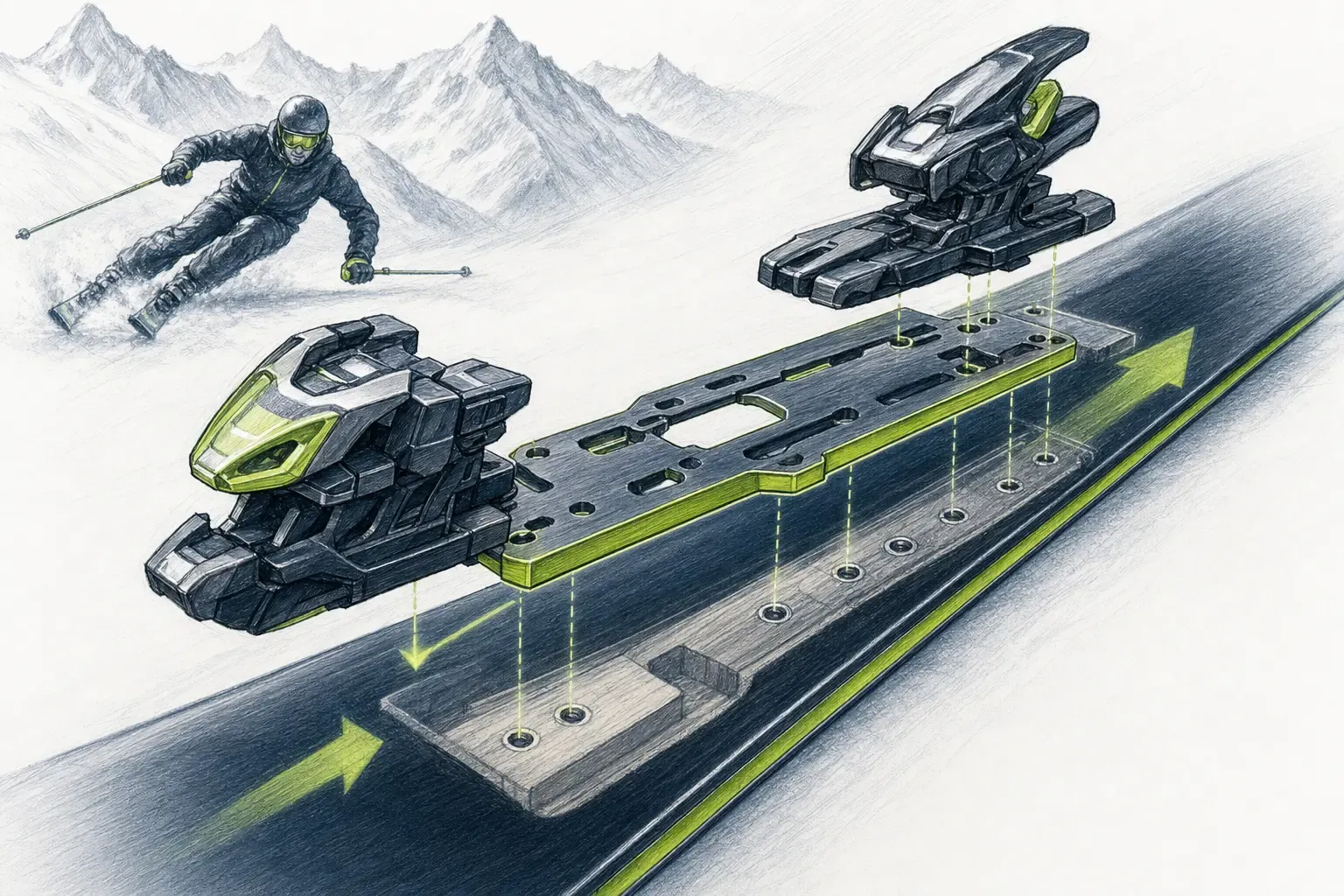
Binding riser plate
A structural part between the ski and the binding that provides the mounting interface and, depending on the design, affects stand height, ski flex, and power transmission.
Open term →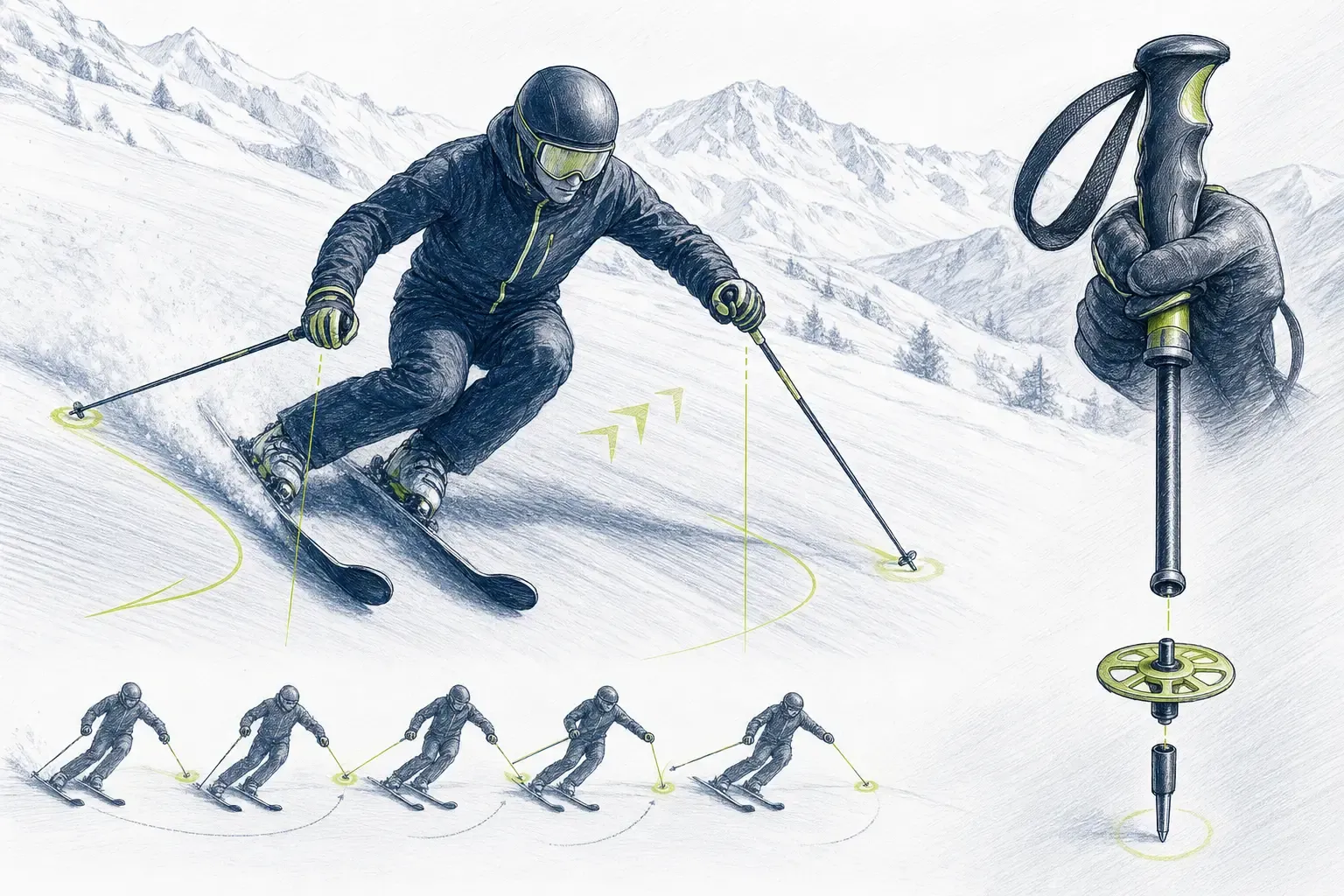
Ski poles
Ski poles help maintain balance, set the rhythm of turns, push off on flat terrain, and stabilize movement in challenging terrain. Their length, grip, and use must match the skier’s build, skill level, and discipline.
Open term →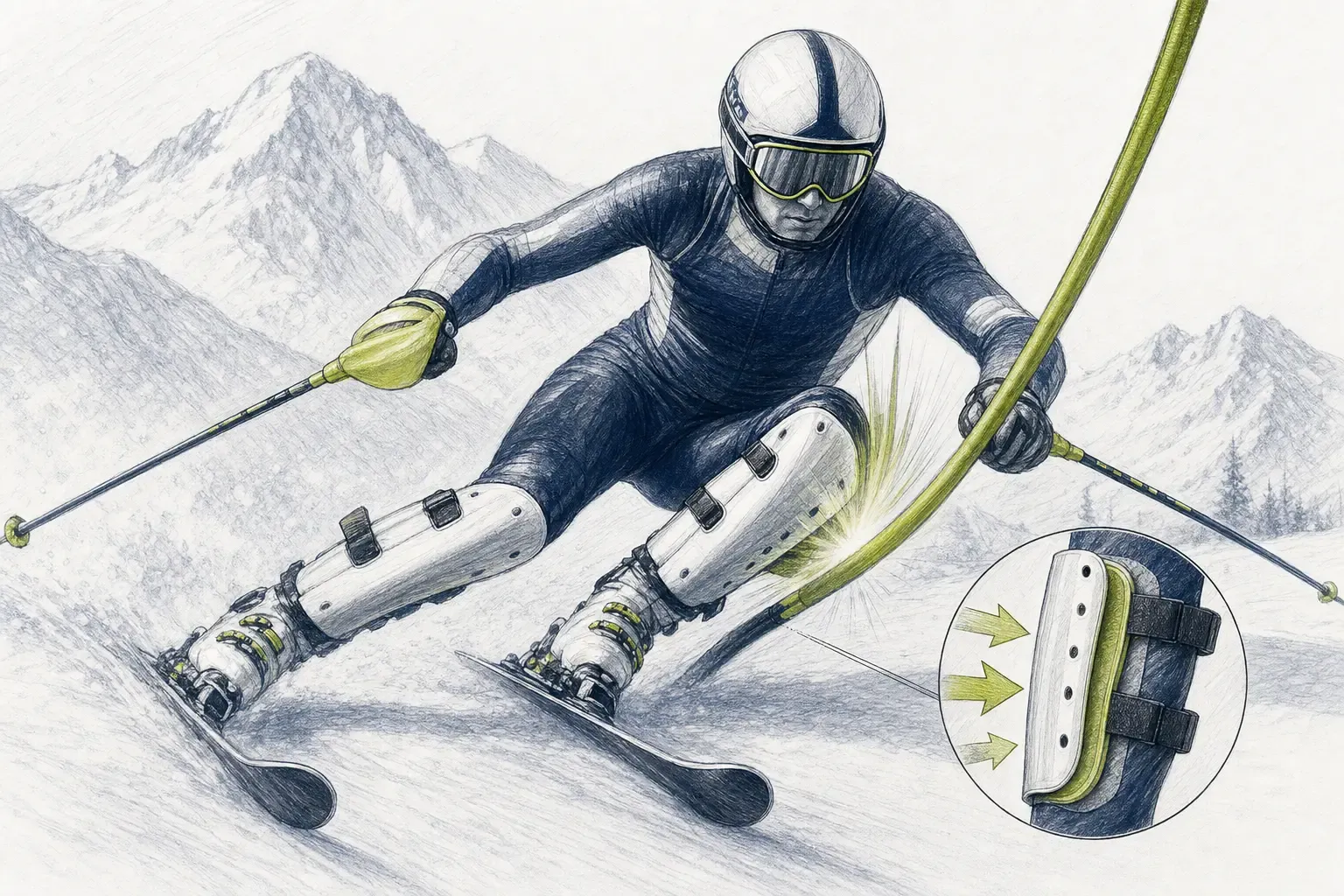
Shin guards
Shin guards are external protective shields used mainly in slalom to reduce the impact of poles on the front of the lower leg.
Open entry →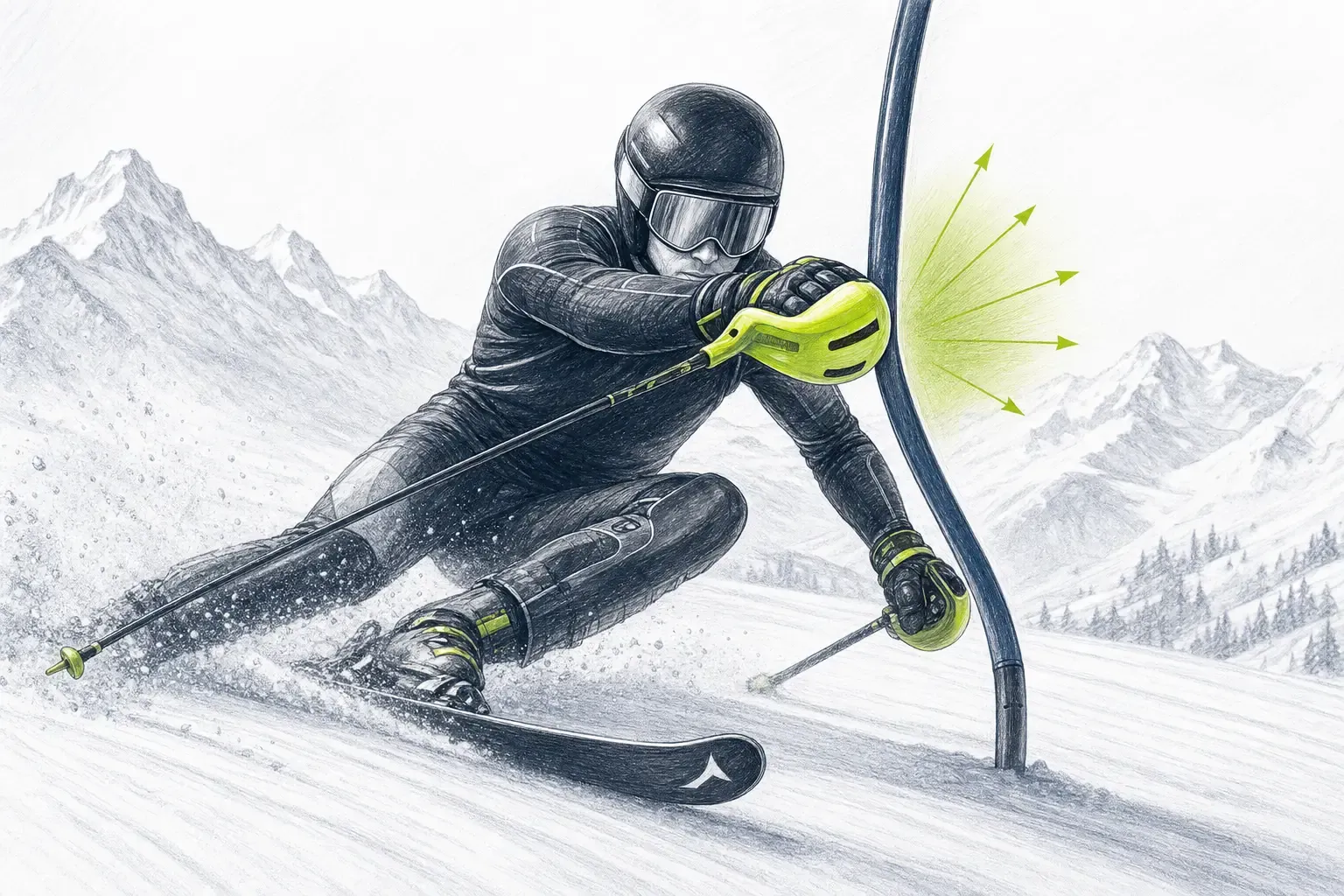
Hand guards
A hand guard is a rigid cover mounted on a slalom pole that, on contact with the gate pole, protects the skier’s fingers and knuckles.
Open entry →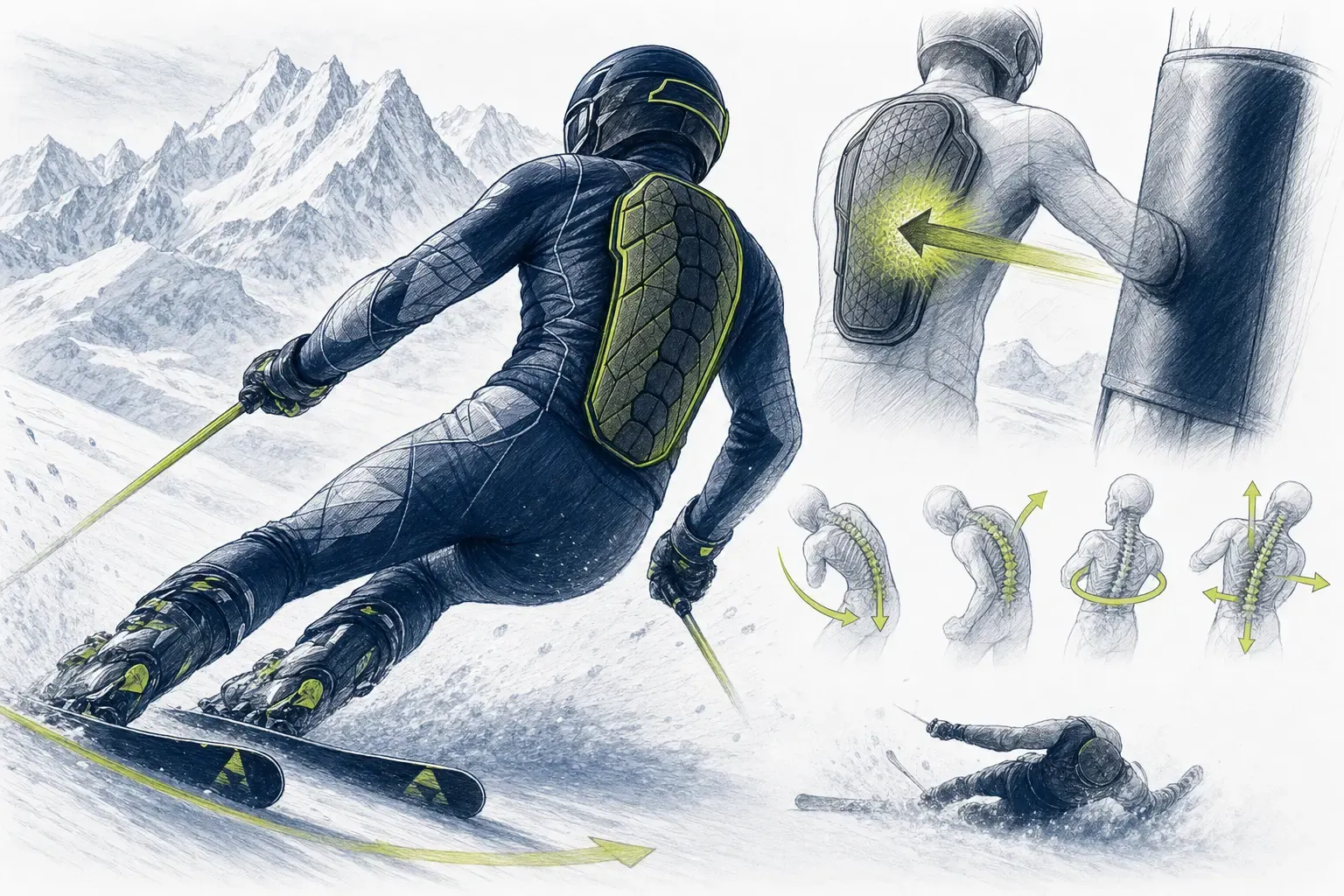
Back protector
A back protector is a protective element that absorbs and disperses part of the energy in a direct impact to the back. However, it does not guarantee protection against all spinal injuries.
Open entry →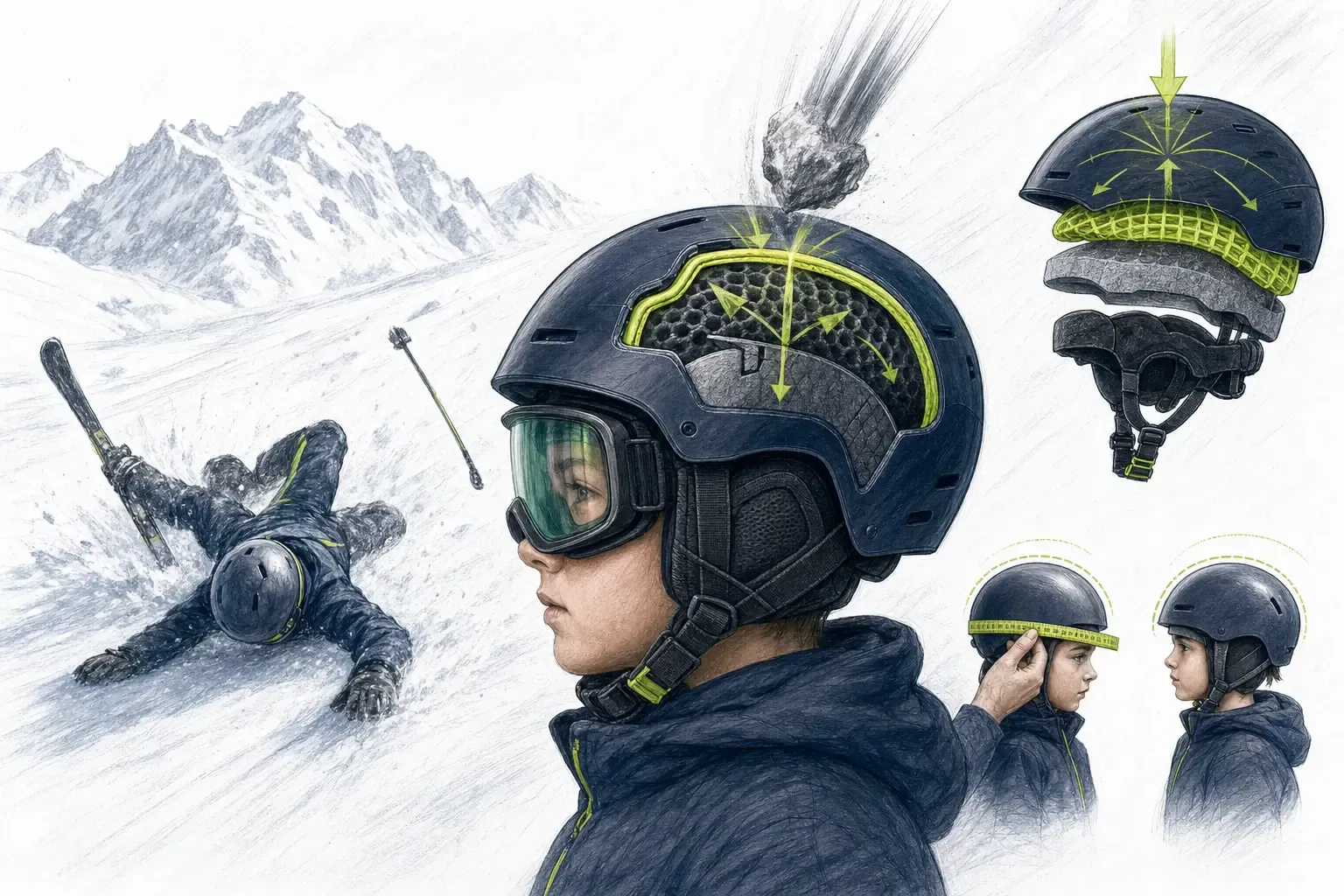
Helmet
A ski helmet is protective gear designed to reduce the risk and severity of head injury in a fall or impact. It must match its intended use, fit properly, and in races meet the current rules of the given discipline.
Open entry →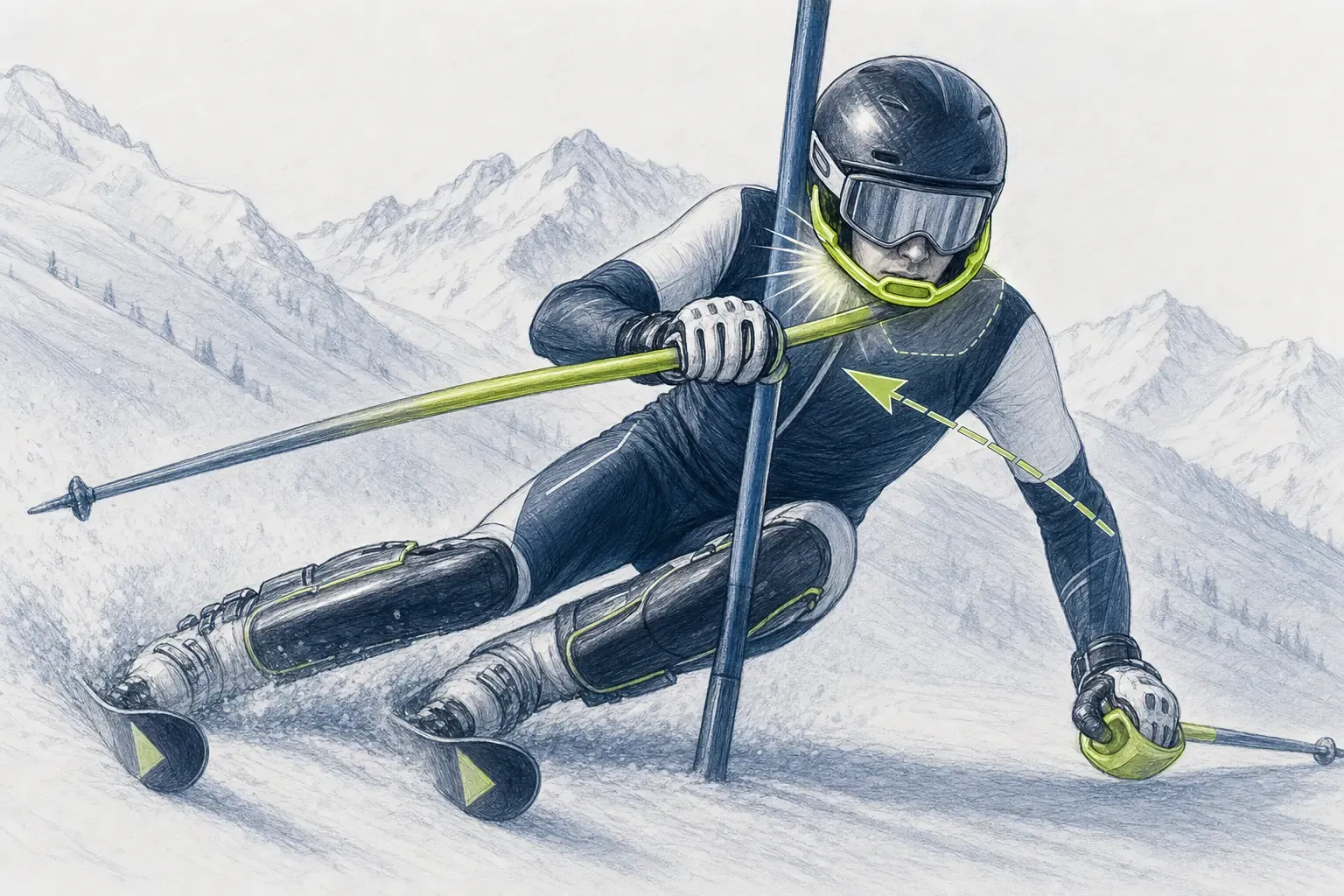
Slalom chin guard
A slalom chin guard is a detachable guard attached to the helmet that limits a deflected slalom pole from striking the lower part of the face directly.
Open entry →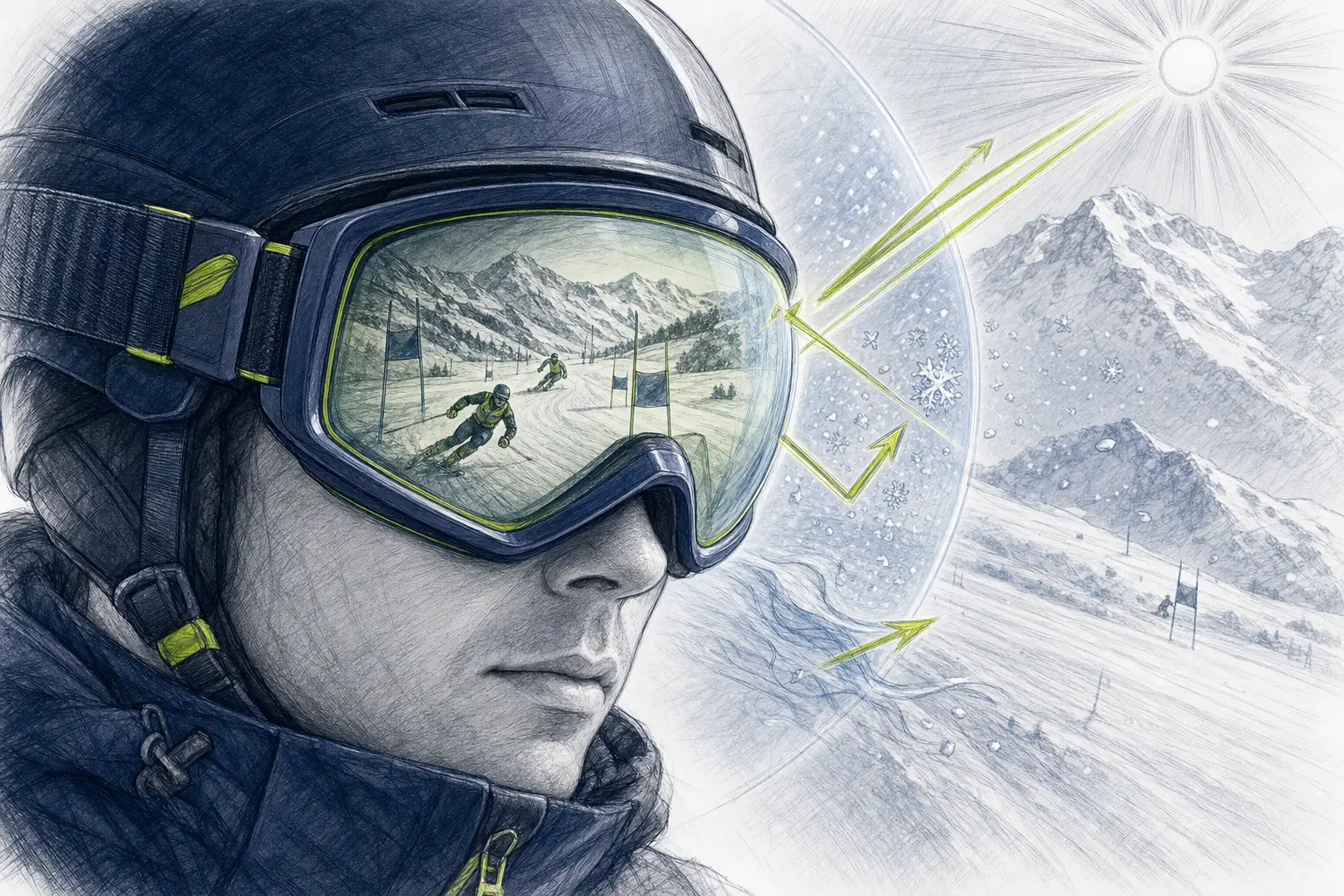
Ski goggles
Protective goggles with a lens that, when skiing, protect the eyes from sun and UV radiation, wind, snow, and precipitation while still preserving a clear view.
Open entry →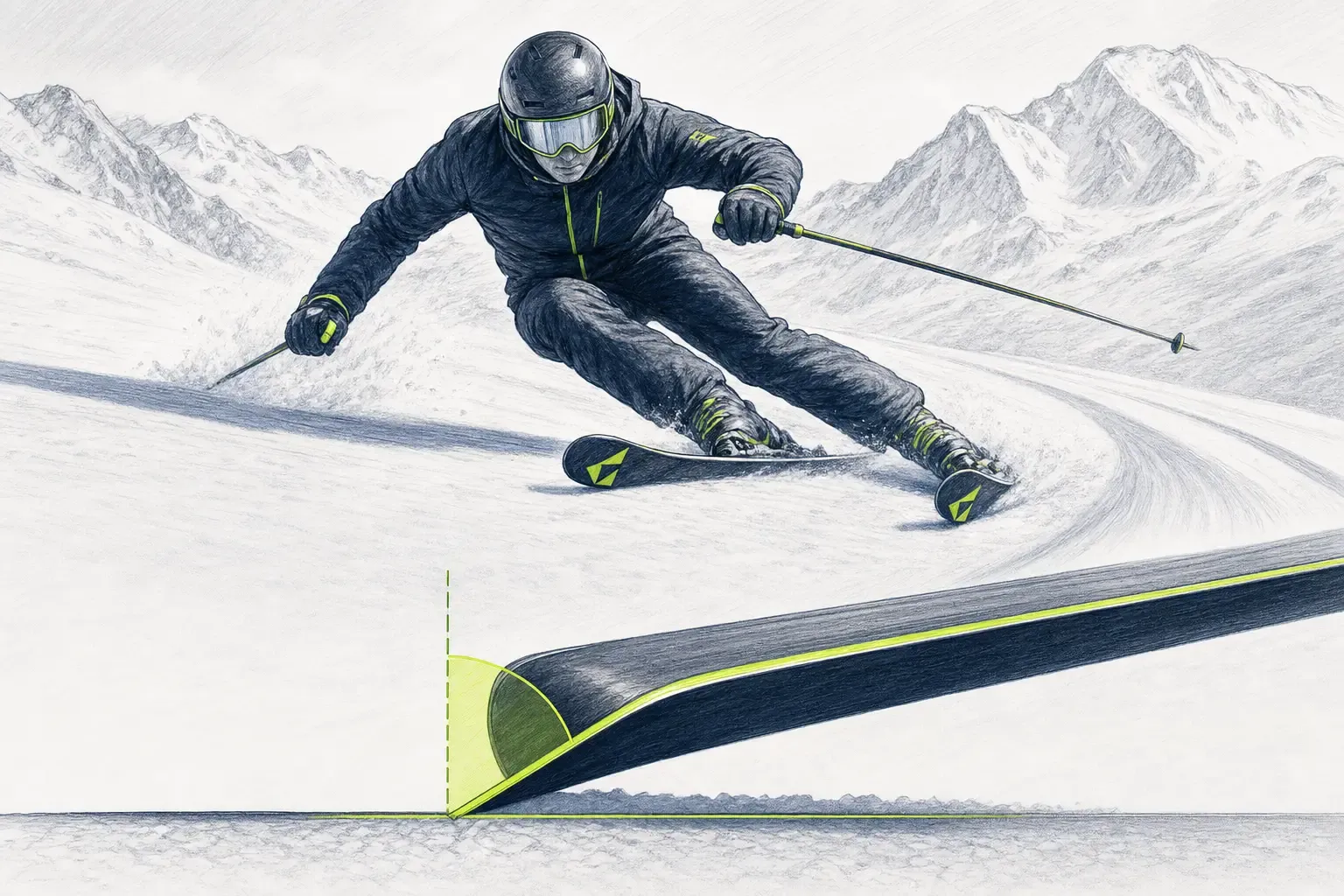
Edge angle
Edge angle is the degree of tilt of a ski relative to the snow surface. It affects edge grip, ski flex, and the shape of the turn, but it cannot be assessed without considering speed, load, direction of movement, and snow quality.
Open entry →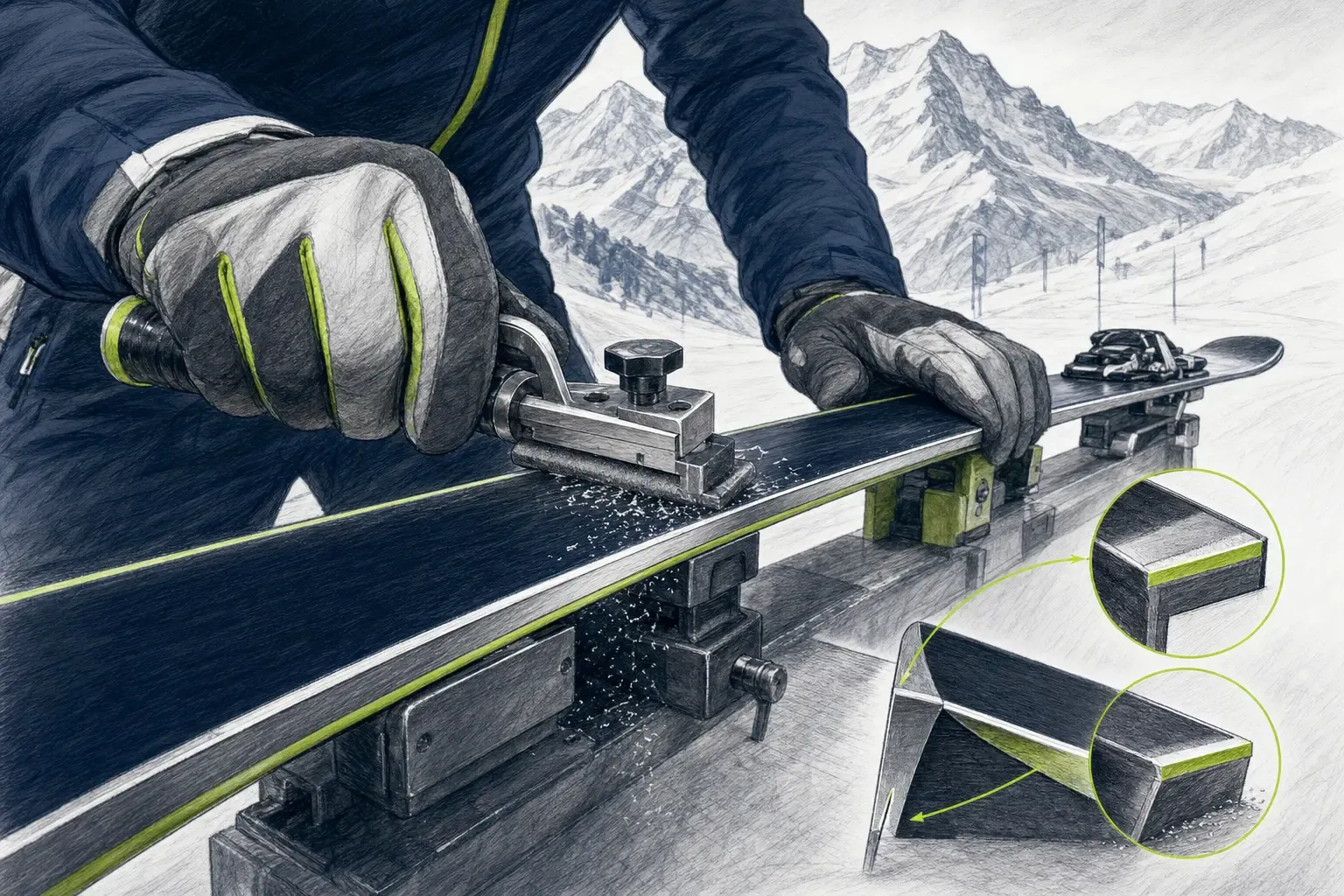
Edge tuning
Edge tuning is the controlled restoration of the geometry, sharpness, and smoothness of the steel edges of a ski. It includes work on the edge from the base side and the sidewall, removal of damage, and subsequent fine smoothing.
Open entry →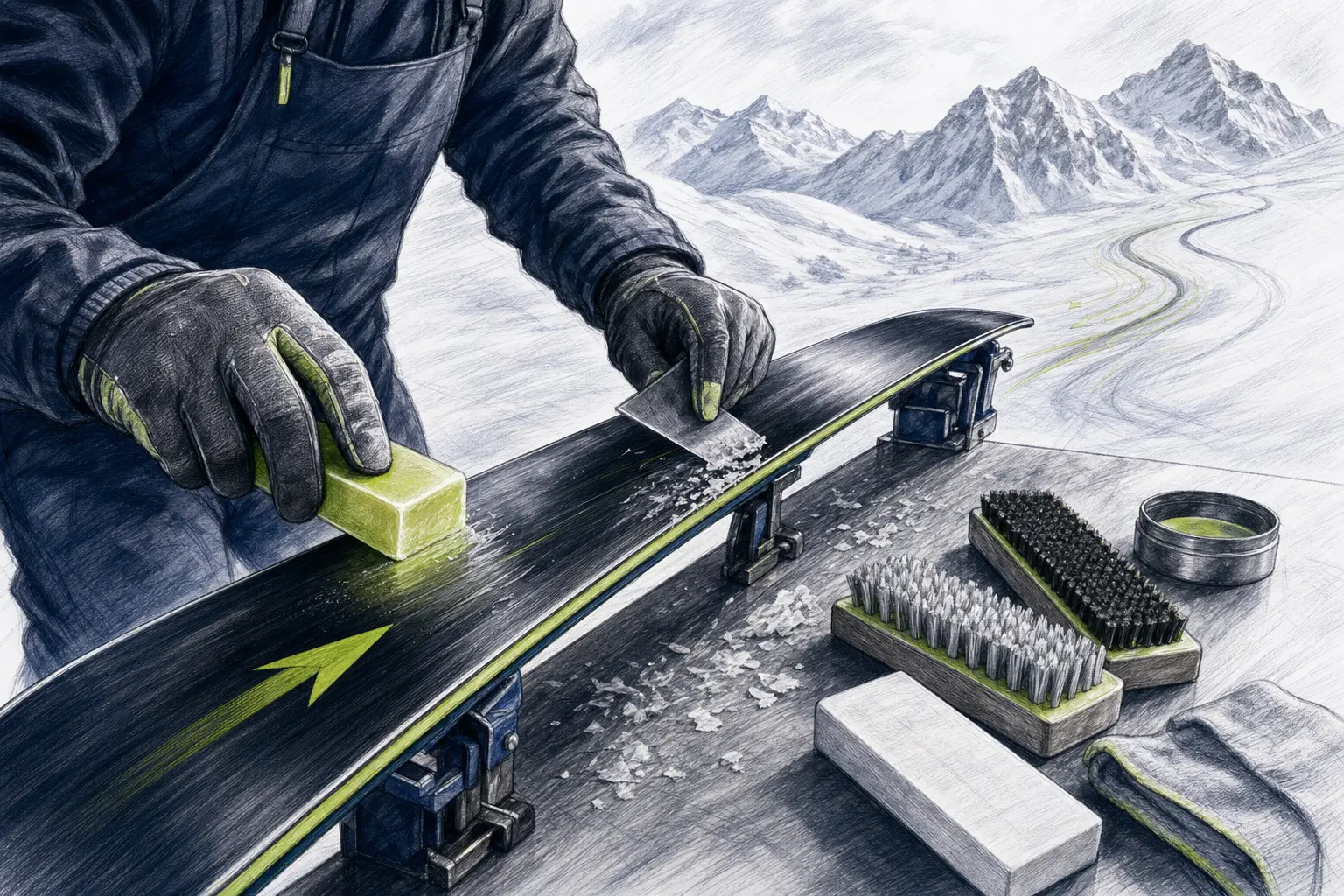
Waxing
Waxing is the treatment of a ski base with a suitable glide wax, followed by removal of excess wax and brushing of the surface.
Open entry →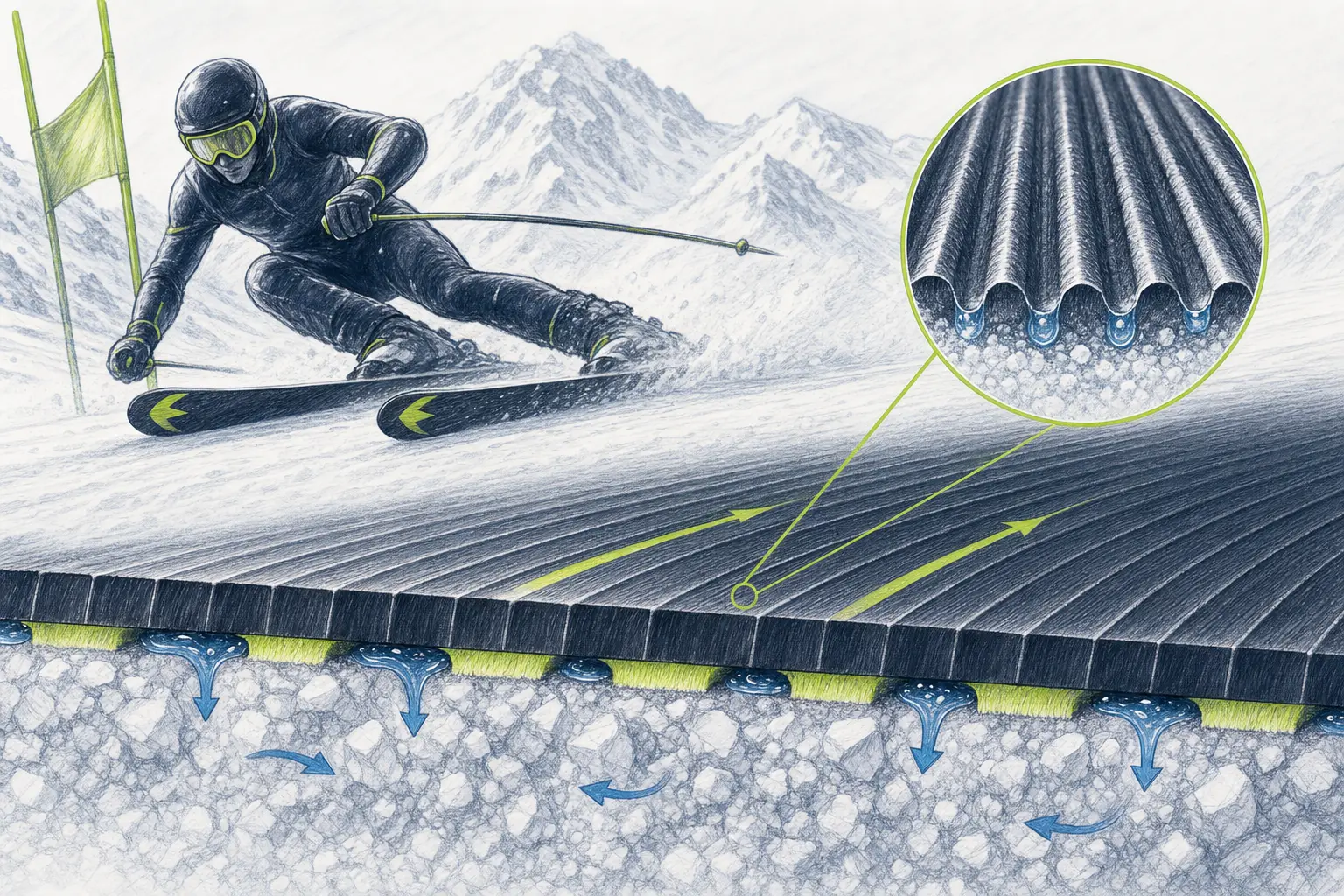
Base structure
Base structure is a deliberately created relief of fine grooves and flat areas on the gliding side of the ski, which affects contact with the snow and glide.
Open entry →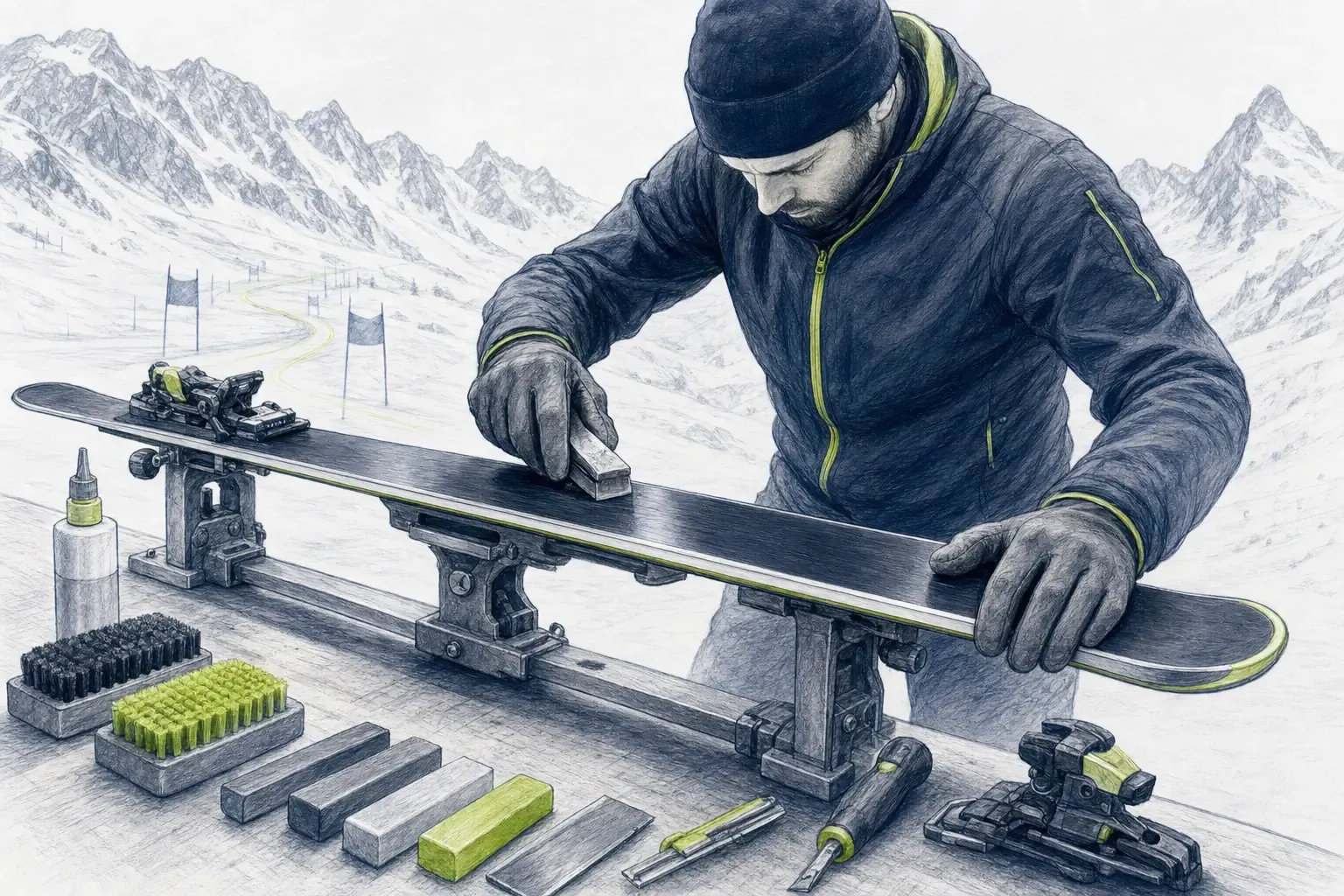
Ski service
Ski service is the inspection, repair and preparation of the base, edges and bindings so that skis behave predictably, safely and appropriately for the conditions and the skier's level.
Open entry →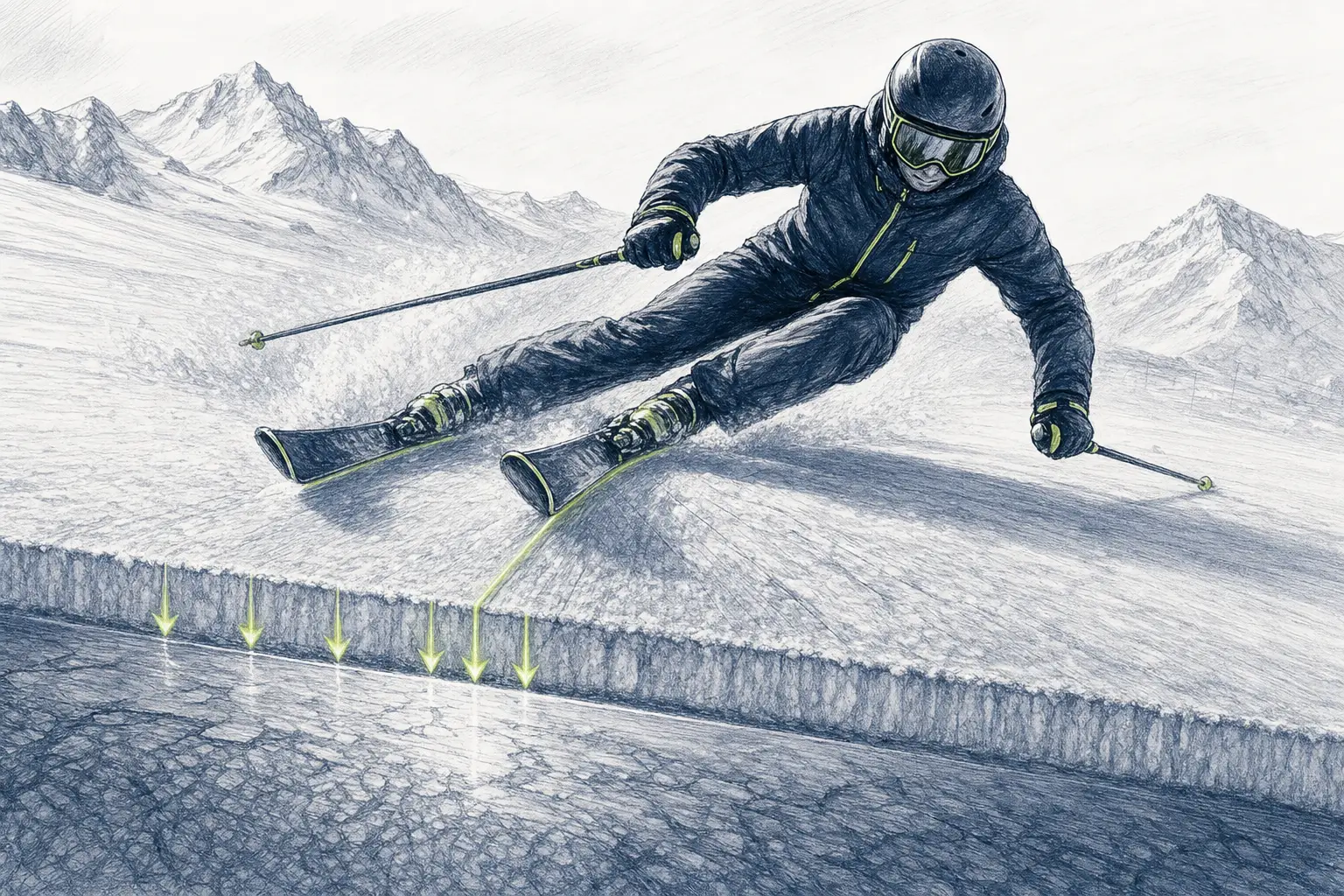
Hard snow
Hard snow is a compact, little-deformable surface where precise edging, balanced stance, smooth pressure control and appropriate speed matter.
Open entry →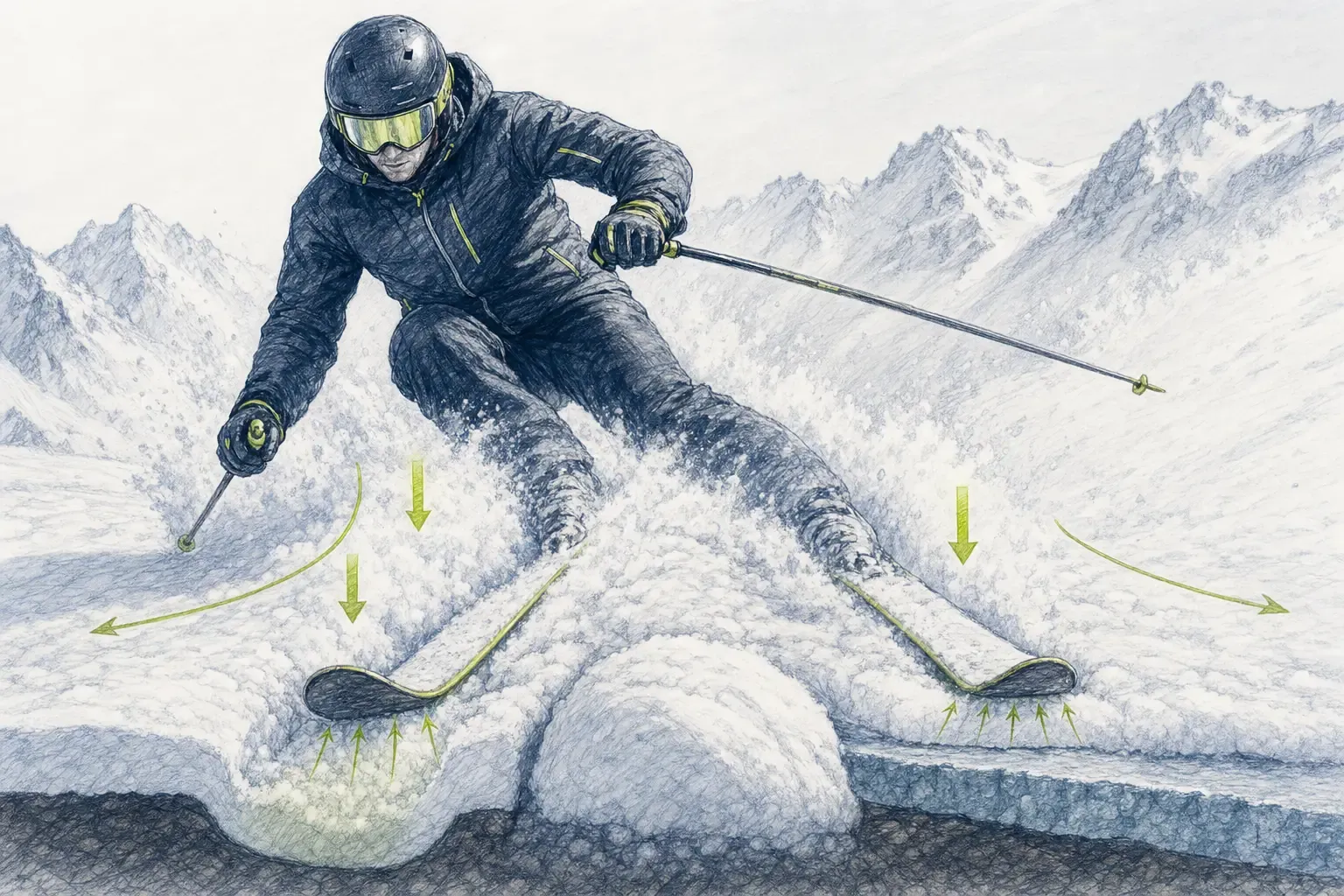
Soft snow
A snow surface that compresses or gives way easily under the ski. It can be dry powder, freshly tracked snow, or damp spring snow.
Open entry →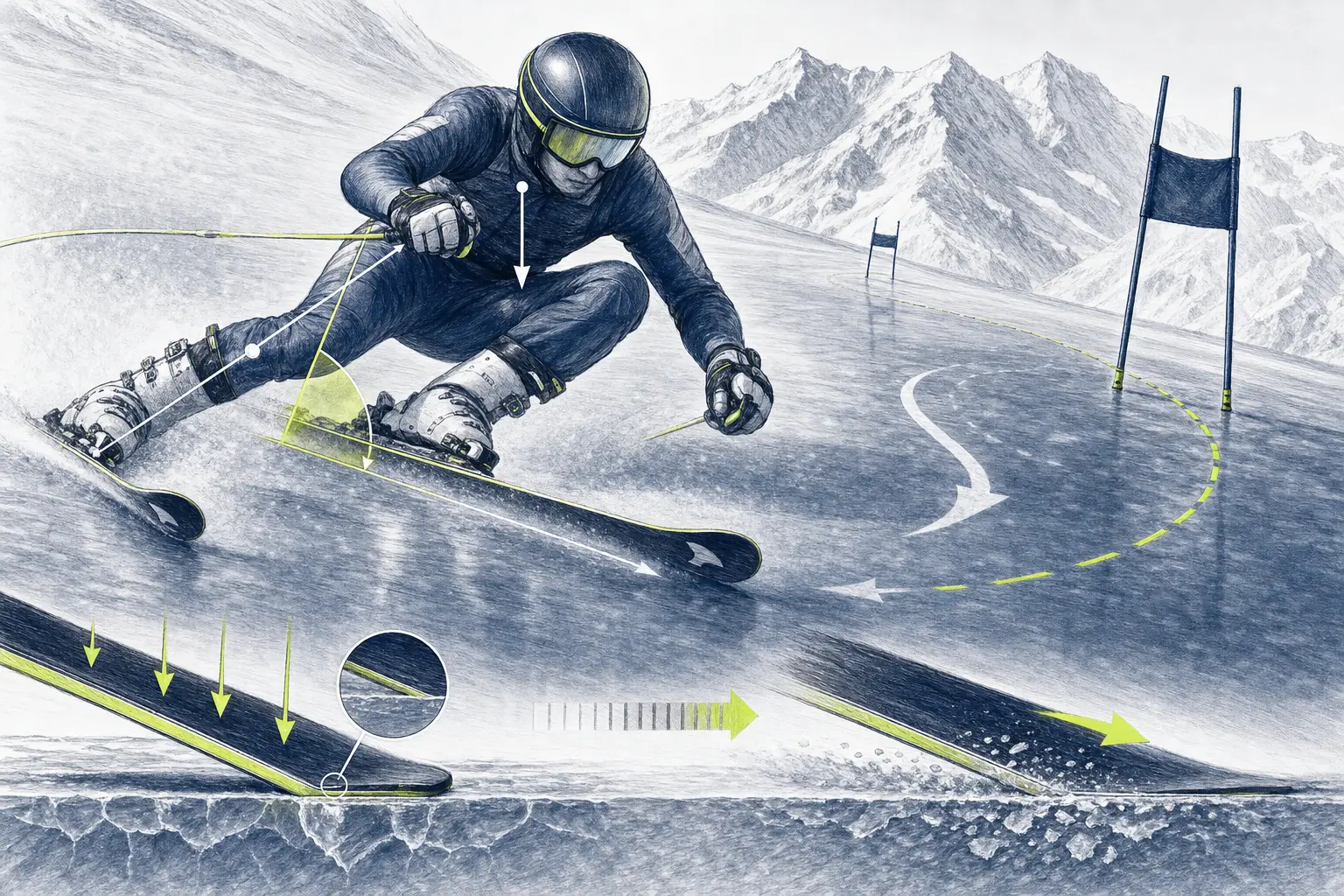
Ice track
A very hard, smooth or icy course surface where skis penetrate the snow only minimally and, with incorrect loading, slip more easily.
Open entry →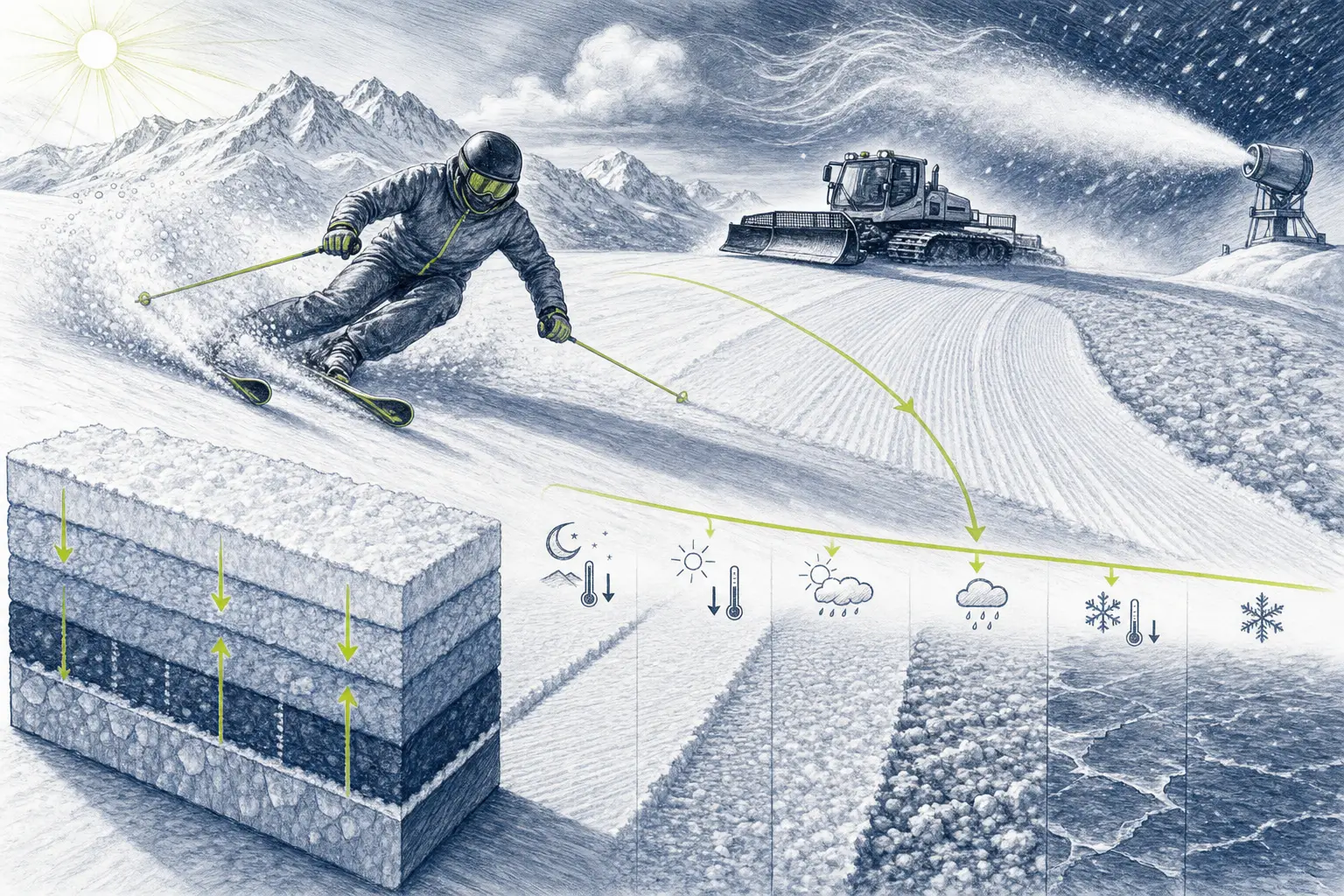
Snow conditions
The state of the snow surface and snow layers, which affects ski control, edge grip, speed, terrain difficulty and skiing safety.
Open entry →Training and athlete
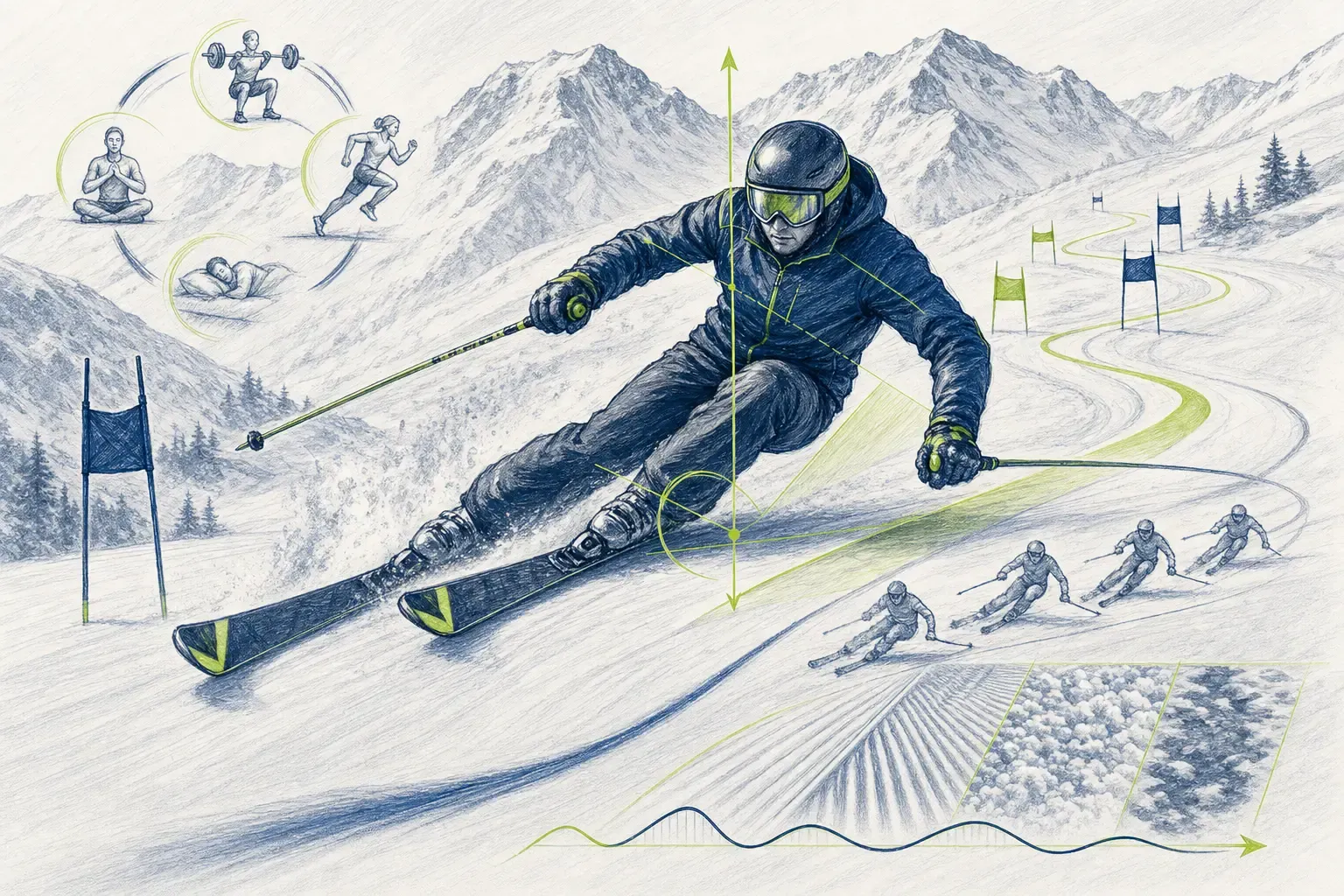
Ski training
Ski training is a planned and appropriately dosed process of developing technique, tactics, fitness, psychological abilities, and a skier’s independence on snow and off it.
Open term →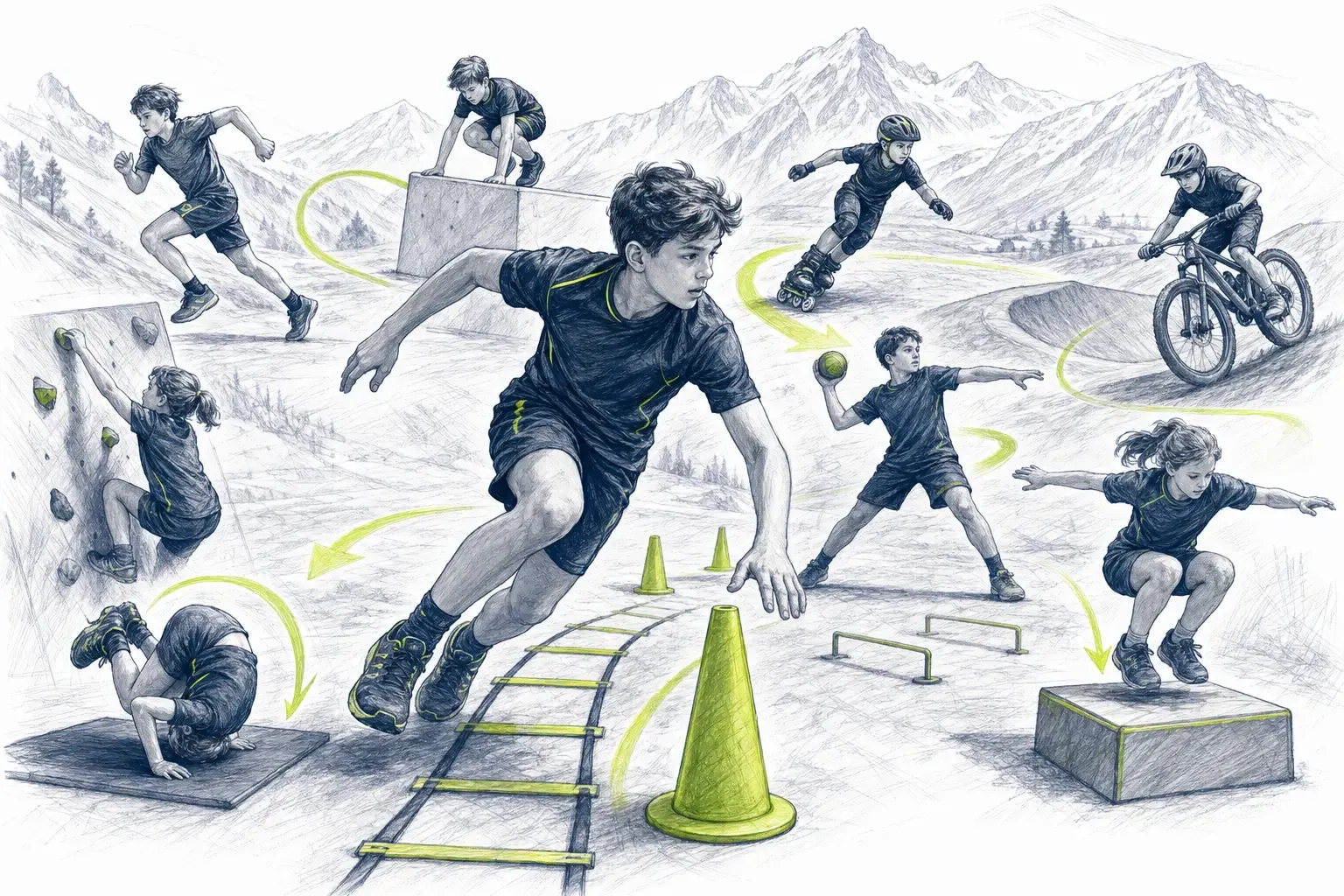
Dryland training
Dryland training is systematic training off snow that develops the movement, fitness, and coordination prerequisites needed for safe and high-performance skiing.
Open term →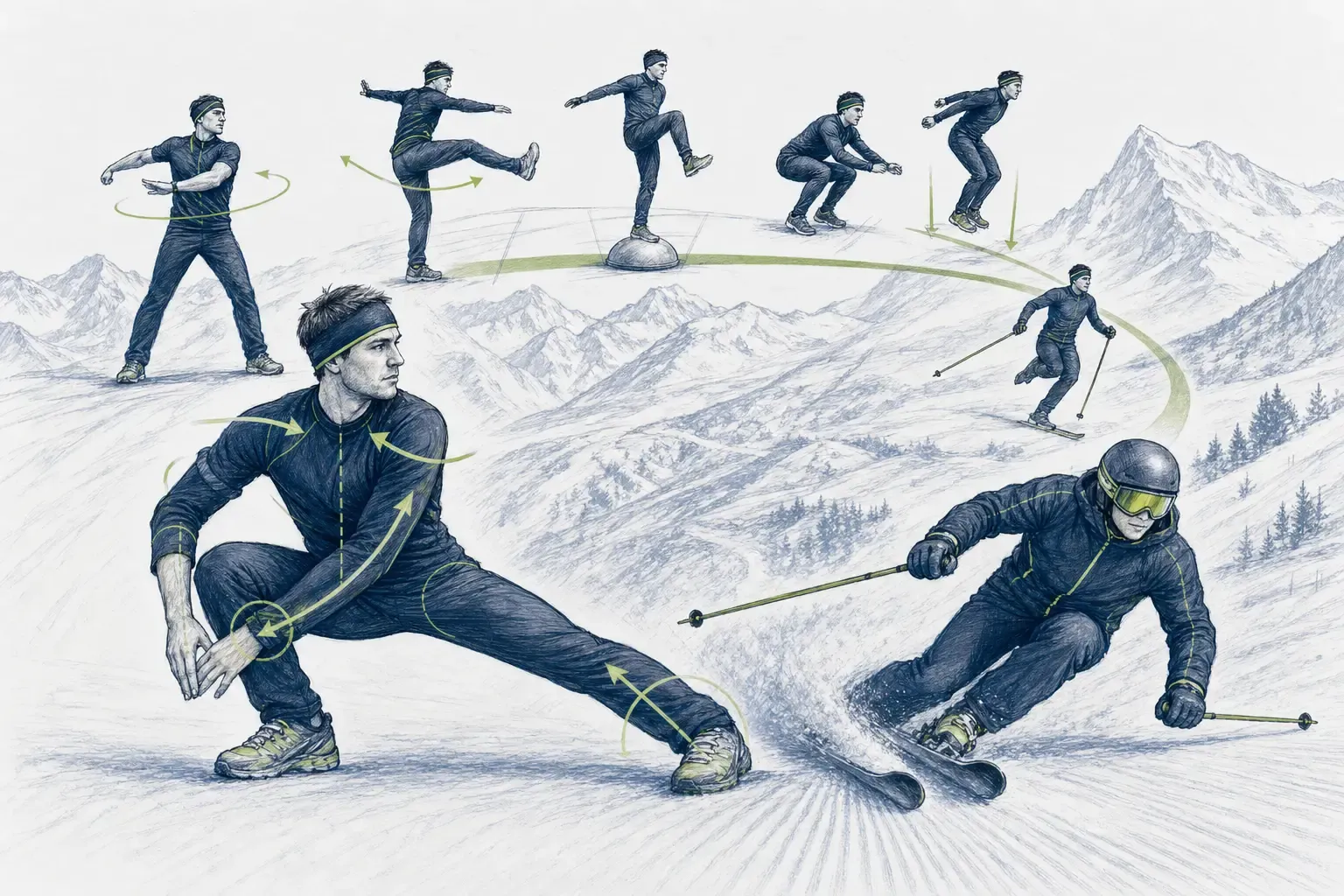
Warm-up
A targeted preparation of the body for skiing that gradually combines general warming up, mobility, balance, coordination, and ski-specific movements.
Open term →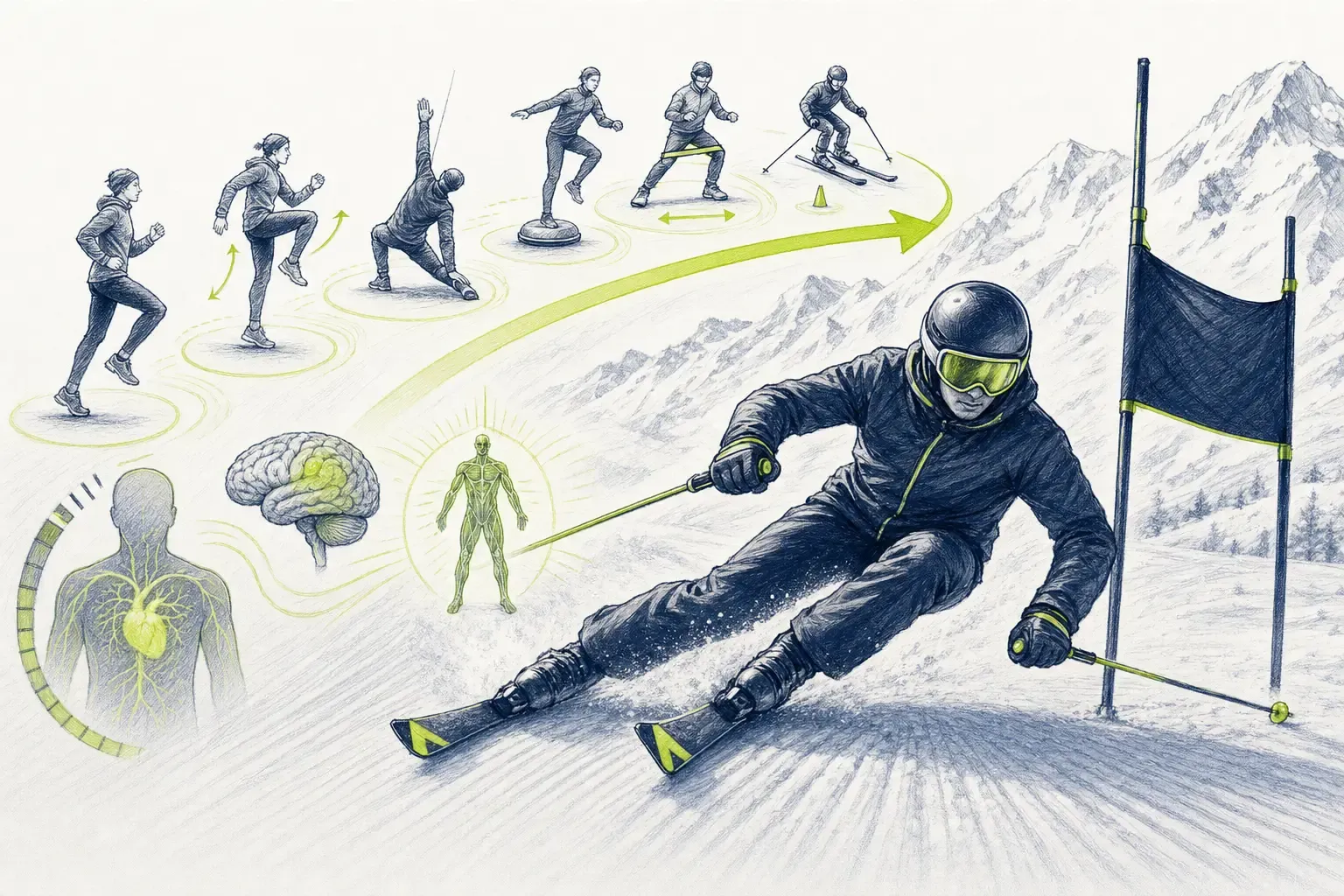
Activation
A targeted part of the warm-up that prepares the neuromuscular system, stability, coordination, and attention for skiing or race performance.
Open term →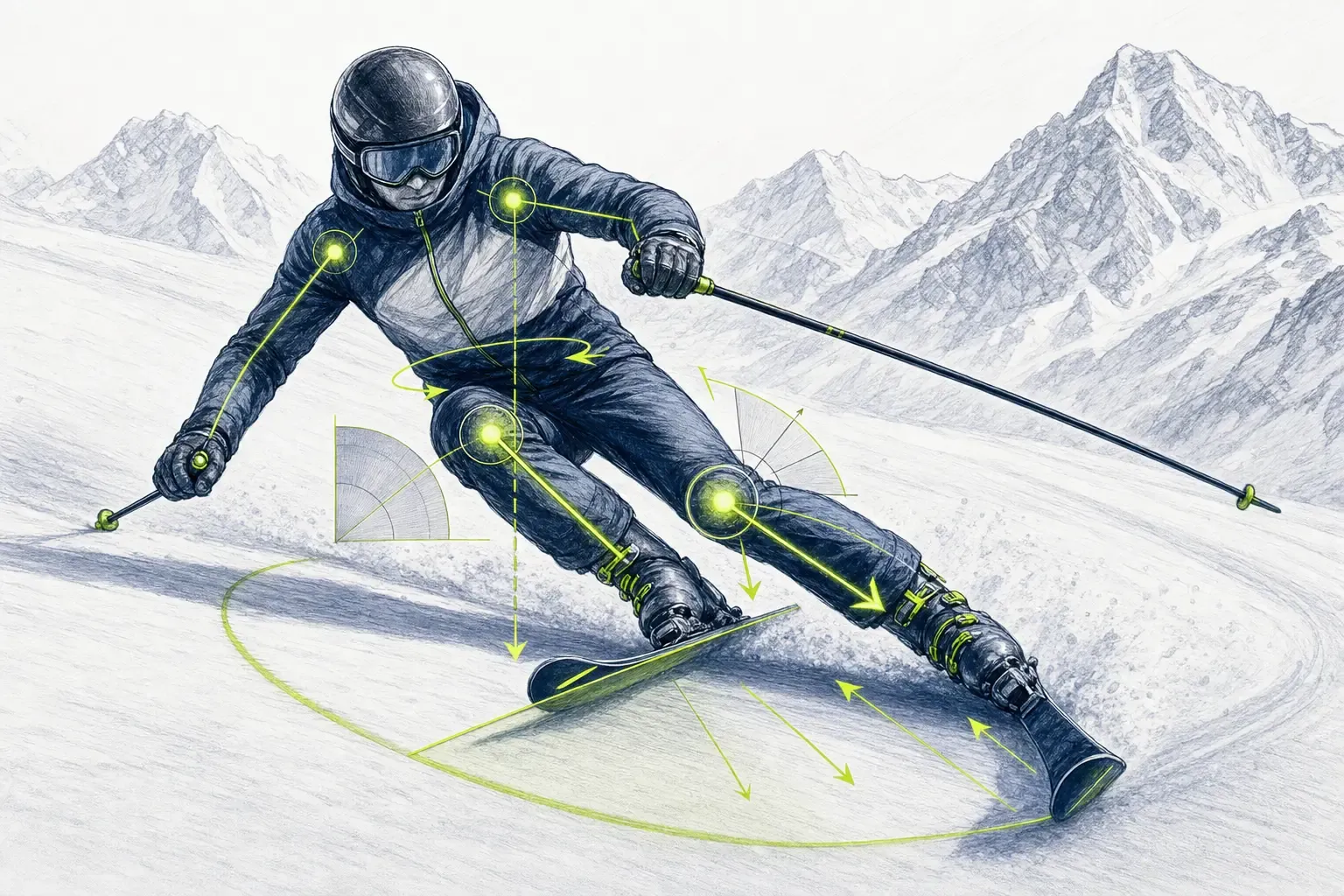
Mobility
Mobility is the ability to use the required range of motion purposefully, actively, and with control. In skiing, it is shown especially in the work of the ankles, hips, and torso, always together with stability, strength, and coordination.
Open entry →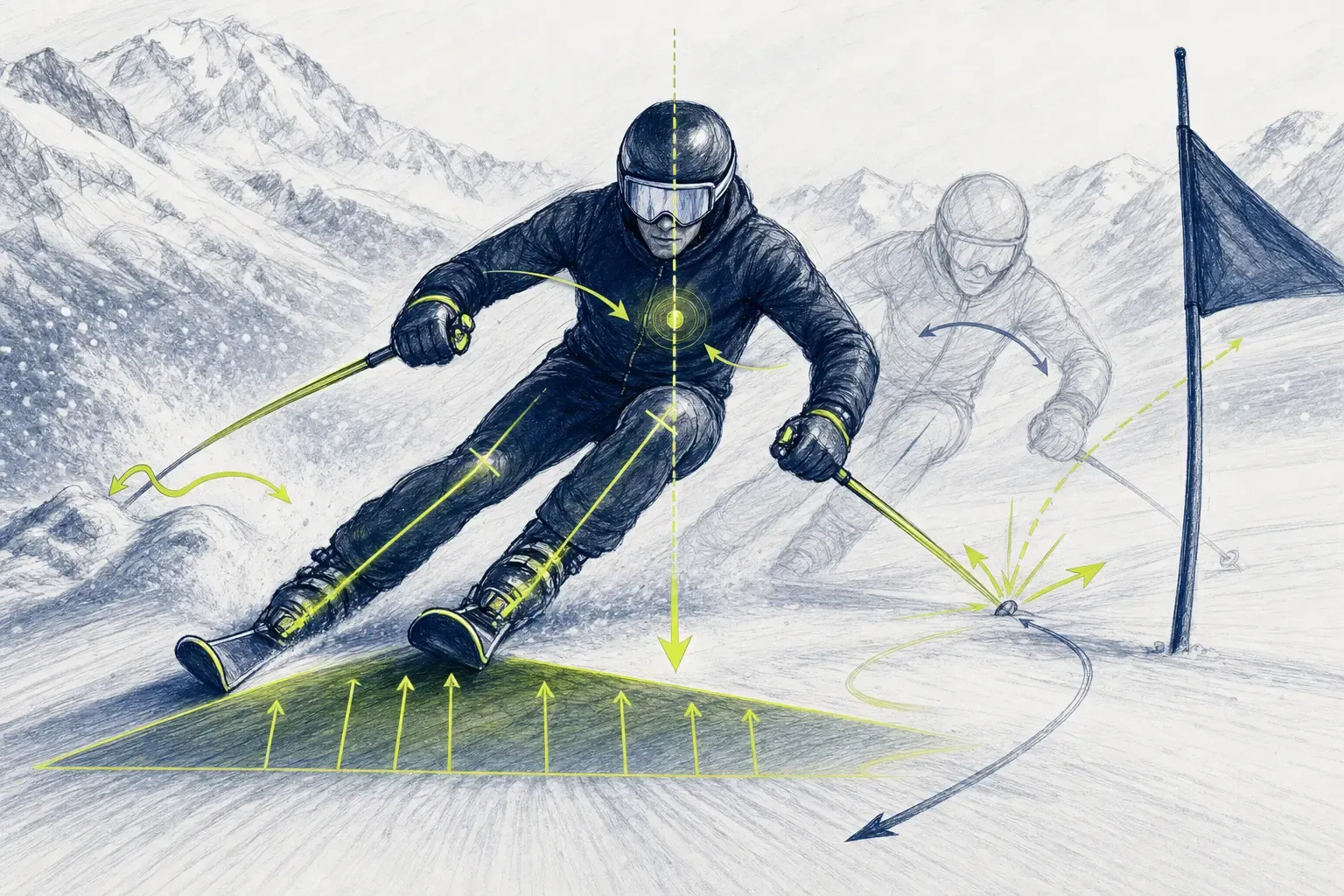
Stability
Stability is the skier’s ability to maintain or quickly regain a functional body position and control of the skis when forces act on them, or when direction, terrain, or speed changes.
Open entry →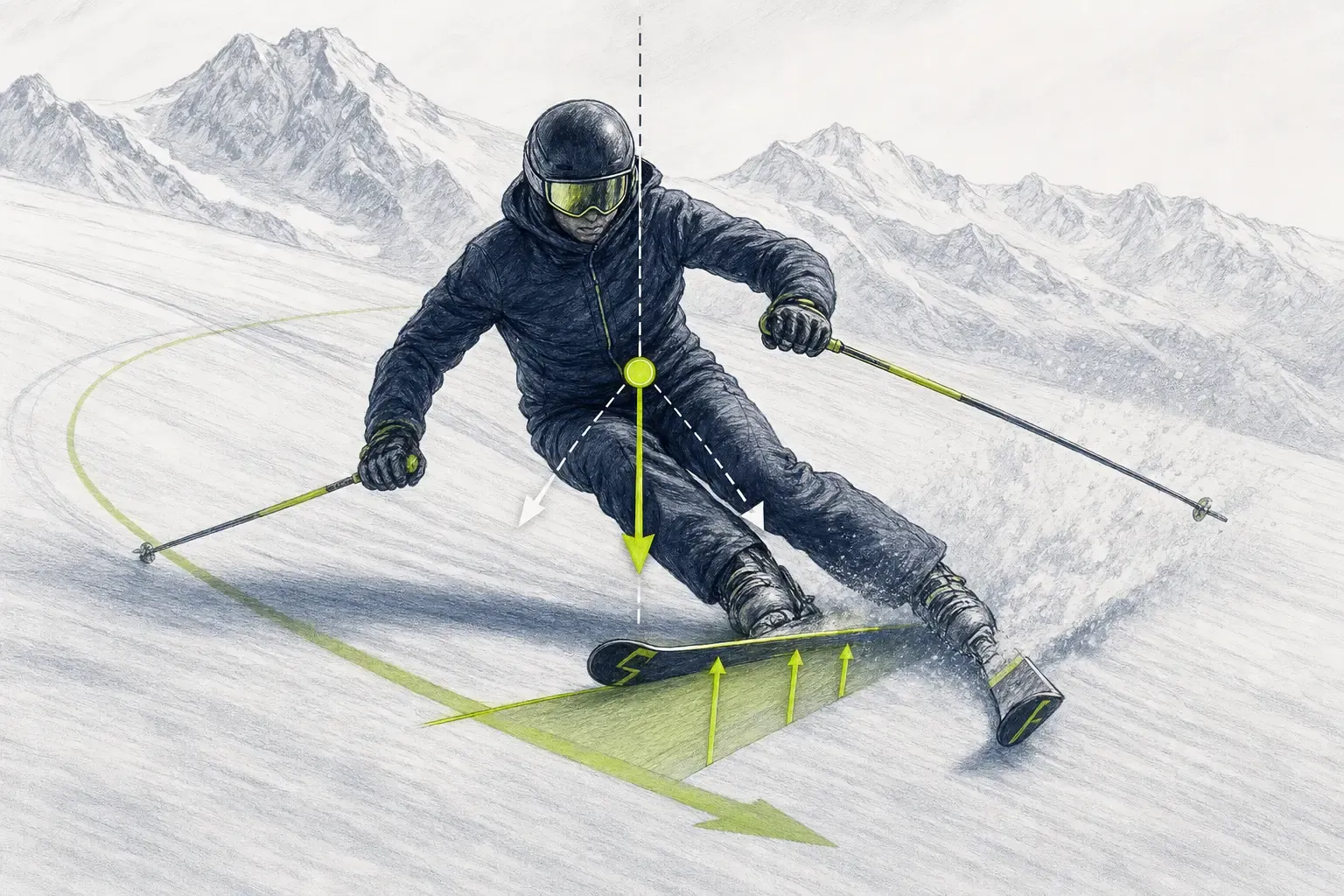
Balance
Balance is the skier’s ability to continuously maintain or restore an effective relationship between the body and the support provided by the skis.
Open entry →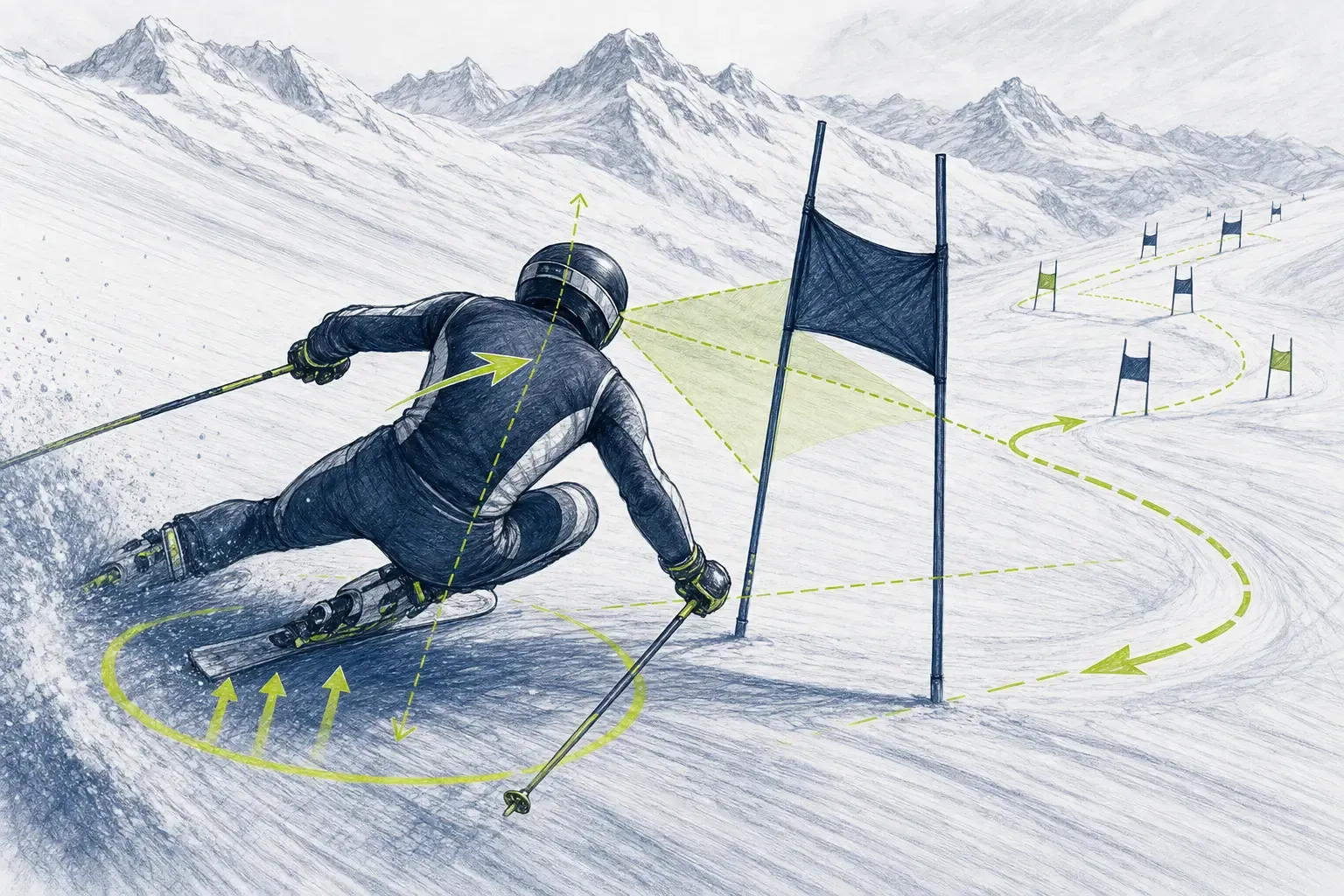
Agility and dexterity
Agility is the ability to quickly and effectively change the movement of the whole body in response to a stimulus; dexterity is a broader practical term for handling changing movement situations.
Open entry →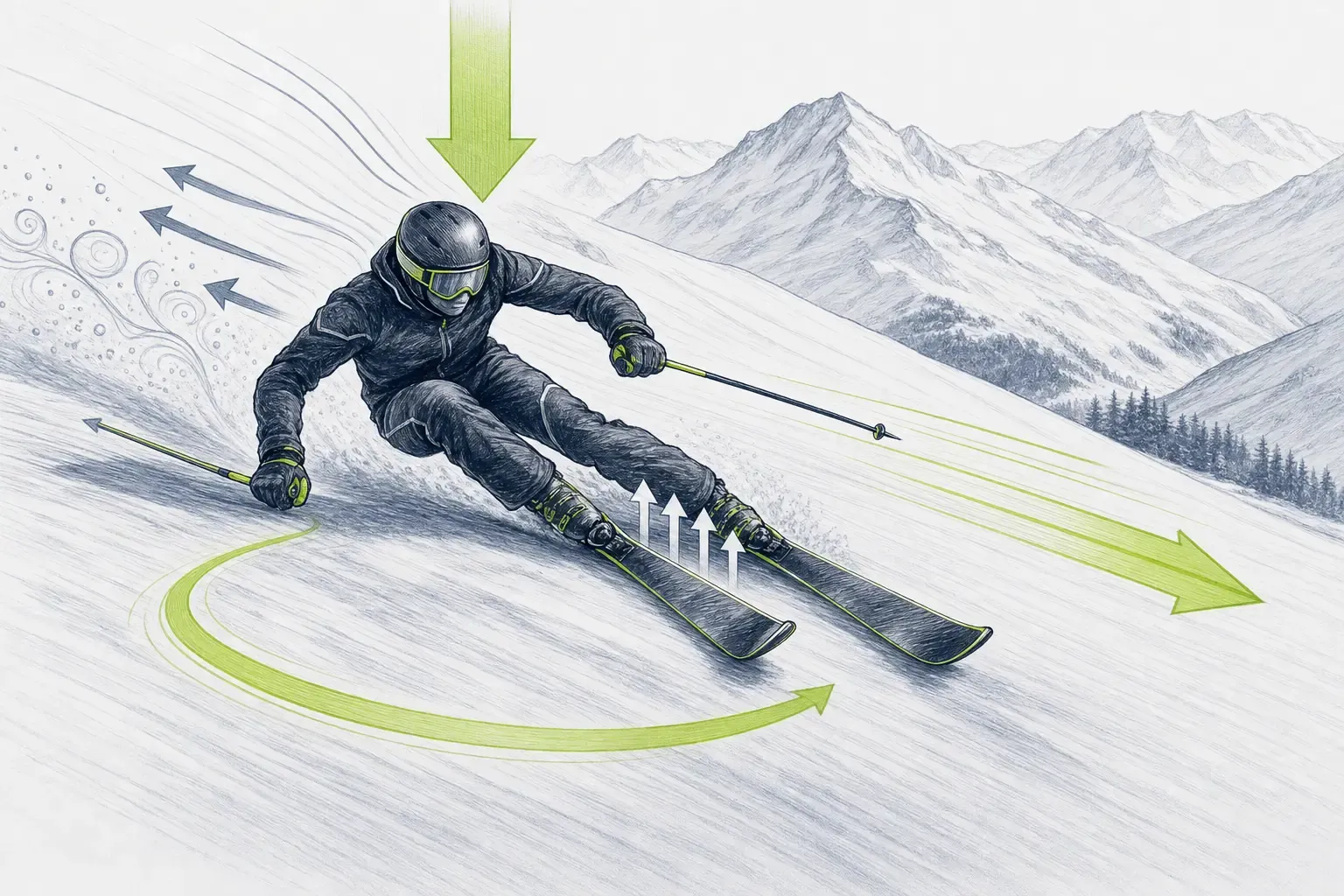
Speed
Speed is the extent of the skier’s movement down the slope, expressed as distance covered per unit of time. In skiing, it is also the result of the slope, line taken, technique, body position, equipment, and snow conditions.
Open entry →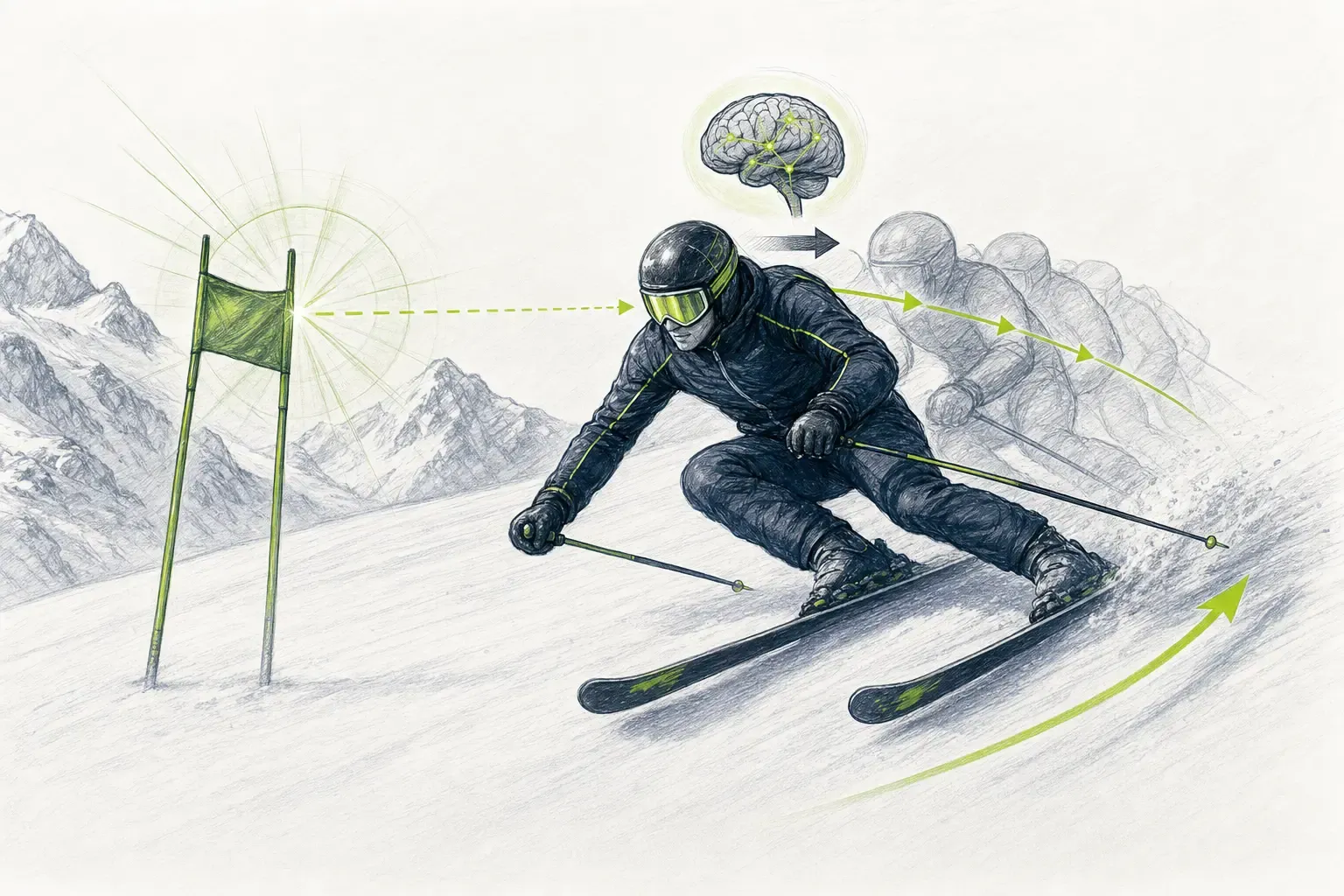
Reaction speed
The ability to quickly notice a stimulus, choose an appropriate response, and start moving.
Open entry →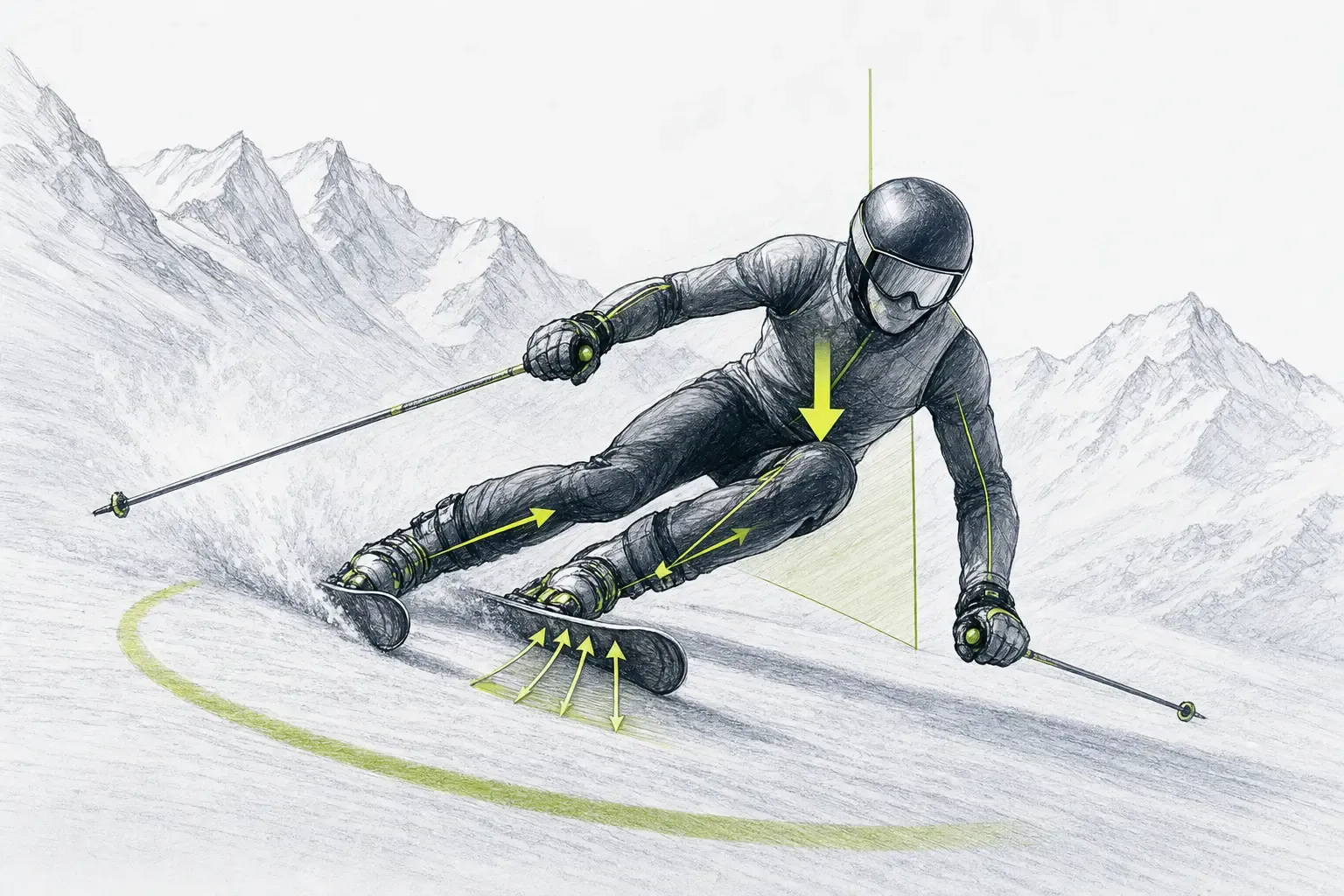
Strength
Strength is the ability of the neuromuscular system to create muscle tension and work against external resistance. In skiing, it helps maintain posture, regulate pressure on the skis, handle load in the turn, and control movement when tired.
Open entry →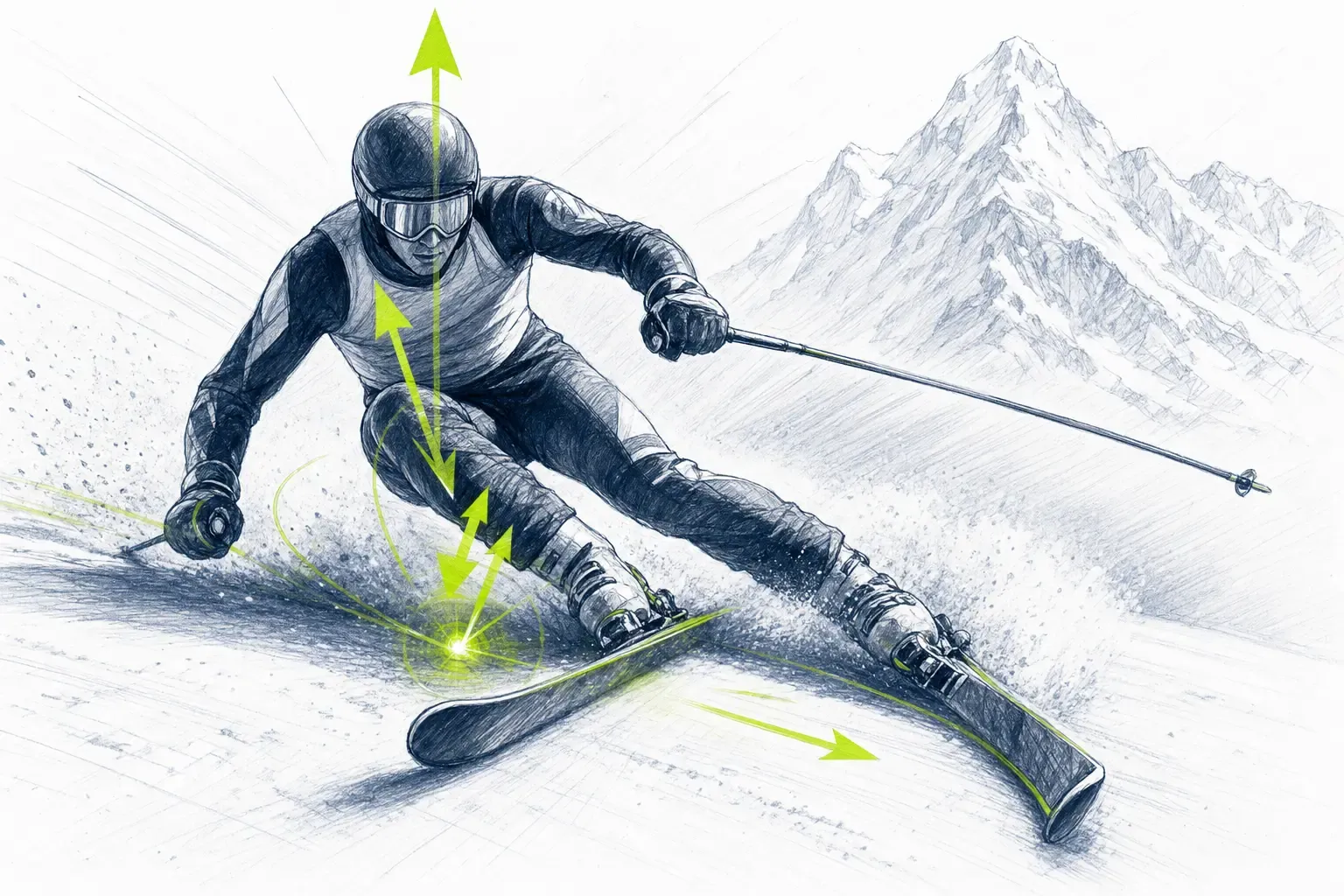
Explosiveness
Explosiveness is the ability to produce great force or power in a very short time; in skiing, it helps at the start, with quick changes in load, and in handling dynamic situations.
Open entry →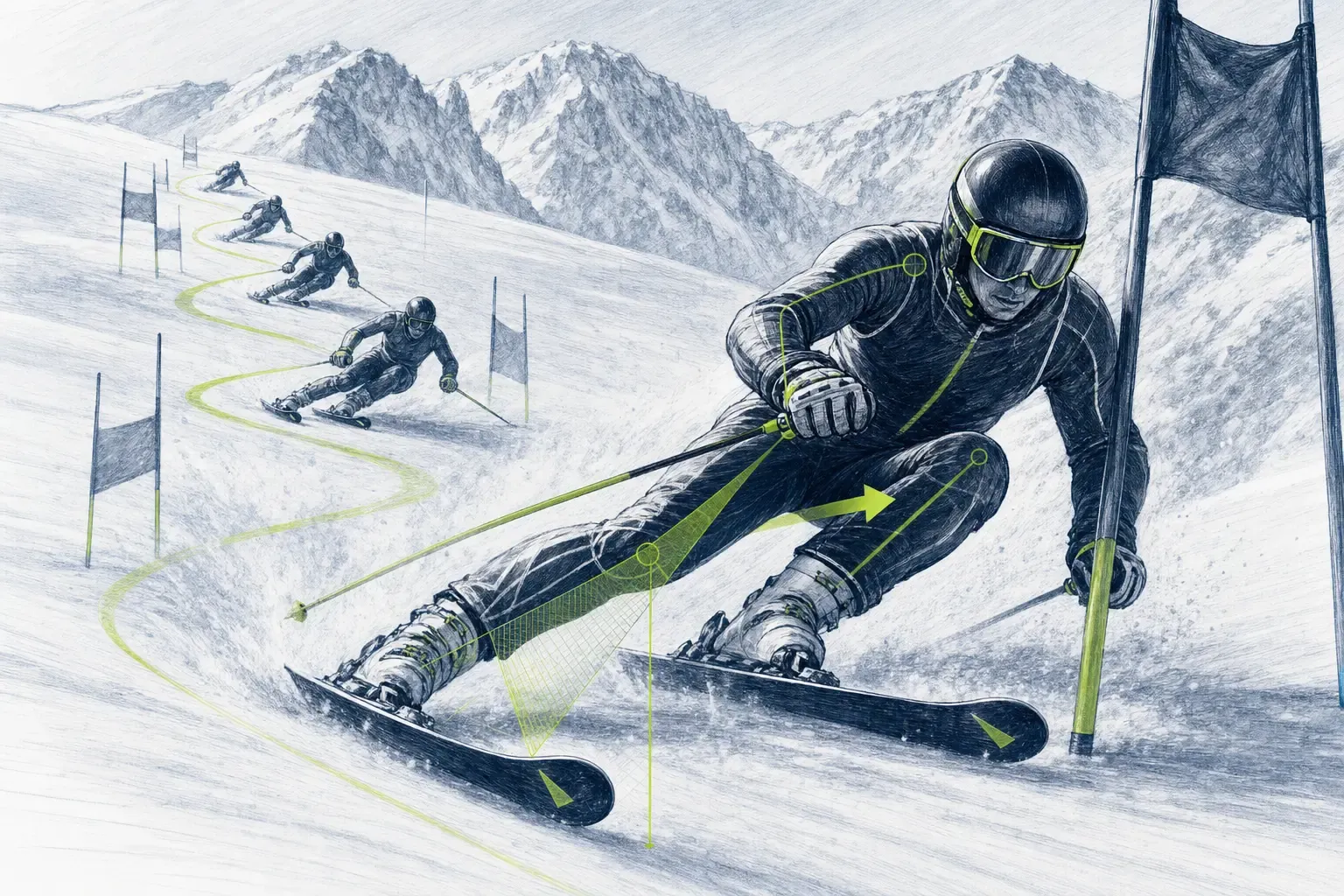
Endurance
Endurance is the ability to perform or repeatedly handle movement activity for an appropriate length of time, resist fatigue, and maintain the required quality of movement.
Open entry →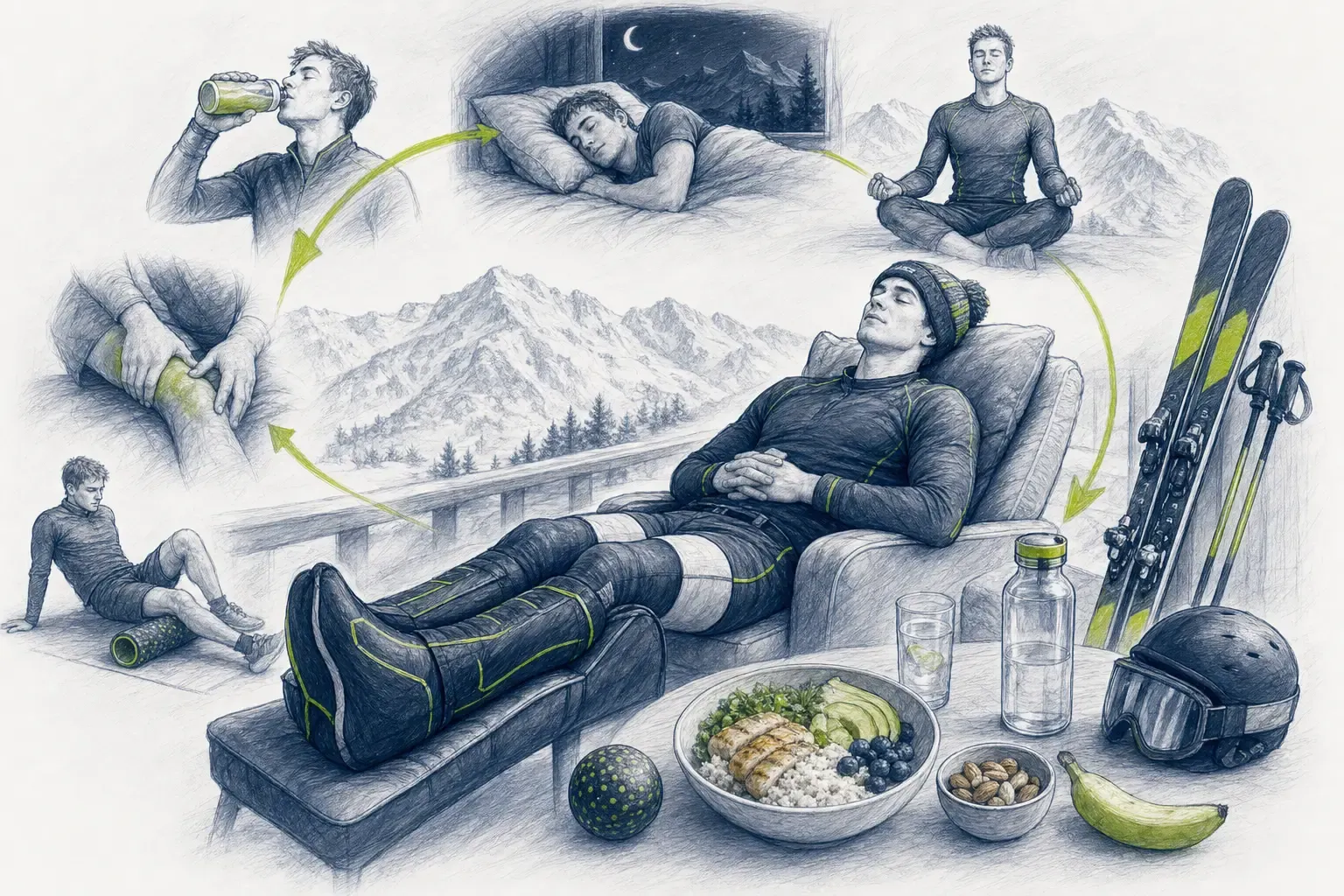
Recovery
Recovery is the restoration of physical and mental readiness after training or races, allowing safe continuation of load and the development of training adaptation.
Open entry →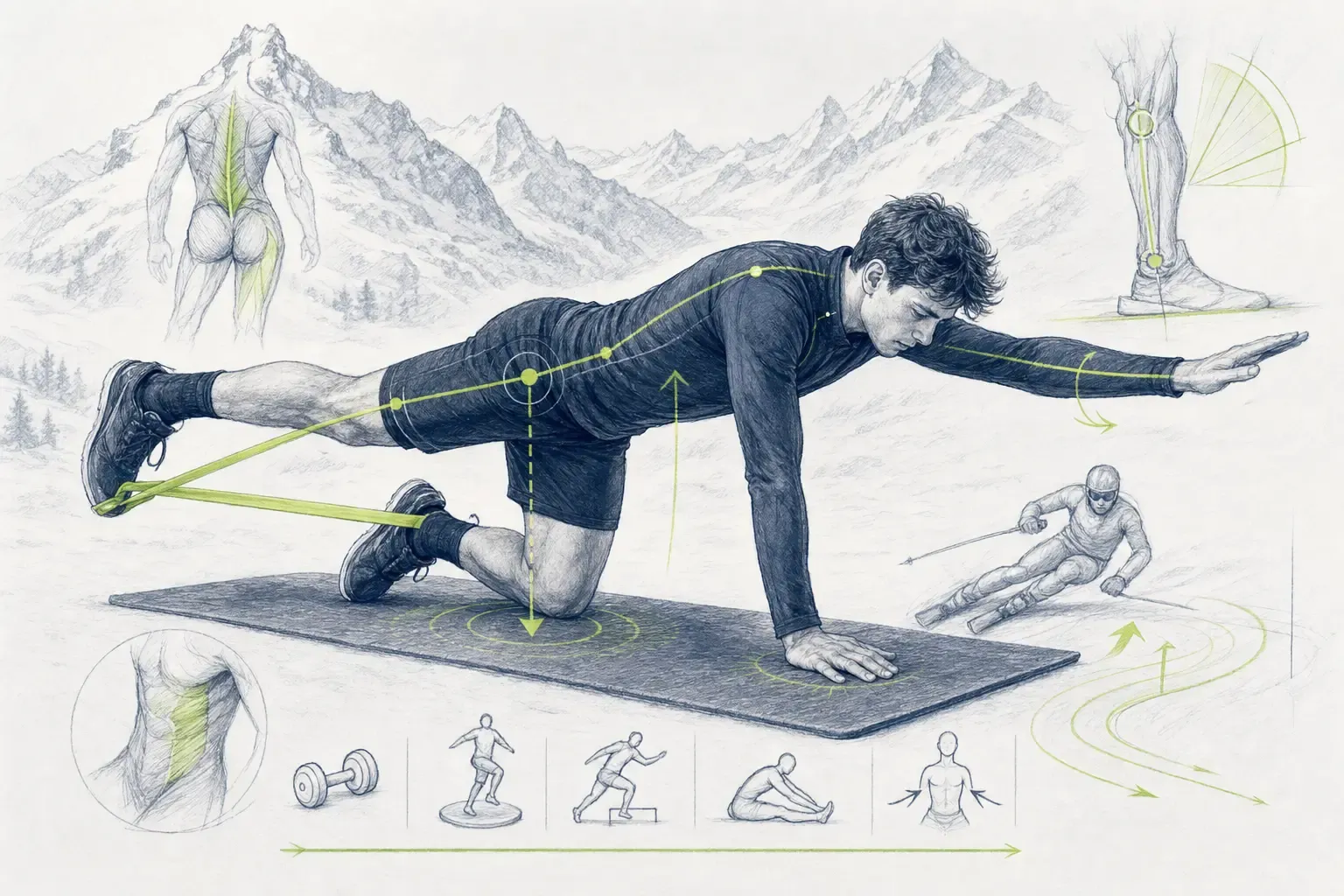
Compensation exercise
A targeted supplementary exercise that balances the load from skiing and supports adequate mobility, muscle coordination, stability, and movement quality.
Open entry →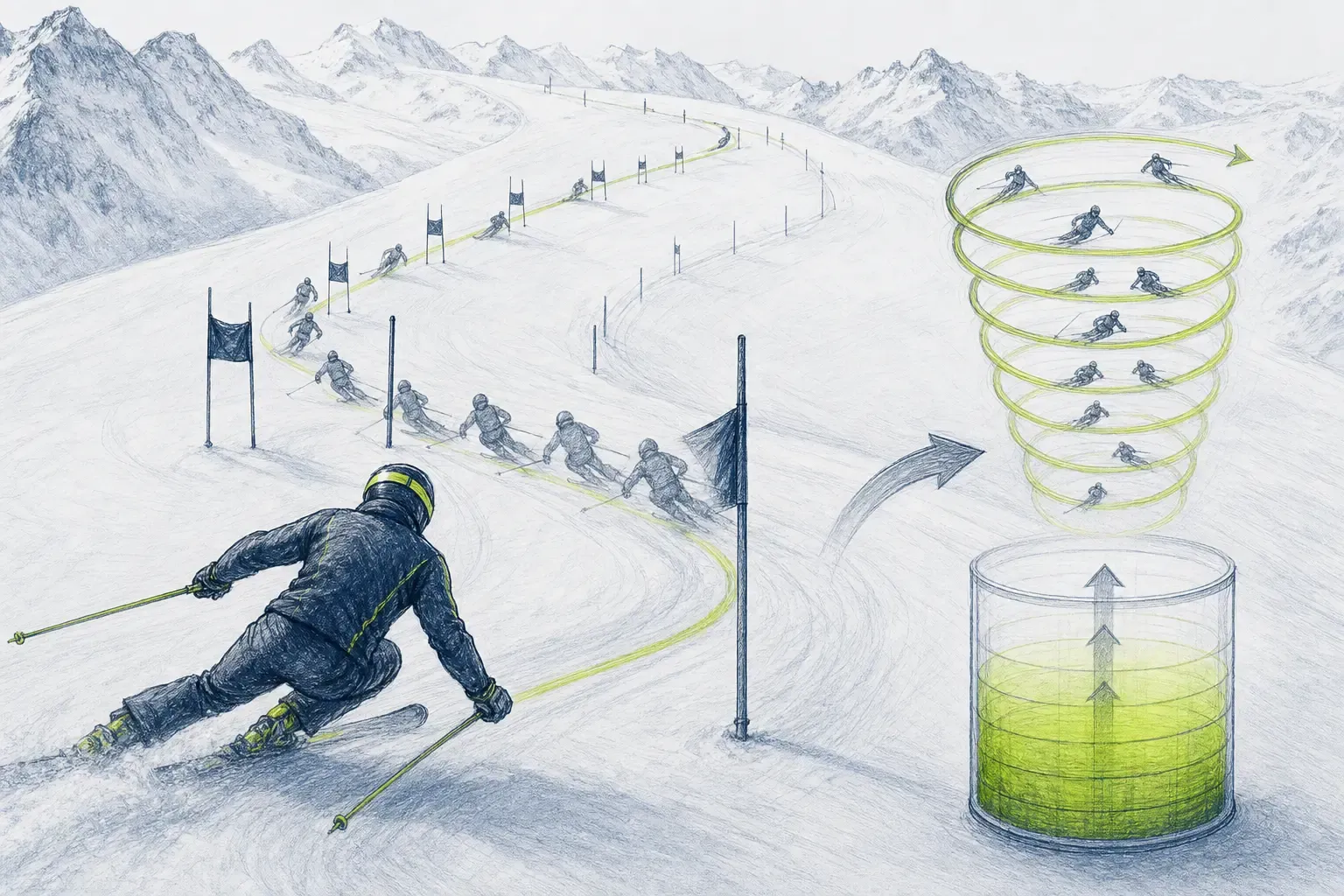
Training volume
Training volume expresses the amount of training work completed over a certain period of time; by itself, however, it does not say how demanding or how high-quality the training was.
Open entry →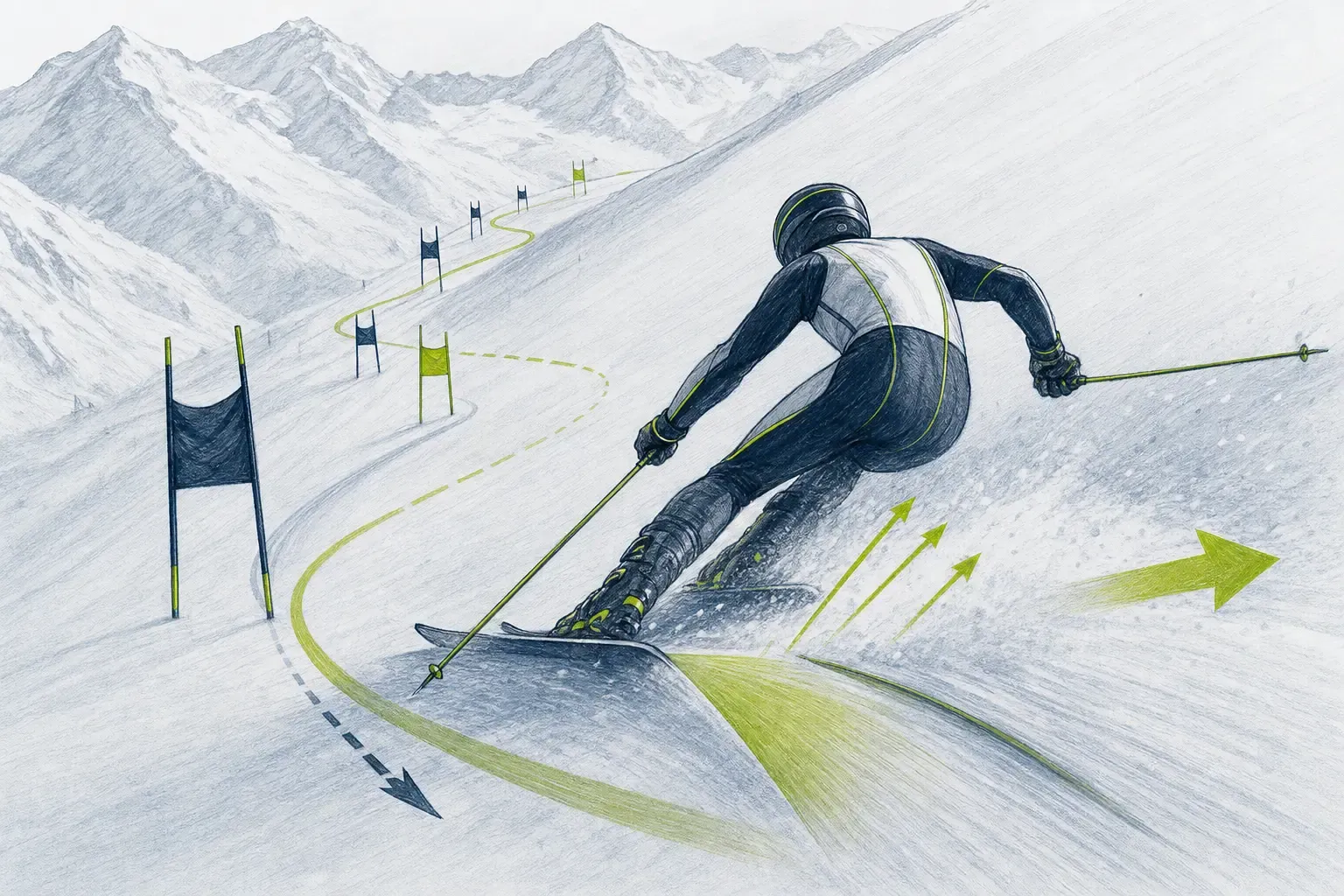
Training intensity
Training intensity expresses how demanding an exercise or ski task is in relation to the current abilities and condition of a particular athlete.
Open entry →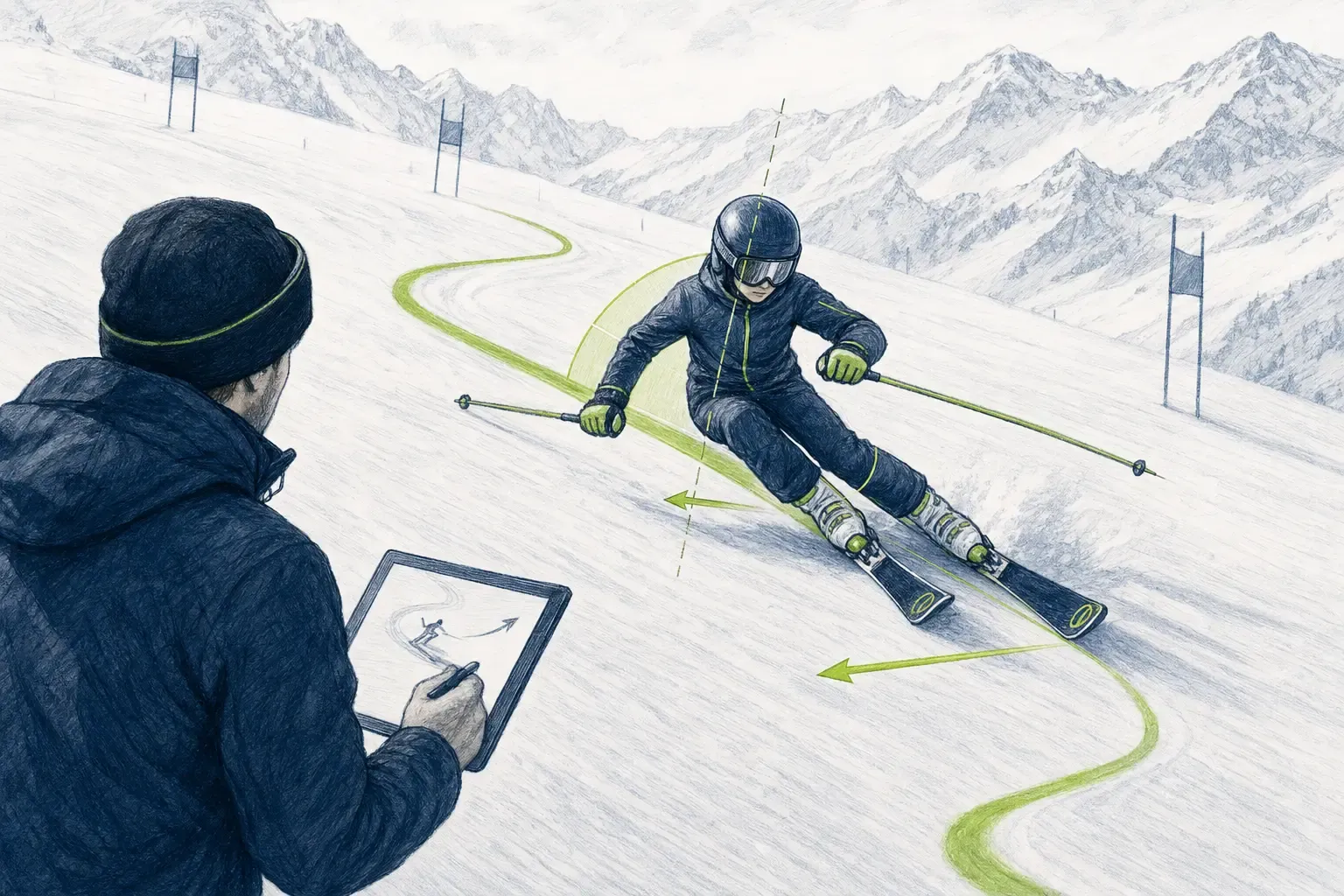
Training run
A targeted run down a slope or marked course in which the skier performs a specific technical, tactical, or performance task.
Open entry →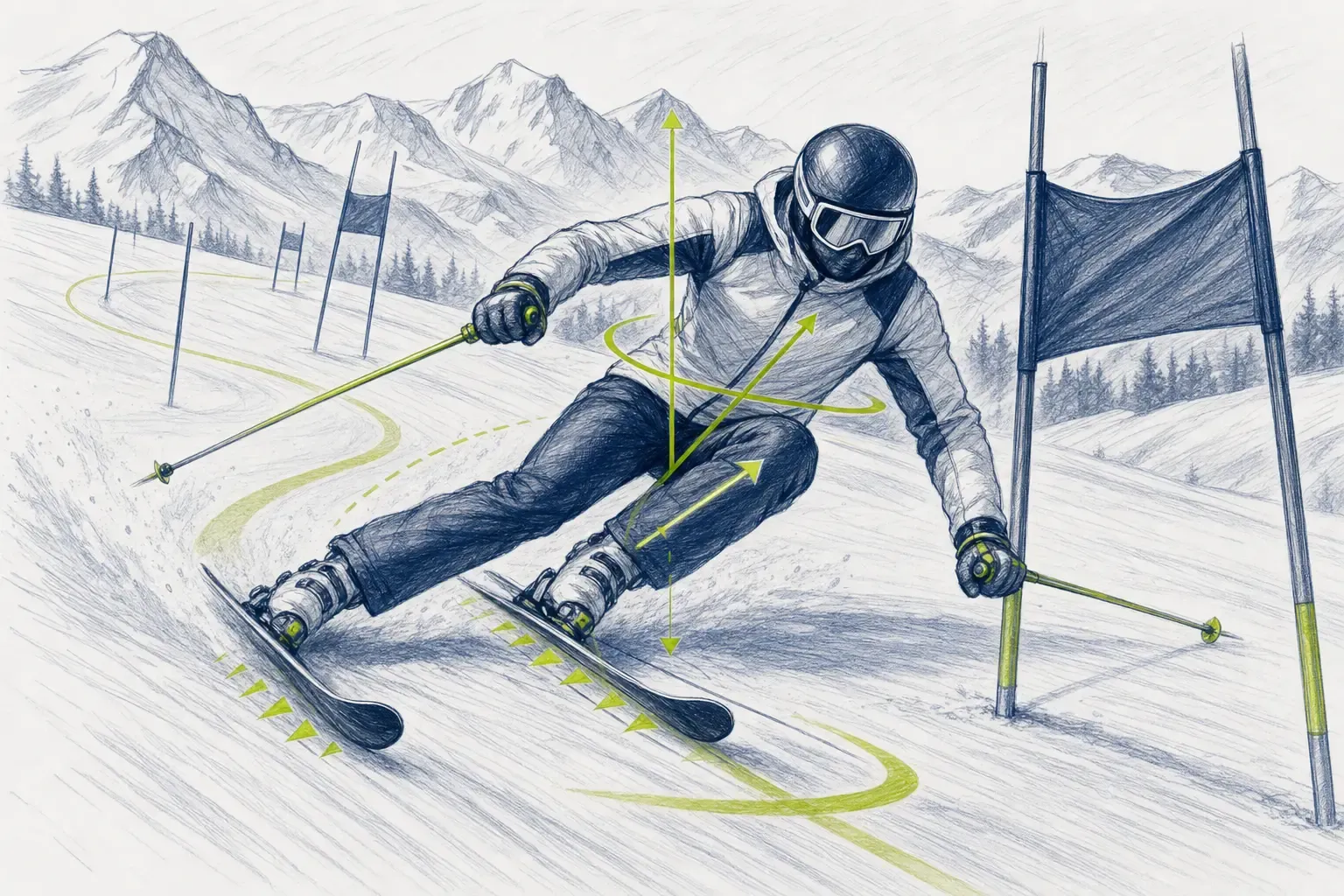
Technical run
Technical run means the purposeful, precise, and adaptable use of ski movements so that the skier safely and repeatedly controls direction, speed, and the shape of the turn.
Open entry →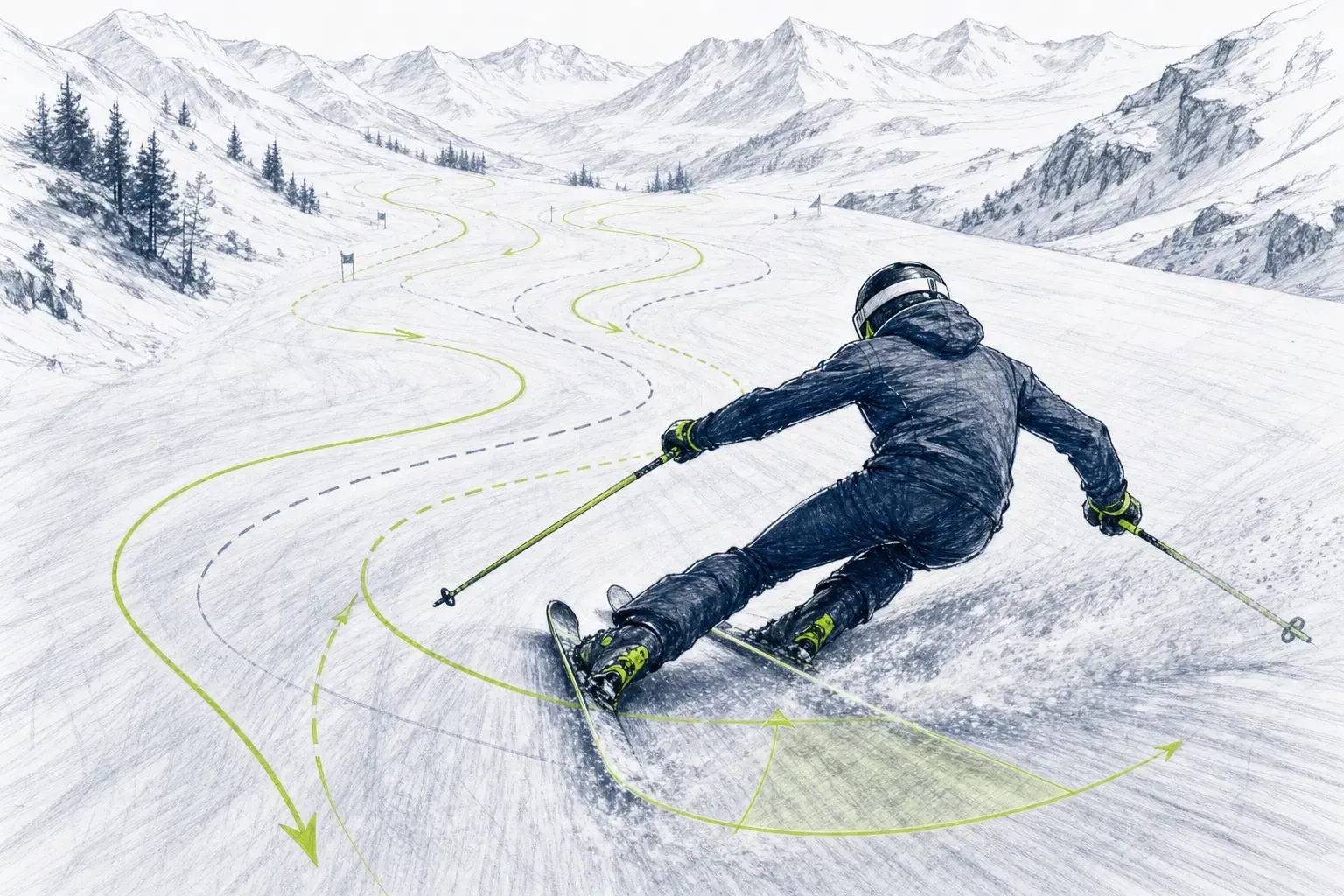
Free skiing
Free skiing is free skiing without a marked gate course, used to develop basic skills, get warmed up, practice technique, and transfer technique into race skiing.
Open entry →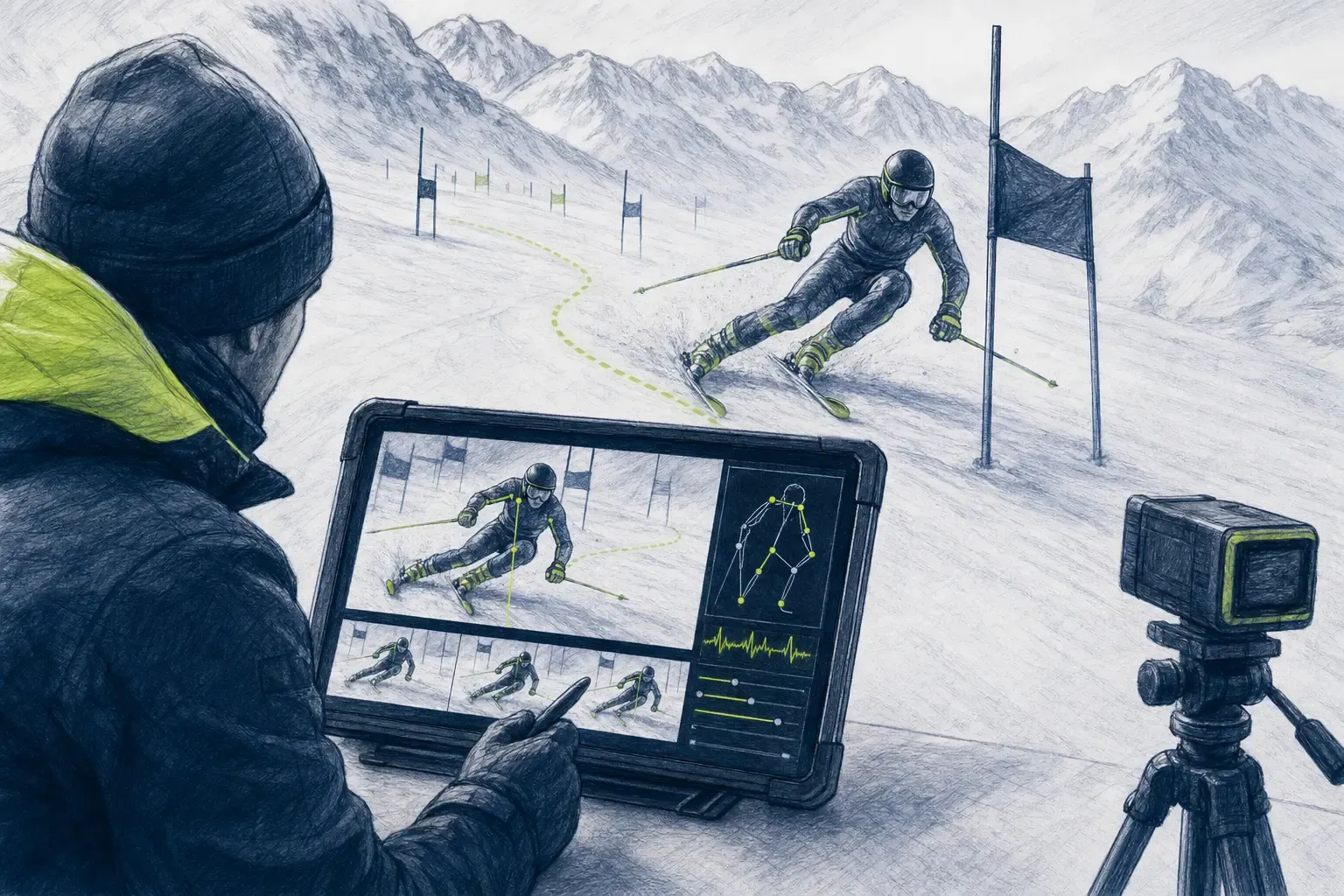
Video analysis
Video analysis is the focused observation of skiing movement from video footage, helping connect the skier’s feeling with the visible course of the run and the coach’s feedback.
Open entry →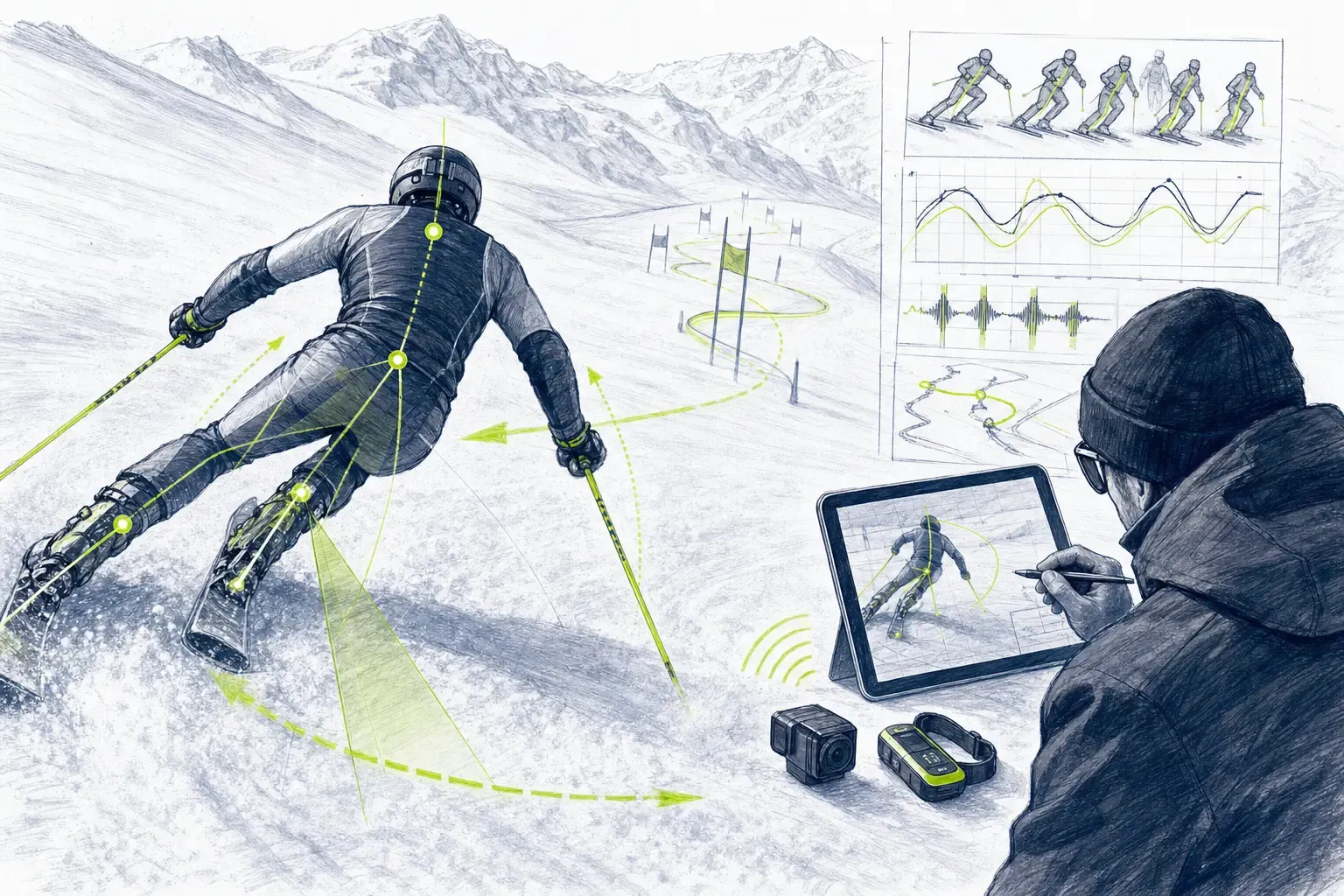
Run analysis
Systematic observation of a ski run that connects visible movement, ski behavior, and the result of the run with a specific training task.
Open entry →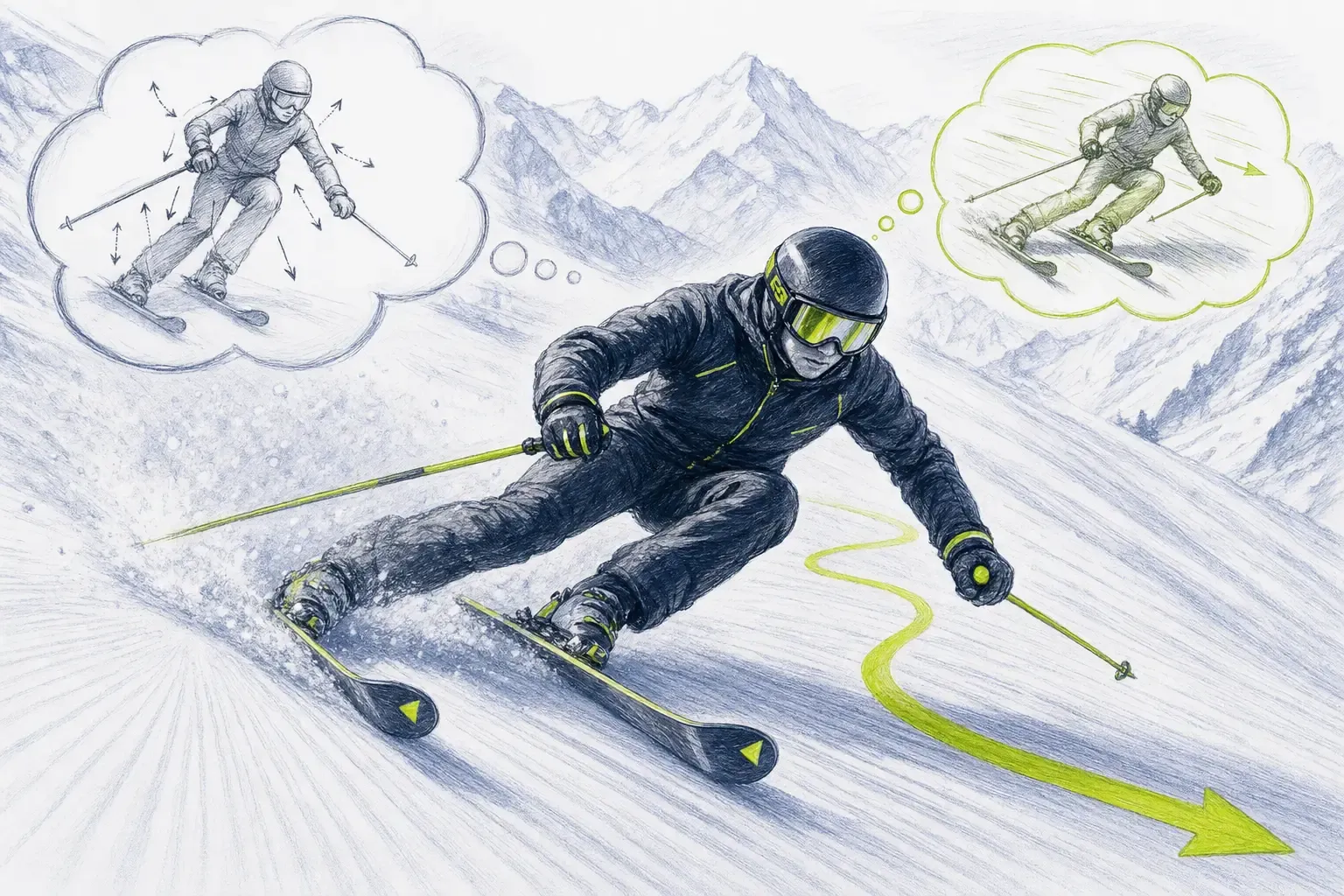
Movement automation
Movement automation is a state of motor learning in which the skier performs a learned movement smoothly and with less need to consciously control every detail.
Open entry →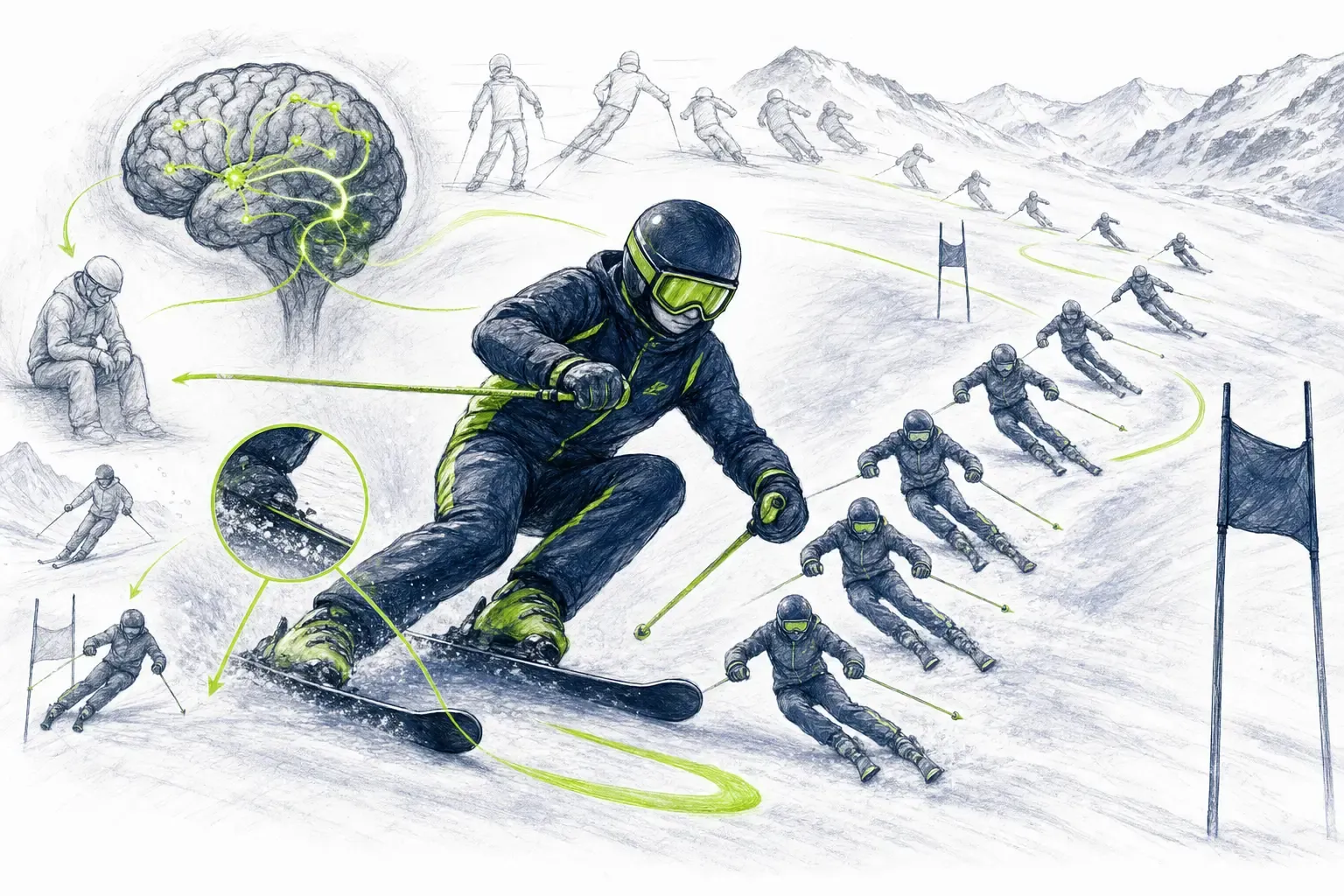
Motor learning
Motor learning is the process in which practice and experience cause a relatively lasting change in the ability to perform and adapt a movement skill.
Open entry →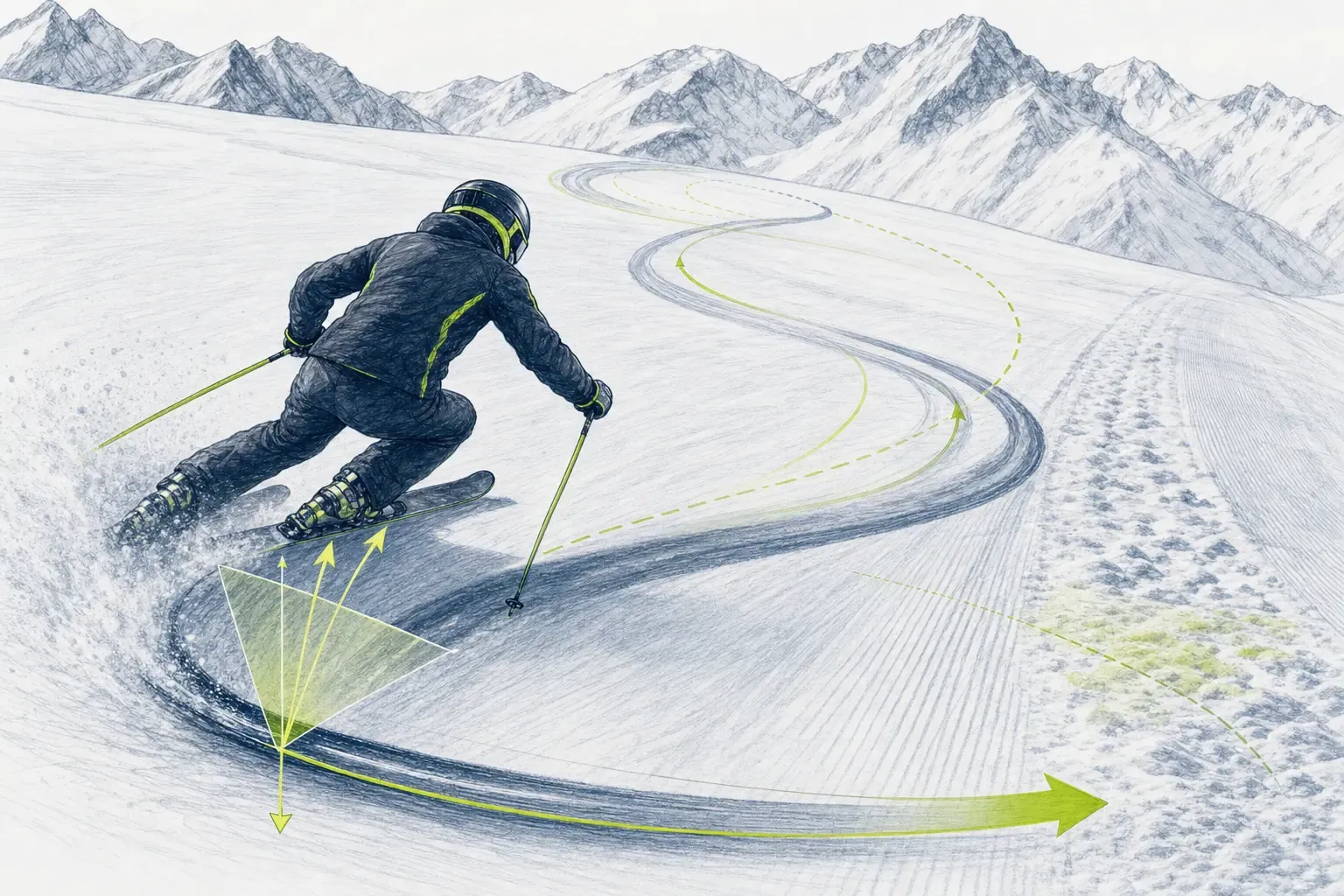
Warm-up run
A controlled opening run on snow that gradually prepares the skier for training or racing and lets them sense the conditions, equipment, and their own physical readiness.
Open entry →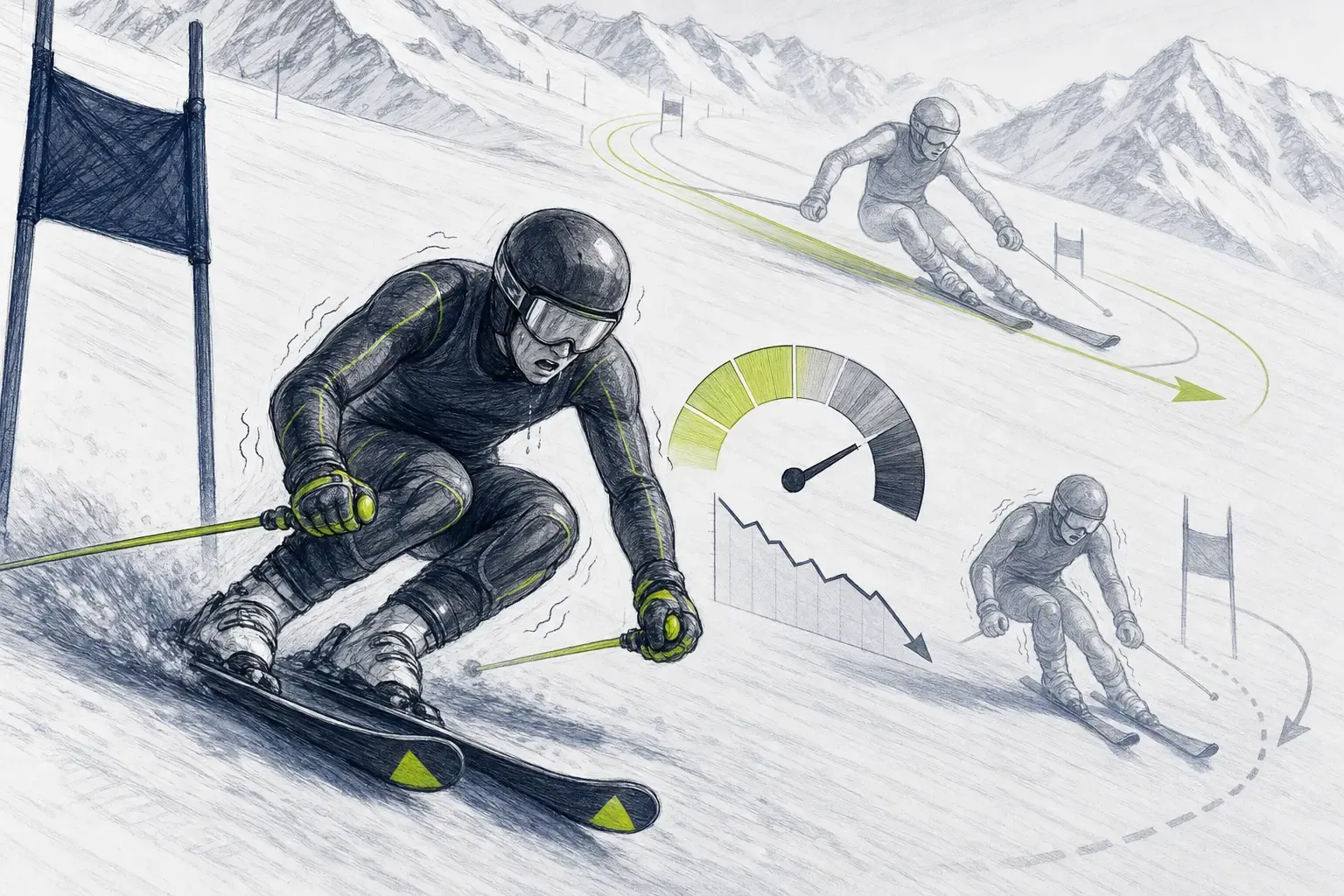
Fatigue
A temporary drop in physical or mental performance in which the skier needs more effort for the same task, and strength, coordination, attention, or decision-making worsens.
Open entry →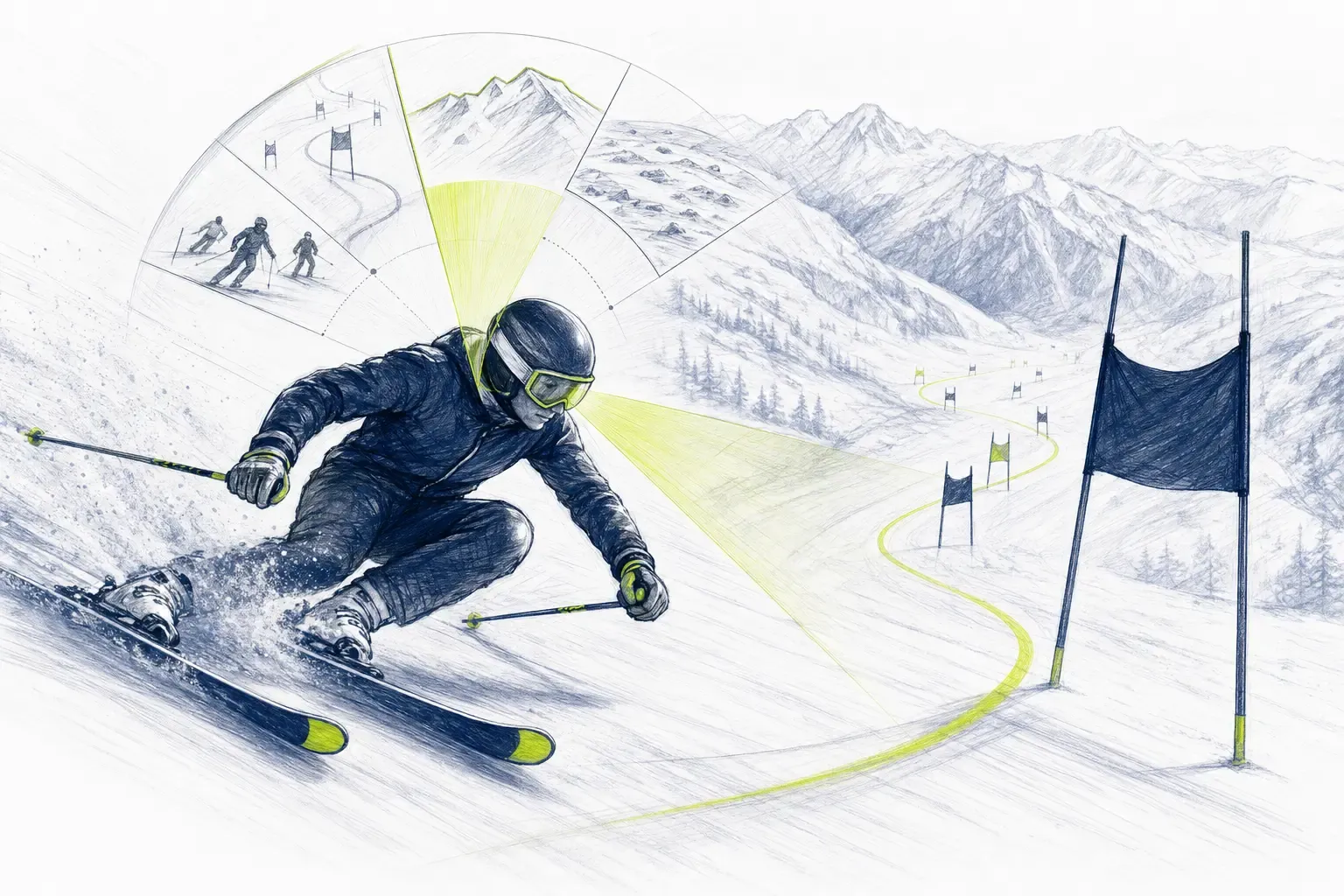
Concentration
Concentration is the ability to focus attention on important stimuli, maintain it appropriately, shift it as needed, and return to the task after being distracted.
Open entry →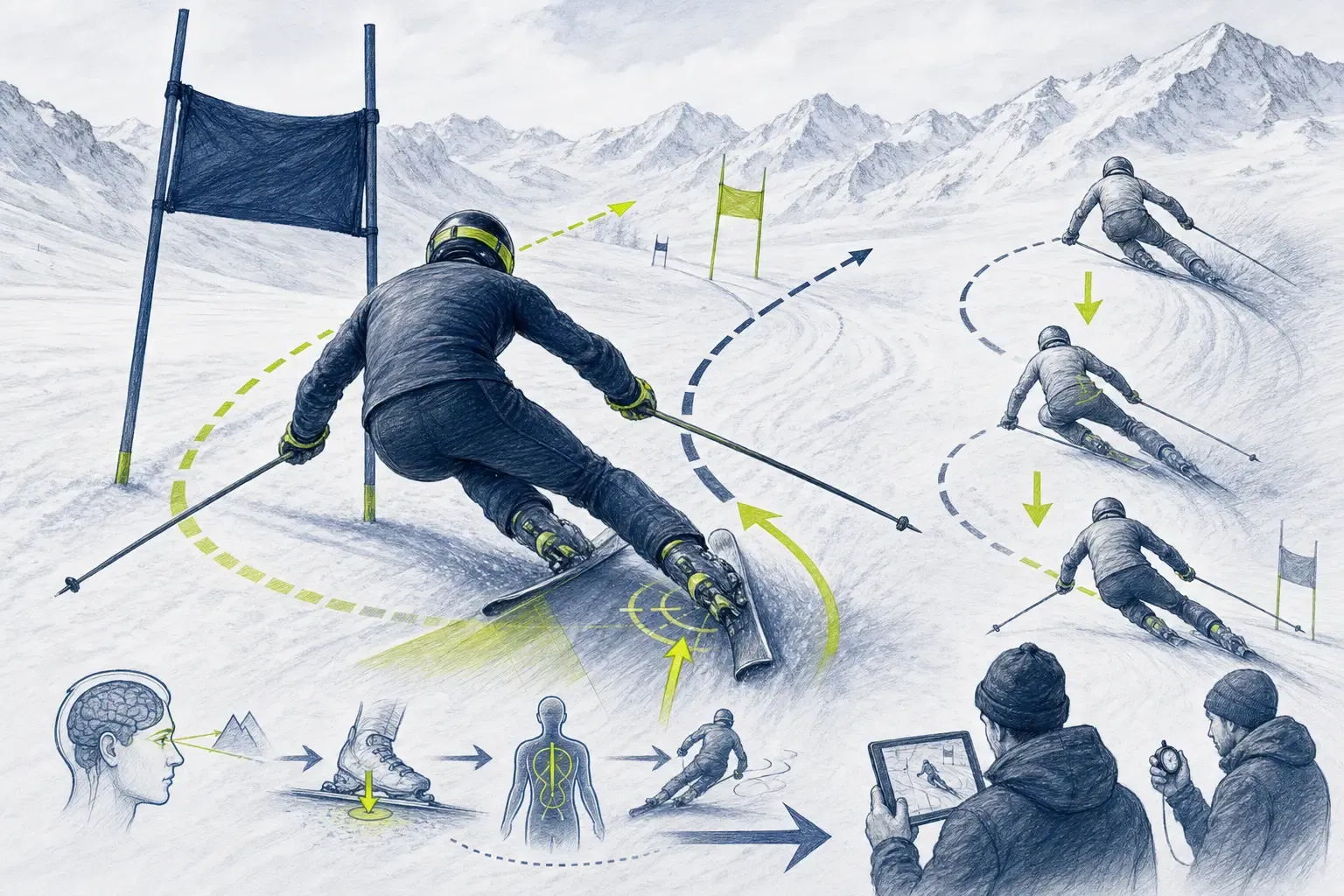
Response to an error
The skier’s ability to safely and effectively adjust movement, line, or decision after deviating from the intended outcome.
Open entry →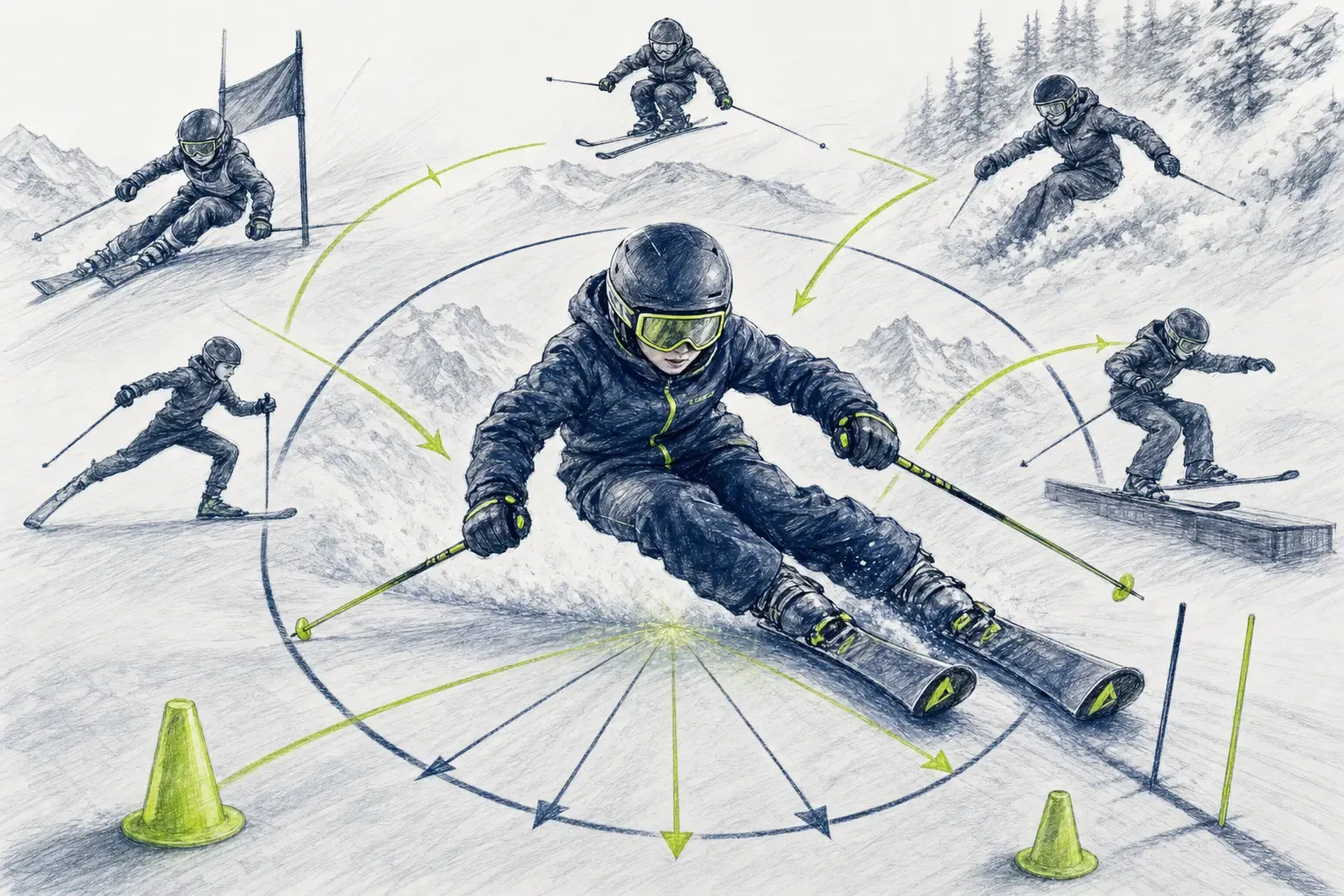
Sport versatility
Sport versatility is a broad foundation of movement abilities, skills, and experience from which a child can safely and long-term develop skiing performance.
Open entry →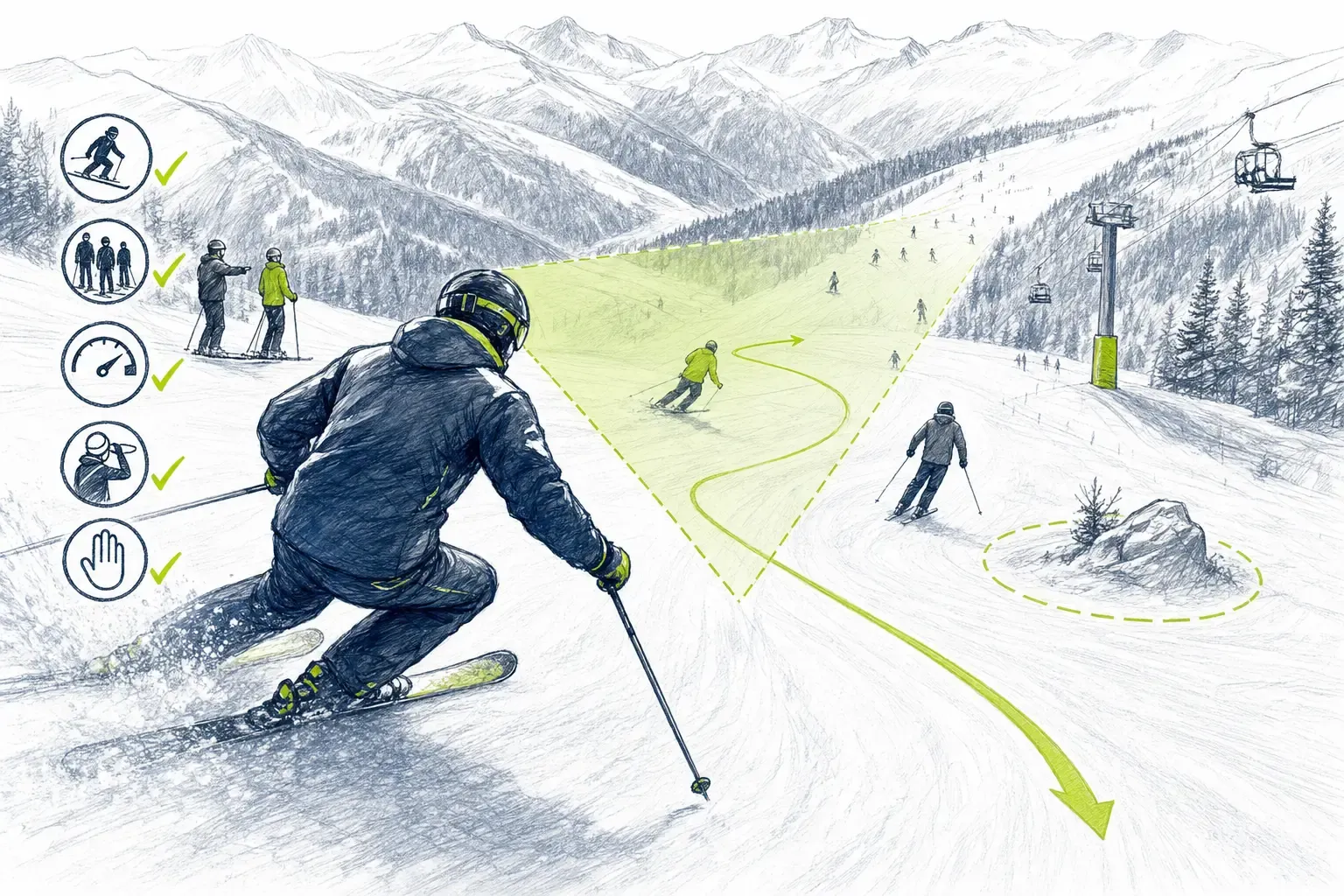
Slope safety
A set of rules, habits, and organizational measures that reduce the risk of injury to the skier and other people on the slope.
Open entry →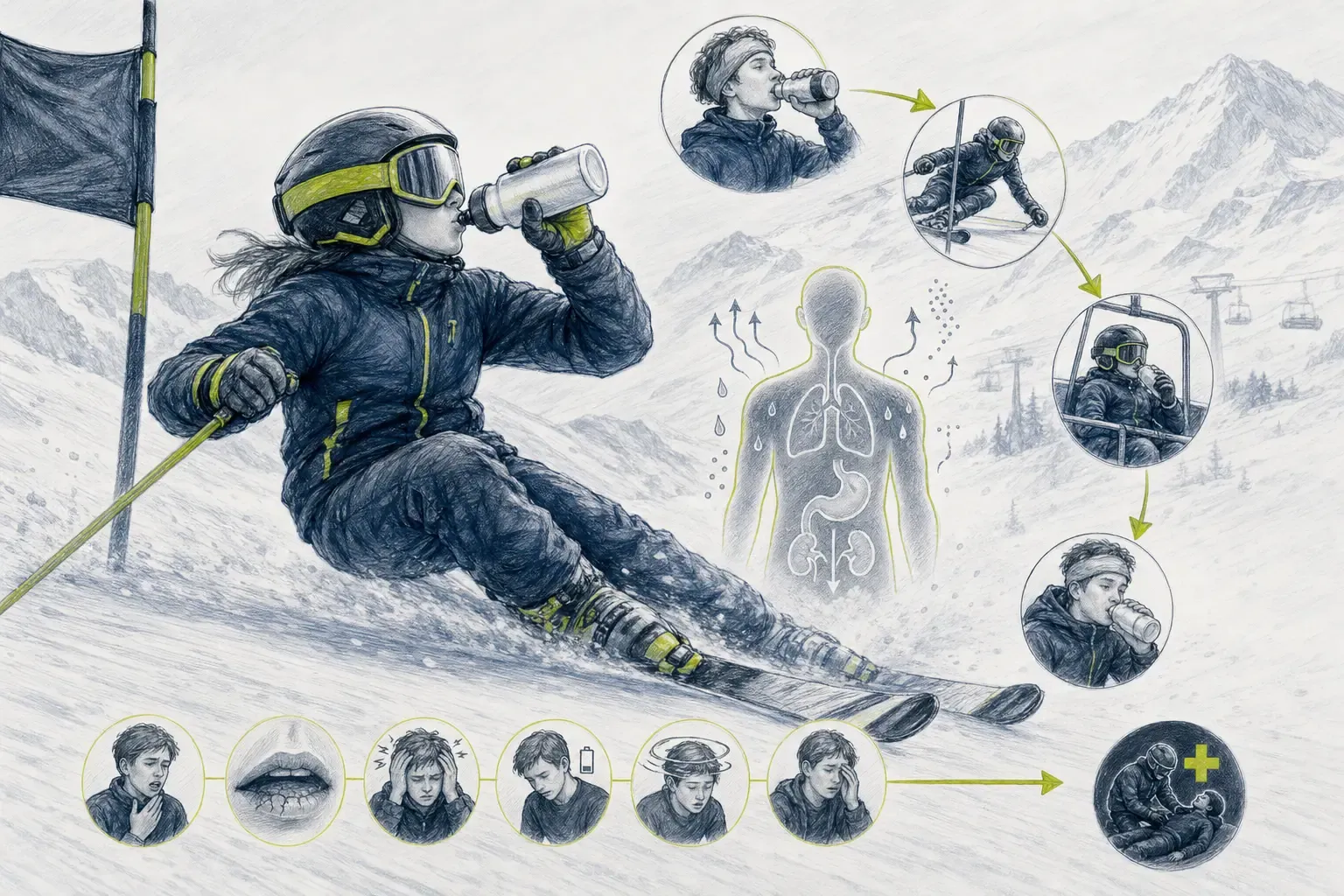
Hydration
Planned and adequate intake of fluids before, during, and after skiing with the aim of maintaining normal hydration without too little or too much water.
Open entry →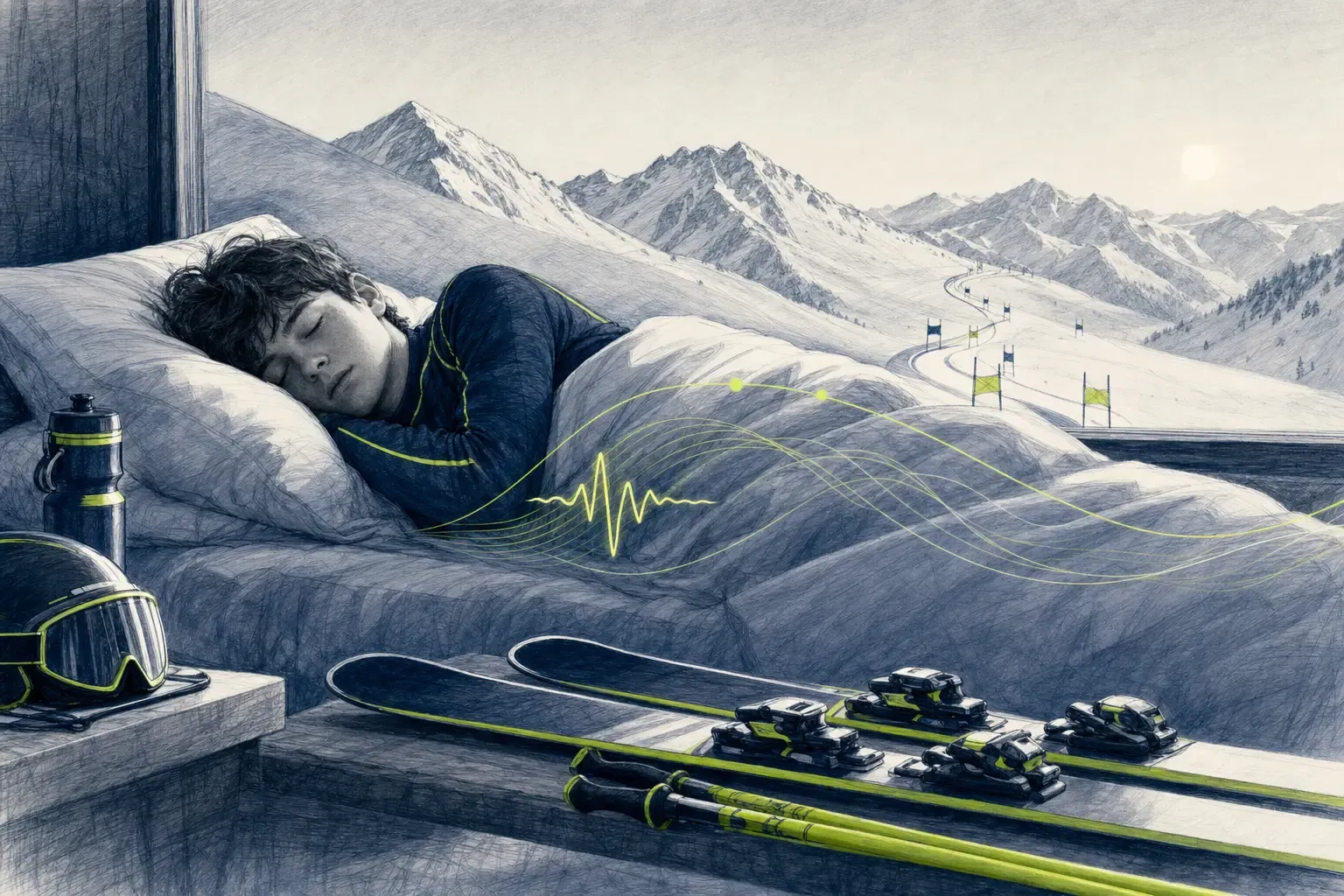
Athlete sleep
Athlete sleep is sufficiently long, regular, and undisturbed sleep that supports health, motor learning, attention, and readiness for training.
Open entry →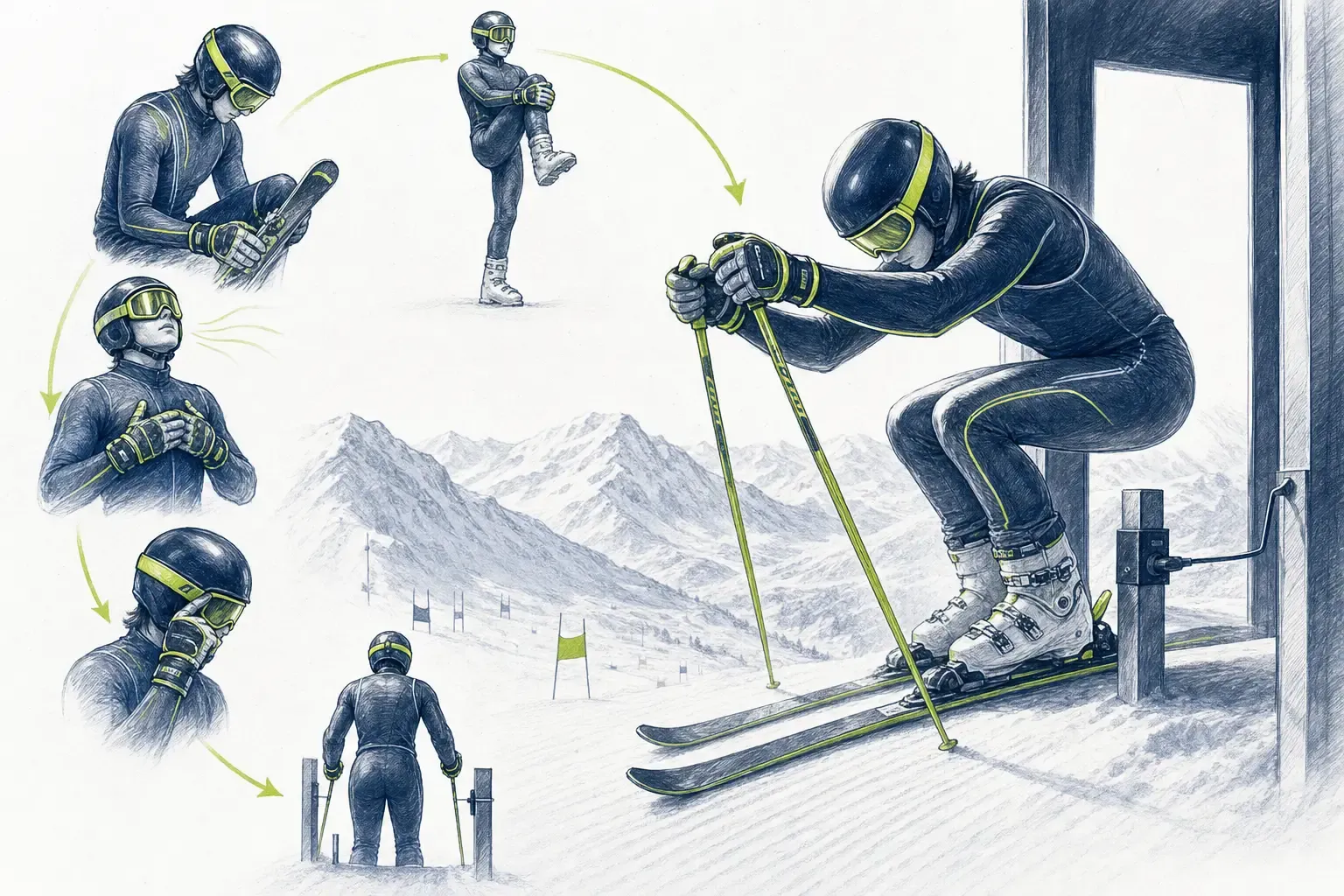
Pre-start routine
A learned sequence of simple activities that helps the skier prepare physically, mentally, and organizationally for a race run just before the start.
Open entry →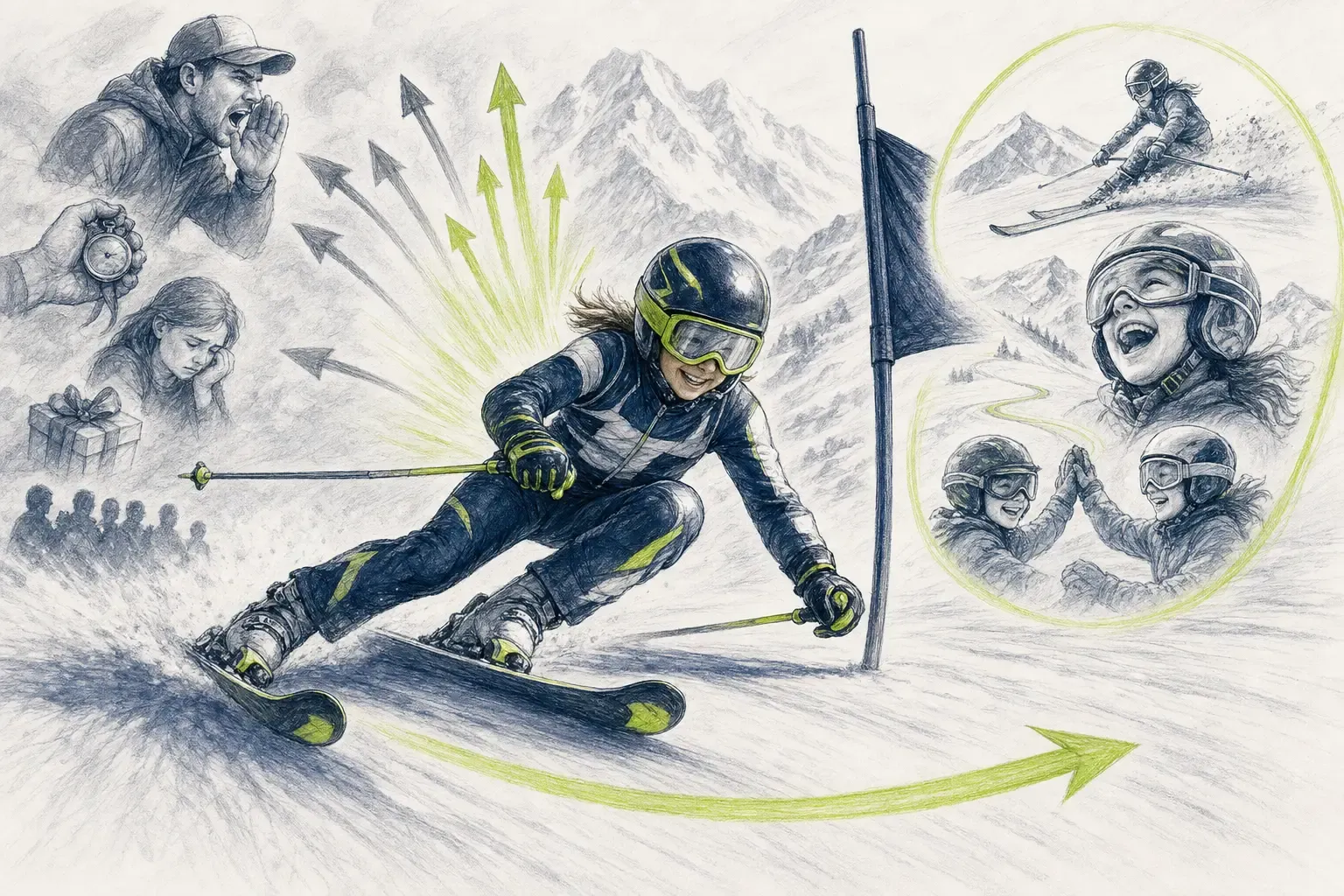
Sports motivation
Sports motivation is a set of internal and external influences that affect why a child skis, how they get involved, and whether they stick with the sport.
Open entry →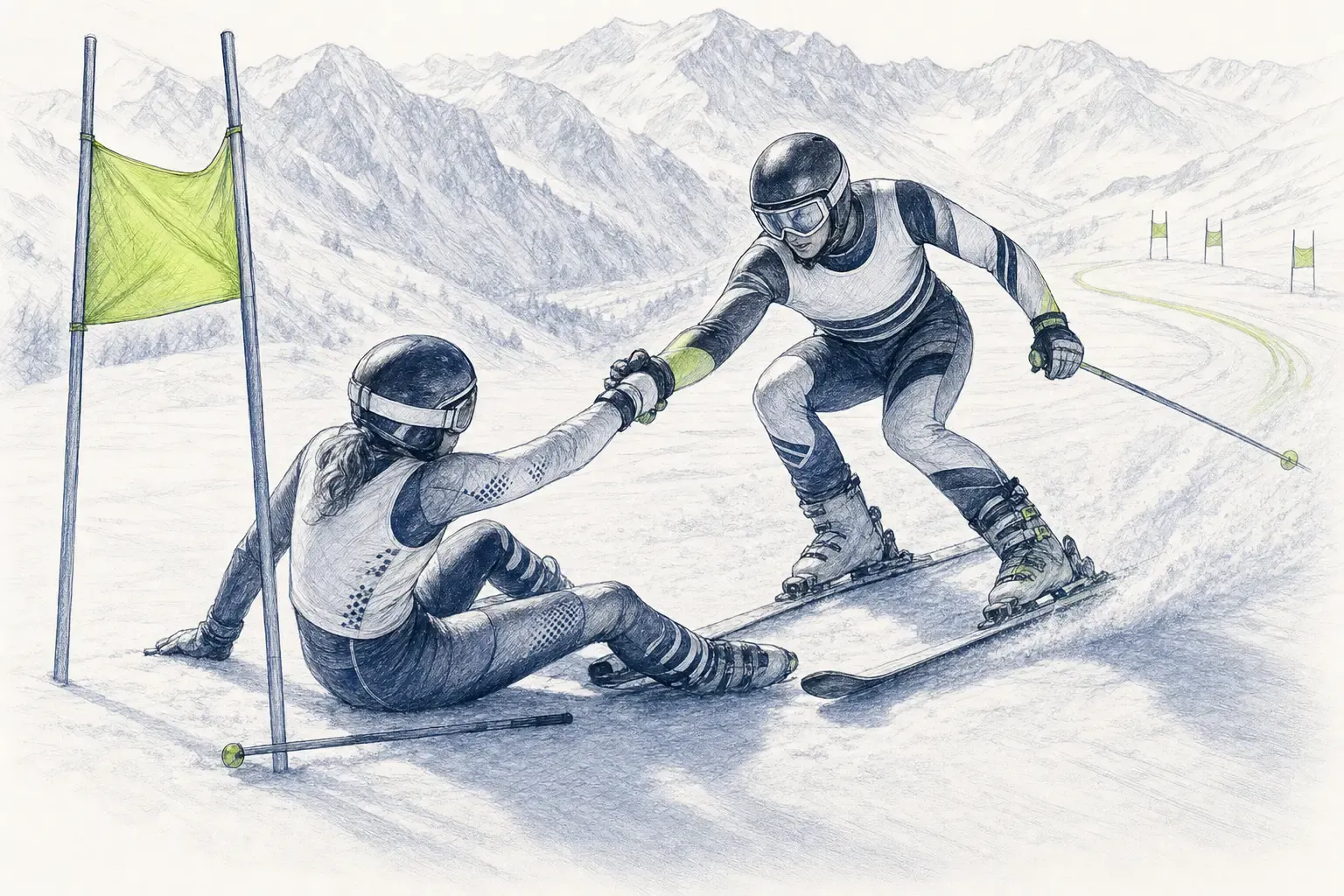
Fair play
Fair play is the honest, safe, and respectful behavior of an athlete and those around them, in line with the rules and without trying to gain an unfair advantage.
Open entry →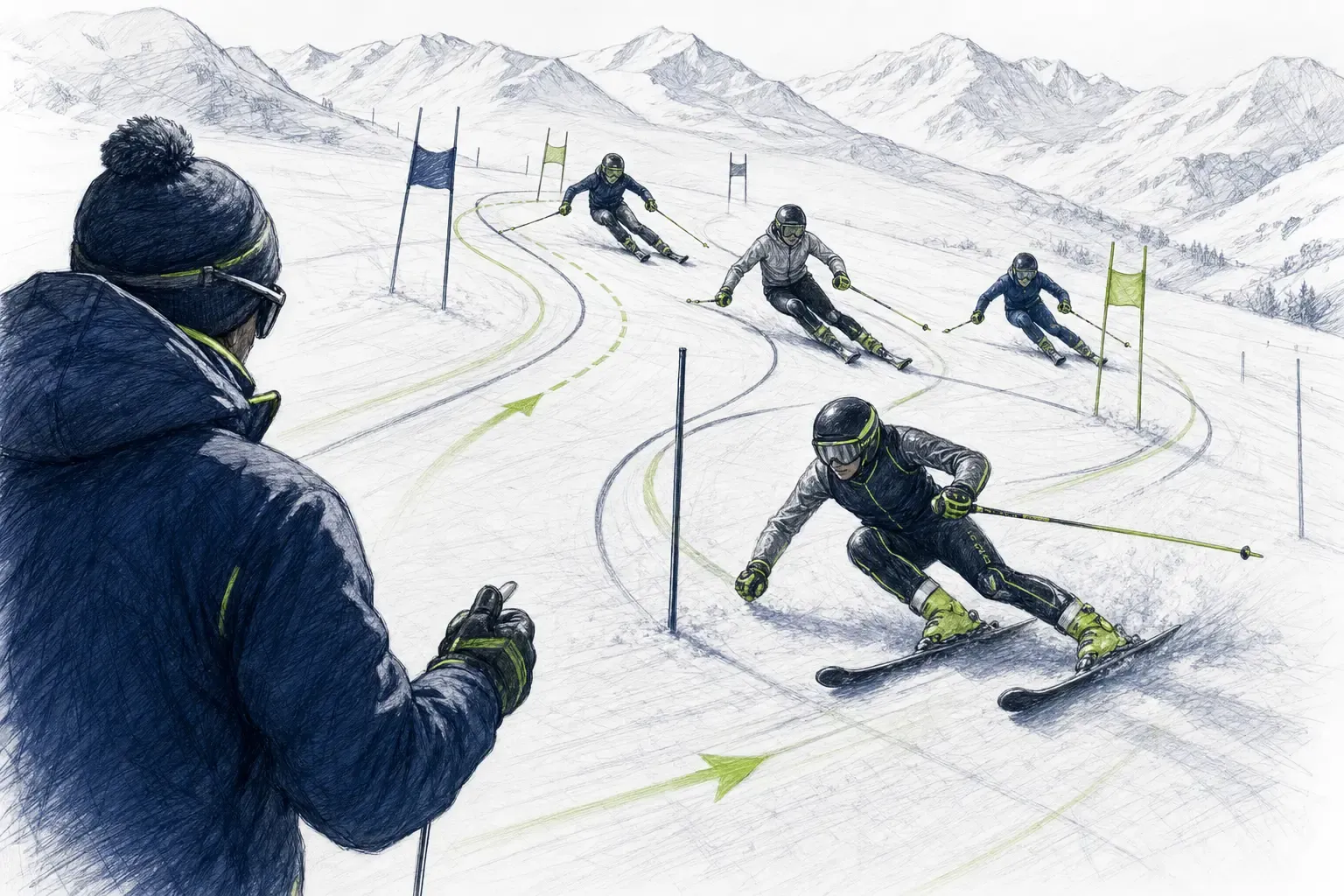
Team training
Team training is the joint preparation of a ski team with a shared goal, but with tasks and feedback suited to individual athletes.
Open entry →