What is the second run
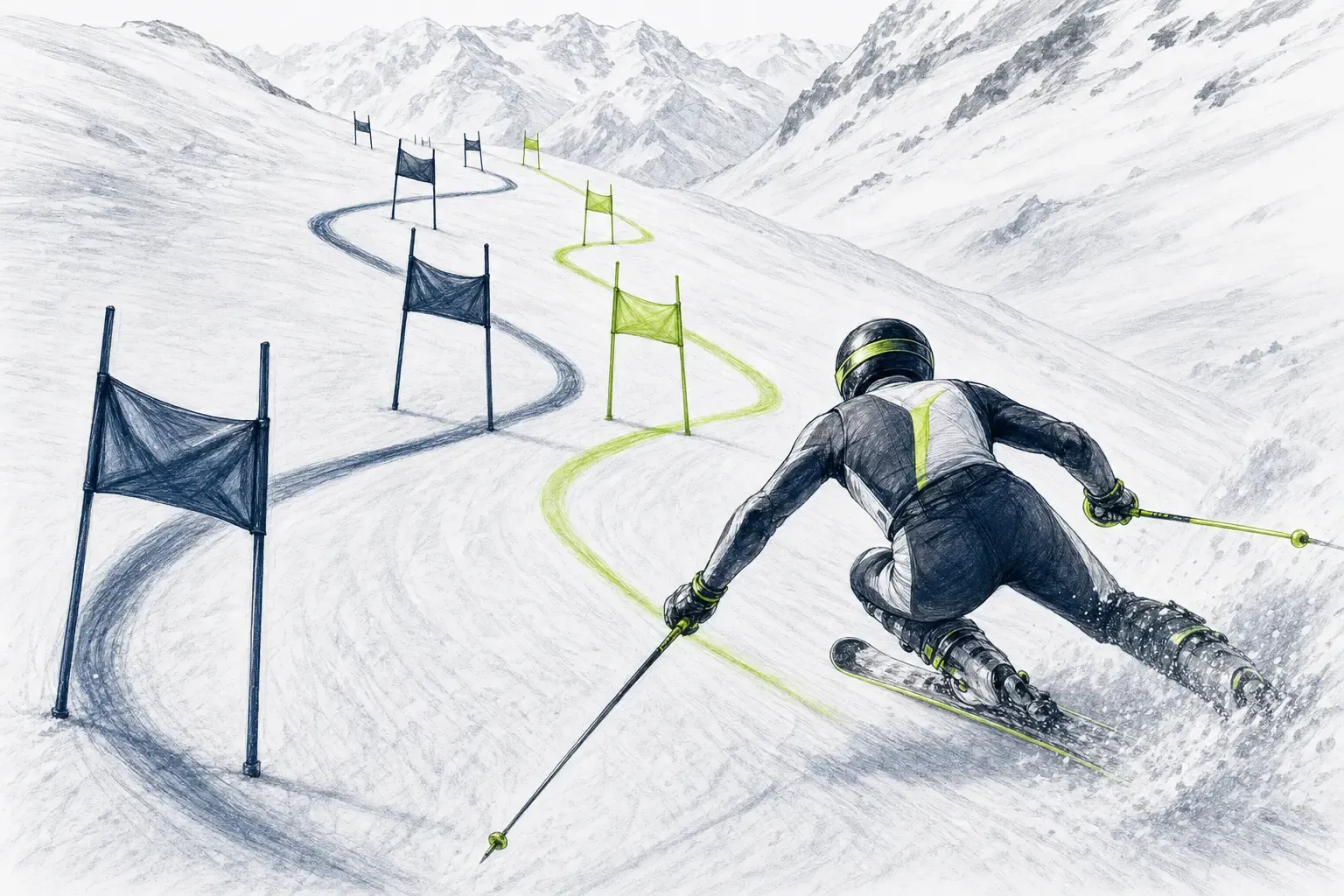
Second run is the second competitive run in races decided over two runs. In the FIS English rules, it is called second run. It is not a re-run or a separate race: the result is usually determined by the sum of the times from the first and second runs.
Typical two-run disciplines are slalom and giant slalom. The second run can take place on the same slope, but with a different gate setup. Snow, visibility, and course conditions can also change significantly from the first run. So the racer cannot simply repeat the same skiing approach from the first run.
Not every alpine discipline has a second run. Super-G and standard downhill are usually run as a single competitive run, although the FIS rules also recognize special cases of two-run downhill. Special formats, such as team combined or parallel events, have their own rules and cannot automatically be treated as a classic first and second run.
Who can start
Racers are placed into the second run according to the result of the first run and the regulations of the specific event. The basic requirement is to finish the first run correctly. A racer who did not finish the course or was disqualified usually has no valid result from which they could advance.
In regular FIS races, the starting order for the second run is created from the first-run results list. The first 30 classified racers are normally reversed: the thirtieth starts first, the twenty-ninth second, and the leader of the first run starts as thirtieth. From 31. place onward, the order continues according to the first-run results. The jury may decide under the rules that only the first 15 racers are reversed; such a decision must be made no later than one hour before the start of the first run.
A special regulation may limit the number of qualifiers. For example, the FIS World Cup rules for the 2025/26 season allowed only the first 30 racers to qualify in slalom, giant slalom, and two-run downhill. This limit cannot be carried over to children's, national, or club competitions without checking the regulations.
A separate start list must be issued for the second run. The bib number on the suit therefore does not show the starting order in the second run. A parent or racer should not estimate it only from the result or the original start number.
Why it matters for a young skier
The reversed order gives the fastest racers from the first run a later start. That keeps the result open until the end of the reversed group. At the same time, the course may be in a different condition for individual racers, which is a natural part of outdoor sport.
Before the second run, a child should mainly know:
- whether they qualified for it and what their start order is,
- when and how the course inspection will take place,
- where to warm up and when to move to the start,
- what was technically essential in the first run,
- that the first run is not erased and its time remains part of the result.
The second run should not be understood as a headlong attack to wipe out the loss. The right tactic depends on age, experience, the course setup, and the coach’s instructions. For younger children, orientation on the course, correct passage through the gates, and finishing the run are more important than calculating split times or gaps to competitors.
Typical misunderstandings
“The winner of the second run won the race.” Not necessarily. The decisive factor is the overall result according to the competition rules; in a standard two-run format, it is the sum of both times.
“The leader after the first run starts first in the second.” In the reversed group, it is the opposite — they start only after the other racers in that group.
“The second run is a repeated run.” A repeated run, which the jury may allow under exactly defined circumstances, replaces the affected attempt. The second run is a regular and заранее planned part of the competition.
Coach’s view
Between runs, the coach usually separates the evaluation of the first performance from preparation for the new course. Instructions should be brief, age-appropriate, and focused on a few manageable tasks. At the same time, the coach checks the official start list, the schedule, and the jury’s decisions. The exact procedure is always determined by the current rules, regulations, and instructions of the organizer of the specific race.
Sources and further reading
- FIS – International Competition Rules for Alpine Skiing (ICR), version 13. 11. 2024
- FIS – Rules for the Alpine FIS World Cup, edition 2025/26
- FIS – Alpine Data & Software Booklet, version 1.15
- FIS – Timing & Data: rules and technical timing documents
- FIS – Winter Olympic Games 2026, documentation of alpine events and start lists
- FIS – Rules and clarifications for the World Championships and special competition formats