Parents’ Advice
Practical content for parents: first time on skis, gear, fear, games, technique, and fitness preparation by a child’s age.
Selected topics
11 articles · 14 answers in the FAQ
10 common mistakes parents make when teaching kids to ski — and what works better
A parent can make skiing much easier for a child — or, without meaning to, turn it into a test. Ten situations we often see on the slopes, and practical ways to handle them better.
Read the article →
A child’s first day on skis: how not to ruin it
The first day doesn’t have to end with turns. What matters more is that the child leaves the snow wanting to come back.
Read the article →
How long should a child ski?
A good session doesn’t end by the clock. It ends before tiredness takes away the child’s technique, safety, and desire to return to the snow.
Read the article →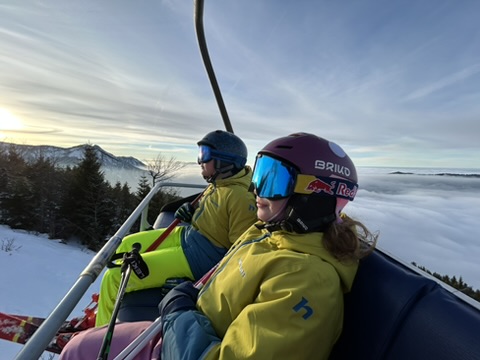
How to dress a child for skiing
Warmth doesn’t mean piling everything from the closet onto the child. The goal is simpler: stay dry, protected from the wind, and still able to move freely.
Read the article →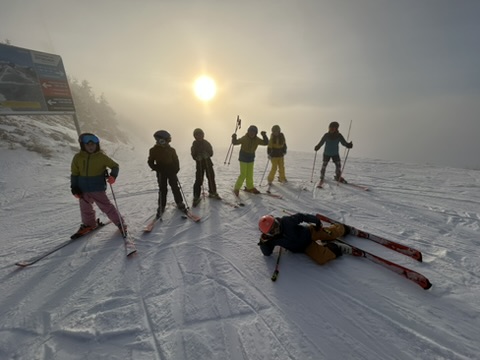
How to prepare a child for ski training
Good training starts before the first turn. Sleep, a calm morning, food, drinks, and checked gear will do more for a child than the last technical tip in the parking lot.
Read the article →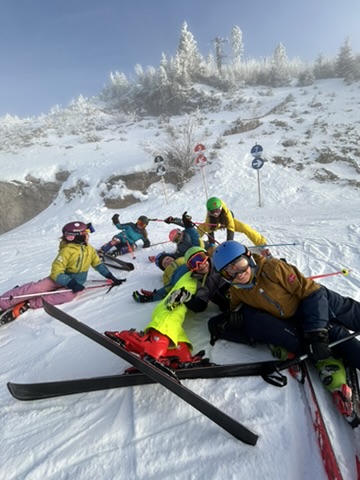
How to keep a 5–6-year-old child focused on skis
A five- or six-year-old child does not need to “concentrate more.” It needs a clear task, suitable terrain, and a rhythm that alternates learning, play, and rest. A practical guide for parents on how to tell fatigue from boredom, simplify instructions, and support quality training without constant nagging.
Read the article →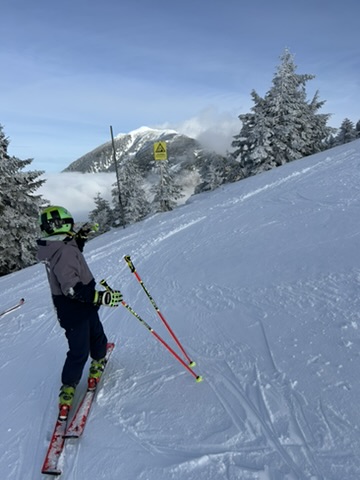
How to choose skis and ski boots for a child
Children’s gear should not have to last three seasons at any cost. It should fit the child, be safe, and help them ski — not struggle with skis that are too long or boots that are too big.
Read the article →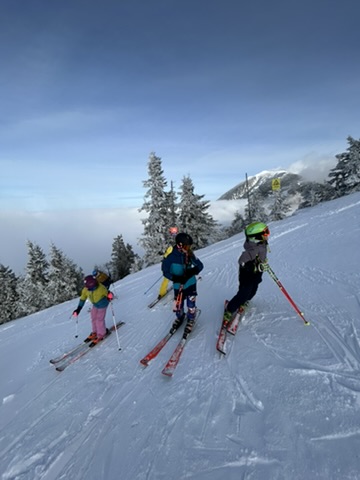
A child is afraid on skis: what to do
Fear is not disobedience. Most often, it means the situation is currently too fast, too steep, or too unfamiliar for the child.
Read the article →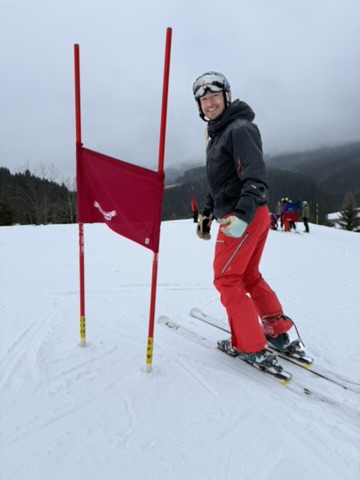
When is a child ready for a ski club?
More than age matters: the desire to move, the ability to function in a group, and an appropriate level of independence.
Read article →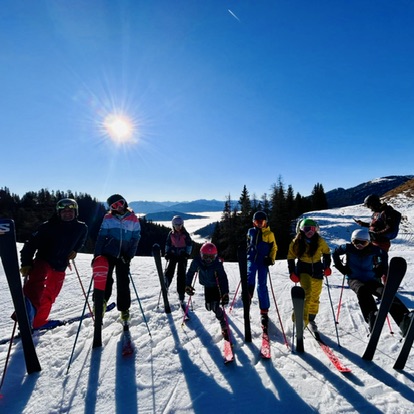
Why do child skiers train without snow too?
Skiing is not learned only on skis. Balance, coordination, agility, strength, and endurance develop throughout the year.
Read article →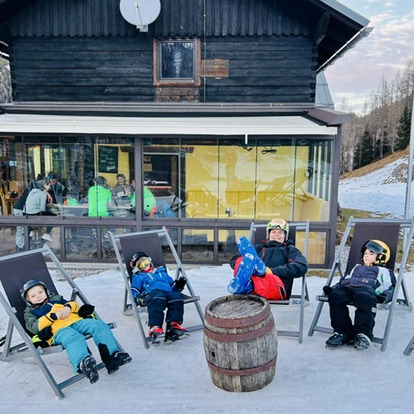
Parent or coach: who should teach a child to ski?
A good skier is not automatically a good teacher of their own child. A parent and a coach have different, but equally important, roles.
Read article →Frequently asked questions from parents
From which birth year do you accept new children?
For the 2026/27 season, the club accepts new members from the 2020-21 birth year. The Teens group is for the 2013 birth year. In any case, we are open to new faces and accept children of other ages as well. We do not teach children from absolute scratch. A child needs to know how to stand on skis, make basic wedge turns at least, and know how to stop. Dryland training and general athletic preparation are open to everyone. We currently have great groups of children aged 6-7, as well as 8-10-year-olds, and your child will find the right ski crew.
How do you start skiing with a child, and what should you expect from the first trainings?
Start on easy terrain and without pressure to perform. With the youngest children, the goal is to get used to the equipment, gliding, getting up, and feeling safe. A shorter positive training session is usually more valuable than a long day ending in fatigue and resistance. Avoid shouting or pressure of any kind, because that is often exactly what a child takes away from their first steps on skis. Better bite your tongue - we all know it! Training with a coach has one advantage: the child automatically keeps a healthy distance from the coach. Authority is authority.
How often do children train?
The current 2026/27 schedule includes training on Tuesdays, Thursdays, and Saturdays. The type of training changes depending on the day and time of year. Training sessions last 1-1,5 hours. Saturday training lasts 2-3 hours, depending on whether the group goes cycling or has athletics training. A child also has the opportunity to spend 30 to 35 days on snow.
Should I buy my child bigger ski boots and skis so they last longer?
It is not advisable to buy significantly bigger equipment just to have it on hand. A ski boot that is too loose makes control worse, and an excessively long ski makes learning harder. For children who grow quickly, a good rental service may be a smarter solution. More important than new skis is proper servicing. If children have dull edges and unwaxed skis, they will struggle on the slope. Carving turns will be harder to learn. With a base covered in a centimeter-thick layer of ice, it is impossible to move on the slope. Sharpen and wax.
What should you do when a child starts to get scared on the slope?
Reduce the difficulty of the terrain and try to find the specific cause: speed, steepness, lift, a fall, cold, or uncomfortable equipment. The goal is to restore a sense of control. Do not push the child through panic; move forward in smaller, manageable steps. One example is Renátka, who skied into Filmársky žľab in the High Tatras at the age of 8. It was spring, there was little snow, rocks, and the gully is relatively steep. Tears and fright followed, but in the end we skied it down together with the other children to Zamkovského chata without any problems...
How long should a child's ski training last?
There is no single right length for all children. Age, experience, weather and especially fatigue are taken into account. When coordination gets worse, unnecessary falls start to add up, the child loses focus, is hungry or cold, it's time for a break or to end the training. At Ski Loko we usually train throughout the whole ski day, because these days are as rare for us as a bust from Levoča. In any case, the more psychologically and physically demanding sessions take place with one morning break. In the afternoon, it's more about play and free skiing. The character and level of preparation of the slopes at the resorts also affect training. When bumps form, it's time to jump around and ride skicross, freeride, chase games...
Is it better for a parent or a coach to teach a child to ski?
A parent is an excellent partner for the first contact with snow and for skiing together. A coach brings methodology, perspective, and can adapt the terrain and the tasks. In the club, group motivation also helps. A good solution is cooperation: let the coach handle technical guidance, while the parent builds the child's joy of skiing. So leave improving skiing to the coaches, and enjoy the variety of movement on snow together.
Why does a ski club train in spring, summer and autumn too?
Skiing needs balance, coordination, agility, strength, endurance and quick reactions. These abilities are very well developed through running, skating, cycling, gymnastics, climbing, games and other general sports training. Then, on snow, the child does not build movement skills from zero. The basis is controlling their own body, along with a certain level of muscle and endurance development. A skier is, first and foremost, an athlete.
Does a child already need to know how to ski in order to join the club?
A finished skiing technique is not always decisive. Age, movement readiness, the ability to function in a group and the right placement are important. For a new child, it is best to consult the current level with a coach. Recruitment conditions may change depending on the season. Usually we require that the child can stand on skis, make their first turns and stop safely. It's better to spend the first steps on skis with parents. From these basics, you can build gradually.
Who does Ski Lokomotíva accept in season 2026/27?
In season 2026/27 we accept new children from the 2020-2021 year group. The Teens group is intended for children from the 2013 year group. Current dates of the first trainings, fees and application forms are listed on the Recruitment and Season page. If you have children of a different age, come take a look too. We are also open to other children and we'd be happy to get to know you.
How should a child be dressed for ski training?
Dress according to the weather and the intensity of movement. Functional layering is practical: a moisture-wicking layer, an insulating layer and a protective layer against wind and snow. The child should not be sweaty or frozen. Spare dry gloves are useful. When the sun is shining and the children are moving enough, there is no need to pay too much attention to clothing, and children usually take off layers on their own when it gets warm. When the weather is worse (and we train in any weather), you need to adapt to that. Nothing should be overdone, because we try to make sure the children keep moving during training and do not just stand around on the slope.
Does a small child need poles for their first skis?
At the very beginning, children often learn without poles so they can focus on balance, stance, gliding and controlling the skis. Poles are added according to age, level and the coach's methodology; they are not a requirement for the first contact with skiing. For older children, poles are standard, although some specific exercises are done without poles. Poles are also an excellent aid.
What should you ask a child after training?
Instead of evaluating the order or comparing them with others, ask what they enjoyed, what new thing they tried and what was challenging. Such communication supports learning, the courage to try, and a long-term relationship with sport. During the day, the children receive feedback on the slope, so they often know how to repeat the coach's words themselves. Every ski day we have a joint discussion and evaluation with the children.
Can I adjust my child's ski bindings myself?
Binding adjustment depends on the skier's and boot's parameters and has a safety function. When buying, renting or changing boots, we recommend checking and adjusting them at a professional ski service, not guessing at home. Children's binding size and release setting must be set before going out so that the coach does not end up spending the first day on the slope adjusting the equipment of their athletes.