What is fair play
Fair play is a way of sports conduct and decision-making based on honesty, respect, equal application of rules, and rejection of unfair advantage. It applies to the competitor, coach, parent, official, and organizer. In skiing, it also includes behavior that does not endanger others and respects their dignity.
Fair play is not just an undefined demand to “behave nicely.” FIS places it within the broader framework of integrity, ethics, safety, and athlete protection. Its educational guidelines require impartiality, respectful relationships, constructive feedback, and putting the participant's well-being ahead of victory or achieving a sporting goal.
Fair play and rules
Rule precisely determines what is allowed or forbidden in a given discipline and what procedure or consequence may be used. Fair play is a broader ethical principle: it helps you decide honestly even in a situation that the rules do not describe down to the last detail.
In competitive skiing, fair play means above all:
- competing with your own performance and not bypassing the rules of the course, equipment, or race organization,
- not providing false information and not deliberately misleading referees or organizers,
- not trying to damage, distract, or dangerously hinder an opponent,
- respecting the jury's decisions and communicating clearly,
- taking responsibility for your own actions.
Fair play does not mean, however, that a competitor or team may not object to a decision. If the relevant rules allow a protest or another procedure, using it calmly and truthfully is a legitimate part of the competition. The result and any sanction are not decided by a general impression of “sportsmanship,” but by specific competition, disciplinary, ethical, or safety rules. That is why FIS has separate regulations for ethics, behavior on the slope, and prevention of race manipulation.
Meaning for children
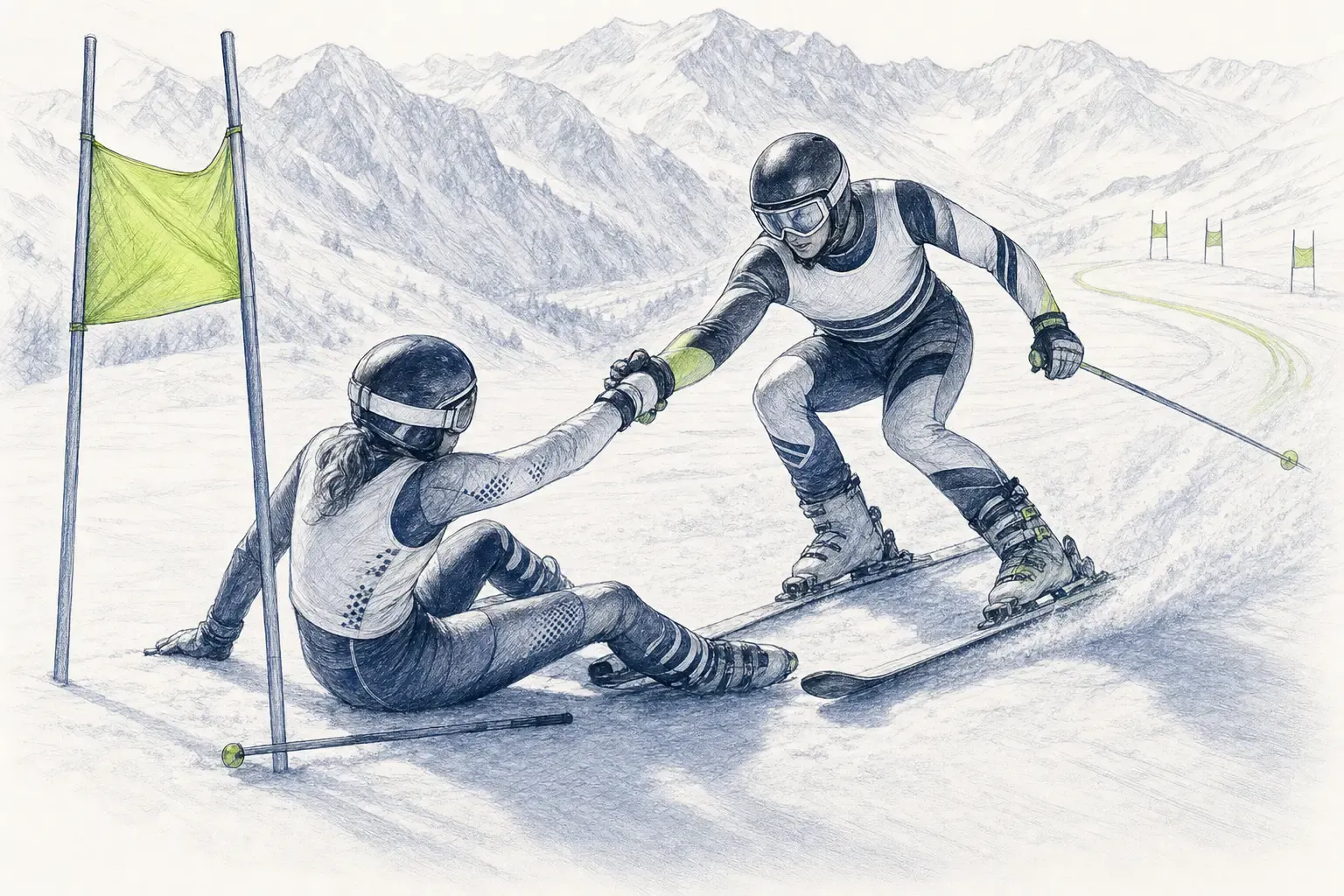
A child does not learn fair play from one instruction. They learn it through repeated situations: waiting for the coach's signal, respecting order, not automatically blaming others after a fall, reporting danger, and being able to congratulate an opponent. For younger children, the explanation should be short and concrete; older competitors should also understand responsibility toward the team, organizers, and other slope users.
Training practice: a coach can assess not only time and technique, but also the reaction to a mistake, a defeat, or a referee's decision. It is appropriate to praise a child who tells the truth, helps after an accident, or can apologize after a conflict. Fair play should not be enforced through ridicule, intimidation, or excessive training load. FIS understands a safe sports environment as the prevention of physical and psychological harm and requires coaches to maintain clear professional boundaries, respect, and timely resolution of concerns.
A parent supports fair play by not excusing cheating with the result, not insulting opponents or referees, and not turning a loss into a child’s personal failure. Adult behavior is often more convincing for a young skier than verbal instruction.
Common misconceptions
- Fair play means letting the opponent win. No. The goal is to give the best legal performance, not to suppress competitiveness.
- It applies only to the competitor. No. Coaches, parents, organizers, and officials also bear responsibility.
- Winning justifies the means. A result gained through dishonest or dangerous behavior goes against the purpose of sport competition.
- A child must obey every adult without question. Respect for authority does not mean an obligation to endure humiliation, pressure, or inappropriate behavior. A concern can be reported to the coach, club management, or the relevant safeguarding contact. FIS explicitly states that there is no need to have proof ready to report a concern, and the reporting person should not carry out the investigation themselves.
The coach’s view
A good coach sets the same expectations for everyone, explains the difference between a mistake and intentional cheating, and communicates without humiliation. When fair play is violated, they first find out the facts, take into account the child’s age and understanding, and choose an appropriate educational response. However, in the case of a serious safety, ethical, or safeguarding concern, they proceed according to club and federation rules; they do not downplay the situation or handle it only with an informal warning.
Sources and further reading
- FIS – Safeguarding
- FIS – Snow Safe Policy
- FIS – Education Guidelines, version 1.0, February 2026
- FIS – General Regulations
- FIS – Statutes
- FIS – Advice for the development of NSA Safeguarding Snow Safe Policies
- FIS – Coach or Team Manager Safeguarding Checklist
- FIS – Ethics Checklist for Coaches or Team Officials