What a gate pole is
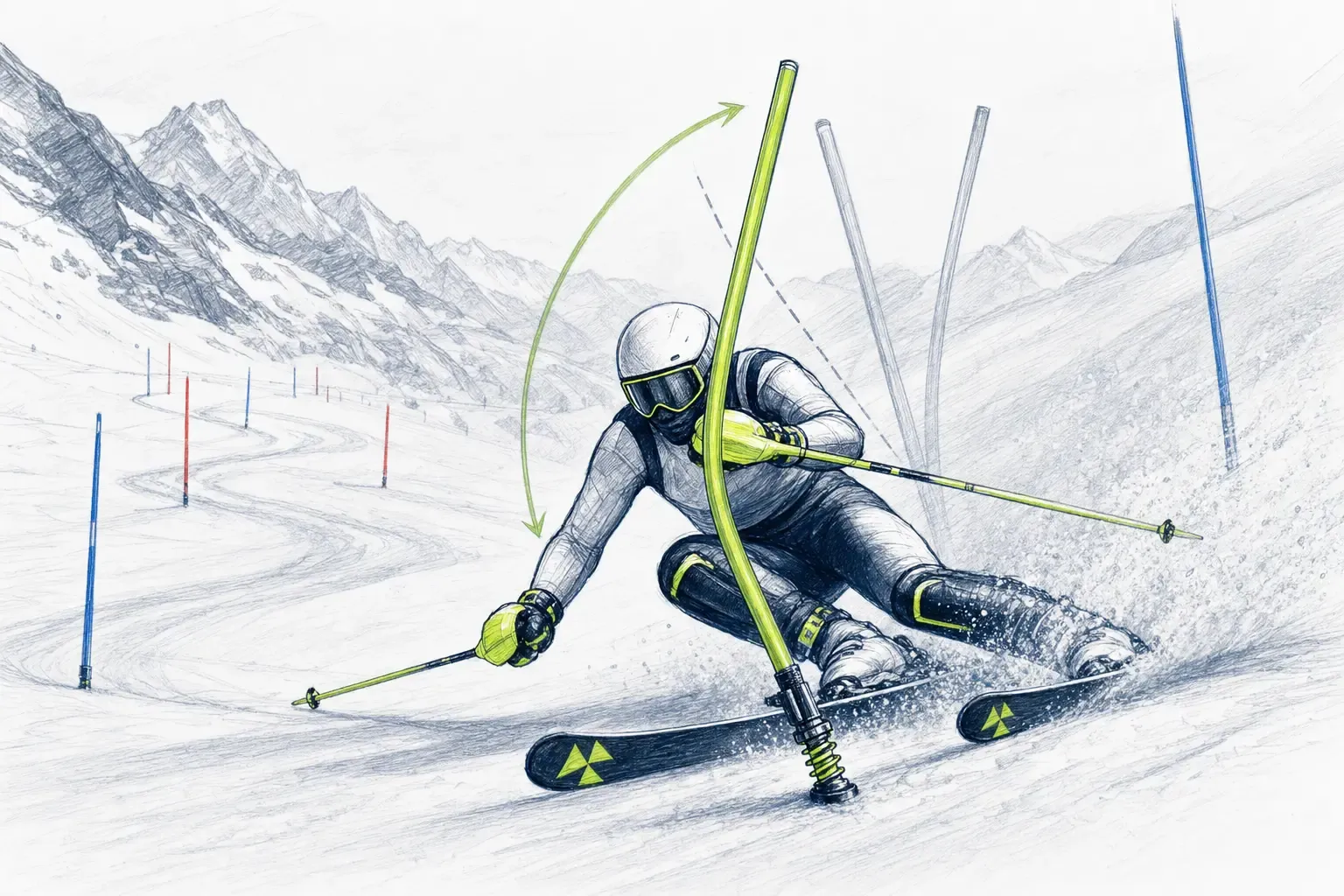
Gate pole is an element used to mark out a race or training course in alpine skiing. FIS rules refer to poles used in alpine disciplines collectively as slalom poles and distinguish fixed poles and flexible, hinged poles (flex poles). A flexible pole has a mechanism at the base that allows it to fold down after impact and then return to its original position. Competition poles must comply with the current FIS rules and technical specifications.
A gate pole is not a synonym for the whole gate. A gate is a space or line defined by the rules that a racer must pass through correctly. Depending on the discipline, it may be marked by a single turning pole, a pair of poles, or pairs of poles connected by gate panels.
Use in individual disciplines
In slalom, red and blue poles alternate. The turning pole around which the skier carves the turn must be flexible in FIS races. Modern slalom courses are usually set with a single pole; outer poles remain mainly at the first and last gate and in designated combinations. The exact course setting and the way through it are always determined by the current competition rules.
In giant slalom and super-G, the gate is made up of two pairs of poles with colored panels. The turning poles must be flexible. The panels should be wind-permeable and fastened so that if a racer catches them, they can release from one pole. Gate panels are also used in downhill. In races included in the FIS calendar, flexible poles are mandatory in all alpine disciplines except downhill, where their use may be required by the jury.
Gate poles in children's training
A full slalom pole offers resistance on contact and, after being knocked down, springs back up. For a beginner child, it may therefore not be the right first aid. In training practice, the progression goes from soft brushes to short poles, also called stubbies, and then to lighter junior hinged poles. This sequence helps develop turn shape, balance, and the correct line without making the child focus too early on knocking poles down. This is a coaching method, not a universal race rule.
Practicing active blocking of the slalom pole with the hand and forearm, known as cross-blocking, makes sense only once the skier can maintain a stable position and smooth turning mechanics. Contact with the pole should not replace proper timing, pressure on the outside ski, or ski guidance. At this stage of training, suitable hand guards and other equipment required by the rules, the manufacturer, and the coach are used.
Typical mistakes and misunderstandings
- Trying to hit every gate: the goal is a fast and correct run through the course, not the pole impact itself.
- Transitioning to full gates too early: harder contact can upset balance, cause avoidance, or reinforce poor hand movement.
- Confusing a training aid with a competition gate: a brush or short gate may mark the same line, but it does not have to meet the rules of a specific race.
- Judging technique by contact: a quality turn can be clean in training without touching the gate; on the other hand, knocking the gate down hard does not yet mean correct technique.
- Using a damaged or unsuitable gate: the condition of the joint, anchoring, gate, and panels must be checked before training or races by the responsible coach or organizer.
Coach’s view
The slalom gate is above all a reference point and a source of immediate feedback. Depending on age, strength, experience, and the goal of the drill, the coach chooses brushes, short gates, junior gates, or full competition gates. For children, a technically correct turn and safe handling of the course should come first. Only then come a tighter line and active contact with the gate.
Sources and further reading
- FIS – Alpine Skiing Documents: current ICR, specifications for flexible poles and homologated equipment
- FIS – International Competition Rules 2024, articles on slalom poles and gate panels
- FIS – Specifications for Alpine Competition Equipment 2026/27
- U.S. Ski & Snowboard – Alpine Course Setting Recommendations
- U.S. Ski & Snowboard – Alpine Training System
- U.S. Ski & Snowboard – Athlete Performance Profile
- U.S. Ski & Snowboard – Alpine Equipment
- U.S. Ski & Snowboard – Alpine Competition Officials Education Resources