What the ski tail is
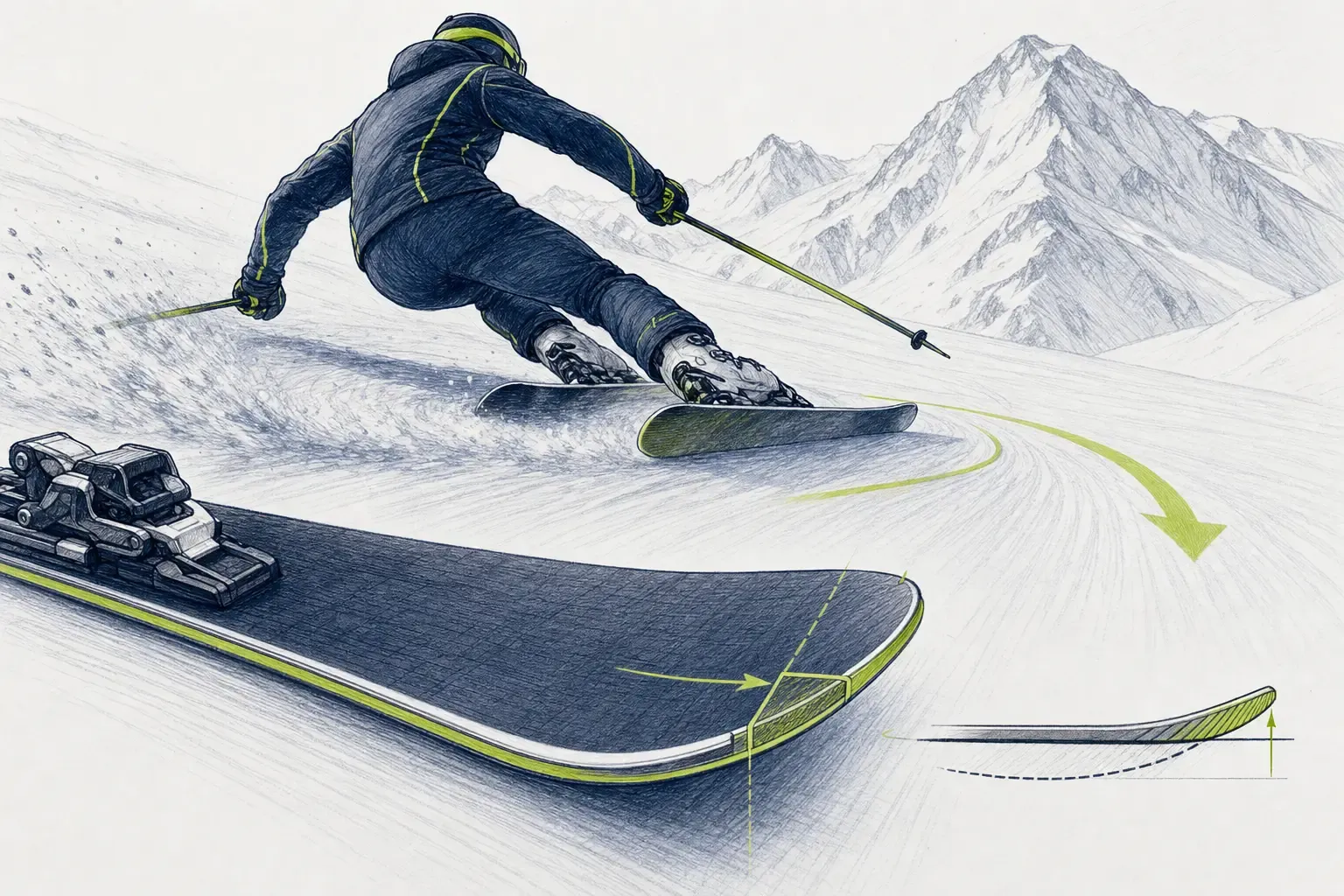
The ski tail (in English ski tail or tail) is the rearmost point or edge of the ski. ISO 6289 precisely distinguishes the tail itself, the raised part behind the rear contact line, and the rear half of the ski body. In everyday skiing language, however, the word tail often refers to the entire rear part of the ski behind the binding area.
The ski tail should not be confused with the binding heel, that is, the rear part of the safety binding that holds the heel of the ski boot.
Tail shape and function
In ski dimensions, the tail width is usually the third number in the tip – waist – tail order. Along with the tip width, waist width and ski length, it contributes to sidecut. However, the resulting behavior cannot be determined from just one dimension: longitudinal and torsional stiffness, camber profile, tail rise and the design of the whole ski are also important.
In general, a wider and less tapered rear section can support the ski on edge for longer, while a narrower or more strongly tapered tail may release from the turn more easily. This is a design tendency, not a rule that applies to every ski. Manufacturers use tails ranging from almost flat shapes to strongly raised constructions; the rise can make the ski easier to release, especially in soft snow.
The tail in turn steering
Pressure can also be changed along the length of the ski during the turn. Moving the center of mass forward increases the load on the front part, which helps create the path for the rest of the ski. Moving it back increases pressure in the tail area. Effective skiing is therefore not based on keeping one spot loaded the same way all the time, but on continuously controlling pressure according to the phase of the turn, speed, slope and snow conditions.
At the end of a carved turn, the tail helps keep the ski supported and pointed in the right direction. That does not mean the skier should deliberately and permanently lean back. With the correct movement, the skier stays balanced over the skis and the pressure changes smoothly.
Children and common mistakes
The most common misunderstanding is the instruction “push into the heels” without explanation. A child may interpret it as leaning back, pushing the skis out in front of the body, or resting on the back of the ski boots. This overloads the ski tails and at the same time unweights the tips, which then have a harder time starting and guiding a new turn.
For beginners, it is better to develop a balanced stance, ankle mobility, and the ability to stay over the skis. The coach introduces targeted work with longitudinal pressure distribution gradually, according to age, motor skills, and mastery of the basic turn. This is not about separate “pressing the heel,” but about a coordinated movement of the whole body.
The coach mainly watches whether the child:
- does not enter the turn leaning back,
- does not push the skis far in front of the body,
- can release the old edges after finishing the turn,
- uses a range of motion that matches the speed and terrain.
Racing context
In racing skis, the rear geometry is part of the overall length, sidecut widths, and the calculation of the sidecut radius. FIS sets requirements by discipline, gender, and age category; for youth, equipment is therefore selected according to the current rules of the given season, not according to the shape of the heel alone. For season 2026/27, the current FIS documents and the rules of the national federation are decisive.
From a coach’s point of view, it is important to distinguish between active completion of the turn and passive leaning back on the heels. The first comes from controlled loading of the bent ski followed by edge release; the second reduces readiness for the next turn.
Sources and further reading
- ISO 6289:2025 — Skis — Vocabulary, terminology preview
- ASTM F472-11(2017) — Standard Terminology for Geometry of Alpine Skis
- FIS — Alpine Skiing Documents and current rules
- FIS — Specifications for Alpine Competition Equipment 2026/27, list of documents
- FIS — Ski Radius Calculator: About
- U.S. Ski & Snowboard — Level 100 Alpine Manual
- Völkl — How to Choose Skis
- Office québécois de la langue française — terminological entry ski tail
- Majesty Skis — Skiing Re//Defined, ski construction terminology