What hydration means
Hydration is a planned intake of fluids before, during, and after sport. Its goal is to keep the body properly hydrated, support concentration and performance, and at the same time prevent both too little and too much fluid. The need to drink is not the same for every child: it is affected by age, body size, exercise intensity and duration, clothing, weather, altitude, diet, and individual sweating. That is why there is no single correct number of litres suitable for all young skiers.
Why you need to drink even in winter
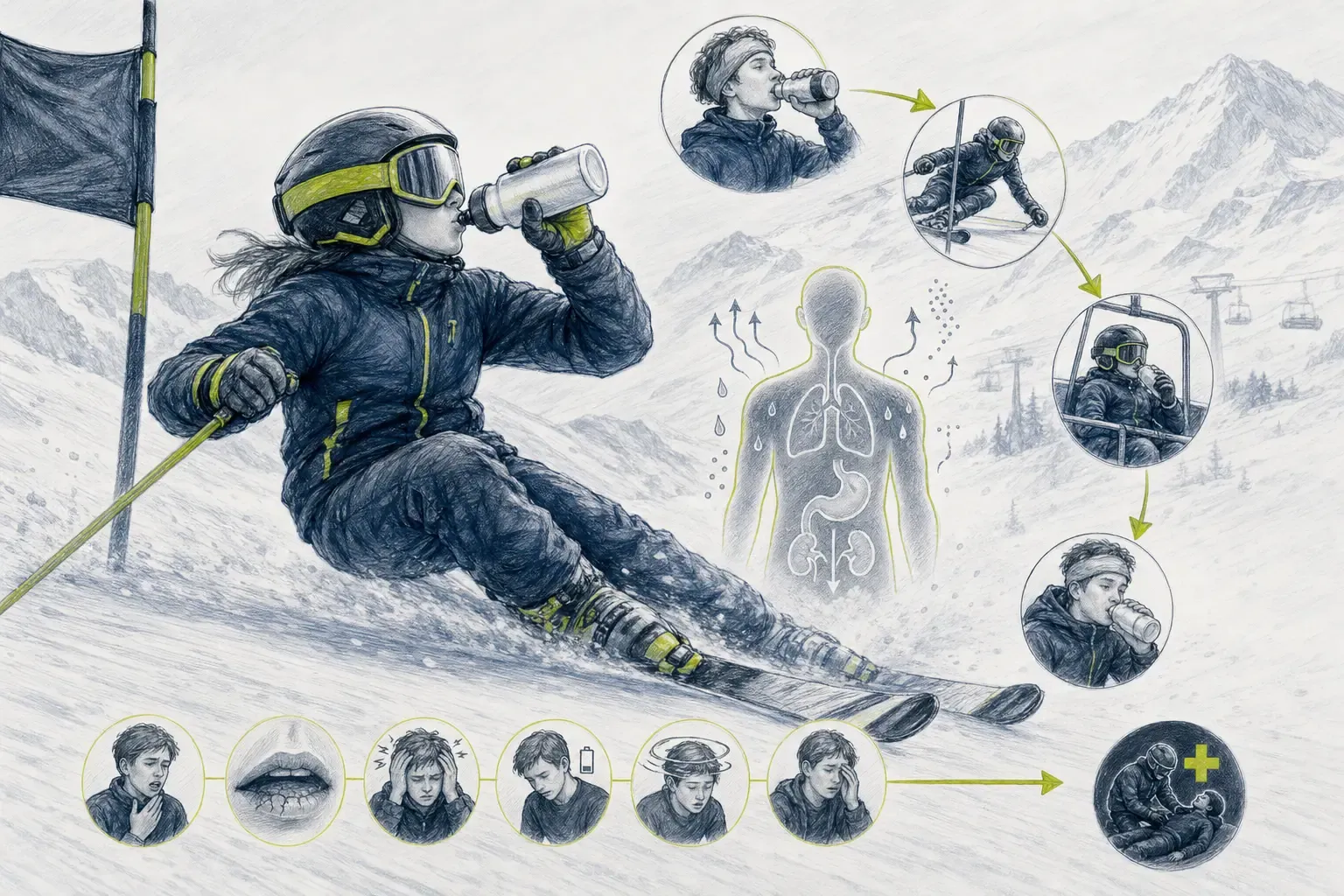
Cold does not mean the body is not losing fluids. Water leaves through sweating, breathing, and urine; sweat can also stay hidden in the lower layers of clothing. Cold and altitude are among the conditions that can change fluid regulation during exercise. On the slope, drinking is easily put off because of gloves, a bottle that is out of reach, riding the lift, or trying to make it to the next run.
Fluid loss can show up as thirst, a dry mouth, headache, unusual fatigue, dizziness, or poor concentration. However, these signs are not specific to dehydration and may also be related to cold, illness, altitude, or low energy. In case of confusion, repeated vomiting, collapse, or a significant worsening of condition, sport should be stopped and professional medical assessment arranged.
What should a child drink
For ordinary children’s training, the basic drink is water. A sports drink containing carbohydrates and electrolytes may be useful during long or intense exercise, heavy sweating, or repeated efforts, but it should not automatically replace water. Its use should be considered based on the specific training, food availability, and individual tolerance. Regularly drinking sweetened sports drinks outside such exertion unnecessarily increases sugar intake and may also affect teeth.
An energy drink is not a sports drink. It usually contains caffeine or other stimulants and is not a suitable way to hydrate children or adolescents.
In training practice, a lukewarm unsweetened drink in a well-sealed container can also help in cold weather. More important than the drink’s temperature is that it is safe, available to the child, and easy for them to drink without trouble.
Hydration during training and races
A child should not arrive on the slope thirsty, but they also should not drink a large amount all at once right before the start. It is practical to include calm chances to drink before putting on ski boots, during planned breaks, with meals, and after skiing is finished. Younger children need active reminders from an adult; a bottle in a backpack they cannot access during training does not solve hydration.
During races, it is a good idea to prepare a drink so it is available after course inspection, between runs, and at the finish. Race day is not the time to try an unfamiliar drink or an unusually concentrated mix. This is training practice, not a universal race rule.
If a coach wants to estimate fluid losses more precisely, they can compare body weight before and after activity in suitable conditions. With children, such monitoring should be done sensitively, under supervision, and solely to assess hydration, not as a body check or a tool for weight reduction.
Common mistakes
- the belief that in winter there is no need to sweat or drink,
- waiting until you are very thirsty
- one fixed portion of fluids for all children,
- swapping a sports drink for an energy drink,
- drinking a large amount at once instead of at suitable times throughout the day,
- overly warm clothing leading to unnecessary sweating,
- an unavailable, spilled, or frozen bottle.
Even drinking “as much as possible” is not right. Fluid intake that greatly exceeds losses can disrupt the sodium concentration in the blood and lead to dangerous hyponatremia. The goal is a proper balance, not a contest over how many bottles are emptied.
Coach’s view
The coach plans breaks and drink availability according to the group’s age, the weather, the length of the session, and the intensity of skiing. They watch for unusual fatigue, loss of attention, and changes in behavior, but they do not make a diagnosis based on a single symptom. A good hydration routine is simple, practiced, and manageable organizationally: the child knows where the drink is, when they can have a sip, and that any thirst or nausea should be reported in time.
Sources and further reading
- National Athletic Trainers’ Association – Fluid Replacement for the Physically Active
- National Athletic Trainers’ Association – Position Statements
- American Academy of Pediatrics – Sports Drinks and Energy Drinks for Children and Adolescents
- American Academy of Pediatrics – Soccer Injuries in Children and Adolescents
- American Academy of Pediatrics – Clinical Practice Guideline for the Evaluation and Treatment of Children and Adolescents With Obesity
- American Academy of Pediatrics – Hydration Maximizes Young Athletes’ Performance
- American Academy of Pediatrics – Children Should Avoid Drinks With Sugar