What is reaction speed
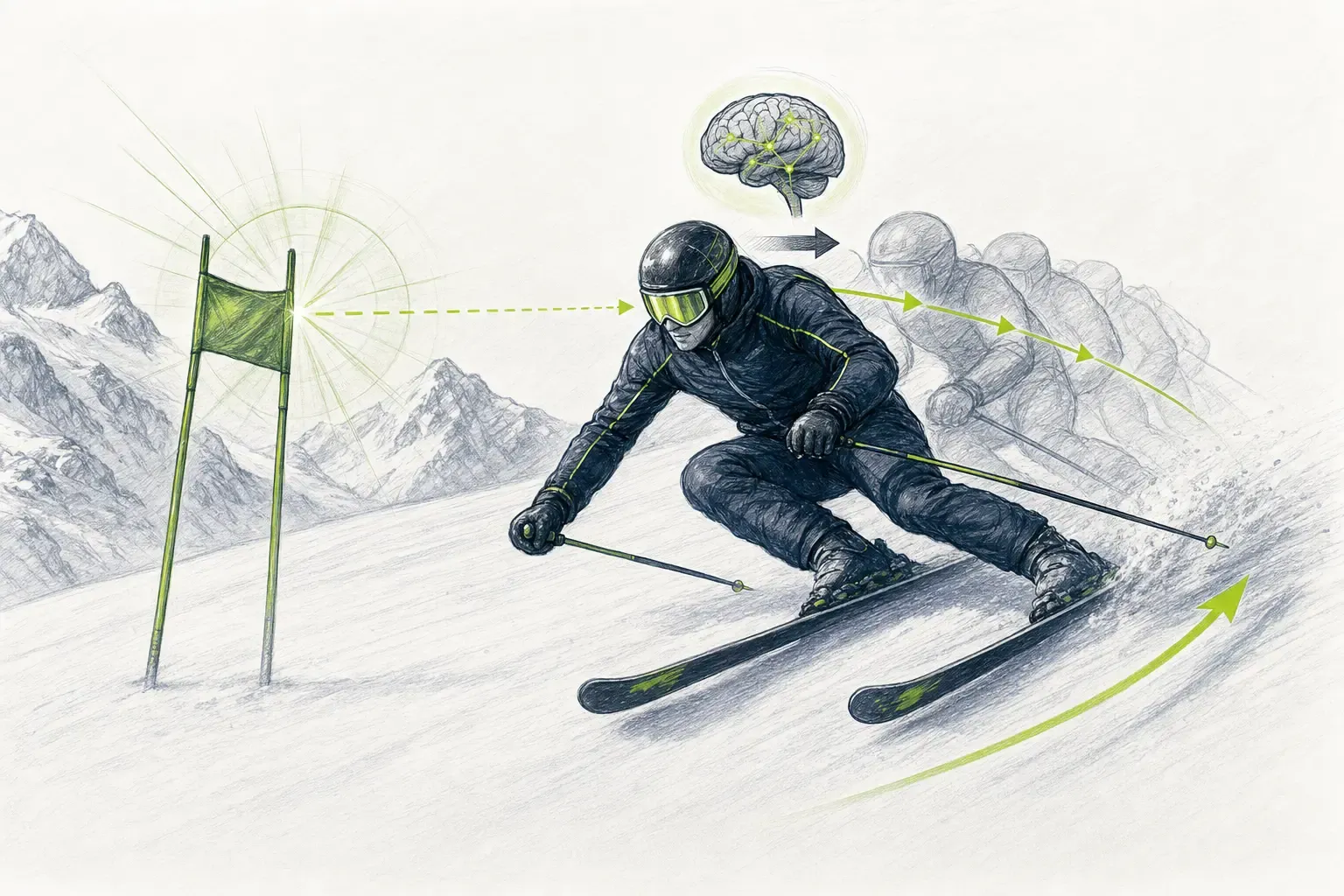
Reaction speed is the ability to notice a stimulus, process it, choose an appropriate response, and start moving as quickly as possible. The time from the appearance of the stimulus to the start of the movement response is called reaction time. The shorter it is, the faster the reaction is in terms of time.
It must be distinguished from the time of the movement itself. A child may quickly recognize a signal, but carry it out slowly or inaccurately. Conversely, a motorically fast skier may lose time by noticing the crucial information too late. When evaluating athletes, therefore, the accuracy of responses and the method used to measure them are also monitored alongside reaction time.
Most often, the following are distinguished:
- simple reaction – one known response follows one previously known stimulus, for example movement after an acoustic signal,
- choice reaction – the athlete chooses from several options according to the stimulus, for example changing direction based on the color shown.
Reaction speed is not the same as a reflex. A reflex is an automatic, involuntary response of the nervous system. A sports reaction usually includes perceiving the situation, making a decision, and a learned movement.
Importance in skiing
The skier continuously gathers information from vision, the balance system, pressure in the feet, and the movement of individual parts of the body. They respond, for example, to changes in slope, snow firmness or texture, loss of support, unexpected movement by another skier, or a coach's instruction.
In racing skiing, it is not just about responding as fast as possible. What matters is the whole chain perception – decision – movement. A correct but fractionally later reaction may be more useful than an immediate wrong movement. In addition, the result depends on technique, balance, strength, speed, and whether the skier has a suitable movement response prepared.
A major role is played by anticipation, that is, predicting what will happen next based on available information. An experienced skier does not have to wait until the problem fully develops: from the shape of the terrain, body position, or previous movement, they can estimate what will follow. Research on the development of predictive movement abilities shows that these abilities change significantly during childhood. Reaction and anticipation therefore cannot be considered unchanging innate traits.
Reaction speed in children
Children's results are influenced by age, experience, attention, understanding of the task, fatigue, and motivation. Comparing a younger child with an older racer based on a single test measured in milliseconds therefore has little value.
For younger skiers, a varied development of basic movement skills takes priority. Suitable activities include chase games, ball games, changes of direction, balance tasks, and games with simple visual or acoustic cues. A systematic review of children's sports games points to their benefit for basic motor and perceptual-motor abilities. The official U.S. Ski & Snowboard methodology likewise builds the development of a young skier on a broad foundation of skiing skills, not on isolated training of one ability.
As children grow older and gain experience, the number of options, movement speed, and similarity to a real skiing situation can gradually increase. However, there is no single universal method suitable for every child.
How it develops – the coach’s view
In training practice, you move from a simple and safe task to more complex decision-making:
1. one known signal and one movement response, 2. two or more signals with different responses, 3. reaction during movement, 4. choosing a solution in a ski-like task, 5. handling the situation at higher speed or under slight time pressure.
You can use starts on different signals, mirroring a partner’s movement, catching a ball, changes of direction based on color or number, and ski exercises in which a child chooses from previously explained options in a wide and clear space. On snow, the coach must adapt the task to the child’s age, technical level, traffic, terrain, and speed. An unexpected stimulus must not create a dangerous situation.
Short tasks are more useful than a large number of chaotic signals, because the child stays focused and the coach can identify where the mistake occurred: when noticing the stimulus, when deciding, or only when performing the movement. Research on decision-making in youth sport supports the importance of tasks that connect perception with a specific movement response, although findings from team sports cannot be directly transferred to skiing without verification.
Measurement and common misunderstandings
A simple hand test, light board, or computer test measures only the reaction in a precisely defined task. It is not independent proof that the child will react faster on skis. Results from different tests should not be compared directly, and when repeating a measurement, the same procedure, environment, and level of warm-up must be maintained.
Physical load can change perceptual-cognitive performance depending on intensity, type of task, and sports experience. It cannot therefore be automatically assumed that every kind of fatigue will slow reaction in the same way; testing before training and after a demanding run represents different conditions.
A common mistake is trying to develop reaction speed only with light devices or a screen. Such tools can train a specific visual-motor task, but transfer to sporting decision-making is not automatic. More recent review studies also point out that improving reaction time does not necessarily mean improving decision accuracy or performance in a specific sport.
For the coach, the goal is not a child who only reacts quickly to a signal. The goal is a skier who recognizes the important information in time, chooses a safe solution, and can execute it technically.
Sources and further reading
- Psychomotor and Basic Cognitive Abilities in Professional Athletes: A Systematic Review
- Physical Load Affects Perceptual-Cognitive Performance of Skilled Athletes: a Systematic Review
- Developmental change in predictive motor abilities
- The Effect of Sports Game Intervention on Children’s Fundamental Motor Skills: A Systematic Review and Meta-Analysis
- Effects of Training Programs on Decision-Making in Youth Team Sports Players: A Systematic Review and Meta-Analysis
- U.S. Ski & Snowboard – Level 100 Alpine Manual
- Effects of stroboscopic visual training on reaction time and decision-making ability in athletes: a systematic review and meta-analysis