What is a red gate
Red gate is one of the color-marked gates on an alpine ski race or training course. In slalom, it is marked by red slalom poles; in giant slalom, super-G, and downhill, the color stands out mainly on the gate panels. Its purpose is to visually separate the individual gates and make it easier for the racer to navigate the course.
Color does not determine which side the gate must be passed on, nor whether a left or right turn follows. The correct line is decided by the layout of the poles, the position of the turning pole, and the line set by the course setter.
Red and blue gates
According to the rules used in classic slalom, consecutive gates alternate in red and blue. The same principle also applies in disciplines with gate panels and in para alpine skiing.
A different situation applies in parallel races, where red and blue may indicate two entire parallel courses. The term red course there is therefore not the same as one red gate.
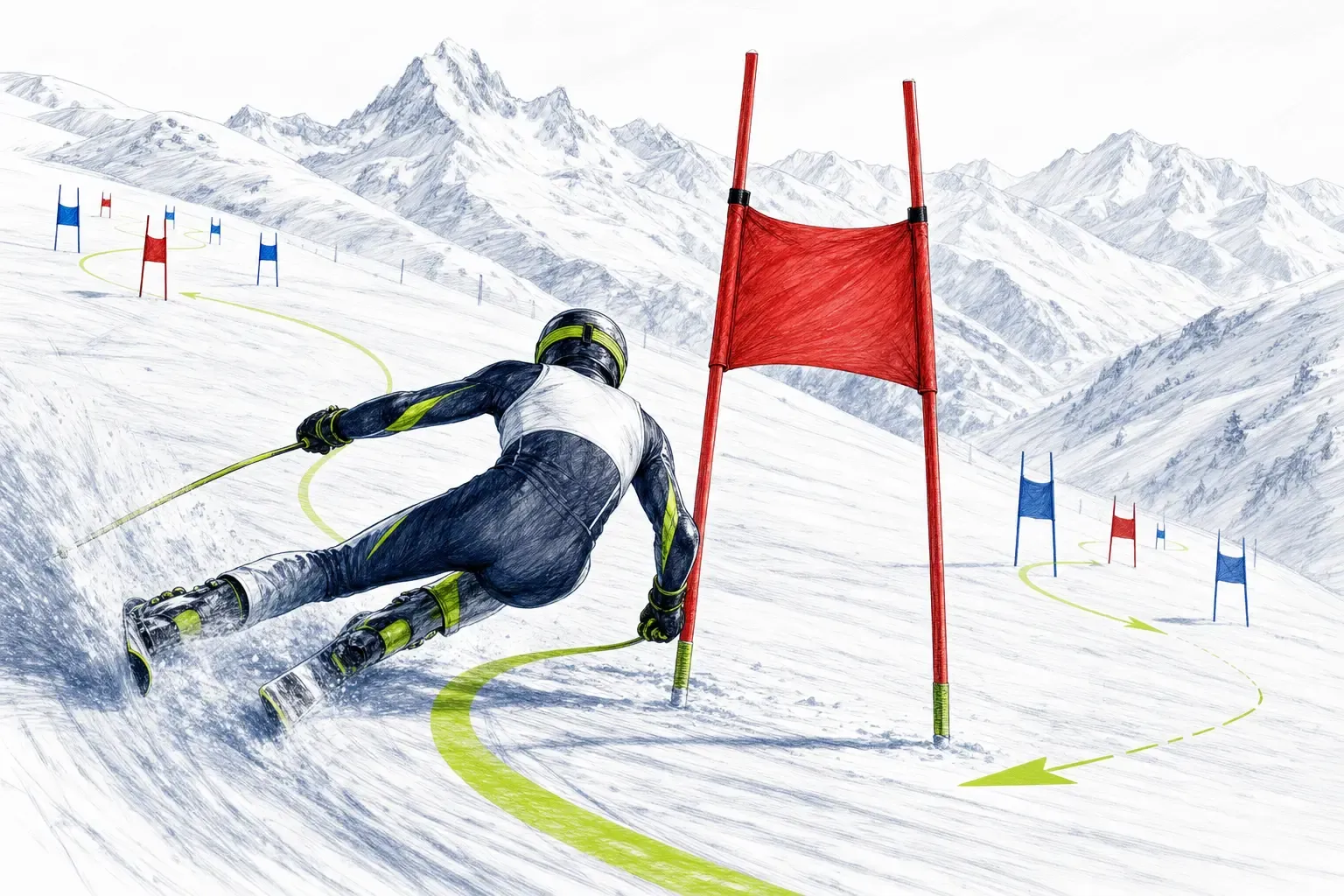
The basic FIS rules use red and blue. However, national regulations may introduce special provisions for their own competitions; one example is the American allowance of additional contrasting alternating colors. At specific races, the applicable rules and the event regulations therefore take priority.
Correct passage
When judging a gate passage, it does not matter whether the skier knocks down the pole or even touches it at all. What matters is that both ski tips and both feet pass the prescribed gate line. A racer may hit the pole and still pass the gate correctly; likewise, they may miss it without touching it but on the wrong side. Exact judgment is the responsibility of the judges according to the rules of the given discipline.
Children’s training and the coach’s view
During the first exercises, colors help children recognize the rhythm and order of the gates. However, a guide such as “red always on the right” is not suitable, because it stops working when the course is set differently. In a way appropriate to their age and level, children should learn to look for the turning pole, feel the direction of the next turn, and gradually also look ahead to the next gate.
In training practice, the goal is not to hit the poles as hard as possible. First, the focus is on the correct line, balance, and timing of the turn. Brushes, short poles, or full flexible poles are chosen by the coach according to the skiers’ level and the aim of the exercise. The poles and panels used must match the rules and technical specifications of the event.
Sources and further reading
- FIS – Alpine Skiing Documents: current rules and course specifications
- U.S. Ski & Snowboard – 2026 Alpine Competition Guide
- U.S. Ski & Snowboard – Alpine Rules & Equipment
- U.S. Ski & Snowboard – Alpine Competition Officials Education Resources
- FIS – Para Alpine Skiing Rules and Regulations
- FIS – Para Alpine Documents
- U.S. Ski & Snowboard – 2025 Congress Update: alternating gate colours