What the boot shell is
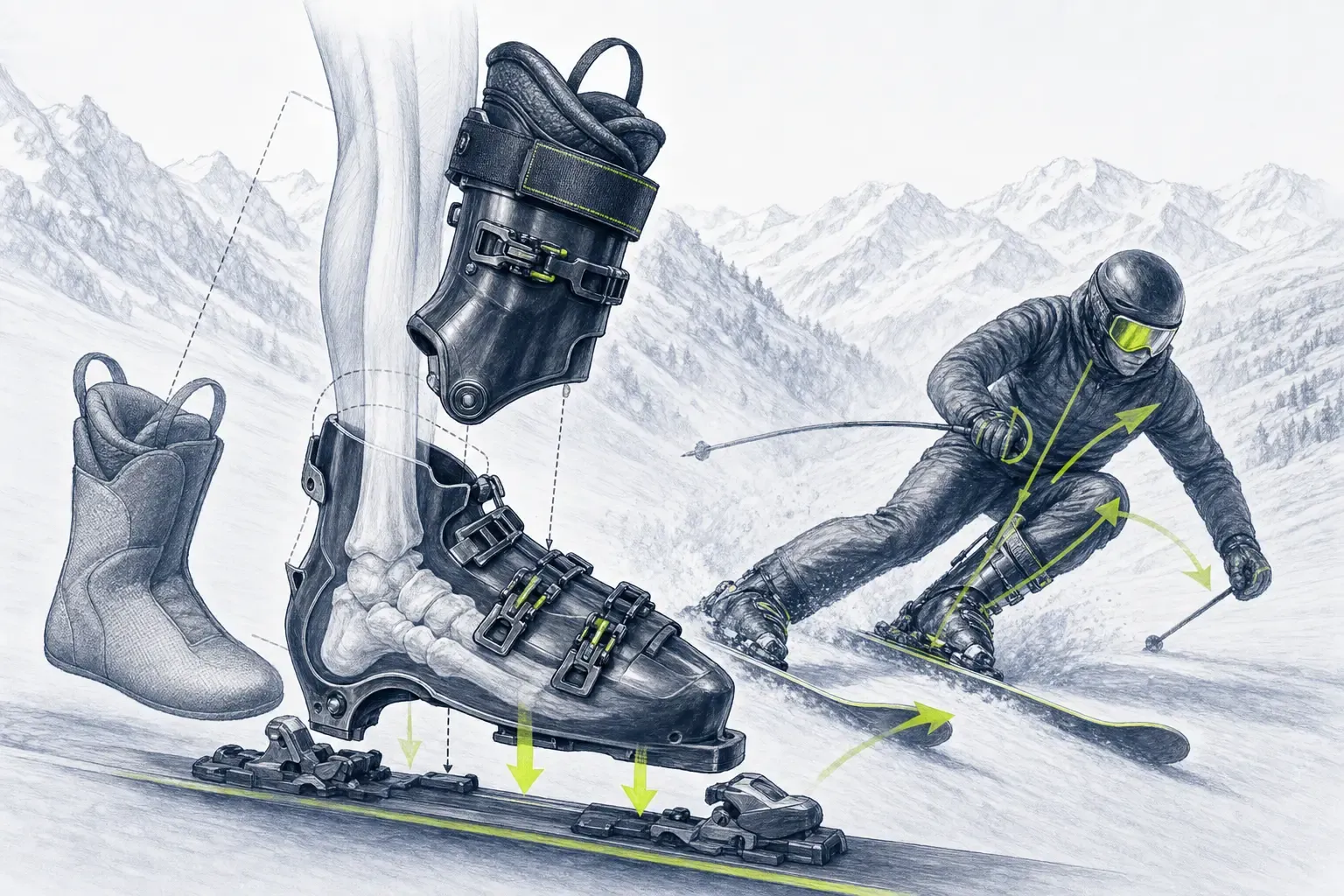
The boot shell is the hard outer casing of a ski boot. It usually consists of a lower shell wrapping the foot and a movable cuff around the lower leg. The two parts are joined by hinges, rivets, or screws. Buckles, a cable tightening system, the upper strap, and other structural elements are attached to the shell. The removable inner liner is not part of the shell.
Manufacturers may use the word shell to refer only to the lower shell and list the cuff separately as cuff. In common Slovak ski language, the shell often means the entire hard outer construction of the ski boot.
What the shell is for
The shell stabilizes the foot and lower leg, absorbs forces acting while skiing, and transfers the skier’s movements through the binding to the ski. Its shape determines the space for the foot, heel, ankles, and instep. The cuff design affects side support as well as how much the boot can flex forward.
An important part is the sole with front and rear contact zones for the binding. Standard ISO 5355 sets out requirements, testing, and marking for classic alpine ski boots type A for adults and type C for children. ISO 23223 covers ski boots with a sole that improves walking. Correct binding release also depends on the dimensions and construction of these interfaces.
Shells are made from technical plastics, and their material, wall thickness, and geometry vary from model to model. In some boots, selected areas can be professionally heat-molded. Any such modification must follow the manufacturer’s procedure; for example, Salomon allows adjustment of the lower shell or the shell together with the cuff on specific models.
The shell in a children’s ski boot
A children’s shell should not be just a smaller copy of a hard racing boot. It must match the child’s foot size, body build, strength, motor skills, and way of skiing. The coach mainly watches whether the young skier can naturally bend the ankles and knees in a basic stance while the foot remains stable.
A shell that is too big does not hold the heel and foot in the right place. The child then often compensates for the extra room by overtightening the buckles, wearing thick socks, or curling the toes. The result can be poorer ski control, pressure on the instep, and discomfort. Conversely, a shell that is too small or the wrong shape can create painful pressure points.
Size therefore cannot be judged only by the number on the boot or by whether the toes touch the front when putting it on. It is advisable to check the shell length and space after removing the inner liner, assess the foot shape, and then try on the complete boot. The correct allowance should be determined by an experienced salesperson or bootfitter according to age, level, and intended use; there is no universal number suitable for every child.
Stiffness and racing context
Shell stiffness is commonly described by the flexrating. The number alone, however, does not say whether the boot fits the child properly or whether they can actively flex it. When choosing, it is assessed together with size, shape, cuff height, skier weight, and technical level.
In racing practice, greater emphasis is placed on precise heel hold and immediate transfer of movements. That does not mean every young racer needs the tightest or stiffest shell possible. Racing boot adjustments belong in the hands of a bootfitter who works with the coach and takes the child’s feedback into account.
FIS issues technical specifications for competition equipment by season. For example, the document for season 2025/2026 included a separate method for measuring ski boot sole thickness. At race inspection, the document valid for the specific season is therefore always used, not a figure taken from older rules.
Inspection and typical mistakes
Before skiing, check the shell for cracks, loose joints or rivets, damaged buckles, and significantly worn sole contact surfaces. Grinding, replacing the soles, or any other intervention in the binding interface can affect its function. Compatibility is verified according to the markings on the ski boot, binding, and the manufacturers' instructions, not just by whether the boot can be mechanically clicked into the binding.
Binding adjustment or inspection is not done by testing it by hand. Standard ISO 11110 sets requirements for devices used in ski shops to measure binding release moments. After changing ski boots, replacing soles, or finding damage, a specialist shop should check the ski–binding–boot system.
From a coach's point of view, a good shell is one the child does not have to think about while skiing: it holds the foot without unnecessary pressure, allows appropriate movement, and works reliably with the binding.
Sources and further reading
- ISO 5355:2019 – Alpine ski-boots — Requirements and test methods
- ISO 23223:2025 – Alpine ski boots with improved walking soles
- ISO 9838:2023 – Alpine and touring ski-bindings — Test soles for ski-binding tests
- ISO 11110:2015 – Test devices for the setting of the functional unit ski/boot/binding
- FIS – Specifications for Alpine Competition Equipment 2025/2026
- Salomon – S/PRO SUPRA C BOA 130, shell construction and material