What skiing technique is
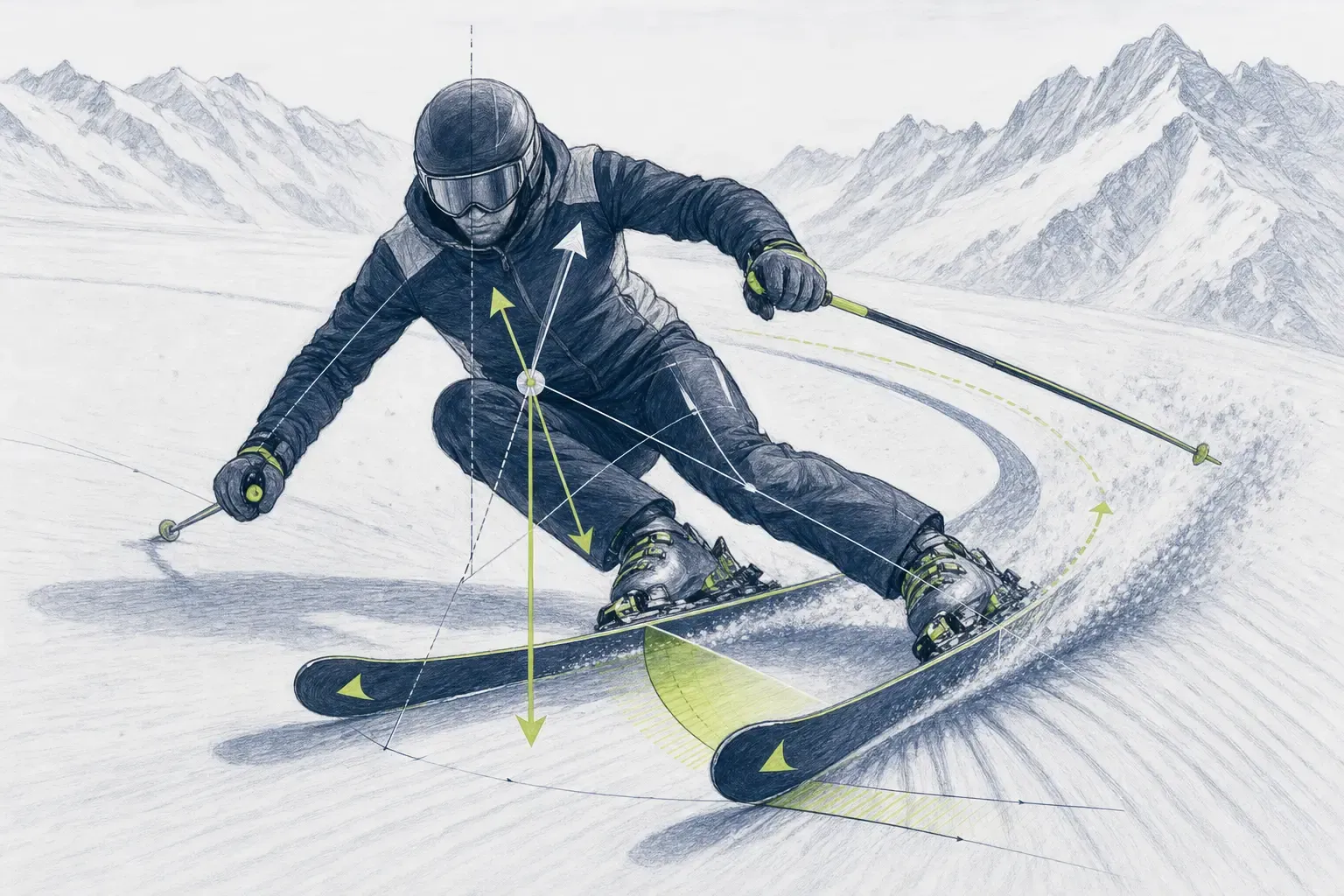
Skiing technique is the purposeful arrangement of body movements and positions through which the skier acts on the snow via the skis. Its result is balance, direction change, speed control, and handling a specific situation. Technique is therefore not just how the skier looks, but above all what their movements cause.
There is no single correct stance that applies throughout the whole turn. The skier moves relative to the skis; the slope angle changes, the direction of the forces acting on the skier changes, and so does the load on each ski. A technically good movement is therefore dynamic, appropriate to the task, and performed at the right moment.
Basic components of technique
In coaching practice, skiing is often broken down using four interconnected areas:
- Balance – the ability to maintain or regain stability above the moving skis. It includes adjusting the body position in both the fore-aft and side-to-side directions, not constantly holding one “ideal” position.
- Edging – controlling the angle between the ski base and the snow. The edge angle is created by leaning the whole body and angulating at the joints; simply pushing the knees inward is neither a complete nor a suitable technical instruction.
- Guiding and turning the skis – changing the skis’ direction through leg movements and the action of forces. A turn can be predominantly carved, mixed, or skidded. A controlled skid is not automatically a mistake: it may be needed for speed control, on a steep slope, or in a limited space.
- Pressure management – controlling the amount, place, and timing of loading. It includes distributing pressure between the right and left ski, the front and back of the ski, and the individual phases of the turn.
These areas cannot be fully separated. Greater edging changes the action of forces, pressure affects ski flex, and balance determines whether the skier can use the forces that arise. That is why official U.S. Ski & Snowboard development systems work with fundamental skiing skills as a long-term foundation, not just as a set of isolated exercises.
How a ski turns
In a turn, the ski moves along a curved path thanks to the interaction of the skier, equipment, and snow. When it is edged and loaded, its shape and flex can support a carved line. In a skidded turn, the ski also moves partly sideways, which helps change direction and control speed.
Leaning the body, turning the shoulders, or pressing into the skis does not by itself guarantee a good turn. The sequence and timing of movements matter. The transition between turns must create the conditions for new edging, guiding the skis, and gradually taking on the load.
Technique in children
With children, technique is not developed by copying the detailed movement of an adult racer. The task must match skiing ability, body proportions, strength, coordination, attention, and the conditions on the slope. The same age therefore does not mean the same technical readiness.
A suitable foundation is varied free skiing, changes in turn radius and rhythm, simple balance tasks, safe use of varied terrain, and gradual mastery of different types of turns. A wedge can be an appropriate beginner tool for controlling direction and speed; however, the goal is not to stay with it without further development of ski guiding.
Official long-term development models emphasize age-appropriate training, all-around athleticism, and thorough mastery of the basics before narrow specialization. The SkillsQuest program also builds a young racer’s development on skiing skills, free skiing, and deliberately chosen tasks.
When working with children, short and clear instructions, a clear demonstration, play, and tasks with a visible goal work well in practice. However, the coach chooses the method according to the specific group; there is no universal training rule.
Skiing technique in racing
In alpine skiing, technique is a tool for solving course tactics. The racer needs to choose the line, turn radius, amount of skidding, the moment of edge change, and pressure distribution so as to handle the gates, terrain, and speed. Slalom, giant slalom, and speed disciplines therefore place different demands on rhythm, range of movement, and timing.
Technical execution in alpine racing is not scored as an artistic impression. Successful technique must be fast, repeatable, and flexible enough to adapt to changes in the course and snow. A development program should not be limited only to gate training; even official coaching systems connect technique with tactics, fitness, equipment, psychology, and the athlete’s long-term development.
The FIS sets the competition rules and separate specifications for racing equipment, not one mandatory way of moving. Before the racing season, always check the current rules for the given discipline and age category; safety and equipment requirements may change.
Common misconceptions
- “Good technique means always carving on the edge.” Carving is an important skill, but it is not the right answer for every speed, slope, or space.
- “A skier must always be forward.” The skier needs flexible fore-and-aft balance. Rigidly pushing the body forward can limit movement just as much as skiing in the back seat.
- “A calm torso means a motionless torso.” The upper body should support balance and direction, not be stiffly fixed.
- “The outside ski must carry everything.” In many turns it bears most of the load, but the inside ski remains part of balance and steering.
- “A technical mistake can be fixed with one drill.” A drill only matters when it targets the identified cause and the improvement carries over into normal skiing.
Coach’s view
The coach first watches the outcome: the line, speed, stability, and the skis’ reaction. Then they assess the skis’ contact with the snow, timing, and the movements of individual body parts. One unsuccessful run does not necessarily prove a technical problem; the cause may be an inappropriate task, terrain, fatigue, fear, or a poorly chosen speed.
Good feedback should name the key point, not everything at once. Video, poles, markers in the snow, or technical drills are tools, not the goal of training. What matters is whether the young skier can use the new skill safely in free skiing and later also in a race situation.
Sources and further reading
- U.S. Ski & Snowboard – Training Systems
- U.S. Ski & Snowboard – SkillsQuest
- U.S. Ski & Snowboard – Alpine Training System
- U.S. Ski & Snowboard – Level 100 Updates: Basic Skiing Drills
- U.S. Ski & Snowboard – Learning Management System Launched for Coaches
- FIS – Event Marketing and Specifications for Alpine Competition Equipment
- FIS – FIS Alpine Meeting: Focus on Athlete Safety and Season Outlook