What forerunner means
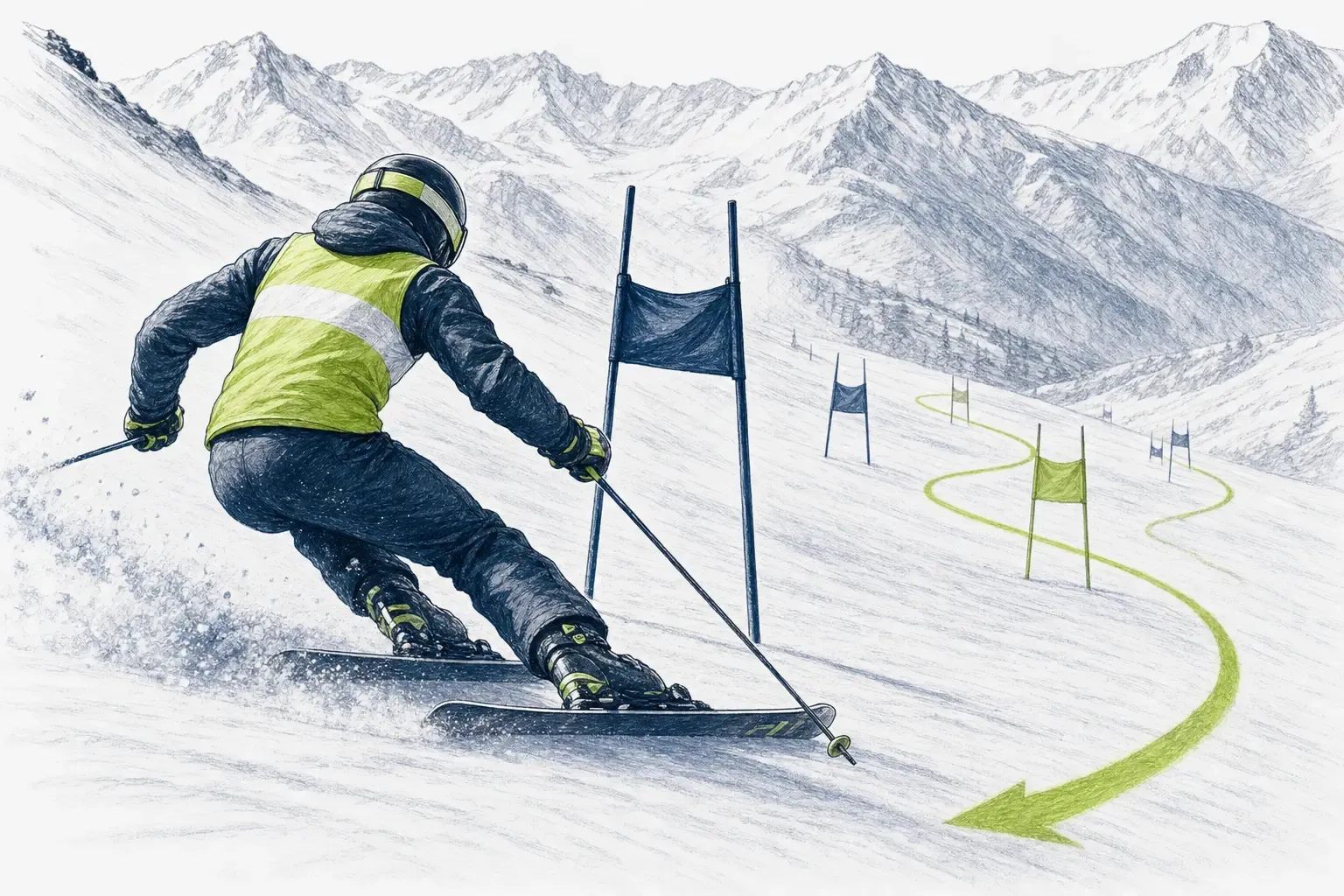
Forerunner is an English term used in the FIS rules; in Slovak, the term predjazdecis used. It refers to a skier who goes down the prepared and marked race course before the first competitor. The jury may assign additional forerunners after a longer interruption or whenever it needs to reassess the conditions on the course.
A forerunner is not the first racer. Their run does not count toward the results, and their time must not be published as a competition performance. Under FIS rules, they cannot later start as a racer in the same competition.
The role of the forerunner
According to FIS rule 605, the organizer must provide at least three forerunners. The jury decides on their number, selection, and order. Forerunners should have a distinctive bib or vest and the skiing level needed to complete the course in racing style, meaning at a speed and on a line appropriate to the discipline.
After finishing, they may be asked to tell the jury especially about:
- the condition of the course surface and any changes,
- visibility and the effect of the weather,
- problematic or unusual spots,
- how the course behaves when skied on the racing line,
- other circumstances that may affect the safe and fair running of the race.
During the descent, forerunners should also complete training runs so the jury can get comparable information about how the course is developing. Their experience is a basis for the jury’s decisions, not a replacement for checking the course, the safety nets, timing, or the work of the technical delegate.
Forerunner in children’s races
In children’s categories, the role of a forerunner should not be a reward or a chance for a less experienced skier to “try out the course.” A child or young skier must be able to handle the difficulty of the course with a sufficient margin, understand the start instructions, and be able to describe the conditions after the run in a clear, factual way.
The rules do not set one universal level suitable for every course. What is appropriate depends on the discipline, slope, speed, surface, weather, and the skier’s experience. The choice therefore belongs to the organizer and the jury; for youth events, the rules of the relevant national federation and the event’s participation conditions must also be respected.
From the coach’s point of view, it is best to set clearly before the run:
- when and on what signal the forerunner may start,
- whether they should ski at full race intensity or more controlled,
- which sections they should pay special attention to,
- to whom and in what way they should report after finishing.
This is an organizational and safety task, not a training trial or a demo run meant to reveal the ideal line to racers.
Common misunderstandings
A forerunner is not a course crew member. People who, before the start or during the race, move loose snow, prepare tracks, or clear the area near the gates have a different role.
A successful run does not mean the course is automatically safe. The forerunner provides observations; the jury decides whether to start, interrupt, modify, or cancel the race.
The forerunner’s time is not a reference result. It should not be used for unofficial rankings or for public comparison with children in the competition. More important is the quality of the run and the accuracy of the report.
A forerunner does not have to be a former elite racer, but they must be able to handle the specific course safely and convincingly in a race-like way. Excellent technique on an open slope is not enough on its own if the skier has no experience with gates, speed, or the relevant discipline.
Sources and further reading
- FIS – Alpine Skiing Documents: International Competition Rules, edition 6. July 2026
- U.S. Ski & Snowboard – 2026 Alpine Competition Guide
- U.S. Ski & Snowboard – 2026 Alpine Competition Guide, PDF
- U.S. Ski & Snowboard – Alpine Competition Officials Education Resources
- Alpine Canada – National Competition Rules
- FIS – International Competition Rules for Alpine Skiing, archived edition 2022
- Alpine Canada – National Officials Program, Level 1